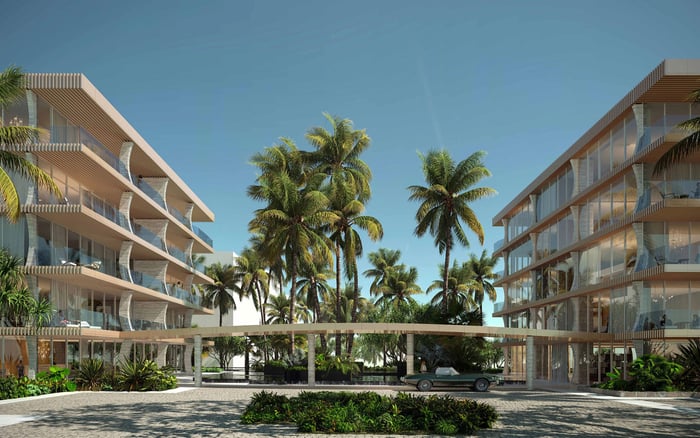
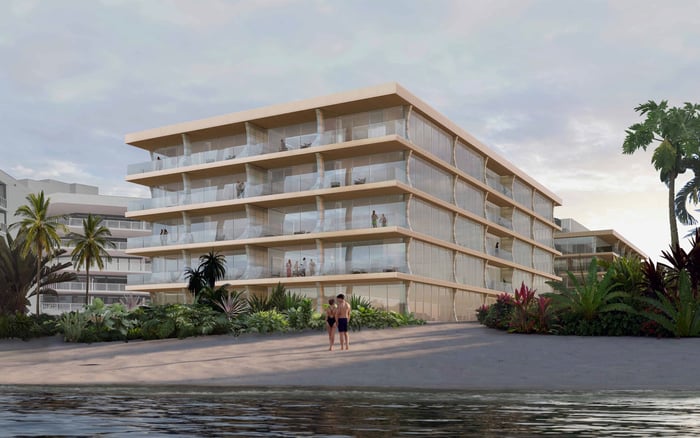
A luxury buyer guide to the Palm Beach County residence profiles best suited to acoustic comfort, privacy, and remote work without overextending unsupported project-specific claims.
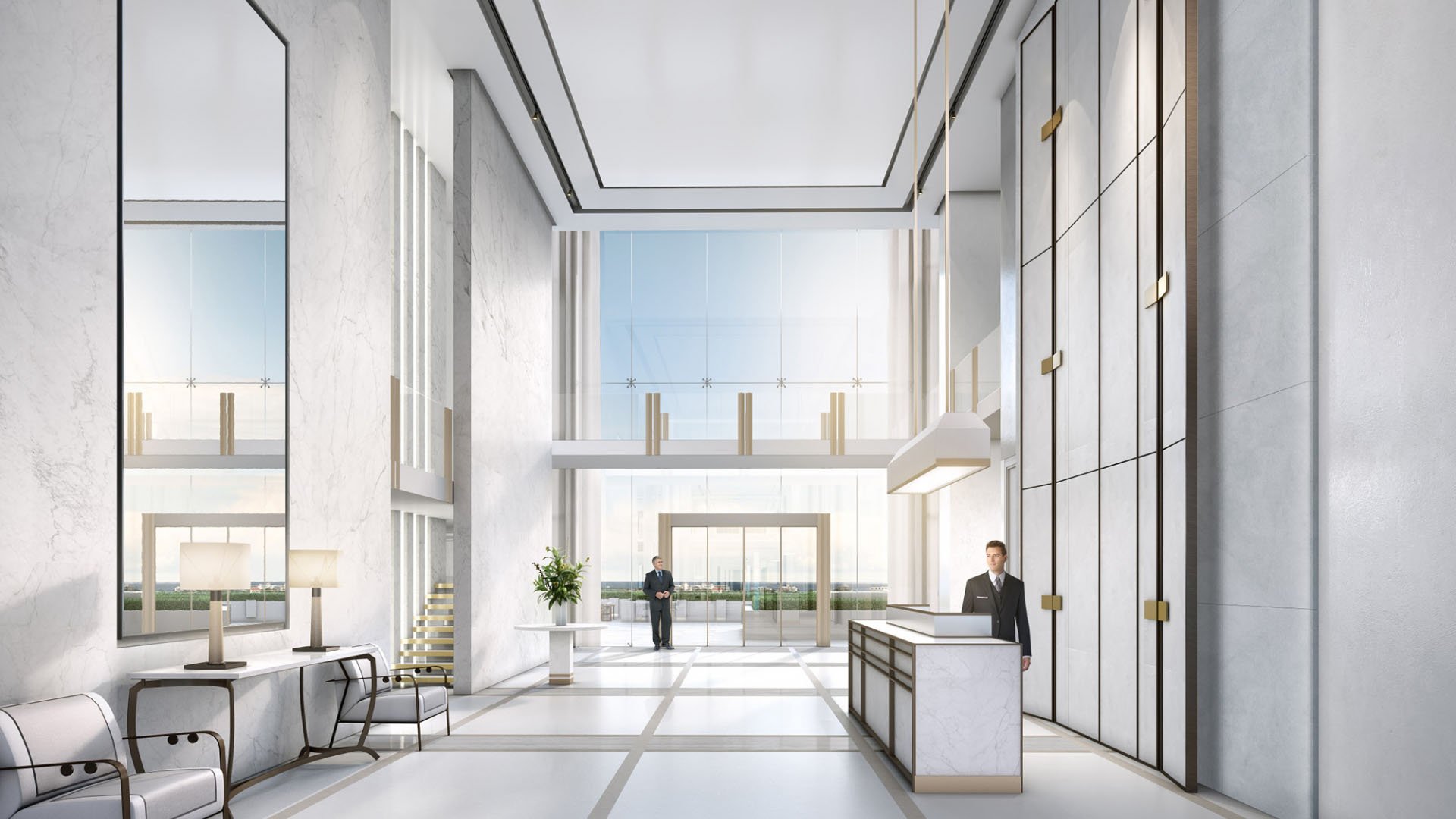
For South Florida buyers, the luxury conversation now extends well beyond views, valet, and finishes. A residence has to perform quietly. The best home for remote work is not simply the one with a handsome office; it is the one where concentration is protected from elevator corridors, service areas, traffic, mechanical systems, pool decks, neighboring terraces, and the everyday rhythm of family life.
In Palm Beach County, that creates a more exacting search brief. Buyers may begin with lifestyle language such as Palm Beach, West Palm Beach, Boca Raton, oceanfront living, new construction, or gated communities, but acoustic comfort requires a deeper reading of plan, placement, building envelope, and daily-use patterns. A beautiful room can disappoint if sound travels through doors, floors, glass, or poorly separated entertaining areas.
The strongest residences for remote work tend to share a few traits: a true room with a door, distance from social zones, limited shared walls, thoughtful glazing, quiet mechanical systems, and an arrival sequence that does not cut through the work area. For buyers who take calls across time zones, record confidential conversations, or simply value calm, these details are not technical footnotes. They are central to how the residence lives.
1. High-floor corner condominium - vertical separation
A high-floor corner condominium is often a compelling profile for buyers who want privacy, light, and separation from street-level activity. The corner condition can reduce the number of immediate side neighbors, while elevation may distance the residence from traffic, pedestrian movement, and amenity noise.
For remote work, the critical test is the office position within the plan. A corner den or secondary bedroom away from the elevator corridor and primary entertaining area is preferable to a decorative alcove near the kitchen. Buyers should pay close attention to balcony doors, HVAC sound, corridor noise, and whether the room can be closed without feeling improvised.
2. Boutique low-density residence - fewer shared moments
A boutique, low-density building can appeal to buyers who want fewer daily intersections and a calmer residential cadence. With fewer residences sharing arrival areas, elevators, corridors, and amenity spaces, the experience may feel more private and controlled.
This profile is strongest when the floor plan supports a dedicated work zone that is not dependent on the main living room. A room near a secondary bedroom wing, guest suite, or interior hall can provide a more composed workday than a workstation inserted into an open-plan entertaining space. The question is not only whether the building is quiet, but whether the residence gives work a defined address.
3. Waterfront residence with deep setback - sound buffered by space
A waterfront residence can be acoustically persuasive when the site creates distance from busier roads and social circulation. Water outlooks often draw attention first, but the real advantage for remote work may be the sense of spatial breathing room around the home.
Buyers should distinguish between visual serenity and actual quiet. Terraces, pool areas, docks, and neighboring outdoor entertaining spaces can all carry sound. The best waterfront work-from-home setup places the office inward or laterally away from the most active outdoor zones, while still allowing natural light and a sense of calm. Acoustic comfort here is about orientation as much as setting.
4. Gated single-family estate - control of the sound environment
For buyers who want maximum command over their environment, a gated single-family estate remains a powerful option. The appeal is not merely privacy at the entry, but the ability to separate household functions across a broader plan. Offices, guest rooms, service areas, garages, gyms, and entertainment spaces can be positioned with greater independence.
This profile works best when the office is not an afterthought carved from a bedroom. A proper study should be set apart from the family room, outdoor kitchen, pool, motor court, and staff circulation. Door quality, ceiling height, flooring, and adjoining rooms all matter. A quiet estate is designed through adjacency, not just acreage.
5. New-construction residence with flexible room hierarchy - future-ready quiet
New-construction residences may offer the advantage of contemporary planning, flexible rooms, and modern expectations around work-life integration. For remote-work buyers, the most valuable feature is often not the most visible finish, but the ability to dedicate a room permanently to focused use.
The best examples provide a secondary suite, enclosed den, media room, or library that can become a serious office without compromising guest accommodation. Buyers should evaluate whether doors, wall assemblies, glazing, and mechanical placement support long calls and confidential meetings. A flexible room is only valuable if it is also acoustically credible.
Acoustic comfort is rarely proven in a brochure or by a single daytime showing. A buyer should experience the residence at different hours if possible, particularly when service activity, traffic, school runs, amenity use, or weekend entertaining may change the sound profile. The most elegant property can live very differently at 8 a.m., 3 p.m., and after dinner.
Inside the residence, test the actual work room with the door closed. Listen for corridor conversations, elevator chimes, plumbing movement, HVAC hum, pool-deck sound, and impact noise from above. Notice whether hard surfaces amplify sound. Marble, glass, and wide open volumes can be beautiful, but they may need rugs, drapery, millwork, or upholstered elements to support a softer acoustic environment.
Buyers should also study adjacency. A home office beside a powder room, laundry room, elevator landing, media room, or children’s play area may not deliver the quiet implied by its staging. The strongest layouts create layers between the office and the noisiest functions of the home.
Palm Beach County offers a wide range of luxury living formats, from coastal condominiums and waterfront homes to gated estate settings and urban residences close to dining, culture, and professional services. Each format can serve remote work well, but each brings a different acoustic equation.
An oceanfront condominium may offer visual calm but still require careful review of wind, terrace, amenity, and neighboring-unit sound. A West Palm Beach residence may provide proximity and convenience, but the work area should be protected from city movement. A Boca Raton estate can offer generous interior separation, yet outdoor entertaining areas and family zones still need thoughtful planning. A Palm Beach address may deliver discretion, but the plan must still make room for focused work.
The key is to treat quiet as a primary amenity, not a secondary comfort. The residence should allow a buyer to move from a breakfast conversation to a board call, from a family weekend to a confidential negotiation, without feeling the home is working against them.
What makes a residence acoustically comfortable for remote work? A quiet residence combines room separation, solid doors, controlled mechanical noise, and limited disruption from neighbors, roads, amenities, and household activity.
Is a dedicated office always better than a den? Usually, yes, if the office has a real door, appropriate privacy, and separation from entertaining and service areas. A den can work if it performs like a true room.
Are high-floor condominiums automatically quieter? Not automatically. Elevation can help, but buyers still need to evaluate corridor noise, neighboring units, HVAC systems, balcony doors, and amenity placement.
Can an oceanfront residence be too noisy for calls? It can be, depending on wind, terrace use, pool activity, neighboring outdoor areas, and glazing performance. The view should be tested alongside the sound environment.
Why does layout matter so much? Layout determines whether work is buffered from kitchens, media rooms, laundry areas, guest rooms, elevators, and outdoor entertaining spaces. Distance is a luxury feature.
Should buyers visit at more than one time of day? Yes. Sound conditions can shift with traffic, service schedules, amenity use, school hours, and weekend activity.
Are gated-community homes best for acoustic privacy? They can offer more control, but the office still needs thoughtful placement away from household circulation, garages, pool areas, and entertainment spaces.
Does new construction guarantee better acoustic comfort? No. Newer residences may offer contemporary planning, but buyers should still examine doors, glass, mechanical systems, wall separation, and room adjacency.
What is the biggest mistake remote-work buyers make? They focus on the styled office photograph rather than testing how the room sounds when the door is closed and the home is active.
How should a buyer compare Palm Beach County residence types? Compare them by daily performance: privacy, room separation, quiet hours, outdoor noise, building circulation, and whether the office can remain undisturbed.
If you'd like a private walkthrough and a curated shortlist, connect with MILLION.
If branded residences are on your mind — as a home or as an allocation — we would be glad to share what we are seeing, privately.
Begin a quiet conversation