A discreet buyer’s guide to Miami residence formats where private dining feels residential, composed, and personal rather than loud, programmed, or club-like.
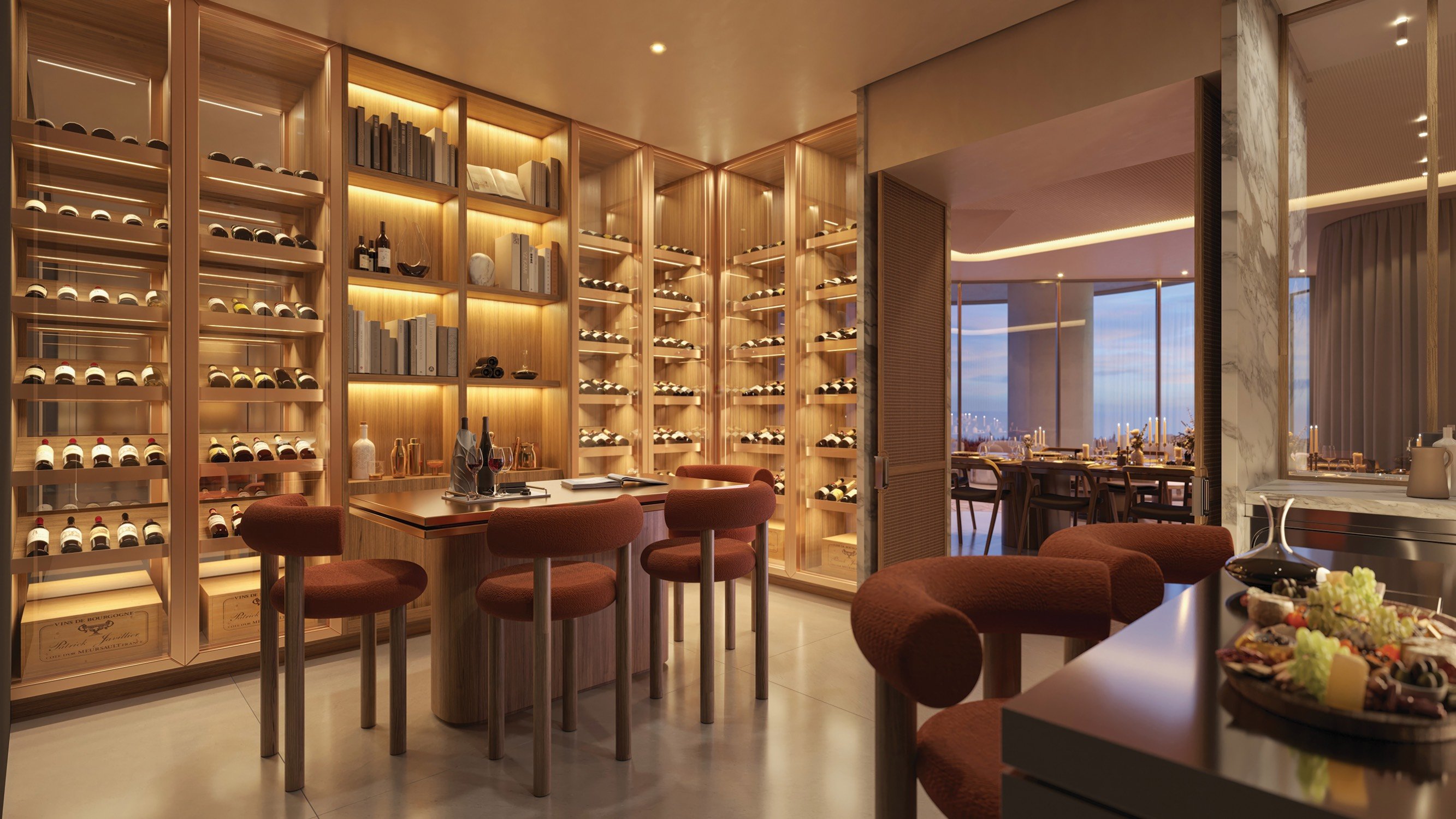
The most compelling private dining rooms in Miami residences do not try to imitate a nightclub, hotel lobby, or members’ lounge. They are quieter than that. They understand that the buyer hosting eight people for a birthday dinner, a family holiday, or a discreet business conversation usually wants polish without spectacle.
For South Florida’s ultra-premium audience, the question is no longer whether a building has a dining amenity. The sharper question is whether that room feels like an extension of the home. Lighting, ceiling height, acoustics, kitchen support, arrival sequence, staff circulation, and privacy matter as much as the menu. A dining room can be beautifully furnished and still feel wrong if guests pass through a busy bar environment, or if every dinner feels like a staged event.
In neighborhoods such as Brickell, Downtown, Edgewater, and Surfside, buyers are increasingly distinguishing between social amenities and residential amenities. The former creates energy. The latter preserves intimacy. Private dining belongs in the second category.
1. Owner’s dining room residence - formal without being public
The strongest format is a residence where private dining reads as a proper dining room first and an amenity second. The ideal setting has a clear table arrangement, refined lighting, a calm material palette, and enough separation from louder common areas to keep conversation natural.
This is the buyer’s choice when the goal is hosting with ceremony, not performance. It suits collectors, executives, and families who want dinner to feel personal rather than like a reservation in their own building.
2. Chef’s kitchen residence - culinary focus over social noise
A chef’s kitchen format works best when the room is designed around food, pacing, and service rather than visual drama. The most successful examples create proximity to the culinary process while protecting the comfort of seated guests.
This format is especially attractive for buyers who entertain frequently but dislike the looseness of a club setting. The room should support tasting menus, wine service, private chefs, and family-style meals without requiring the host to manage logistics.
3. Garden terrace dining residence - outdoor atmosphere with control
Miami makes outdoor dining seductive, but placing tables near a view is not enough. The stronger garden or terrace format gives residents a sense of open air while preserving privacy, shade, seating comfort, and an elegant transition from interior service areas.
For buyers comparing boutique residences or new-construction offerings, the terrace dining question is practical. Can the space handle a calm dinner, or is it simply a photogenic corner? The answer often reveals how seriously the building understands residential hospitality.
4. Waterfront salon residence - view-led but still intimate
Waterfront dining can easily become theatrical. The more sophisticated version treats the view as atmosphere, not entertainment. A waterfront salon should allow guests to enjoy Biscayne Bay, the ocean, or the skyline without making every seat feel exposed.
This format appeals to buyers who want Miami’s visual identity at the table but do not want the room to feel like a public venue. Scale is essential. Too large, and the space becomes a banquet room. Too small, and it may not serve multi-generational gatherings comfortably.
5. Library or lounge-adjacent residence - conversation first
The most understated private dining option is the room connected to a library, salon, or quiet lounge rather than a party-facing amenity deck. It is less about culinary theater and more about conversation, privacy, and the feeling of an evening that can unfold slowly.
This format is ideal for buyers who host advisors, close friends, or family and prefer a more residential cadence. It also tends to age well because it is not dependent on a trend-driven hospitality concept.
Private dining is easy to render and harder to operate. A buyer should ask how the room is reserved, how often it can be used, what staffing is available, whether outside chefs are permitted, and how food arrives from preparation areas. The answers often matter more than the finishes.
Acoustics are another quiet luxury. A room that looks beautiful but amplifies noise can quickly lose its intimacy. Soft materials, proper spacing, and separation from high-traffic spaces help a dining room feel composed even when fully occupied.
Service paths are equally important. Guests should not feel that plates, carts, staff, and building operations are crossing the same social corridor. A well-planned private dining room lets the host remain present rather than constantly aware of logistics.
Finally, the room should have a natural beginning and end. Arrival should feel gracious, not confusing. Departure should be easy, not like leaving a crowded venue. The best private dining rooms make the evening feel seamless.
Brickell often appeals to buyers who entertain around business schedules, visiting partners, and polished city evenings. In that context, private dining should feel efficient, elegant, and discreet. A room that is too loud or too public can undercut the privacy buyers are seeking.
Downtown buyers may value skyline drama, cultural access, and a more urban rhythm. Here, private dining should balance energy with separation, allowing the view and city presence to enhance the meal without turning it into a scene.
Edgewater can offer a softer waterfront mood, where bay light and residential calm become part of the appeal. In this setting, buyers should pay attention to whether dining spaces feel connected to the water or merely oriented toward it.
Surfside carries a quieter, more residential association for many luxury buyers. Private dining in this context should be restrained, serviceable, and serene, with a sense of occasion that does not overwhelm the building’s domestic character.
A common mistake is confusing exclusivity with privacy. Exclusive can still be loud. Private should feel protected. A room may be limited to residents, beautifully furnished, and difficult to reserve, yet still feel like a club if the design encourages spectacle over conversation.
True private dining respects proportion. It allows a host to stage a dinner without feeling on display. It offers support without intrusion. It creates atmosphere without requiring a theme. For many Miami buyers, this is the distinction that separates a trophy amenity from an amenity that will actually be used.
The best advice is to tour slowly. Sit where guests would sit. Notice the lighting at different times of day. Ask how music is controlled. Study whether the table feels like the center of the room or merely an accessory in a larger lounge. The right residence will make dining feel natural before anyone begins to explain it.
What makes private dining feel residential rather than club-like? Scale, acoustics, service discretion, and a calm arrival sequence make the difference. The room should support hosting without making guests feel on display.
Should buyers prioritize a chef’s kitchen or a formal dining room? It depends on hosting style. Culinary-focused buyers may prefer a chef’s kitchen, while formal entertainers may value a dedicated dining room.
Is outdoor private dining practical in Miami? It can be, provided the setting accounts for shade, comfort, privacy, and service access. A terrace alone is not enough.
Why does the reservation policy matter? A beautiful room has limited value if it is difficult to book or overly restrictive. Buyers should understand access before assigning value to the amenity.
Are waterfront dining rooms always better? Not necessarily. A view is powerful, but proportion, privacy, and acoustics determine whether the room feels elegant.
Can a private dining amenity replace entertaining inside the residence? It can supplement in-home hosting, especially for larger dinners. It should not feel like a compromise in comfort or privacy.
What should buyers ask about staffing? They should ask whether building staff, private chefs, or outside caterers can support the room. Service flexibility is central to usability.
Do smaller buildings offer better private dining experiences? Sometimes, because fewer residents can mean a more intimate rhythm. The design and operating rules matter more than building size alone.
How important is sound control? Extremely important. Conversation is the core of private dining, and poor acoustics can make even a beautiful room feel uncomfortable.
Which Miami buyers benefit most from private dining? Buyers who host family, advisors, clients, or visiting friends will feel the value most. The key is choosing a room designed for discretion.
For a discreet conversation and a curated building-by-building shortlist, connect with MILLION.
If branded residences are on your mind — as a home or as an allocation — we would be glad to share what we are seeing, privately.
Begin a quiet conversation