A discreet buyer’s guide to Miami residence types that pair bay views with a calmer, more private daily rhythm.
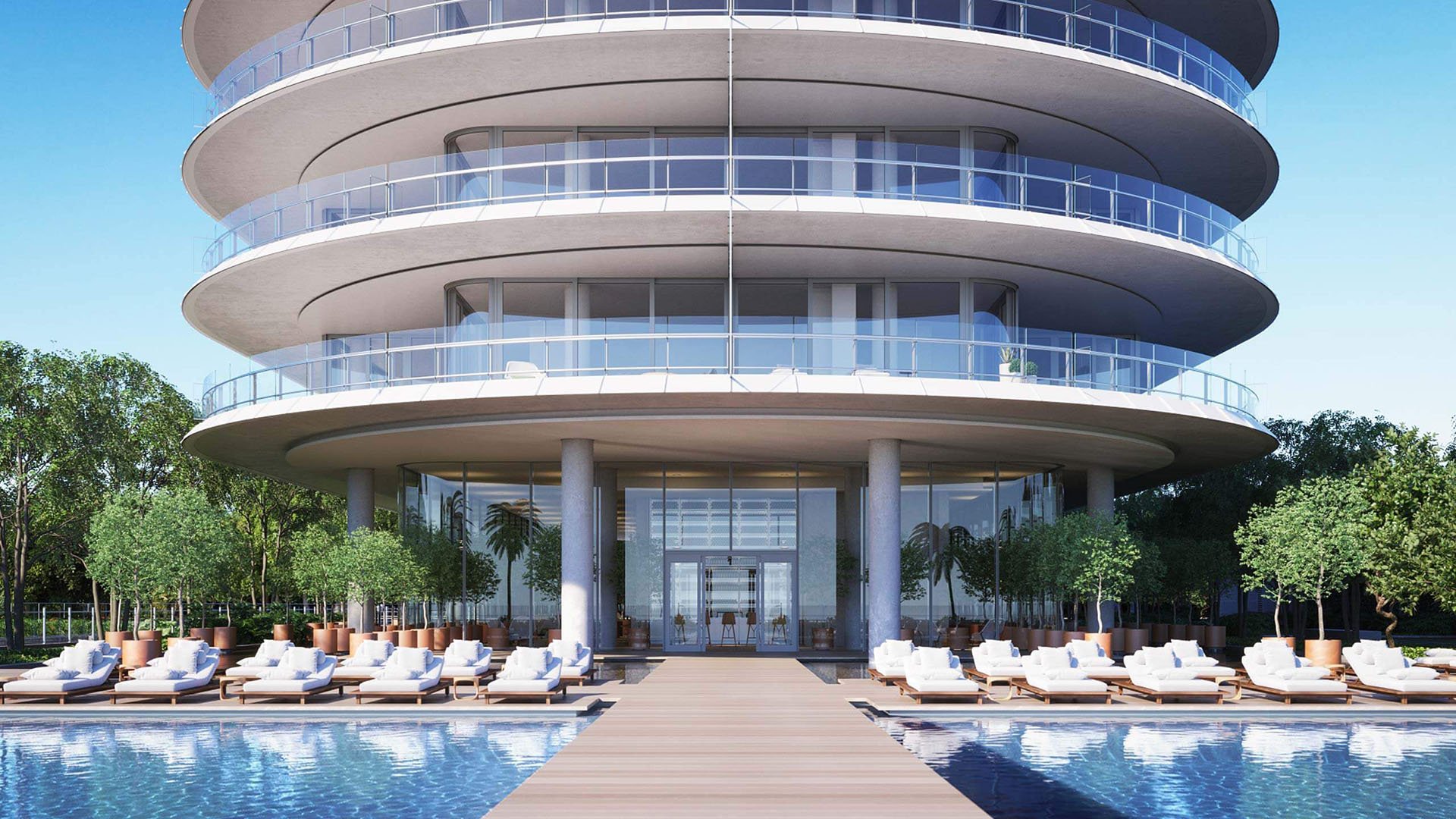
For the buyer who already understands Miami, the view is only the beginning. Biscayne Bay can deliver theatrical light, open water, and a sense of distance from the city, but the more refined question is how that view is experienced each day. Is the arrival calm? Are elevator journeys discreet? Does the amenity floor feel like a private club or a public lounge? Can the residence hold sunset, dinner, family, and quiet without competing with the building around it?
Lower social density is not simply a matter of choosing the smallest building. It is the relationship between the number of residences, the scale of shared spaces, the privacy of access, and the way a household actually lives. One buyer may accept a larger address if the circulation is well considered. Another may prefer a boutique waterfront setting where fewer neighbors define the mood of the property. In either case, the best bay-view residence feels composed, not crowded.
For Miami’s ultra-premium audience, this is where the conversation becomes more precise. A waterview is strongest when the floor plan allows the eye to travel across water without interruption. A balcony matters when it is deep enough to be used, not merely admired. A terrace becomes part of the living room when it supports dining, lounging, and privacy. A pool is more desirable when it feels serene rather than staged. A marina connection can be compelling, but only when it serves the owner’s lifestyle rather than becoming a source of constant movement.
1. Bayfront penthouse residence - private skyline above the water
A bayfront penthouse is the clearest expression of vertical privacy. Its appeal is not only elevation, but separation: fewer immediate sightlines, a broader horizon, and a daily experience removed from lobby traffic and amenity movement. For buyers who entertain, the penthouse format can also create a natural distinction between public-facing hospitality and the private life of the home.
The strongest examples are those where outdoor space is fully integrated into the plan. A generous terrace facing the bay can transform mornings, evenings, and seasonal entertaining, while high ceilings and open living rooms can make the water the central architectural element.
2. Full-floor bay residence - controlled arrival and quiet circulation
A full-floor residence appeals to buyers who want the feel of a private home within a condominium setting. The key advantage is control. With fewer immediate neighbors on the same level, daily movement can feel calmer, especially when elevator access and service circulation are thoughtfully separated.
This format suits households that value both scale and discretion. It can accommodate art, staff, visiting family, and formal entertaining without the feeling of living in a busy vertical neighborhood. For a buyer seeking lower social density without giving up the conveniences of a full-service building, the full-floor bay residence is often the most balanced choice.
3. Boutique waterfront condominium - fewer residences, more personal rhythm
A boutique waterfront condominium is often chosen by buyers who want bay views without the performance of a large resort-style tower. The atmosphere can feel more residential, with a quieter lobby, more familiar staff interactions, and a less congested amenity schedule.
The tradeoff is intentional. Instead of pursuing the largest amenity menu, the boutique buyer is often selecting calm, proportion, and ease. This can be especially attractive to seasonal owners who want the residence to feel ready on arrival, but not socially demanding. In Miami Beach and nearby bayfront enclaves, this type of living can feel especially well suited to buyers who prize understatement.
4. Waterfront townhouse or villa residence - horizontal privacy by the bay
For some buyers, lower social density is best achieved by reducing vertical shared space altogether. A waterfront townhouse or villa-style residence offers a more grounded experience, often with private outdoor areas, more direct arrival, and a stronger sense of domestic separation.
This category is compelling for buyers moving from a single-family environment who still want a managed or lock-and-leave lifestyle. The bay view may be experienced from fewer levels, but the feeling of ownership can be more personal. Outdoor dining, private entries, and direct transitions between interior and exterior space can make the residence feel less like a building and more like a waterfront home.
5. Island or enclave residence - separation as the luxury feature
An island or enclave residence is defined by context. The sense of crossing into a quieter setting can be as important as the residence itself. For buyers who want bay views with fewer casual encounters, the surrounding environment matters: traffic pattern, access points, waterfront orientation, and the way neighboring properties shape the approach.
This option suits owners who want the city within reach but not constantly present. The best version provides visual openness, controlled movement, and a residential cadence removed from peak urban energy. It is not necessarily about isolation. It is about choosing a setting where privacy is built into the geography.
The most successful purchase begins with the buyer’s weekly routine. A residence used primarily for long weekends has different needs than a primary home with children, staff, guests, and regular entertaining. A pied-à-terre may prioritize arrival, views, and a serene primary suite. A full-time residence may require storage, service access, secondary bedrooms, and outdoor areas that perform every day.
Elevator design deserves particular attention. Private or semi-private elevator access can change the entire feeling of a building, but so can the placement of service elevators, package rooms, valet flow, and amenity entries. Lower density is not only what appears on a brochure. It is what happens at 6 p.m., on a holiday weekend, or when multiple households are hosting at once.
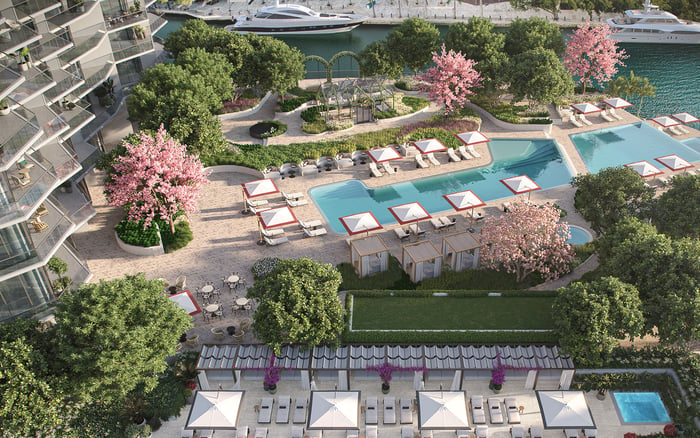
Amenity design should be read with the same care. A beautiful pool deck may be less appealing if it becomes the building’s social stage. A fitness room may be more valuable if it is well placed and easy to use at quiet hours. Lounges, dining rooms, spa areas, and guest suites should support the private life of owners rather than pull every resident into the same shared space.
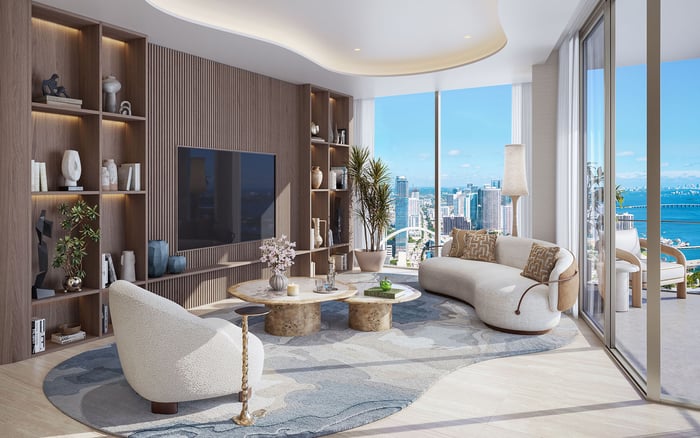
Bay views are most valuable when the floor plan respects them. Long, uninterrupted living rooms, properly placed primary suites, and outdoor spaces aligned with interior circulation all deepen the experience. A waterview from a narrow corner is different from a bay panorama that carries across the main entertaining rooms.
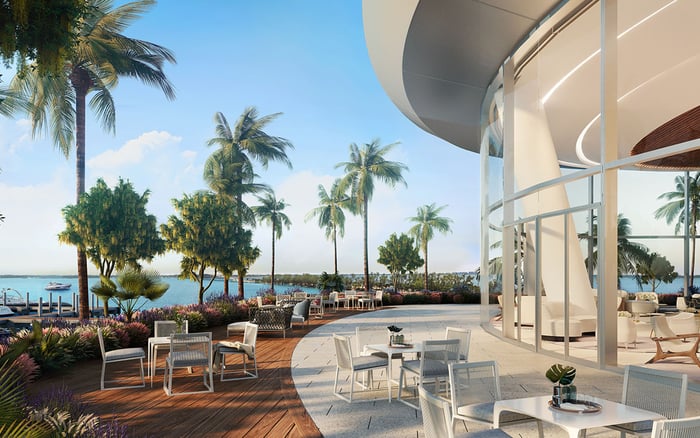
Buyers should also study how outdoor space functions. A balcony may be ideal for morning coffee and evening air, while a larger terrace may support dining and entertaining. Exposure, privacy from adjacent units, and the relationship between glass, shade, and furniture placement matter. The most elegant homes make the view feel natural, not forced.
Sound is another part of the view. A residence can look serene but live differently if it sits above a highly active amenity deck, entrance, or waterfront service area. The quieter choice is not always the highest floor or the smallest building. It is the residence where sightlines, acoustics, circulation, and access are in harmony.
For the discreet buyer, the best Miami bay-view residence is the one that protects attention. It should offer beauty without friction, service without exposure, and access without constant social negotiation. Lower social density is ultimately a quality-of-life decision. It affects how one arrives, hosts, rests, and leaves.
The right selection may be a penthouse, a full-floor home, a boutique condominium, a villa-style residence, or an enclave setting. What unites them is not a single architectural formula, but a shared promise: water, privacy, and ease held in careful balance.
What does lower social density mean in a Miami residence? It refers to a calmer daily living experience with fewer shared encounters in elevators, lobbies, amenity spaces, and arrival areas.
Is a boutique building always the best choice for privacy? Not always. A larger building with excellent circulation and private access can sometimes live more discreetly than a small building with compressed shared spaces.
Should bay-view buyers prioritize height? Height can improve outlook and separation, but floor plan, exposure, acoustics, and outdoor usability are just as important.
Why does elevator design matter so much? Elevators shape daily privacy. Private or well-separated access can make a residence feel calmer and more personal.
Is a terrace more valuable than a balcony? It depends on lifestyle. A terrace may support dining and entertaining, while a balcony may be sufficient for quiet daily use.
Do amenities reduce privacy? They can if poorly planned. The best amenity programs support owners without creating constant social traffic near residences.
What should seasonal buyers focus on? Seasonal buyers should emphasize easy arrival, secure service, low-maintenance outdoor space, and a residence that feels calm immediately upon entry.
Can a marina setting still feel private? Yes, if access, views, and movement are well managed. The key is whether boating activity enhances the lifestyle or interrupts it.
Is Miami Beach a suitable search area for lower-density bay living? It can be, particularly for buyers who want water views, cultural access, and a more residential rhythm in the right setting.
How should a buyer compare two similar bay-view residences? Compare the lived experience: arrival, elevator use, outdoor privacy, amenity flow, sound, service access, and the quality of the view.
For a discreet conversation and a curated building-by-building shortlist, connect with MILLION.
If branded residences are on your mind — as a home or as an allocation — we would be glad to share what we are seeing, privately.
Begin a quiet conversation