A discreet buyer’s guide to South Florida luxury addresses where school-district considerations intersect with branded residences, estate neighborhoods, and long-term resale strategy.

For many ultra-premium buyers, the most desirable address is no longer defined by water views, service culture, or architectural pedigree alone. A quieter criterion now sits beside those classic measures: the school-district zone. In South Florida, where family offices, international relocations, and second-home buyers often converge in the same neighborhoods, education access has become part of the property conversation from the first showing.
This is not simply a question of public versus private-school planning. It is a question of optionality. Families want a residence that can support multiple outcomes: a zoned-school pathway, a private-campus commute, proximity to enrichment, and eventual resale liquidity when the next buyer evaluates the same map. The result is a luxury market in which a residence may be judged not only by its finishes, but by the way it fits a family’s academic calendar, daily driving pattern, and long-term investment logic.
The most disciplined buyers do not treat school zoning as a headline claim. They treat it as parcel-specific due diligence. Boundaries can be nuanced, assignments can depend on address-level verification, and family needs can change quickly. Still, certain South Florida residential patterns consistently appeal to education-minded buyers: branded urban residences, established condominium corridors, estate neighborhoods, and low-density enclaves with a sense of daily calm.
1. Mandarin Oriental Residences corridor - branded urban education access
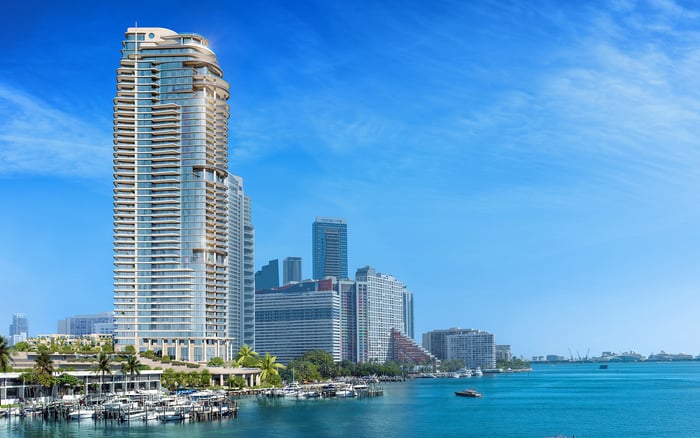
The Mandarin Oriental Residences reference point represents the modern branded-residence buyer: service-oriented, privacy-conscious, and often balancing family life with global mobility. In this profile, the appeal is not only the residence itself, but the ability to combine hotel-level ease with access to a broader education ecosystem.
For families considering The Residences at Mandarin Oriental, Miami or a similar full-service address, the school-district question is typically paired with lifestyle efficiency. Buyers want to understand morning travel, after-school logistics, tutor access, and how a lock-and-leave residence can still function as a primary family base.
2. Pinecrest estate zone - low-density family permanence
Pinecrest remains a shorthand for buyers who want space, privacy, and a more residential rhythm. The appeal is especially clear for families who prioritize yard space, quiet streets, and a single-family format over the services of a vertical residence.
In school-district conversations, Pinecrest often enters the brief when buyers are thinking in years rather than seasons. The draw is not spectacle. It is continuity: a home that can absorb school-age children, extended family visits, sports equipment, and the routines that define a full-time South Florida household.
3. Coral Gables campus-adjacent zone - legacy prestige and daily structure
Coral Gables speaks to buyers who prefer architectural tradition, mature landscaping, and an environment that feels civic rather than resort-like. Its appeal to education-minded families is tied to daily structure: commutes, cultural access, and a neighborhood fabric that supports longer ownership cycles.
For luxury buyers, the Gables decision is often less about chasing the newest amenity package and more about securing a setting that feels enduring. That can make the area especially compelling for families who value discretion, established streetscapes, and a sense of place recognizable across generations.
4. Coconut Grove residential zone - village scale with family flexibility
Coconut Grove offers a different version of luxury: lush, intimate, and relaxed, with a village sensibility that appeals to families wanting proximity without feeling overexposed. For many buyers, Coconut Grove searches are driven by walkability, greenery, and the desire for a home environment that feels warmer than a conventional high-rise corridor.
The education lens here is often practical. Families weigh school-zone verification alongside campus commutes, waterfront recreation, and the ability to maintain a rooted lifestyle while remaining close to Miami’s professional and cultural centers.
5. The Patrician corridor - established condominium value
The Patrician reference point signals a more established condominium idea, one that contrasts with the newest branded launches. For some buyers, that is the attraction. They may prefer a known residential setting, a simpler ownership proposition, or a building culture that feels settled rather than newly introduced.
In the school-district conversation, this kind of address tends to appeal to buyers comparing total lifestyle fit, not just novelty. The decision may involve seasonal use, extended family needs, proximity to the coast, and the confidence that comes from a mature residential corridor.
The first priority is verification. A school zone should never be assumed from a neighborhood name, building reputation, or marketing language. The specific parcel matters. Before a contract becomes binding, buyers should confirm the current assignment directly through the appropriate local channels and understand whether any special programs, transfers, or enrollment rules apply.
The second priority is the commute map. In South Florida, the difference between a superb residence and a stressful weekday can be a few intersections at the wrong hour. Luxury buyers increasingly evaluate residences by morning departure routes, afternoon pickup patterns, and access to extracurricular hubs. A beautiful home that complicates daily life may feel less luxurious after the first semester.
The third priority is adaptability. Families with young children may begin with one education plan and change course later. International buyers may need flexibility around boarding, language programs, or college preparation. Local families may compare public zoning with private-school options as children move from elementary years into upper school. A strong address supports more than one plan.
The choice between new-construction branded residences and established estate settings is less about superiority than fit. Branded residences can offer service, security, wellness amenities, and simplified ownership. That can be highly valuable for families who travel frequently or split time between markets.
Estate neighborhoods offer another kind of luxury: land, privacy, and the ability to shape daily life around the household rather than the building. For school-focused families, that may mean a dedicated study room, outdoor space after class, guest accommodations for grandparents, or proximity to a familiar route.
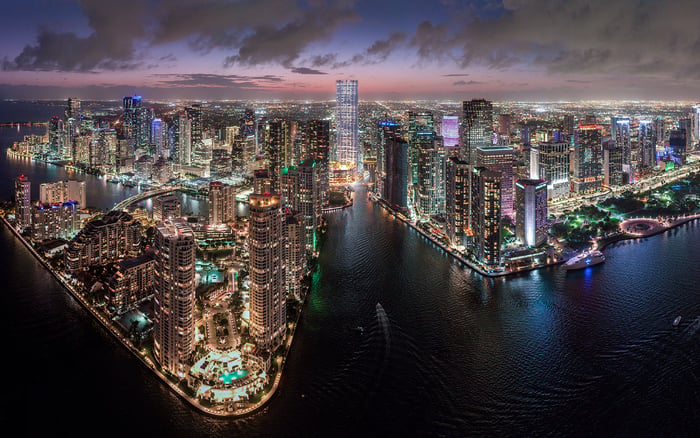
Brickell, for example, may suit a buyer who wants urban energy, professional proximity, and a highly serviced residential environment. Pinecrest may suit a buyer who wants a broader domestic footprint and a quieter routine. Neither profile is inherently better. The stronger choice is the one that aligns with the family’s weekday reality.
Education access can influence demand because it expands the buyer pool. A residence that works for families, executives, international owners, and future downsizers has more ways to remain relevant. That does not mean every school-oriented purchase is automatically defensive, but it does mean buyers should think carefully about how the next owner will read the address.
Resale strength is often connected to clarity. If a home offers a coherent lifestyle story, such as privacy near schools, services near cultural amenities, or a known condominium setting with coastal access, it is easier for future buyers to understand. The best luxury purchases do not rely on a single feature. They balance design, location, daily function, and the education layer without overclaiming any one of them.
For the MILLION reader, the lesson is simple: school-district zones should be treated with the same seriousness as views, building quality, and ownership structure. They are not a decorative detail. They are part of the architecture of family life.
Why do luxury buyers care about school-district zones? School zones can shape daily routine, long-term planning, and resale appeal, especially for families relocating to South Florida.
Should buyers rely on a neighborhood name for school assignment? No. School assignment should be verified at the parcel level before making a binding purchase decision.
Are branded residences practical for families with school-age children? They can be, particularly when service, security, and simplified ownership support the family’s weekday rhythm.
Why is Pinecrest often considered by family buyers? Pinecrest appeals to buyers seeking low-density living, privacy, and a more traditional single-family home environment.
How does Brickell fit into an education-focused search? Brickell may suit families who value urban convenience, professional proximity, and a highly serviced residential setting.
Is a private-school plan still relevant when evaluating school zones? Yes. Many families compare public assignment, private options, commute time, and future flexibility together.
Can school zones change after purchase? Boundaries and enrollment rules can change, so buyers should avoid treating any assignment as permanently guaranteed.
Does education access affect investment thinking? It can. A residence with strong family functionality may appeal to a broader future buyer pool.
Is resale value only about school access? No. Resale also depends on design, location, condition, privacy, services, and overall market demand.
What is the best way to shortlist comparable options for touring? Start with location fit, delivery status, and daily lifestyle priorities, then compare stacks and elevations to validate views and privacy.
For a confidential assessment and a building-by-building shortlist, connect with MILLION.
If branded residences are on your mind — as a home or as an allocation — we would be glad to share what we are seeing, privately.
Begin a quiet conversation