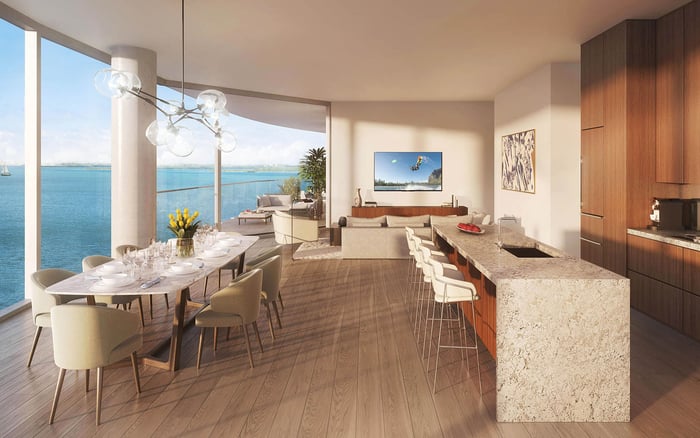
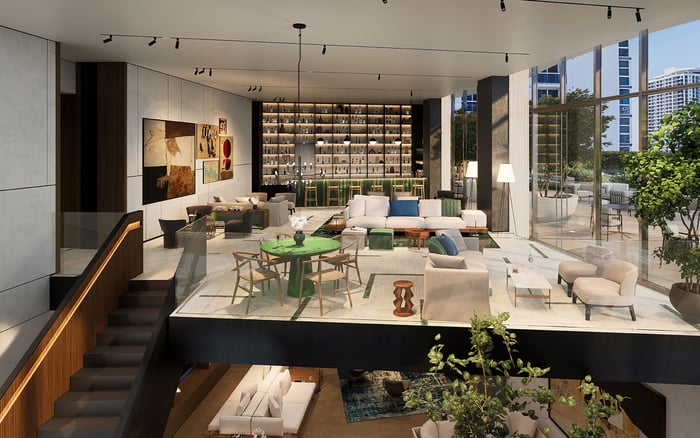
A discreet buyer’s guide to five Miami-Dade condominium candidates, distinguishing advertised arrival features from association records, visitor logs, and household-staff permissions.
For an owner whose household includes a housekeeper, chef, nanny, or personal assistant, condominium privacy extends beyond a private elevator. It depends on how discreet arrival, employee access, resident information, and entry records work together. An elegant lobby can support that experience, but it cannot answer every question about who sees an owner’s name or a household’s daily movements.
The essential distinction is between physical privacy and information privacy. Controlled entrances and staffed reception govern movement through a property. Association records, building directories, and visitor-management systems require separate scrutiny. Neither a luxury address nor a polished concierge operation should be treated as a promise of anonymity.
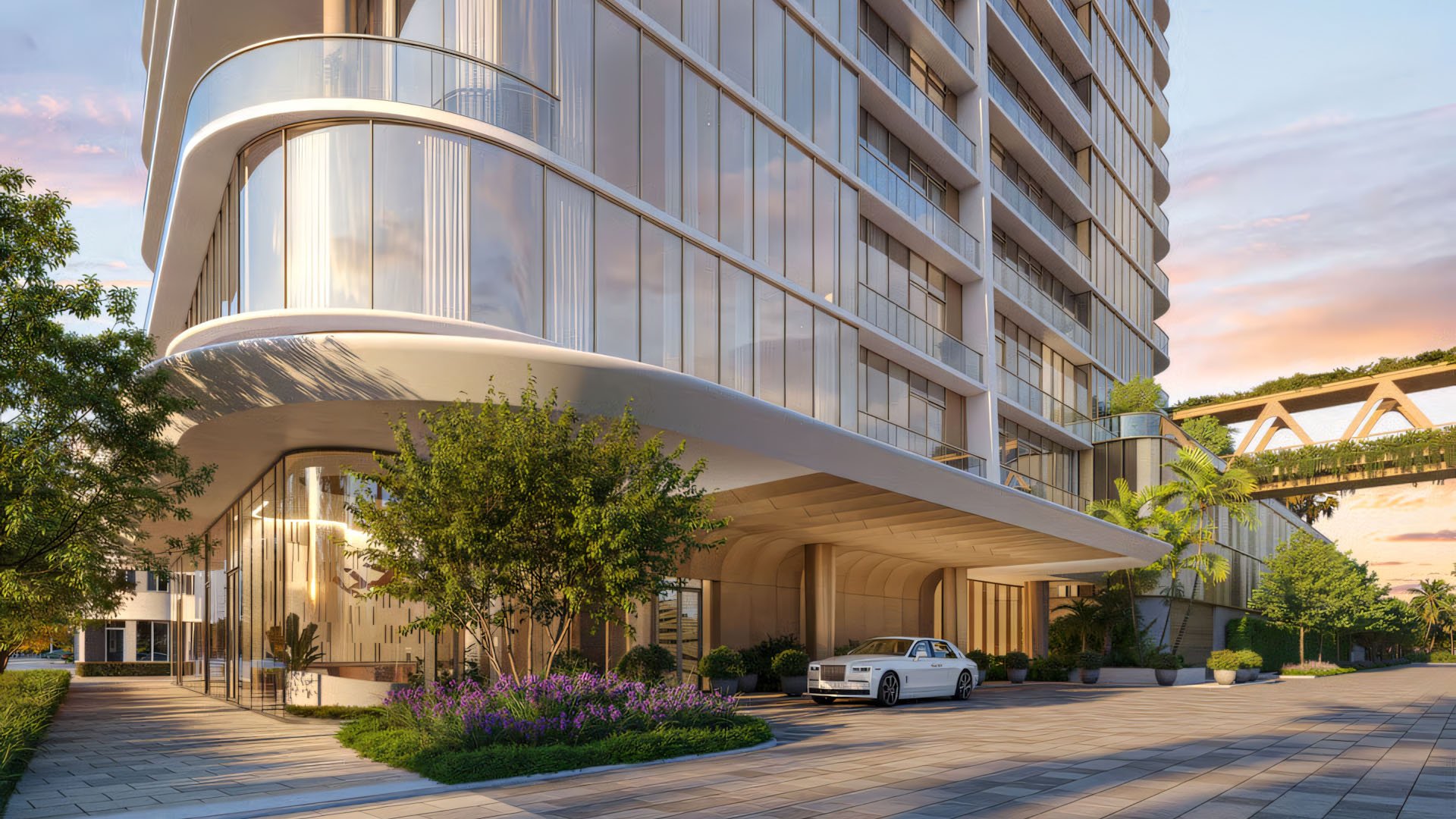
In Brickell, Cipriani Residences Brickell illustrates why arrival design belongs in the conversation. Its advertised private entrance and landscaped porte-cochère are meaningful physical features. Whether household employees receive individual credentials is a separate question-and one that requires a written answer.
The first four entries are ordered by their advertised private arrival, elevator control, staffing, and security features. The fifth is an additional policy-review candidate, not a comparable feature-based ranking. This shortlist does not rank public-record anonymity or confirmed household-staff permissions, and marketing descriptions should not be mistaken for audited operational performance.
1. Cipriani Residences Miami - Brickell
At 1420 S Miami Avenue, Cipriani presents the shortlist’s most comprehensive described combination of arrival and access features: an exclusive private entrance, a landscaped porte-cochère, and a lobby leading to two banks of high-speed, touchless elevators. Advertised features also include 24-hour staffing, 24-hour security, and controlled building access.
An intelligent interface for concierge, valet, and security operations warrants closer examination. For a staffed household, the decisive question is whether that interface supports individually authorized employees without unnecessary disclosure of the owner’s schedule. The advertised features do not establish separate household-staff permissions.
2. Elysee Miami - Edgewater
At 788 NE 23rd Street, Elysee’s advertised private high-speed elevators and private foyers for all residences make it particularly relevant to buyers focused on the transition from common areas to the home. Its features also include 24-hour door attendants, 24-hour security, video surveillance, and white-glove concierge service.
Private elevator access is a compelling architectural distinction, but it does not establish a separate service route or distinct domestic-employee credentials. Confirm the current configuration and procedures, including how employees reach a residence when the owner is away.
3. 900 Biscayne Bay - Downtown Miami
900 Biscayne Bay advertises staffed entry, 24-hour security personnel, electronic access features, and high-speed elevators with secure key access. Its security features also include an observation and digital-recording system.
For owners with regular household employees, these features make credential management and access to recordings especially important. The advertised systems do not establish separate employee access profiles, visitor-log retention periods, or who may retrieve arrival records.
4. The Standard Residences - Miami
The Standard Residences advertises a 24-hour attended lobby, concierge services, high-speed elevators with controlled property access, and 24-hour security systems. These provide relevant foundations for managing resident, guest, and employee arrivals.
The practical assessment should focus on circulation and authorization: where household staff enter, how they receive access, and whether permission can be limited to an agreed schedule. An attended lobby alone does not establish private arrival or a dedicated service-elevator route.
5. Aria Reserve Miami - Edgewater: policy-review candidate
Aria Reserve is included as an additional Edgewater comparison candidate. This article does not establish its arrival features, employee permissions, or visitor-management procedures, so its position should not be read as a verified privacy ranking.
Apply the same diligence framework: request the actual arrival routes, credential rules, directory practices, and access-log policies. Those answers are necessary before comparing its suitability for a staffed household with the advertised features above.
Florida condominium associations must maintain an owner roster containing names, mailing addresses, unit identifications, voting certifications, and telephone numbers if known. Owners and their authorized representatives generally have inspection and copying rights for association official records, subject to statutory confidentiality restrictions.
That framework is distinct from unrestricted public access. A secure lobby also does not eliminate the association’s obligation to retain owner information. Buyers should ask counsel to distinguish county property records, association official records, and information displayed or distributed within the building. Each requires its own review; none should be assumed to follow the same access rules.
Associations may print and distribute to unit owners a directory containing owner names, unit addresses, and telephone numbers. An owner may exclude a telephone number from that directory through a written request. This is a specific privacy measure-not a general right to erase the owner’s name, unit identification, or mailing address from required association records.
Before closing, ask management how directory requests are implemented and what information appears in resident-facing systems. Do not assume one written request covers every directory, screen, or application.
Access control and information control can serve different objectives. A recording system may support security while raising questions about who can view a household’s arrival history. The useful inquiry is not simply whether the building uses technology, but what information it retains and under what rules.
Request written policies covering employee credentials, guest authorization, deliveries, contractors, and after-hours entry. Ask separately about access-log retention and who can inspect visitor records. Treat expiring guest credentials, resident arrival alerts, and separate household-staff directories as questions to resolve, not amenities to assume.
Beyond the five-project shortlist, a buyer evaluating Aston Martin Residences Downtown Miami should likewise request the actual operating policies rather than extrapolate from the project’s positioning.
Branded residences can shape expectations of service, but a brand is no substitute for written permissions. Ask management to walk through an ordinary household day: an employee arrives before the owner, a delivery follows, and a contractor needs temporary access. The exercise should reveal how each person is authorized without relying on assumptions about concierge discretion.
Clarify who can approve, modify, and revoke access. Ask whether credentials identify individual employees, whether restrictions can be scheduled, and how a departing employee’s authorization is withdrawn. These are purchase questions, not confirmed capabilities of the shortlisted buildings.
The strongest fit is a residence whose physical design and written procedures work together. Private arrival may reduce exposure in common areas; directory choices can limit particular disclosures; careful credential policies can define household access. None replaces a separate legal review of ownership visibility and records obligations.
For a discreet approach to selecting your next residence, explore MILLION.
If branded residences are on your mind — as a home or as an allocation — we would be glad to share what we are seeing, privately.
Begin a quiet conversationCipriani Residences Miami leads for its described combination of private entrance, landscaped porte-cochère, touchless elevators, 24-hour staffing and security, and controlled access. Household-staff permissions still require confirmation.
No. A private or secure elevator does not by itself establish a separate service route or distinct permissions for domestic employees.
Elysee advertises private high-speed elevators and foyers for all residences, along with 24-hour door attendants, security, video surveillance, and white-glove concierge service. Buyers should confirm current arrangements.
Its advertised features include staffed entry, 24-hour security personnel, electronic access, secure-key high-speed elevators, and an observation and digital-recording system.
It advertises a 24-hour attended lobby, concierge services, high-speed elevators with controlled property access, and 24-hour security systems. These features do not establish dedicated employee circulation.
Aria Reserve is an additional Edgewater project for applying the same privacy diligence questions. Its inclusion is not a verified ranking of arrival features or household-staff permissions.
Owners may submit a written request to exclude their telephone numbers from the association directory. That exclusion does not remove other required owner information from association records.
Unit owners and their authorized representatives generally have inspection and copying rights, subject to statutory confidentiality restrictions. This is distinct from unrestricted public access.
Request written policies on employee credentials, guest authorization, deliveries, contractors, after-hours entry, access-log retention, and who can inspect visitor records.
No. Physical security, association records, resident directories, and county property records require separate reviews; controlled entrances do not establish an anonymity strategy.