A buyer-focused guide to evaluating façade sealants, concealed balcony waterproofing, engineering records, and potential wind-driven-rain disputes at The Ritz-Carlton Residences® Sunny Isles, without confusing general maintenance intervals with building-specific requirements.
At The Ritz-Carlton Residences® Sunny Isles, the purchase conversation naturally begins with the ocean. The condominium at 15701 Collins Avenue in Sunny Isles Beach pairs its oceanfront setting with expansive glass walls and balconies. Those architectural elements also define a practical diligence agenda: how glazing interfaces, façade joints, and balcony assemblies are inspected, maintained, and funded.
The objective is not to presume a problem. No project-specific wind-driven-rain claim, mandatory sealant renewal cycle, or scheduled balcony-membrane replacement is established here. Buyers should distinguish the residence’s presentation from the documented condition of the systems that keep water outside. A pristine interior is desirable; it is not a substitute for an engineering assessment.
An approximate completion date around 2020 provides context, but the certificate of occupancy should anchor any age-based inspection analysis. An approximate completion year should not become a definitive maintenance calendar or statutory deadline.
Approximately 10-15 years can serve as a preliminary planning interval for renewing façade sealant joints between dissimilar materials. It is not a Ritz-Carlton-specific requirement, a warranty, or evidence that work is due. Exposure, installation quality, movement, and current condition can materially alter the appropriate timing.
The useful question is not simply when sealant reaches a particular age. It is whether the installed system performs as intended, whether its maintenance history is documented, and whether a qualified professional has recommended observation, testing, localized repair, or broader renewal. Project specifications, adhesion testing, and leakage history should guide that distinction.
For a buyer also considering Jade Signature Sunny Isles Beach, the same discipline applies: compare building-specific evidence rather than assume that a shared location produces a shared replacement schedule. This is a diligence principle, not a statement about either property’s condition.
Request the scope behind any proposed façade work. Does it identify the interfaces involved, explain the recommended repair, and distinguish investigation from replacement? A budget allowance without a defined scope offers less clarity than a documented recommendation tied to observed conditions.
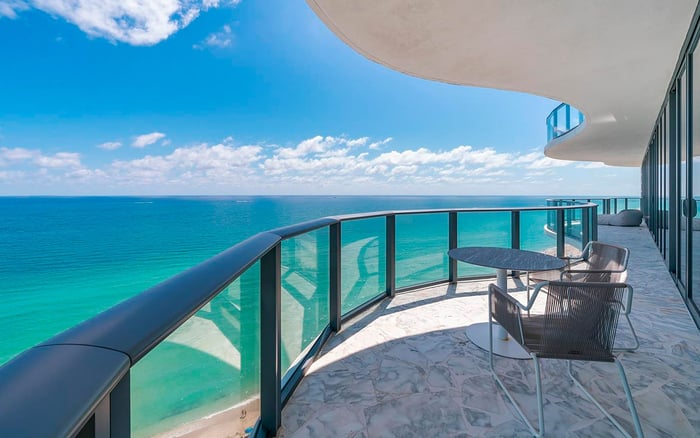
The visible balcony surface and the concealed waterproofing assembly are not interchangeable. Tile or a renewed coating may improve presentation while leaving membrane, flashing, or threshold defects unresolved. For purchase planning, the question is what lies beneath the finish-and how the entire assembly manages water.
An indicative 15-25-year service life for balcony membranes beneath tile or topping is useful only as a broad planning range, not a guaranteed replacement date. Ultraviolet exposure, salt, ponding, traffic, drainage, installation quality, and maintenance all influence performance.
Inspection priorities include slopes, drains, membrane seams, door thresholds, wall transitions, and railing penetrations. These are general locations where leakage can originate, not documented defects at this condominium. The inspection should follow the water-management assembly rather than stop at the appearance of the tile.
If balcony work has occurred, ask whether it addressed only the surface or also the waterproofing beneath it. Request dated scopes and completion records, then have the relevant professional explain what was repaired, what remained untouched, and whether further evaluation was recommended. Cosmetic freshness and technical completeness are different measures.
Wind-driven rain can enter through defects at windows, doors, façade joints, flashing, stucco, and glazing interfaces. Window-system leakage can also be associated with incompatible sealants or applications that trap water instead of allowing it to drain. These mechanisms warrant investigation, not automatic attribution to a single component.
An interior stain alone does not establish failed sealant. Depending on the circumstances, a professional investigation may involve visual review, moisture mapping, controlled water testing, adhesion checks, and selective openings. The goal is to identify the entry point and contributing conditions before selecting a repair.
After a storm, competing explanations may include storm damage, construction defects, deterioration, inadequate maintenance, and pre-existing moisture. Timing alone does not settle causation. Preserve photographs, dated observations, correspondence, and relevant repair records before cosmetic work obscures the evidence. Seek professional direction for the investigation.
Neither an association master policy nor an owner’s HO-6 policy should be treated as a guaranteed funding source. Coverage and claim outcomes require review of the actual policies and circumstances. Nothing here establishes coverage for this building or a particular residence.
The most useful document package connects condition, recommended work, and funding. Request complete, dated engineering reports and recommendations, recent association meeting minutes, repair contracts, and funding plans. Read them together: an engineering recommendation may identify a task, while minutes and contracts help clarify whether it remains under discussion or has progressed to execution.
Search the minutes for recurring water intrusion, balcony leaks, façade repairs, window leaks, storm damage, and remediation. A reference to an issue should prompt a follow-up question, not an immediate conclusion about severity. Ask what investigation followed, what action was authorized, and what documentation supports its current status.
If your shortlist includes Armani Casa Sunny Isles Beach, apply the same document requests independently. A comparison is more meaningful when each property is evaluated through its own maintenance records rather than a generalized assumption about coastal buildings.
Translate unresolved recommendations into closing questions. What work is contemplated? Is the scope defined? What funding plan exists? Which questions require engineering or legal clarification before commitment? This keeps the purchase discussion focused on documented obligations rather than speculative repair costs.
Florida’s milestone-inspection framework generally covers condominium and cooperative buildings three stories or higher at 30 years, with subsequent inspections every ten years. Local enforcement agencies may require an earlier inspection at 25 years because of environmental conditions. Buyers should verify the applicable requirements with authoritative legal and local-agency guidance.
Do not assume a universal coastal deadline or confuse a statutory milestone with a sealant or waterproofing service-life estimate. They answer different questions. Building-envelope maintenance should respond to specifications and condition, not wait for an age-based inspection threshold.
Whether your final comparison includes Turnberry Ocean Club Sunny Isles or remains focused on the Ritz-Carlton residence, use a consistent standard: documented condition, a clearly understood repair scope, and a clear funding plan. A brand is not an engineering finding, and an indicative service life is not a diagnosis.
For discreet guidance on your next South Florida residential purchase, connect with MILLION.
If branded residences are on your mind — as a home or as an allocation — we would be glad to share what we are seeing, privately.
Begin a quiet conversationThe oceanfront condominium is at 15701 Collins Avenue, Sunny Isles Beach, Florida.
No project-specific wind-driven-rain claim is established here. The leakage mechanisms discussed are general diligence considerations, not findings about this condominium.
No. That range is a general planning interval; project specifications, condition, adhesion testing, and leakage history should guide decisions.
An indicative service-life range is 15–25 years, not a guaranteed replacement date. Exposure, drainage, installation quality, and maintenance influence performance.
No. The visible finish is distinct from the concealed waterproofing assembly, so request records showing the actual scope of work.
General priorities include slopes, drains, membrane seams, door thresholds, wall transitions, and railing penetrations. These are potential leakage locations, not documented defects at this building.
No. Identifying the cause may require visual review, moisture mapping, controlled water testing, adhesion checks, or selective openings.
Request complete dated engineering reports and recommendations, recent meeting minutes, repair contracts, and funding plans. Follow up on references to leaks, façade work, storm damage, and remediation.
The framework generally applies to condominium and cooperative buildings three stories or higher at 30 years, then every ten years. Local agencies may require an earlier inspection at 25 years because of environmental conditions; verify the applicable deadline.
Coverage cannot be assumed under an association master policy or an owner's HO-6 policy. Preserve evidence and obtain a review of the actual policies, cause of intrusion, and circumstances.