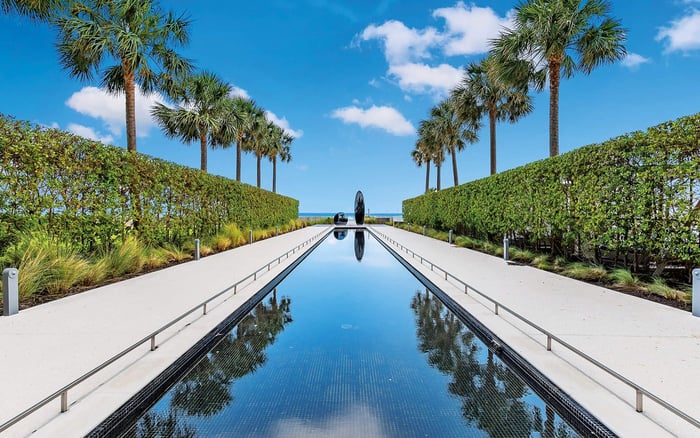
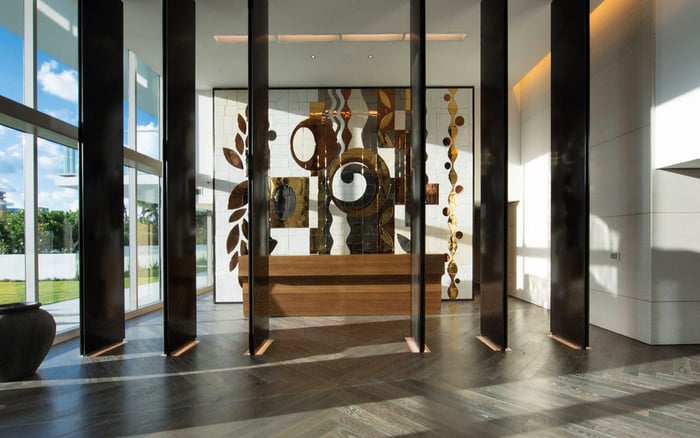
Five Key Biscayne residential choices for buyers balancing second-home convenience with a disciplined resale strategy, from Oceana’s documented high-end transactions to Commodore Club’s broad unit mix.
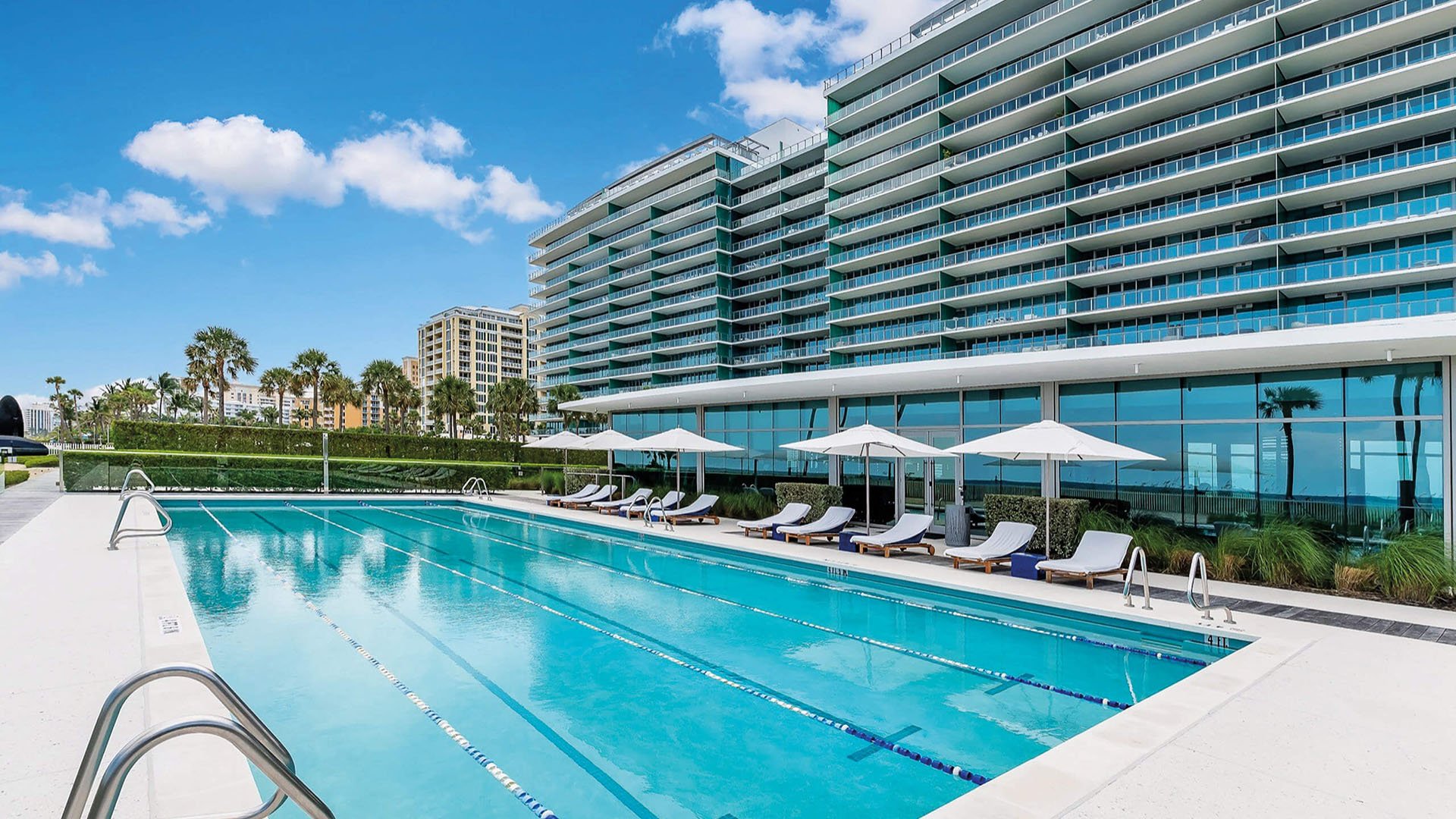
A Key Biscayne second home should feel effortless on arrival and manageable during an extended absence. But ease of ownership and ease of resale are separate questions. An exceptional address may command substantial prices without offering a predictable exit for every bedroom count, floor or exposure.
The five selections below form an editorial shortlist, not a measured ranking of resale speed. Comparable days on market, absorption, sale-to-list ratios and turnover across unit types are not established here. Lock-and-leave suitability also requires verification of each building’s operating arrangements.
For buyers beginning with Oceana Key Biscayne, the essential distinction is between evidence that expensive residences have sold and evidence that a particular residence can sell readily. The first is documented; the second requires unit-level analysis.
1. Oceana Key Biscayne: 350-360 Ocean Drive
Completed in 2014, Oceana comprises a reported 142 condominiums and 12 villas. It has the strongest documented high-end closed-sale evidence among these selections: three Q2 2024 transactions above $8.3 million, including a $9.6 million sale at approximately $2,500 per square foot. Those transactions establish activity at substantial price points-not liquidity across every layout.
A separate historical asking-price snapshot sharpens that distinction. Two-bedroom unit 304S, measuring 1,823 square feet, was listed at $4.8 million, or $2,633 per square foot. Two-bedroom unit 205S, at 1,830 square feet, was listed at $3.65 million, or $1,995 per square foot. Similar size did not produce similar asking prices. The difference cannot be attributed to floor or view alone, and neither figure should be treated as a current valuation.
2. Grand Bay Residences: oceanfront beside the Ritz-Carlton
Grand Bay’s appeal here rests on its established oceanfront residential setting adjacent to the Ritz-Carlton. That distinction matters: hotel-adjacent ownership is not the same as ownership integrated into a hotel. Assess the residential offering on its own terms rather than presume a particular service package from proximity.
No separate, reliable measure of closed-sale velocity is established here for Grand Bay. Its inclusion reflects the ownership setting, not demonstrated faster absorption. For a specific purchase, request comparable sales within Grand Bay itself, then compare bedroom count, interior area, floor and exposure. Do not import the Ritz-Carlton’s asking-price benchmark into that analysis.
3. Ocean Club: Ocean Towers One and Two
At 799 and 791 Crandon Boulevard, Ocean Towers One and Two offer a resort-community setting and a range of water and nature exposures. Tower One is described as a 16-story building containing 93 residences. Historical average asking-price references were approximately $1,534 per square foot for Tower One and $1,636 for Tower Two.
Those figures are asking-price references, not closed-sale averages or evidence that one tower resells more quickly. Ocean Club merits attention from buyers weighing different exposures within the community, but comparisons should remain tower-specific and unit-specific. A broad water-view description does not establish that two residences would be alternatives for the same eventual buyer.
4. Ritz-Carlton Key Biscayne Residences: 455 Grand Bay Drive
The Ritz-Carlton selection represents branded hotel-residence positioning rather than Grand Bay’s hotel-adjacent setting. Its historical average asking-price reference of approximately $2,134 per square foot is a pricing benchmark, not a measure of resale absorption or an assurance of resale profitability.
For an owner expecting to travel frequently, the practical question is what the specific ownership arrangement provides-and requires. Confirm service access, staffing, rental restrictions, any hotel-program participation and associated costs before assigning value to convenience. Brand recognition alone does not establish the future buyer pool for a particular residence.
5. Commodore Club East, West and South: Ocean Lane Drive
Commodore Club occupies the northern Key Biscayne beachfront and comprises three 12-story towers totaling 552 residences, constructed between 1971 and 1974. Historical community specifications span one to four bedrooms and approximately 308-2,825 square feet. These describe the community’s unit mix, not currently available inventory.
A historical average asking-price reference near $1,060 per square foot places Commodore Club below the luxury-building benchmarks above. Its broader range of configurations and lower asking-price reference make it a useful alternative within this shortlist. Neither establishes faster resale or lower association costs. Building condition, reserves and assessments deserve close review alongside each unit’s layout and exposure.
Start with bedroom count and usable interior area. Oceana’s two historical listings show how a building-wide price-per-square-foot figure can conceal substantial differences. Request closed transactions in comparable configurations, then examine condition, outdoor space and other unit characteristics rather than assume size alone explains value.
Next, separate floor bands. Request evidence for the floor range you would actually buy, including competing listings and completed sales. Without that comparison, neither a high-floor premium nor a lower-floor discount establishes a more liquid purchase.
Finally, distinguish Oceanfront location from the outlook of the individual residence. Treat Waterview as the beginning of a description, not the end: identify the orientation, visible water, obstructions and outlook from principal rooms. The evidence here does not establish that non-prime views sell faster or that a premium exposure reliably recovers its purchase premium.
The objective is not simply to negotiate a discount. It is to understand which competing residences a future buyer would consider at the same total price.
Treat lock-and-leave as a purchasing requirement to verify, not a blanket promise attached to a condominium name. Establish who can enter the residence during an absence, how maintenance issues are communicated and which services are included rather than separately arranged.
Review association budgets, reserves, assessments, insurance responsibilities and recurring charges. Confirm rental restrictions and any hotel-program obligations in writing. These questions belong in the purchase decision even when the residence will never be rented.
The same discipline applies if the search expands to Oceana Bal Harbour: evaluate that address independently rather than carry over Key Biscayne pricing assumptions. If Park Grove Coconut Grove also enters the conversation, compare documented ownership arrangements and unit-level sales, not simply the appeal of the names.
Oceana offers documented high-end transactions; Grand Bay and the Ritz-Carlton present distinct ownership settings; Ocean Club introduces tower and exposure choices; Commodore Club broadens the configuration and asking-price spectrum. None eliminates the need for a residence-specific resale case.
The strongest purchase is one whose price, operating obligations and comparable transactions remain persuasive after the immediate attraction of the view has passed.
For a discreet conversation about your Key Biscayne shortlist, connect with MILLION.
If branded residences are on your mind — as a home or as an allocation — we would be glad to share what we are seeing, privately.
Begin a quiet conversationNo. It is an editorial shortlist, not a measured liquidity ranking based on comparable days on market, absorption or turnover across unit types.
Oceana has the strongest documented high-end closed-sale evidence among these selections, with three Q2 2024 transactions above $8.3 million. That does not establish resale speed for every residence.
The historical listings show substantial asking-price differences between similarly sized residences. The evidence does not isolate floor, exposure or condition as the cause.
No. Grand Bay is described as oceanfront and hotel-adjacent, while the Ritz-Carlton selection has branded hotel-residence positioning; services and obligations require separate verification.
Historical quoted averages were approximately $1,534 per square foot for Ocean Tower One and $1,636 for Ocean Tower Two. These are not closed-sale averages or current valuations.
No. The historical asking-price reference of approximately $2,134 per square foot does not demonstrate faster absorption or profitable resale.
Historical community specifications span one to four bedrooms and approximately 308–2,825 square feet across 552 residences. These figures do not describe current availability.
The evidence does not establish that. Buyers should compare completed sales and competing inventory within the relevant floor band and exposure.
No. Its historical asking-price benchmark does not establish lower association fees, assessments or total carrying costs.
Confirm staffing, absence-related maintenance arrangements, service access and recurring costs. Review reserves, assessments, rental restrictions and any hotel-program obligations.