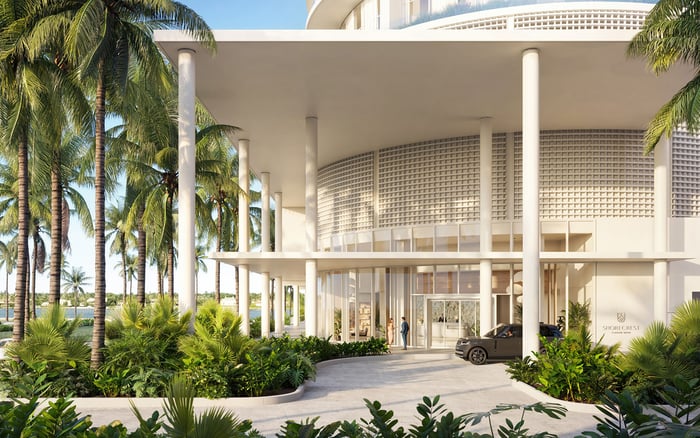
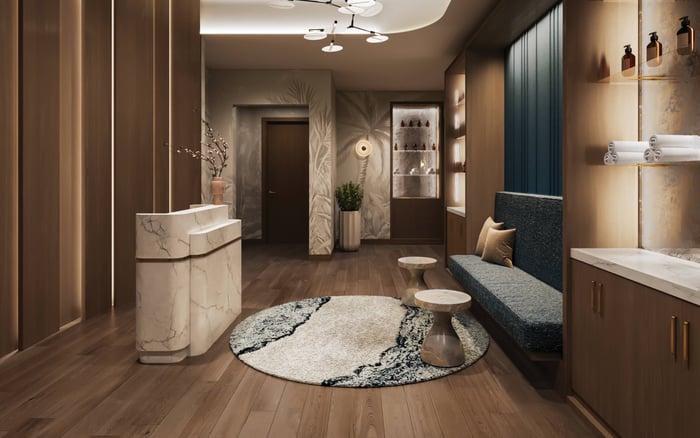
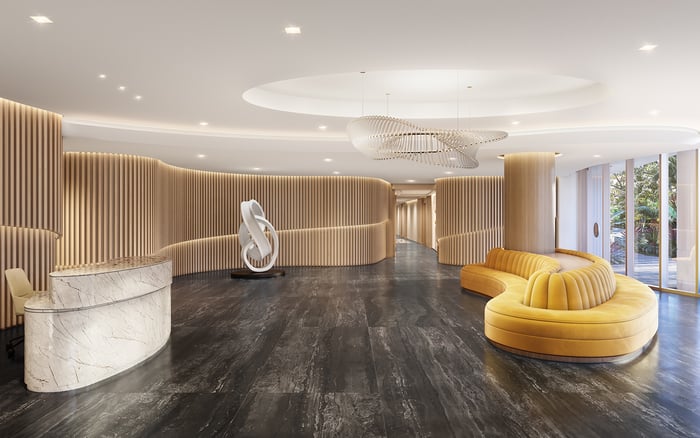
Banyan Tree’s expansive glass and shade prewiring make collection planning an essential part of the purchase conversation. For art-owning buyers, the priorities are verified glazing performance, layered light control and a stable indoor environment.
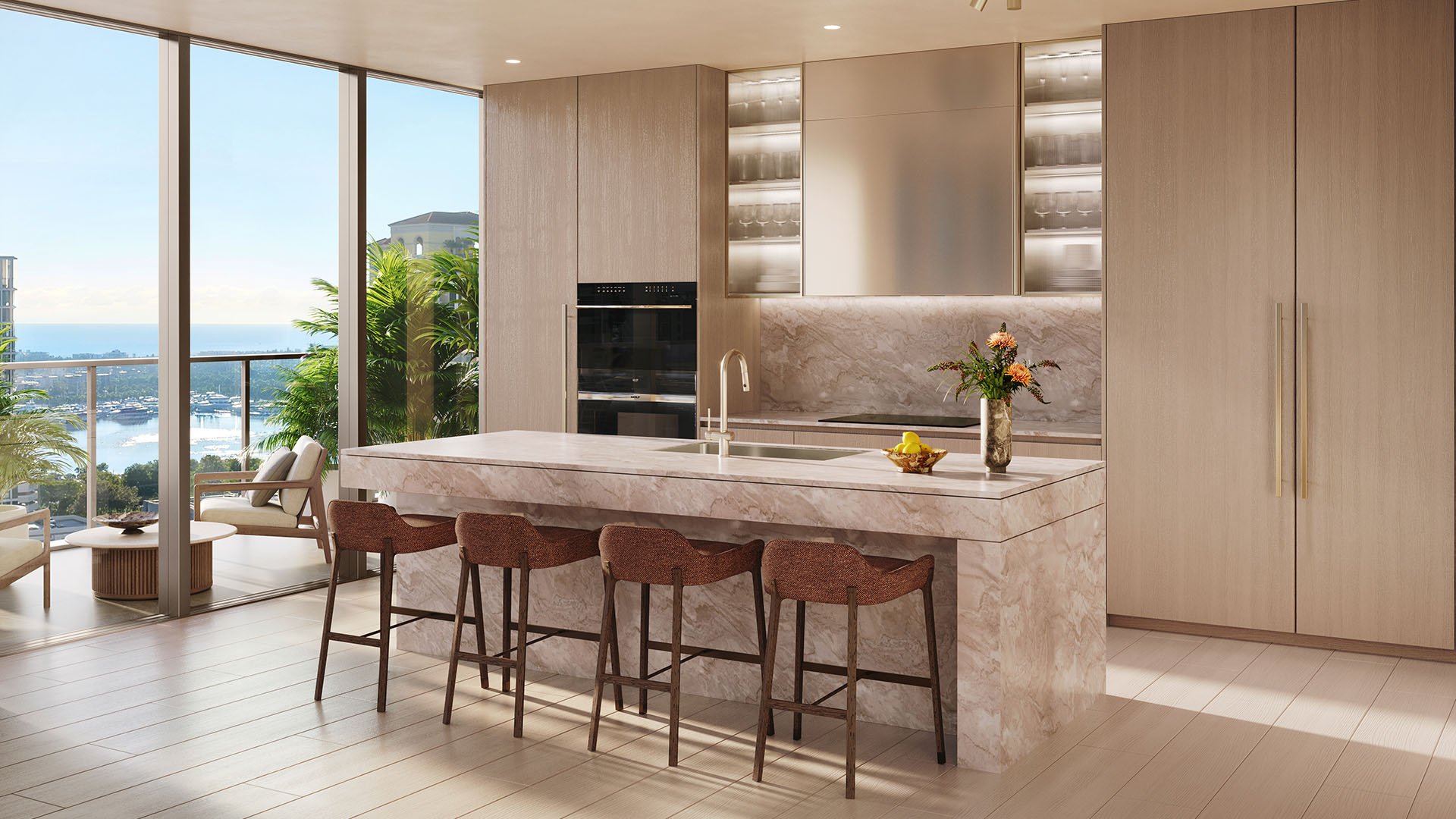
An art collection changes how a residence should be evaluated. The most compelling wall is not necessarily the safest display surface, and a luminous corner room requires more than beautiful framing. At Banyan Tree Residences West Palm Beach, the relationship between glass, daylight and interior control deserves attention before the hanging plan is settled.
The advertised design for the property at 400 Hibiscus Street comprises 88 one- to four-bedroom corner homes with floor-to-ceiling glass and wraparound terraces. These features make light management a central design consideration. For a collector, the question is not whether daylight belongs in the home, but how to enjoy it without exposing valuable works unnecessarily.
A considered purchase review separates three matters: what the residence includes, what its systems can demonstrably deliver, and what the collection needs. None should be assumed from the others.
Residence 1503 is specified with impact windows and central air. Motorized-shade prewiring and smart-home technology are also specified for the project. These are relevant starting points, but neither impact glazing nor central air guarantees an environment suited to a particular collection.
Prewiring is infrastructure, not confirmation that shades are installed, programmed or appropriate for the intended artwork. Buyers should clarify the delivery scope, then ask their design team to plan fabric selection, coverage and operation around the collection. Window treatments should not be left to a final decorative purchase.
The exact UV-transmission ratings, HVAC zoning and dedicated humidity-control capabilities remain unconfirmed. Request those details for the particular residence. A claim about comfort or energy efficiency should not substitute for documented performance at the walls where art will hang.
This distinction also belongs in a purchase comparison involving Alba West Palm Beach: evaluate the proposed residence and its documentation, rather than treating a project name as evidence of conservation suitability.
Keeping paintings out of direct sunlight is the essential first step. Sun exposure can darken varnish and fade or crack paint layers over time. Works on paper, photographs, textiles and objects painted with natural pigments require particular caution and should be kept away from windows.
UV filtering does not eliminate all light damage. Visible light also contributes to fading, so both intensity and duration matter. A room can feel comfortably shaded while still exposing a sensitive work to more light than its display plan should allow.
For a glass-lined residence, begin with the placement of the most vulnerable objects. Ask the design team to assess proposed display walls at different times of day before approving the arrangement. Reserve positions away from windows for light-sensitive works. Do not assume that a terrace or an attractive corner orientation provides sufficient protection.
Rotation offers another useful measure. Moving sensitive pieces between display and appropriate storage can limit cumulative light exposure; not every work needs to remain permanently on view. The display plan can serve both the collection and the room.
An effective light strategy uses several layers. Shades or curtains control incoming daylight; UV-filtering window film can provide additional protection; UV-protective acrylic or glass within picture frames adds another layer. None replaces keeping artwork out of direct sun.
At Banyan Tree, the specified shade prewiring creates an opportunity to plan automation early. Ask how the proposed controls will support everyday use and periods when the home is empty. The practical objective is straightforward: draw shades or curtains and switch off display lighting when rooms are unused, reducing exposure that serves no viewing purpose.
Before specifying film, ask the glazing supplier and building team to confirm suitability and any approval requirements. Before ordering shades, review their coverage against the actual artwork locations. A visually discreet installation still needs to perform its protective role.
For buyers also considering Mr. C Residences West Palm Beach, the same questions offer a useful basis for comparison without implying that either property has equivalent glazing or shade systems.
A comfortable room is not automatically a stable art environment. General reference ranges for paintings at home include approximately 65-75°F and 40-60% relative humidity. Alternatives include a narrower 45-55% humidity band, or a benchmark of 68-70°F and approximately 45% relative humidity.
These ranges are reference points, not Banyan Tree specifications, and should not be combined into a universal prescription. The collection’s materials and condition should guide a discussion with a conservator about suitable targets and acceptable variation.
Consistency matters. Routinely turning cooling or heating off overnight or during the day can produce temperature and humidity swings that damage paintings. Ask how the proposed residence will maintain the agreed conditions, rather than relying solely on its ability to reach a thermostat setting.
Where central humidity control is unavailable, supplemental dehumidification may warrant consideration in humid conditions. Assess it as part of the collection’s environmental plan; do not assume it is necessary or sufficient before the home’s capabilities are understood.
Display lighting should complement the light-control strategy. LED bulbs and indirect lighting help reduce UV exposure and heat-related risks. Recessed or ceiling-mounted fixtures are preferable to frame-mounted picture lights that can expose artwork to localized heat.
Wall selection deserves equal care. Avoid hanging paintings above fireplaces or near heating and cooling vents, where conditions can fluctuate. Kitchens and bathrooms are generally poor locations because of humidity and temperature extremes. Consider overhead plumbing and bathrooms when assessing potential leak exposure, even where a wall otherwise appears ideal.
The most persuasive installation is not simply the most dramatic. It is one in which placement, lighting and environmental conditions have been considered together.
For an owner who is frequently away, the collection’s care cannot depend on daily manual adjustments. Establish a clear routine for shade operation, lighting and continuous climate management before artwork arrives. Automation can support that routine, but its configuration and installation need confirmation.
Before committing to a residence, request the glazing specifications, shade delivery scope and HVAC control details, then review them against the collection’s requirements. Banyan Tree’s advertised features provide a starting point for this discussion, not a substitute for it. The aim is a home where the view and the collection can coexist without relying on assumptions.
For a discreet conversation about choosing a South Florida residence around your collection, connect with MILLION.
If branded residences are on your mind — as a home or as an allocation — we would be glad to share what we are seeing, privately.
Begin a quiet conversationThe property is described as corner homes with floor-to-ceiling glass and wraparound terraces. That architecture makes daylight control and artwork placement important parts of interior planning.
No collection-specific UV performance is established by the impact-window specification for residence 1503. Buyers should request the glazing’s documented UV-transmission ratings.
The specified feature is prewiring for motorized shades and smart-home technology. Buyers should confirm shade installation, controls and programming separately.
No. Visible light also contributes to fading, so reducing exposure intensity and duration remains important.
Works on paper, photographs, textiles and objects painted with natural pigments are particularly light-sensitive. Paintings should also be kept out of direct sunlight.
General guidance for paintings at home includes approximately 65–75°F and 40–60% relative humidity, with other guidance favoring narrower ranges. These are not Banyan Tree specifications; a conservator should help establish collection-specific targets.
No. Central air alone does not confirm dedicated humidity control, HVAC zoning or the ability to maintain a collection’s required conditions.
Routine shutdowns can cause temperature and humidity swings that damage paintings. Maintain stable conditions rather than relying on intermittent cooling.
LED bulbs and indirect lighting help reduce UV exposure and heat-related risks. Recessed or ceiling-mounted fixtures are preferable to frame-mounted lights that can create localized heat.
UV-filtering window film and UV-protective picture-frame glazing can add protection, but neither replaces sunlight control. Rotating sensitive works between display and appropriate storage can also reduce cumulative exposure.