Key Biscayne can let homeowners exchange estate-scale upkeep for a serviced, oceanfront residence without abandoning generous interiors. The right choice depends less on island-wide averages than on building governance, reserves, insurance, assessments, privacy and the daily character of each property.

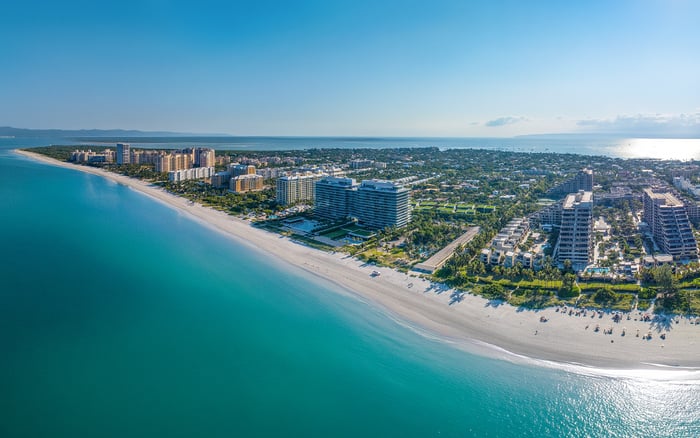
For an owner leaving a large South Florida house, Key Biscayne presents an unusually nuanced proposition: less property to manage, but not necessarily less space, privacy or access to the ocean. The island’s luxury apartments are concentrated largely between Crandon Boulevard and the Atlantic, where direct or deeded beach access can make condominium living feel like a genuine lifestyle exchange rather than a compromise.
The financial logic can also be persuasive. Condominiums trade at a meaningful price-per-square-foot discount to Key Biscayne single-family homes, potentially allowing a homeowner to move into a high-end apartment while releasing equity. Yet a successful transition begins with a precise definition of what is being reduced. Some buyers want fewer maintenance obligations; others want fewer rooms, greater security or the freedom to leave South Florida with minimal preparation.
Within MILLION’s Buyer’s Guides, the central principle is simple: luxury downsizing should remove complexity while preserving the spaces and services used every day.
The market offers a broad spectrum of choices. Key Biscayne condos and co-ops averaged about $1.97 million in list price in November 2025, compared with roughly $1.8 million a year earlier. By June 2026, the median condo and co-op list price was approximately $1.6 million, versus about $1.3 million one year earlier. Roughly two dozen condominiums priced above $5 million had also recently traded or entered the market, reflecting a deeper ultra-luxury apartment segment than the island offered a decade earlier.
Still, island-wide figures are orientation points, not valuation tools. They combine properties of different ages, renovation standards, views, floor plans and governance structures. As of March 17, 2026, 39 active listings carried a median asking price of $1.65 million, or $962 per square foot. In February 2026, the median sale price was near $1.992 million, while the average sale-to-list ratio remained below 100 percent. That leaves room for disciplined negotiation, particularly when condition, assessments or extended market time affect a specific residence.
Scarce land and limited new oceanfront development can support long-term value, especially in newer beachfront properties. Scarcity, however, does not remove the need to underwrite each building separately.
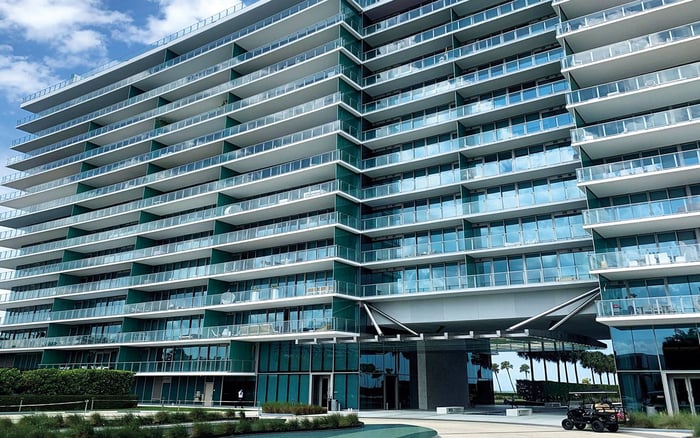
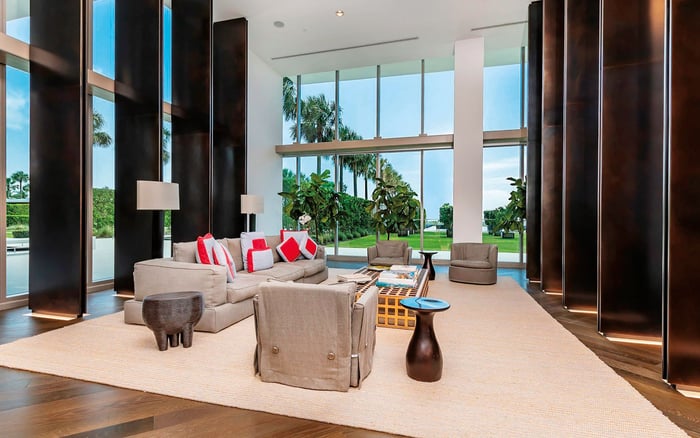
Completed in 2014, Oceana Key Biscayne occupies 350 and 360 Ocean Drive and comprises approximately 142 residences. Its two- to five-bedroom homes range from about 1,758 to 7,500 square feet, making it relevant to buyers who want to shed the burdens of a house without compressing their interiors. Direct beach access, two pools, a fitness center, spa, concierge, tennis courts and an on-site restaurant create a comprehensive service environment.
The Grand Bay cluster offers a different range, encompassing Grand Bay Tower, Grand Bay Residences and Ritz-Carlton Residences. Across the cluster, homes extend from compact accommodations of roughly 354 square feet to estate-scale residences exceeding 10,000 square feet. The Ritz-Carlton component adds beachfront hotel-style services, but its condo-hotel governance and more transient resort atmosphere warrant careful consideration.
Ocean Club’s gated, 55-acre setting and extensive shared amenities may appeal to buyers who prefer a park-like residential environment to a hotel operation. Commodore Club, built from 1971 to 1974 as three 12-story waterfront towers with approximately 552 residences, provides a more established alternative. Its historical pricing span-from about $500,000 to above $3 million-illustrates the breadth created by condition, size and position. Casa del Mar, at 881 Ocean Drive, contains approximately 197 oceanfront residences and offers direct beach access, clay tennis courts, a barbecue area and a game room.
A beautiful residence can still be the wrong downsizing choice if ownership remains administratively demanding. Compare current association and club dues, reserve funding, insurance, pending assessments and recent structural-inspection records. In an older building, a renovated apartment is no substitute for sound common infrastructure. In a newer property, polished amenities do not, by themselves, establish efficient governance.
Beach-access rights demand equal precision. Confirm whether access is direct or deeded, how guests are accommodated and which services carry separate charges. Where hotel amenities are involved, determine whether they are guaranteed to owners or governed by agreements that may change.
Buyers weighing Key Biscayne against other luxury enclaves may also tour Park Grove Coconut Grove or The Ritz-Carlton Residences® Miami Beach. These comparisons are most useful when they clarify priorities around location, scale, service and recurring cost-not when they encourage a superficial amenity count.
Begin with recent comparable sales in the same building, then refine the set by line, exposure, floor, condition and meaningful differences in outdoor space. Review the cost of immediate improvements alongside likely assessments and recurring ownership expenses. A lower purchase price may not represent value if it simply transfers deferred capital work to the buyer.
For downsizers, practical planning matters as much as price. Measure furniture, art walls, storage and terrace usability. Test the route from parking to the residence, understand delivery procedures and assess whether guest accommodations reflect the family’s actual habits. The ideal apartment should simplify daily life from the first arrival-not after a costly reconfiguration.
Is Key Biscayne suitable for luxury downsizing? Yes. It offers ocean-oriented condominium living across newer, resort-style and established residential settings.
Can downsizing still mean a large residence? Yes. Some island condominiums retain multiple bedrooms, substantial interiors and generous terraces.
Are island-wide price statistics enough to value a unit? No. Building, line, floor, view, condition and governance make residence-specific comparable sales more useful.
Is there room to negotiate? In February 2026, the average sale-to-list ratio was below 100 percent, although leverage remains property-specific.
What should buyers review in association documents? Focus on reserves, insurance, recurring dues, pending assessments and recent structural-inspection records.
Does newer construction automatically mean lower ownership risk? No. Newer buildings still require careful review of budgets, governance, insurance and service obligations.
What distinguishes a resort-style residence? Hotel-linked services can increase convenience, but buyers should examine charges, access rights and operating agreements.
Why consider an older oceanfront building? It may offer a less trophy-oriented coastal lifestyle, although common infrastructure and reserves require close review.
What should be measured before making an offer? Confirm furniture fit, art walls, storage, terrace function, parking access and realistic guest needs.
What is the best first step? Define which responsibilities should disappear, then compare only residences that preserve the space and services that matter.
For a discreet conversation and a curated building-by-building shortlist, connect with MILLION.
If branded residences are on your mind — as a home or as an allocation — we would be glad to share what we are seeing, privately.
Begin a quiet conversation