A discerning shortlist of five Bal Harbour residences for owners who value staffed operations, hurricane protection, connectivity diligence, and clearly defined emergency-power coverage.
For the Bal Harbour buyer, lock-and-leave ownership is not simply a matter of attentive service and a secure arrival. It is the confidence that a residence can be protected, monitored, and restored to comfortable use after severe weather, even when its owner is elsewhere. Emergency power, reliable communications, hardened openings, and a written staffing plan are therefore essential to the acquisition conversation.
The central distinction is between code-required life-safety backup and the broader power required for day-to-day livability. A generator may support emergency lighting, fire systems, pumps, access controls, or selected elevators without supplying residential air conditioning, in-unit outlets, Wi-Fi equipment, or every elevator bank. Buyers should therefore treat the presence of a generator as the beginning of diligence, not the conclusion.
The true lock-and-leave advantage is a coordinated system of power, protection, connectivity, and people.
This is especially relevant to a second-home purchase. Within MILLION's Buyer's Guides coverage, Bal Harbour stands apart for its concentration of service-oriented oceanfront living. Buyers considering Oceana Bal Harbour or newer alternatives such as Rivage Bal Harbour should request the same operational detail expected when evaluating any sophisticated real asset.
1. Oceana Bal Harbour - 10201 and 10203 Collins Avenue
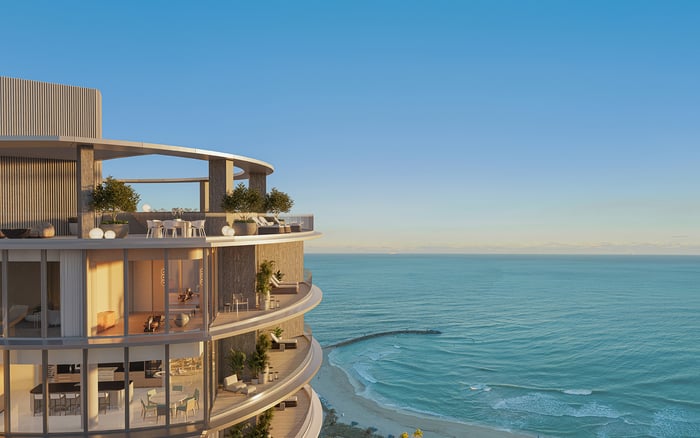
Oceana takes the first position as an all-new condominium redevelopment of the former Bal Harbour Club site. Its contemporary luxury format and floor-through residences-with outlooks spanning the Atlantic, Biscayne Bay, beaches, and surrounding cityscape-make it a compelling fit for owners seeking privacy and an effortless seasonal arrival.
Its resilience package nevertheless requires direct confirmation. Prospective purchasers should obtain details on generator capacity, fuel, tested runtime, supported loads, telecom architecture, and the building's storm-response staffing commitments. Contemporary construction is attractive, but it does not replace written operational answers.
2. St. Regis Bal Harbour Resort & Residences - 9701 Collins Avenue
The St. Regis ranks second because a branded resort-residential operating model is naturally aligned with absentee ownership. For a buyer seeking a residence supported by an established hospitality environment, this structure can offer an important service advantage before and after a storm.
The unanswered questions concern infrastructure rather than positioning. Exact backup-power coverage and connectivity redundancy require direct confirmation. Buyers should ask which comfort systems remain available during an outage and how management communicates with owners if normal telecom service is interrupted.
3. Ritz-Carlton Bal Harbour, formerly One Bal Harbour - 10295 Collins Avenue
This property places third on the strength of round-the-clock operations, including 24-hour security, valet, and room service. That continuous hotel-style presence is meaningful for owners who may need access monitoring, condition updates, or vendor coordination while away from South Florida.
Generator specifications still need to be established directly. The most useful inquiry is not merely whether emergency power exists, but whether it serves elevators, water systems, access controls, network rooms, selected outlets, and any residential cooling. Staffing should also be defined for the preparation and recovery phases, not assumed from everyday service levels.
4. Bellini Bal Harbour - 10225 Collins Avenue
Bellini offers the clearest combination of hardened openings and staffed residential operations among the non-hotel choices in this ranking. Residences feature hurricane-resistant, double-laminate doors and windows, while the building provides a 24-hour concierge and complimentary valet parking.
That pairing supports a credible lock-and-leave profile: physical protection at the residence and continuous personnel at the property. Even so, buyers should confirm generator-supported loads, internet resilience, and the precise services staff will perform when a named storm approaches or after access is restored.
5. The Palace at Bal Harbour - 10101 Collins Avenue
The Palace earns fifth place through its electric hurricane shutters and 24-hour security and valet service. Concierge service further strengthens its appeal for an owner who values an established point of contact while the residence is unoccupied.
Electric shutters warrant a practical follow-up: owners should understand deployment procedures and what happens if utility power is interrupted before preparation is complete. Emergency-power coverage should also be separated into life-safety and comfort loads, with management identifying whether any in-unit systems receive backup power.
A serious review should identify generator output, fuel type and storage, tested runtime, automatic-transfer arrangements, maintenance records, and the exact loads served. The list should distinguish fire and life-safety systems from elevators, domestic-water pumps, garage systems, security equipment, cooling, residential receptacles, and communications infrastructure.
Owners should not plan to address gaps casually with private generators. They should consult utilities and avoid connections without approved automatic-interrupt devices, which violate electrical codes. In a condominium, the safer and more useful question is how the building's professionally maintained systems perform as an integrated whole.
Hurricane-rated openings and backup generators can improve post-storm livability while influencing underwriting and buyer confidence. Yet even robust equipment has limited value without testing, fuel planning, documented responsibility, and staff trained to execute the association's hurricane plan.
Connectivity diligence should determine whether a building has diverse carrier entrances, redundant risers, backup-powered network rooms, and dependable cellular reception within residences and common areas. A nominally active internet subscription offers little reassurance if the building's network equipment loses power or every service follows the same physical pathway.
Staffing merits equal precision. Ask whether personnel will install shutters, enter authorized residences, photograph conditions, conduct post-storm inspections, coordinate remediation vendors, and provide scheduled updates to absent owners. Determine which services are included, which require prior authorization, and whether staffing changes once an evacuation order or access restriction takes effect.
The broader coastal comparison may include nearby The Surf Club Four Seasons Surfside and Arte Surfside. Branded residences may offer an appealing service culture, but branding alone does not answer questions about electrical loads, network pathways, or emergency protocols.
Before contract, review the written hurricane plan, flood-zone exposure, garage and mechanical-room elevations, balcony drainage, façade inspection materials, insurance terms, and reserves. Pair that document review with conversations involving building management and qualified technical advisers. Convert verbal assurances into specific descriptions of equipment, responsibilities, and owner communications.
For a true lock-and-leave residence, the objective is continuity rather than invulnerability. The strongest choice is the building that can explain what remains powered, how communications are preserved, who is present, and what actions occur before and after a storm.
For discreet guidance on selecting and evaluating South Florida's most distinguished residences, connect with MILLION.
If branded residences are on your mind — as a home or as an allocation — we would be glad to share what we are seeing, privately.
Begin a quiet conversationIt combines controlled access, prepared staff, resilient building systems, dependable communications, and clear procedures for protecting and inspecting an unoccupied home.
Not necessarily. Buyers must distinguish life-safety backup from power for air conditioning, outlets, Wi-Fi equipment, water systems, and elevators.
Oceana leads as an all-new oceanfront redevelopment with contemporary construction and a luxury lock-and-leave format, subject to direct verification of its resilience systems.
Its branded resort-residential operating model is well suited to service-oriented ownership, although exact power and connectivity redundancy should be confirmed.
Documented 24-hour security, valet, and room service indicate continuous hotel-style operations that can benefit owners who are away.
Bellini residences are described with hurricane-resistant, double-laminate doors and windows, alongside 24-hour concierge service and complimentary valet.
The Palace combines electric hurricane shutters with 24-hour security, valet, and concierge service, though emergency-power coverage requires confirmation.
Request capacity, fuel and runtime details, transfer arrangements, maintenance records, and a precise schedule of every supported building and residential load.
Ask about diverse carrier entrances, redundant risers, backup-powered network rooms, and cellular reception throughout residences and common areas.
Buyers should clarify shutter deployment, authorized unit entry, condition photography, post-storm inspections, vendor coordination, and owner communication procedures.