A discreet buyer’s guide to Fisher Island condo choices for art collectors, focused on privacy, controlled light, secure logistics, and long-term collection stewardship.
For serious collectors, a Fisher Island residence is not simply a beautiful place to live. It is a private setting for objects that may be visually delicate, financially meaningful, emotionally irreplaceable, or all three. The right condominium must make daily life feel graceful while quietly answering the less glamorous questions: who can approach the residence, how natural light enters the rooms, where art can be staged, and whether the building environment supports discreet handling.
That is why the best Fisher Island condo choice for an art collector begins with restraint. Panoramic views, grand rooms, and terraces may be desirable, but they are only part of the equation. A collector should also weigh solar exposure, wall continuity, service access, elevator proximity, lobby discretion, humidity management, and the ability to receive specialists without turning a private home into a public production.
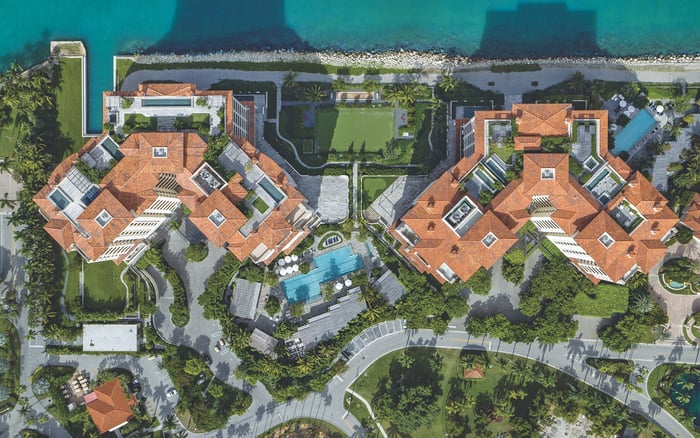
On Fisher Island, buyers often compare established and newer residential options through this lens. A residence associated with The Residences at Six Fisher Island, for example, should be assessed not only for address value, but for how well its plan supports art placement, privacy, and controlled circulation.
1. Primary gallery residence - the main collection setting
The strongest choice for a collector who lives with art daily is a primary gallery residence: a condominium selected around wall quality, circulation, and a calm arrival sequence. The goal is not to turn the home into a museum. It is to make the principal living areas feel composed, with enough visual quiet for significant work to breathe.
This choice suits collectors who rotate pieces seasonally, host intimate viewings, and want their most important works integrated into daily life. Priorities should include uninterrupted walls, measured daylight, a practical route from elevator to installation area, and the ability to separate entertaining zones from private collection zones.
2. Conservation-minded waterfront residence - light as a controlled luxury
A waterfront residence can be seductive for collectors, but light must be treated with discipline. The best version is not necessarily the brightest home. It is the home where glare, heat gain, reflection, and prolonged exposure can be managed without compromising the character of the rooms.
This choice works for collectors with photography, works on paper, textiles, or light-sensitive contemporary pieces. The buyer should study orientation, shading options, glazing conditions, and where museum-grade treatments could be introduced with minimal visual intrusion.
3. Low-traffic boutique condominium - privacy through fewer encounters
For collectors who value anonymity, the building’s daily rhythm matters. A low-traffic condominium can reduce casual exposure, simplify arrivals, and make the movement of installers, conservators, advisors, and insured objects less conspicuous.
This choice is especially compelling for owners who do not want their collecting life visible to neighbors, guests, or service providers beyond those who need access. The focus should be discreet circulation, controlled entry points, and building protocols that make privacy feel natural rather than theatrical.
4. Penthouse or upper-level residence - separation and controlled presentation
An upper-level residence can offer a sense of separation that many collectors appreciate. The appeal is psychological as much as architectural: fewer passersby, stronger thresholds, and a more deliberate journey into the private realm.
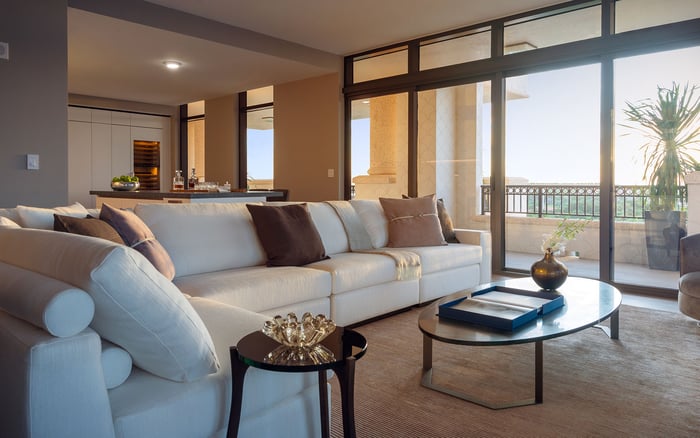
For art, the concern is whether the drama of elevation competes with the collection. Expansive views should be balanced with protected walls, shaded rooms, and areas where art can be experienced without the distraction of constant brightness or reflection.
5. Lock-and-leave collector base - secure seasonal ownership
Some collectors want Fisher Island as a seasonal base rather than a full-time gallery home. In that case, the best condo choice is one that supports secure absence, careful climate continuity, and limited access while the owner is away.
This profile favors simplicity over display. The collection may be smaller, more curated, or focused on pieces that can remain in place without intensive oversight. The key is to understand building access rules, vendor coordination, and the practical responsibilities of leaving art in a residence for extended periods.
Privacy is often discussed as a lifestyle benefit, but for collectors it is a security principle. The fewer people who understand what is in the residence, when it moves, and who advises the owner, the stronger the privacy architecture becomes. That includes arrival patterns, staff access, service elevators, package rooms, parking, and the handling of crates or installation equipment.
A collector evaluating Palazzo del Sol Fisher Island might naturally begin with Palazzo del Sol as a name, but the better question is operational: how would a significant artwork enter, where would it pause, who would see it, and what sequence would protect both the piece and the owner’s discretion?
The same principle applies across the island. Privacy is not one feature. It is a chain of small decisions that either preserves or exposes the collection.
Collectors often discover that the most desirable room for living is not always the safest room for art. South Florida light can be beautiful and unforgiving. A residence may need layered window treatments, UV-conscious strategies, art-safe lighting, and layouts that place sensitive works away from the most aggressive exposures.
This does not mean sacrificing openness. It means choreographing it. A collector can preserve view corridors while using interior walls for principal works, reserving brighter rooms for sculpture, design objects, or pieces less vulnerable to exposure. In residences connected with Palazzo della Luna Fisher Island, buyers may look at Palazzo della Luna through this exact filter: not simply what the view offers, but what the light requires.
The best art homes feel effortless because their controls are not obvious. Shades, lighting scenes, wall finishes, and climate planning should support the collection without making the residence feel technical.
The strongest security plan is layered. Architecture controls approach. Technology monitors conditions. Human protocol governs access. For a collector, all three need to be aligned before major works arrive.
Architectural security includes limited sightlines into private areas, sensible separation between service and living spaces, and secure places for staging. Digital security may involve alarms, environmental monitoring, and access logs. Human security is more delicate: who has keys, who knows the collection schedule, and how vendors are approved.
At The Links Estates at Fisher Island, a buyer considering The Links Estates at Fisher Island should think beyond the residence as real estate and evaluate it as a private operating environment. The art may be the visible treasure, but the invisible systems protect it.
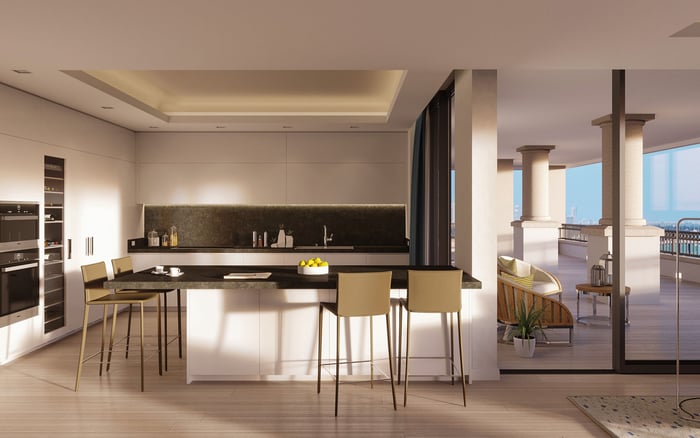
Before contract, a collector should request a practical art-living review. Which walls are most usable? Which rooms receive the harshest light? Can window treatments be upgraded? How are large pieces delivered? Are there limitations on work hours, installers, elevator pads, insurance paperwork, or temporary staging?
The right advisors can answer these questions before closing, when leverage is greatest. A lighting designer, art installer, conservator, insurance specialist, and security consultant may each see a different risk. Together, they can help distinguish a beautiful apartment from a genuinely collection-ready home.
What is the best Fisher Island condo type for an art collector? The best choice is usually the residence with the strongest combination of privacy, controllable light, secure access, and usable wall space.
Should an art collector prioritize views or wall space? Views matter, but wall quality and light control often matter more for preserving and presenting significant works.
Is a waterfront residence always ideal for art? Not always. Waterfront exposure can be beautiful, but collectors should evaluate glare, heat, reflections, and sun patterns carefully.
Can a bright residence still work for sensitive art? Yes, if the rooms can support layered shading, UV-conscious treatments, and thoughtful placement away from harsh exposure.
Why is privacy so important for collectors? Privacy reduces unnecessary knowledge of the collection, movement schedules, advisors, and household routines.
Should security be reviewed before closing? Yes. Access, delivery routes, vendor protocols, and monitoring should be evaluated before the residence is committed to major works.
What makes a condo collection-ready? A collection-ready condo has stable interiors, practical circulation, strong privacy, art-friendly lighting, and discreet service logistics.
Are penthouses better for collectors? They can offer separation and discretion, but the layout, light exposure, and installation logistics still need careful review.
Can a seasonal residence safely hold art? It can, provided climate continuity, access control, monitoring, and maintenance responsibilities are clearly planned.
Which Fisher Island projects should collectors compare? Buyers often compare residences by privacy, light control, security, and lifestyle fit rather than by name alone.
For a discreet conversation and a curated building-by-building shortlist, connect with MILLION.
If branded residences are on your mind — as a home or as an allocation — we would be glad to share what we are seeing, privately.
Begin a quiet conversation