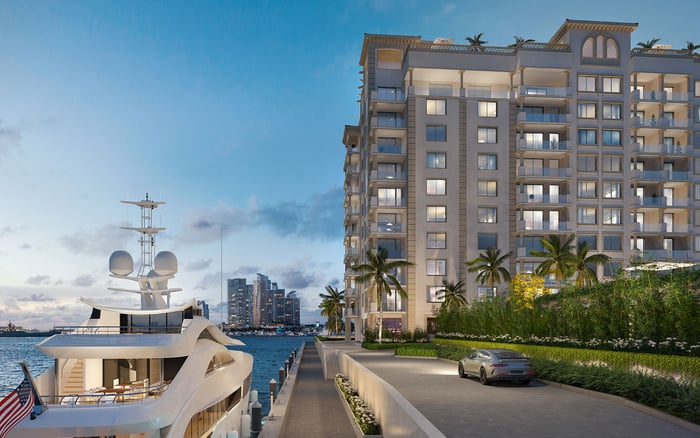
Five branded residences across Downtown Miami and Brickell form a due-diligence shortlist for buyers prioritizing predictable ownership costs. Reserve studies, actual balances and scheduled contributions, rather than branding or list position, should determine confidence in a funding plan.

For a luxury condominium buyer, financial predictability is part of the ownership experience. A beautifully appointed residence can satisfy the lifestyle brief while leaving a separate question unanswered: how will the association pay for major repairs, replacements and unexpected shortfalls?
The five residences below form a focused Downtown Miami and Brickell shortlist for that review. Their numbered positions indicate a sequence for buyer review, not a ranking of verified reserve strength. None should be considered demonstrably less exposed to special assessments without examining its association finances. Here, Downtown Miami includes Brickell and the immediate urban core.
A credible funding plan connects projected maintenance needs, money already held in reserve and scheduled contributions. Branding, affluent ownership and substantial monthly dues do not establish that connection. The objective is not simply a smaller monthly bill, but a clearer understanding of which future obligations are funded and which could require additional capital.
A special assessment is an association charge beyond regular dues, typically imposed when available funds cannot cover an expense. Roof replacement, façade repairs and inspection-required work are common triggers. Insurance-related funding shortfalls can also require additional owner contributions.
Reserves serve a different purpose from day-to-day operating funds. They set money aside for major repairs and replacements, including elevators, roofing, concrete restoration and building systems. Monthly association assessments generally include a reserve-contribution line that deserves separate attention from operating expenses.
Required repairs can be financed through reserves, with borrowing or special assessments covering shortfalls. The useful question, then, is not whether a building has a reserve account, but whether its balance and planned contributions align with the cost and timing of anticipated work. A funding plan is more informative when those elements are considered together.
1. St. Regis Residences Miami - Brickell bayfront
St. Regis Residences Miami opens the shortlist within Greater Downtown Miami. For buyers considering its Brickell bayfront setting, the decisive financial comparison is between projected maintenance needs, reserve balances and scheduled contributions. Its placement does not establish superior funding quality.
The practical review should match each major anticipated expenditure to the funds intended to cover it. New-building status alone does not establish lower assessment exposure. Before treating the residence as a financially conservative choice, require a funding plan that can be reconciled with the building's expected maintenance obligations.
2. Baccarat Residences Miami - Brickell / Miami River
Baccarat Residences Miami occupies the second position, with a clear due-diligence priority: separate reserve contributions from operating dues. A total monthly figure cannot, by itself, show how much is being accumulated for future capital work.
Review the applicable budget and contribution schedule together. The test is whether scheduled reserve funding supports projected repair and replacement needs, not whether overall dues appear substantial. Examine early-cycle funding rather than assuming its adequacy. This position does not imply a stronger reserve policy than another candidate's.
3. Waldorf Astoria Residences Miami - Downtown Miami core
For Waldorf Astoria Residences Miami, the third candidate, begin with the available reserve study and corresponding balance information. Its Downtown Miami core location defines the lifestyle setting; it does not answer the association-funding question.
Read projected structural-maintenance costs alongside actual reserves and planned contributions. Distinguish a forward-looking funding analysis from cash already held by the association. Neither brand recognition nor an expectation of newer building systems establishes reserve adequacy or comparatively lower assessment exposure.
4. Aston Martin Residences - Downtown Miami waterfront
Aston Martin Residences is the fourth candidate, with inspection and reserve-study review central to the ownership-cost discussion. Apply the same financial scrutiny to this waterfront address as to every other residence on the shortlist.
Consider available inspection findings, projected maintenance costs and the reserve position together. Inspection diligence alone does not establish that required work is funded. Clarify how identified obligations will be paid before reading this selection as evidence of lower exposure or a funding plan that outperforms its peers.
5. E11EVEN Hotel & Residences - Downtown Miami entertainment district
E11EVEN Hotel & Residences completes the shortlist. For this entertainment-district candidate, identifying any existing special assessments and their remaining balances is an essential ownership-cost check.
Ask what amounts remain payable and include those obligations in the purchase analysis alongside regular dues. The same reserve and maintenance review applies here as elsewhere. New-building status does not establish the absence of assessments, and the fifth position is neither a negative financial judgment nor a verified risk score.
A comparison between St. Regis Residences Miami and Baccarat Residences Brickell should begin with consistent questions. What is already reserved? What contributions are scheduled? Which major expenses are those funds intended to meet?
Request the applicable association budget, available reserve study, current reserve balances and projected structural-maintenance costs. Distinguish projected amounts from money already accumulated. Read operating expenses and reserve contributions separately rather than comparing only the headline monthly charge.
This approach separates the financial decision from the property's lifestyle appeal. It also avoids treating a higher fee as evidence of conservative reserves or a lower fee as proof of superior value. Neither conclusion follows from the dues figure alone.
When considering Waldorf Astoria Residences Downtown Miami or Aston Martin Residences Downtown Miami, apply the same discipline: examine the study alongside the association's financial position, not in isolation.
A Structural Integrity Reserve Study, or SIRS, combines an evaluation of covered building components with a reserve-funding analysis. Components can include structural elements, roofing, plumbing, electrical systems, waterproofing, and windows and doors. The study helps define future obligations; current balances and contribution schedules help explain how those obligations may be met.
Inspection-related assessment amounts vary with the scope of work, from smaller repairs to extensive structural rehabilitation. Do not rely on “40-year recertification” as a universal current rule. Confirm the building's applicable inspection requirements and review the financial implications of identified work. An inspection milestone is not a complete cost forecast.
The strongest purchase decision rests not on the most reassuring brand narrative, but on a clear understanding of anticipated work, available reserves, scheduled funding and any existing assessment balance before committing.
Use these five residences as a starting point, then let the association documents determine the financial comparison. Credible planning can support a more disciplined purchase, but it should never be presented as a promise that special assessments cannot occur.
For a discreet exploration of Downtown Miami and Brickell residences, connect with MILLION.
If branded residences are on your mind — as a home or as an allocation — we would be glad to share what we are seeing, privately.
Begin a quiet conversationNo. They form a buyer-review shortlist, not a verified ranking of reserve strength or lower assessment exposure.
It is an additional association charge beyond regular dues, typically used when available funds cannot cover an expense.
Common triggers include roof replacement, façade repairs and inspection-required work. Insurance-related funding shortfalls can also lead to additional charges.
Compare the available reserve study, current reserve balances, scheduled contributions and projected structural-maintenance costs. Together, these help clarify how anticipated obligations may be funded.
No. Buyers should distinguish operating expenses from reserve contributions rather than drawing conclusions from the total monthly charge.
A SIRS combines evaluation of covered building components with a reserve-funding analysis. It should be examined alongside actual reserve balances and planned contributions.
Covered components can include structural elements, roofing, plumbing, electrical systems, waterproofing, and windows and doors.
Repairs can be paid for through reserves, borrowing or special assessments when existing funds are insufficient. Buyers should clarify which funding approach applies to identified work.
The article uses Downtown Miami broadly to include Brickell and the immediate urban core. Each candidate's location is identified separately.
Identify any existing special assessments and their remaining balances. Include those obligations alongside regular dues when calculating ownership costs.