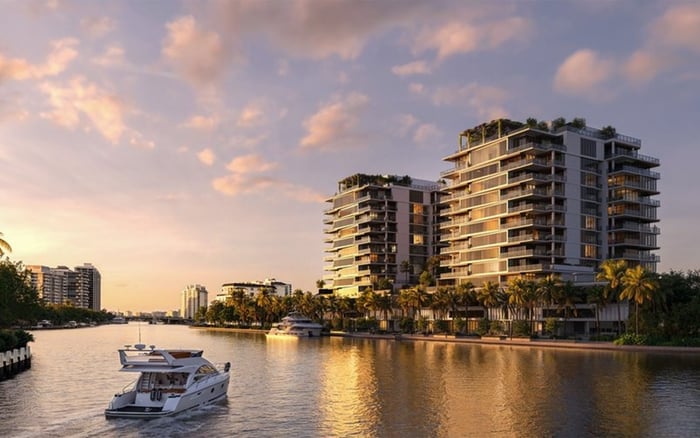
A buyer-focused review of five Broward County branded residences, organized around the questions that matter for guest registration, building-app privacy, access records and pre-contract diligence.

At a branded residence, discretion extends beyond the lobby, elevator and concierge desk. Buyers also need to examine the digital systems that may connect residents, visitors, household staff, vendors and building personnel.
A polished app can make arrivals and service requests more convenient, but convenience does not by itself establish privacy. The important questions concern how a guest is authorized, what areas a credential can unlock, when access expires, what activity is recorded and who can see the resulting information.
The most valuable digital amenity gives residents clear control over access without obscuring how personal information is handled.
The following shortlist keeps the discussion focused on branded residential opportunities in Broward County. It does not assume that any project uses a particular access platform or privacy protocol. Buyers should request current documents and a live demonstration for the specific residence under consideration.
For this project, ask the sales team or management representative to demonstrate the complete visitor-registration process. The review should cover which guest identifiers are required, whether a resident can set an expiration time, how immediate revocation works and which entrances the credential activates.
Buyers should also separate residence-level controls from hospitality services. Request a clear explanation of which accounts, systems and personnel can access information generated through each digital touchpoint.
At this Fort Lauderdale option, focus on the relationship between the residential experience and any brand-facing digital interface. Ask whether guest registration, service requests and residence access use one account or separate systems.
The privacy review should identify the parties able to view guest and entry information. Buyers should also request the applicable retention and deletion terms in writing rather than relying on a verbal overview.
This project belongs on a privacy-focused comparison because purchasers evaluating a branded residence should examine how hospitality service and residential access are separated. Ask who administers resident accounts, who can add or remove authorized users and what happens to permissions after a change in occupancy or ownership.
A useful demonstration should follow a visitor from initial registration through arrival, elevator access and departure. It should also show how the resident cancels a pass before its scheduled expiration.
For this Hillsboro Beach residence, buyers can apply the same controlled-access test while paying particular attention to household staff and recurring service providers. Ask whether permissions can be limited by date, time and accessible area without creating an open-ended credential.
The review should also address lost phones, compromised accounts and inactive users. A privacy-conscious system needs an understandable process for removing access promptly and confirming that the change has taken effect.
At this Hallandale-area project, request a demonstration that distinguishes visitor access from credentials issued to residents, staff and vendors. Confirm whether each user receives an individual credential and whether a resident can review or challenge an unfamiliar access event.
Buyers should also ask how digital access interacts with staffed checkpoints and emergency procedures. The goal is to understand the entire arrival sequence rather than evaluating an app screen in isolation.
A buyer should be able to understand the guest journey without technical ambiguity. Start by asking what information is required to create a pass and whether the visitor must download software, provide an image or share another identifier. Then determine whether the credential is valid for one entry, a defined period or an ongoing schedule.
Scope matters as much as duration. A pass might apply to an entrance, garage, elevator, amenity area or residence door, depending on the building's configuration. Request a map or demonstration showing precisely where each permission begins and ends.
Revocation is equally important. Ask whether the resident can cancel access directly, whether staff intervention is required and how quickly the cancellation reaches every connected entry point.
Begin with visibility. The project should explain whether access information can be viewed by the resident, front desk, security team, association, manager, brand or technology provider. If different parties see different records, request a written description of those boundaries.
Next, examine retention. Ask how long guest identifiers, device information, access events and expired credentials remain in active systems or backups. The response should also describe how a resident requests correction or deletion when applicable.
Account security deserves a separate review. Buyers should ask about authentication, authorized devices, lost-phone procedures and the removal of former occupants or staff. These questions are especially relevant when several family members or household professionals need distinct permissions.
Before signing, request the current materials governing digital access and guest registration. Relevant items may include resident rules, privacy notices, user terms, vendor disclosures and instructions for account closure. Confirm which documents are binding and which are only explanatory.
A live demonstration should test an actual workflow from creation to cancellation. Ask the representative to issue a temporary credential, show its permitted areas, display any resulting record and revoke it. If the process changes during an internet, power or device outage, request a demonstration or written explanation of the backup procedure.
Finally, confirm how the system applies to owners, tenants, family members, guests and service providers. Each user type may require different permissions, and buyers should avoid assuming that one workflow governs every situation.
These five Broward branded residences provide a practical shortlist for a privacy-centered comparison, but the brand name alone cannot answer questions about guest control or data handling. The decisive evidence should come from current project documents, contract review and a system demonstration tied to the residence being considered.
The strongest fit will be the option that gives the buyer understandable permissions, prompt revocation, transparent record visibility and credible backup procedures. For confidential guidance on comparing Broward's branded residential opportunities, connect with MILLION.
If branded residences are on your mind — as a home or as an allocation — we would be glad to share what we are seeing, privately.
Begin a quiet conversationBuyers should confirm what information is required, where a credential works, when it expires and how it can be revoked.
A demonstration lets the buyer observe how a credential is created, used, recorded and cancelled instead of relying on general descriptions.
Visibility may differ among residents, front-desk staff, security personnel, management, the brand and technology providers. Buyers should request the applicable boundaries in writing.
Ask how long guest identifiers, device information, access events and expired credentials remain in active systems or backups.
Buyers focused on controlled access should ask whether passes can be limited by date, time and accessible area.
Confirm whether each staff member can receive an individual credential with a defined schedule and prompt revocation.
The building should explain how the device is removed, how access is suspended and what backup method remains available.
Buyers should not assume they do. Ask whether separate accounts, vendors, permissions or privacy terms apply.
Request current resident rules, privacy notices, user terms, vendor disclosures and account-closure instructions when applicable.
No. Buyers should rely on current documents, contract review and a project-specific demonstration rather than brand prestige alone.