A discreet Las Olas move depends on the full arrival chain, not the elevator alone. This guide shows Brussels families how to assess curb handoffs, lobby controls, household-staff credentials, parcel routing, and private or semi-private elevator access before committing to a residence.
For a Brussels family establishing a home in Las Olas, privacy is not a single amenity. It is an operational sequence involving vehicle approach, curb handoff, reception, vertical circulation, foyer access and residence entry. A weakness at any point can leave an otherwise refined home feeling exposed.
The central question is not simply whether a residence has a private elevator. Buyers should determine who can travel from the arrival area to the front door, which route each person uses, who authorizes that movement and how permissions are changed. This turns an amenity description into a practical privacy plan.
Start by listing the people who may enter regularly: family members, drivers, nannies, cleaners, chefs, tutors and other household personnel. Add occasional guests, contractors, caterers and delivery teams. Each group may need a different arrival route and level of access.
Begin the review at the vehicle. Ask where a family driver may pause, where passengers wait and how management receives advance notice of an arrival. Observe whether guests can see residents entering the lobby or elevator area, and identify any points where residential and service circulation intersect.
Walk the expected route during the hours when the household is most likely to use it. A quiet daytime arrival may not reflect an evening event, a school-morning departure or a scheduled delivery period. Test the route from each relevant starting point, including the principal entrance and resident parking area.
Ask management to explain the difference between resident, guest and service entry. Determine who verifies visitors, where an unannounced guest waits and whether a resident or authorized household representative must approve onward access. The family should also understand what changes after regular staffing hours.
For comparative tours in Fort Lauderdale, families can include Four Seasons Hotel & Private Residences Fort Lauderdale and Sixth & Rio Fort Lauderdale. These visits should be used to inspect each arrival sequence directly and request current procedures rather than assume that different residences operate alike.
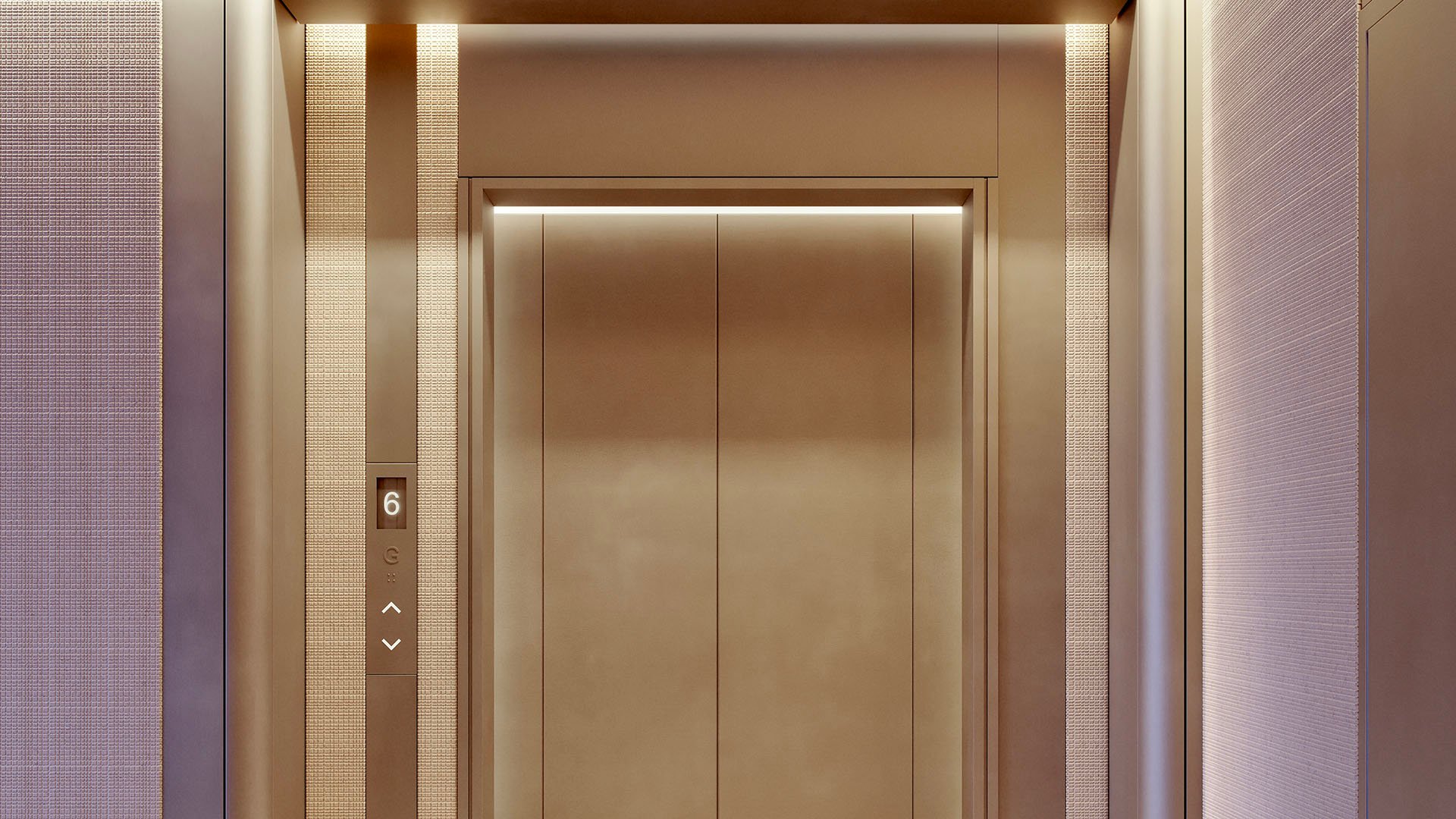
Elevator terminology requires careful verification. A private elevator may refer to a dedicated lift, a controlled elevator that opens into a private foyer or another access arrangement. Semi-private circulation may limit how many residences share an elevator while still involving common use.
Request a floor plan, an elevator-bank diagram and a live demonstration. Ask which credentials permit a stop on the residential floor, whether the elevator opens directly into the home or into a foyer, and what prevents an unauthorized person from reaching that space. Confirm how residents secure the interior side of any elevator foyer.
The service route deserves equal attention. Determine whether household personnel, contractors and deliveries use the resident elevator, a service elevator or another controlled path. Ask how an authorized visitor is prevented from selecting an unrelated floor and where that person can exit.
Families assessing the Fort Lauderdale Beach area may also compare The Ritz-Carlton Residences® Fort Lauderdale. Treat the appointment as an operational rehearsal: follow the intended route, identify each handoff and ask for clarification wherever a procedure depends on staff discretion.
A household moving from Brussels may have established routines for a nanny, cleaner, private chef, driver or tutor. Those relationships should not be translated into shared resident credentials. Request a separate access profile for every recurring staff member, with an approved entrance, defined schedule, permitted elevator route and review process.
Ask whether staff must be preregistered, when identification is checked and whether recurring credentials are available. Confirm which entrance cleaners and caterers should use, whether a nanny accompanying children follows the resident route and how access is withdrawn when an assignment ends.
The household manager should maintain a current roster and communicate additions, removals and schedule changes through the building’s approved process. Drivers need clear instructions covering waiting locations and vehicle release. Private chefs may need a defined route for groceries and equipment. Temporary personnel should receive limited authorization appropriate to their assignment rather than continuing access.
Avoid informal workarounds such as lending a resident credential, leaving a door open or asking one employee to admit another. Convenient shortcuts can undermine the controlled sequence the family is trying to establish.
Guests, vendors and deliveries should not be treated as one category. A social visitor may be escorted through the resident route, while a repair team may require service access and a scheduled elevator. The household should decide who can approve each type of arrival and whether authorization must come from a family member or designated manager.
Create separate procedures for routine parcels, groceries, flowers, urgent documents, furniture and catered events. For each category, identify who accepts the item, where it waits, how the household is notified and who completes the movement to the residence. A delivery should not automatically grant its carrier permission to approach the front door.
Ask management about loading access, permitted delivery periods, oversized-item handling and elevator reservations. Clarify whether a household employee can collect an item and whether building personnel may place anything inside a private foyer. Procedures involving residence access should be explicit rather than inferred.
When touring St. Regis® Residences Bahia Mar Fort Lauderdale, include delivery circulation in the discussion. The objective is to understand the current process at the property, not to rely on general expectations associated with a location or brand.
After touring, prepare a concise access matrix. List each category of person, the authorized entrance, approval method, allowed times, elevator route and person responsible for updating access. Add procedures for unexpected visitors, replacement staff, after-hours arrivals and lost credentials.
The household’s instructions should align with current building rules. Where a preferred routine is unavailable, decide whether the building’s alternative still provides an acceptable level of discretion. Privacy works best when the residence design, management procedures and household practices reinforce one another.
Keep sensitive details limited to those who need them. Staff should understand their own route and responsibilities without receiving broader permissions. Guests and vendors should receive only the instructions required for a particular visit.
Before committing, perform a supervised rehearsal with management’s permission. Arrive by the expected vehicle route, proceed through the intended entrance and follow the elevator sequence to the residence. Trace how a preregistered guest, recurring staff member and scheduled delivery would each be handled.
Record every desk, door, credential and approval involved. Note any point where the process relies on an assumption or an undocumented exception. Then request the current rules governing visitors, household staff, vendors, loading, deliveries and elevator use, including how permissions are modified or cancelled.
A suitable Las Olas residence should support a coherent routine from curb arrival to the front door while remaining manageable for the people who operate the home each day. For discreet guidance comparing and testing Las Olas residences, connect with MILLION.
If branded residences are on your mind — as a home or as an allocation — we would be glad to share what we are seeing, privately.
Begin a quiet conversationReview the complete route from vehicle arrival through the entrance, elevator, foyer and front door. Identify every handoff, credential and approval point.
No. Buyers should request a floor plan and live demonstration to understand the elevator, landing and foyer configuration.
Inspect waiting areas, sightlines, visitor verification and the separation between resident and service circulation. Ask how the process changes after hours.
No. Each recurring staff member should have an individual access profile with defined permissions, hours and routes.
Use limited authorization tied to the vendor’s task and scheduled visit. Confirm the approved entrance and elevator route in advance.
List each user category, entrance, approval method, permitted schedule, elevator route and person responsible for access changes.
Not automatically. The household should define where each delivery is accepted, held and transferred.
Routine parcels, groceries, flowers, urgent documents, furniture and catered events may require different handling. Document the process for each relevant category.
A rehearsal can reveal visibility, shared circulation and unclear handoffs that may not be apparent from plans or amenity descriptions.
Request current rules for guests, staff, vendors, loading, deliveries, elevators and access changes. Review them against the household’s intended routine.