A buyer-focused editorial on how airport access can influence luxury purchase decisions at The Well Coconut Grove, especially for second-home, investment, and cross-market owners.

For the ultra-premium buyer, airport access is rarely about a single trip. It is about the rhythm of ownership. A residence may be used for a season, a long weekend, a school holiday, a board meeting, or a spontaneous escape from another market. When those patterns repeat, the journey from aircraft to front door becomes part of the value proposition.
That is why The Well Coconut Grove invites a more nuanced buyer conversation than design alone. The question is not simply whether a home feels beautiful once you arrive. It is whether the ownership experience remains elegant from the moment the buyer lands, clears the terminal, enters a car, and begins the shift from public movement to private life.
For some buyers, especially those moving between South Florida and other major cities, the airport question can separate two otherwise compelling neighborhoods. A waterfront view, a terrace, a pool, or a generous interior plan may create emotional pull. Yet the practical ease of arrival can determine how often the residence is used, how relaxed the owner feels on arrival, and how confidently the purchase fits into a global routine.
The Well Coconut Grove sits within a buyer decision set where Coconut Grove’s softer residential character is often weighed against more vertical, faster-paced districts. Buyers drawn to the Grove tend to be looking for a sense of enclosure, greenery, and daily livability. They are not necessarily rejecting urban convenience. They are asking whether they can have a calmer address without sacrificing mobility.
That distinction matters. A buyer may admire Brickell for immediacy and density, or consider Coral Gables for established residential character, while still finding that Coconut Grove offers the more emotionally durable lifestyle. Airport access becomes the bridge between those preferences. If the buyer believes the commute pattern will remain manageable, the Grove’s residential atmosphere gains strength. If not, the same buyer may default to a more central-feeling alternative.
In a New Project conversation, this is especially important because the buyer is often underwriting a future lifestyle, not merely purchasing present-day square footage. For New-construction and Pre-construction decisions, the airport discussion tends to appear early, because buyers are evaluating whether the home will serve them over many seasons and many arrivals.
Luxury real estate is often judged by moments that seem small until they become repetitive. The first thirty minutes after landing can frame the entire stay. The last thirty minutes before departure can determine whether the owner leaves relaxed or rushed. Over time, that pattern affects attachment to the residence.
A buyer arriving late in the evening wants a simple transfer home. A family traveling with children, luggage, staff coordination, or pets wants the process to feel intuitive. A principal traveling for business may value the ability to land, change environments, and resume work with minimal friction. None of this requires exaggeration. It simply recognizes that time is one of the rarest luxuries in South Florida’s upper tier.
The Well Coconut Grove should therefore be evaluated not only as an address, but as an operating base. A strong home supports the owner’s real life, including the unglamorous intervals between flights, meetings, school calendars, and social commitments.
A Second-home buyer often measures value through use. The residence that is easiest to reach is more likely to be used frequently, shared with family, and integrated into the owner’s calendar. When access feels complicated, even a remarkable property can become occasional rather than habitual.
This is where airport access can influence willingness to commit. A buyer may accept a longer or more complex journey for a once-a-year destination. They are less likely to accept that friction for a home intended to be part of monthly life. The Well Coconut Grove can appeal to buyers who want the residential texture of the Grove while still thinking practically about repeated arrival.
For Investment-minded purchasers, access can also shape perceived liquidity. Future buyers may vary in taste, but many will understand the value of a location that works for frequent travel. Even when the purchase is primarily lifestyle-driven, the ability to articulate everyday convenience can support confidence.
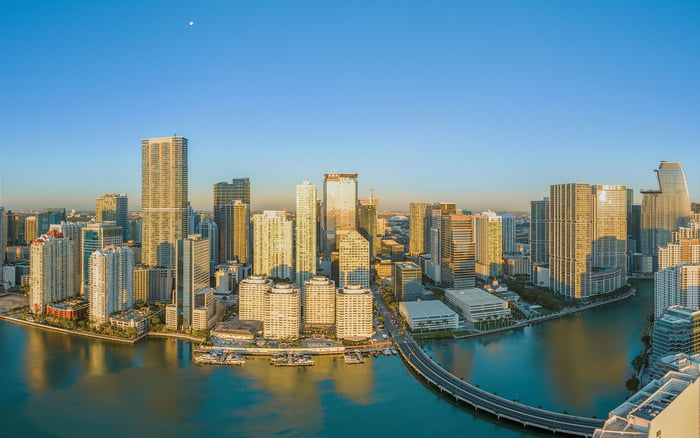
Coconut Grove is not trying to be Brickell, and that is precisely its appeal. The Grove often reads as more intimate, more gardened, and more residential. Brickell, by contrast, offers a dense urban cadence that some buyers prefer for office proximity, dining, and high-rise energy. The airport question can narrow the difference between these choices.
If a buyer can enjoy the Grove’s neighborhood feel while maintaining a workable airport routine, the argument for Coconut Grove becomes stronger. If the buyer’s travel pattern demands the most direct urban circulation possible, a different district may remain in play. The right answer depends on the owner’s calendar, not on a generic ranking.
The same is true when comparing Coconut Grove with established surrounding enclaves. Some buyers will prize the Grove’s balance of privacy and village atmosphere. Others may prioritize a different school, marina, club, or commuting pattern. Airport access does not replace those considerations, but it can reorder them.
A serious buyer should test the ownership pattern rather than rely on a single impression. How often will the residence be used? At what times of day will arrivals and departures occur? Will the buyer travel alone, with family, with staff, or with guests? Is the home intended for long stays, short visits, or a flexible mix?
These questions are more revealing than a generic drive-time estimate. A weekend owner has a different access profile from a full-time resident. A buyer who entertains out-of-town guests has a different threshold for friction than a buyer who lives quietly and travels infrequently. A family with school obligations may evaluate arrival and departure windows differently from an executive using the residence between meetings.
The Well Coconut Grove should be placed into that personal matrix. Its value is best understood when the buyer connects place, travel, privacy, and daily routine into one coherent ownership plan.
Luxury buyers often speak about privacy, architecture, service, and views. Airport access is less romantic, but it can be just as decisive. Repeatable convenience creates confidence. It makes the property feel easier to use, easier to share, and easier to keep at the center of a South Florida life.
For The Well Coconut Grove, the buyer decision may ultimately turn on this balance: the desire for a calmer residential setting paired with the need to remain connected. When that balance feels right, airport access becomes more than a logistical advantage. It becomes part of the emotional case for ownership.
Why does airport access matter for luxury buyers considering The Well Coconut Grove? It affects how easily the home fits into repeated travel patterns, especially for owners who move between cities often.
Is airport access more important for second-home buyers? Often, yes. A second home that is easier to reach is more likely to be used regularly and comfortably.
Should airport access outweigh design or amenities? Not necessarily. It should be weighed alongside architecture, privacy, neighborhood character, and daily lifestyle needs.
How should a buyer compare Coconut Grove with Brickell for airport access? The comparison should be based on the buyer’s own travel schedule, tolerance for urban density, and desired residential atmosphere.
Can airport convenience influence resale confidence? It can support confidence because future buyers often value homes that work smoothly for frequent travel.
Does The Well Coconut Grove only appeal to frequent flyers? No. Airport access is most relevant to frequent travelers, but it can also matter for visiting family, guests, and seasonal use.
What should buyers test before committing? They should consider typical arrival times, departure habits, family logistics, and whether the residence will be used for short or long stays.
Is a quieter neighborhood compatible with strong access? For many buyers, that combination is the goal: a calmer home environment without feeling disconnected from regional mobility.
Why does access feel more important in New-construction purchases? Buyers are often planning future use, so they want confidence that the residence will support their lifestyle over time.
What is the best way to shortlist comparable options for touring? Start with location fit, delivery status, and daily lifestyle priorities, then compare stacks and elevations to validate views and privacy.
If you'd like a private walkthrough and a curated shortlist, connect with MILLION.
If branded residences are on your mind — as a home or as an allocation — we would be glad to share what we are seeing, privately.
Begin a quiet conversation