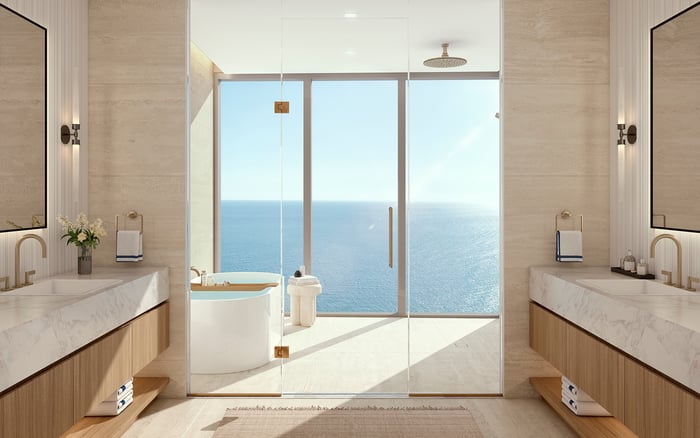
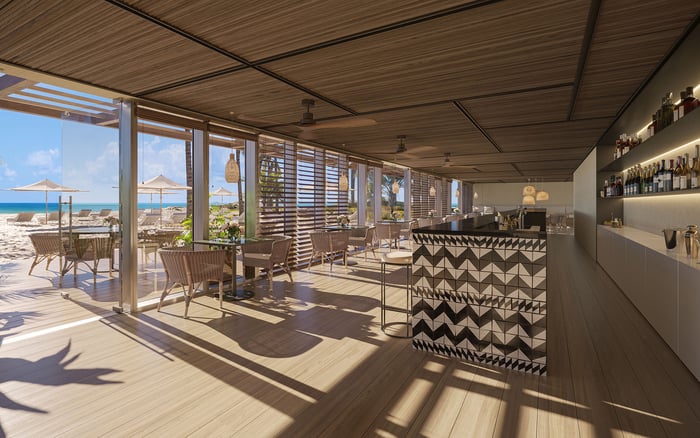
A buyer-focused walkthrough framework for Waldorf Astoria Residences Pompano Beach, emphasizing envelope durability, service planning, life-safety systems, privacy, and long-term ownership quality beyond visible luxury finishes.
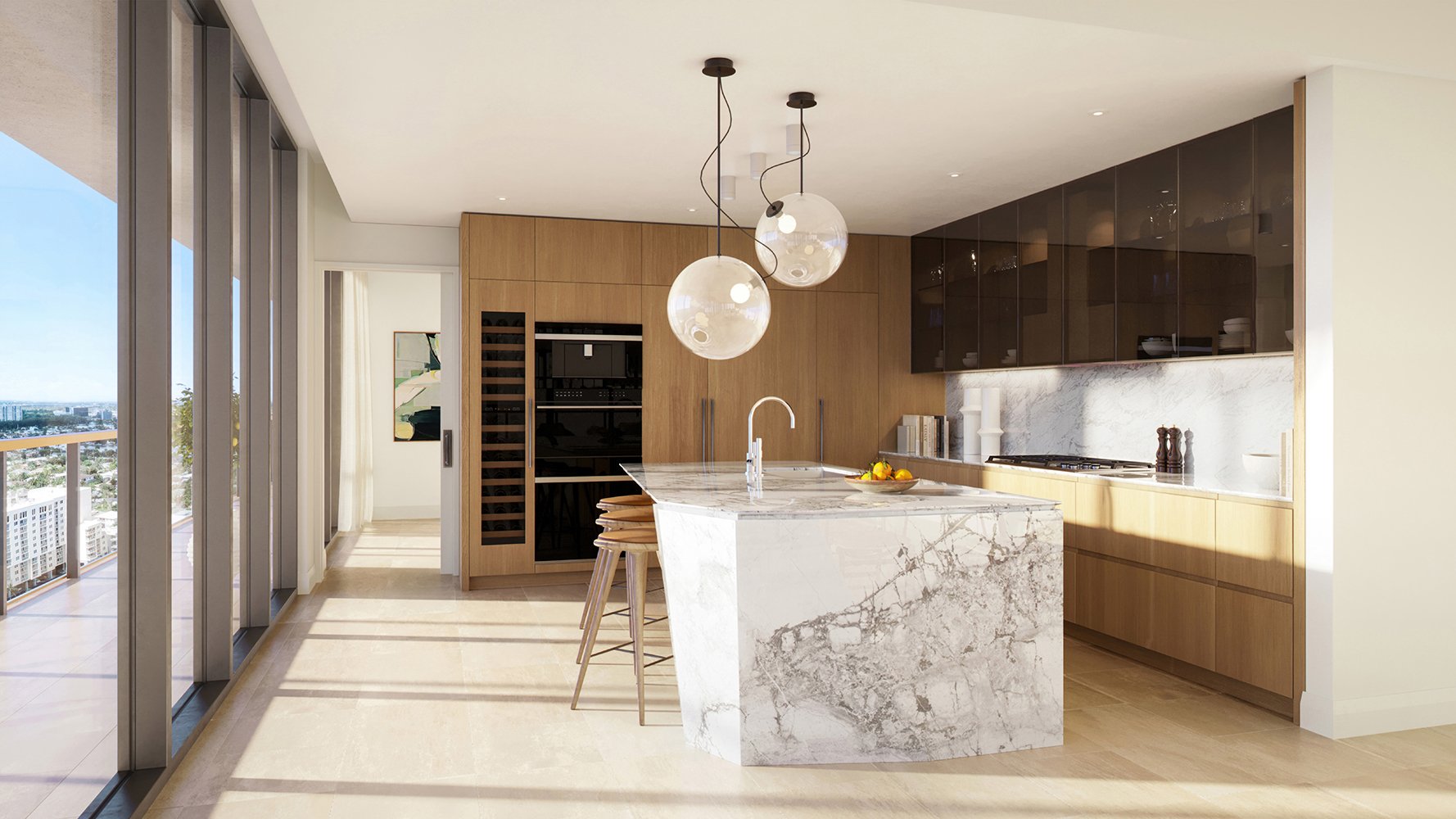
At Waldorf Astoria Residences Pompano Beach, a successful buyer walkthrough should feel less like a design tour and more like a private commissioning review. The Atlantic view, Italian millwork, book-matched stone, and polished fixtures matter, but they are only the visible layer of value. In a branded oceanfront residence, the deeper question is whether the building can preserve that value through salt air, storm seasons, service complexity, and daily operational expectations.
The category language is intentional: Branded Residences, Oceanfront, New-construction, and Pompano Beach each demand a disciplined inspection standard. A buyer is not only evaluating a private home. The buyer is evaluating a hospitality-inflected residential ecosystem where privacy, systems, circulation, maintenance access, and long-term stewardship determine whether the brand promise can be lived, not merely marketed.
Coastal Pompano Beach is beautiful, but it is also demanding. Salt-laden air can accelerate wear on exposed components, especially balcony railings, glazing frames, exterior hardware, coatings, and sealants. During a walkthrough, the exterior envelope deserves the same attention typically reserved for kitchens and primary suites.
Begin with the balcony. Look closely at railings, fasteners, thresholds, drains, door tracks, grout lines, coatings, and any exposed metal. Ask how these areas will be accessed, cleaned, recoated, inspected, and repaired over time. A pristine delivery finish is not the same as a durable maintenance plan. The question is not whether an oceanfront building will require exterior care, but whether that care has been anticipated with seriousness.
Impact-rated windows and doors should be tested beyond appearance. Buyers should request rating documentation, understand installation quality, and examine seals, weeps, drainage, and ease of operation. Doors should open and close smoothly. Tracks should feel precise. Any resistance, air gap, pooling point, or uneven seal deserves follow-up before closing.
This standard is equally relevant across nearby ultra-luxury coastal properties, from The Ritz-Carlton Residences® Pompano Beach to Armani Casa Residences Pompano Beach. In every case, the most valuable residences are not simply the ones with the most seductive views. They are the ones whose exterior assemblies have been designed, installed, and maintained for a marine climate.
A branded residence should function with grace even when no one is staging the experience. Buyers should walk the service logic of the building. How does a resident arrive? Where does a guest wait? How does a delivery move from loading area to residence? How does staff circulation avoid compromising privacy? How does amenity access flow during peak use?
The lobby should not be judged solely by materials. Its configuration should support discretion. Elevator planning should separate, or at least thoughtfully manage, resident movement, guest movement, staff movement, and service needs. Amenity access points should feel intuitive without exposing private residential areas to unnecessary traffic.
Back-of-house logistics are especially important in branded residential living because the brand premium is tied to reliability. Concierge flow, package handling, staff spaces, service corridors, loading areas, and maintenance routes all shape the day-to-day experience. If those areas feel improvised, cramped, or overly visible, the service promise may be harder to sustain.
The same lens applies to other hospitality-shaped residential offerings such as W Pompano Beach Hotel & Residences, where buyers should think carefully about how residential privacy, guest activity, amenity circulation, and operational demands intersect.
The most consequential parts of a luxury residence are often the least photogenic. Mechanical, electrical, plumbing, emergency, and life-safety systems determine livability more directly than decorative finishes do. A buyer walkthrough should include questions about air-conditioning performance, water pressure, drainage, emergency power, fire and life-safety infrastructure, and service access.
In a South Florida oceanfront high-rise, equipment location is a central issue. Buyers should verify where critical systems sit relative to flood exposure, including electrical rooms, pumps, emergency systems, and ground-level service areas. The goal is not to become an engineer during a showing. The goal is to identify which specialists should review the documents and which physical observations require deeper diligence.
Storm preparation should also be discussed in practical terms. How is water managed at terraces, entries, garage levels, and loading areas? What procedures govern preparation before severe weather? What systems are supported by emergency power? What happens when elevators, pumps, access controls, or climate systems need service after a storm?
A professional walkthrough connects what the eye sees with what ownership will inherit. That includes condominium documents, maintenance obligations, service agreements, reserve planning, and the practical cost of keeping an oceanfront branded building at the level implied by its name.
Luxury buyers often focus on the private residence because that is where emotion concentrates. Yet common areas often reveal more about operational quality. Corridors, elevator vestibules, amenity transitions, staff areas, storage zones, mechanical access points, and parking circulation all tell a story about how the building will perform.
Look for consistency. Do materials change abruptly once the tour leaves primary public spaces? Are service areas orderly? Do amenity spaces feel connected without becoming overexposed? Are there pinch points where residents, guests, deliveries, and staff are likely to collide? A residence may be beautifully finished, but if the building’s shared infrastructure feels underplanned, ownership friction can appear quickly.
For South Florida coastal condominiums, buyers are right to pay close attention to structural condition, inspection history, maintenance planning, and life-safety infrastructure. For new properties, this does not mean assuming a problem exists. It means treating documentation, inspection standards, and maintenance planning as part of the asset itself.
For comparison-minded buyers looking along the Broward coastline, Rosewood Residences Hillsboro Beach reinforces the same larger point: the higher the branding, the more important it becomes to test the quiet systems that protect privacy, reliability, and long-term presentation.
The best walkthrough produces a written question list. Separate items into residence-level, building-level, operational, legal, and financial categories. Residence-level issues include glazing, doors, balcony drainage, interior mechanical performance, appliance operation, and finish completion. Building-level issues include façade access, exterior maintenance cycles, water management, equipment locations, and emergency systems.
Operational questions should focus on concierge protocols, amenity scheduling, guest access, deliveries, staff circulation, and privacy controls. Legal and financial questions should move into condominium documents, maintenance obligations, reserve planning, service contracts, insurance responsibilities, and owner rules.
A buyer should leave with clarity on what is beautiful, what is durable, what is documented, and what still requires professional review. That is the essence of a true luxury walkthrough. It respects the drama of the view, but it does not confuse the view with the whole investment.
What should buyers inspect first at Waldorf Astoria Residences Pompano Beach? Start with the oceanfront envelope, including balcony railings, glazing, exterior hardware, coatings, sealants, drainage, and door operation.
Are finishes enough to judge a branded residence? No. Finishes are important, but branded value also depends on building performance, service reliability, privacy, and long-term maintenance planning.
Why does salt air matter during a walkthrough? Salt-laden air can accelerate wear on exposed metal, coatings, glazing components, railings, and exterior hardware, especially on ocean-facing elevations.
Should buyers ask about façade maintenance? Yes. Buyers should understand how glazing, balconies, railings, sealants, and exposed metals will be accessed, inspected, cleaned, and maintained over time.
What should be checked on impact-rated windows and doors? Buyers should review rating documentation, installation quality, seals, drainage paths, tracks, and ease of opening and closing.
Why are back-of-house areas relevant to luxury buyers? Service corridors, loading areas, staff routes, and package handling reveal whether the building can support discreet, reliable branded-residence operations.
How should privacy be evaluated during a tour? Study elevator planning, lobby configuration, guest access, service circulation, amenity entrances, and the separation between resident and operational flows.
Which systems deserve attention beyond the residence itself? Mechanical, electrical, plumbing, emergency power, drainage, pumps, access controls, and life-safety systems should all be part of the review.
How should common areas be read during a walkthrough? Corridors, elevator vestibules, amenity transitions, parking circulation, storage zones, and staff areas can reveal how carefully the building is planned for daily use.
What should buyers do after the walkthrough? Convert observations into questions for legal, engineering, insurance, and condominium-document review before treating the walkthrough as complete.
For a confidential assessment and a building-by-building shortlist, connect with MILLION.
If branded residences are on your mind — as a home or as an allocation — we would be glad to share what we are seeing, privately.
Begin a quiet conversation