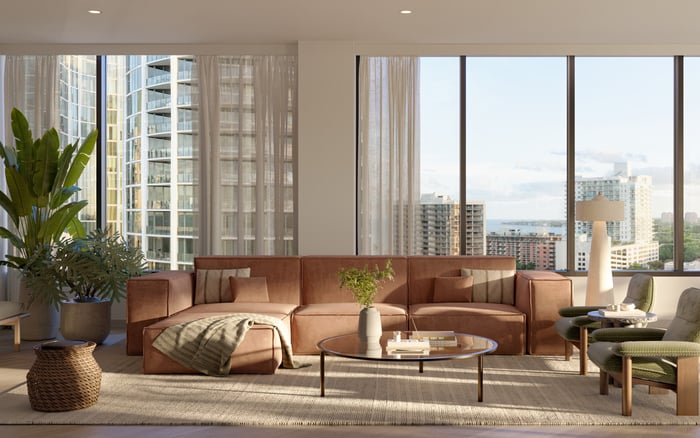
A buyer-focused examination of The Well Coconut Grove and the hidden governance, funding, operating, and control questions behind wellness-branded residential amenities.

The Well Coconut Grove enters a market where luxury buyers no longer evaluate a residence by finishes, frontage, and floor plan alone. In South Florida’s upper tier, wellness has become part of the value proposition, shaping how buyers imagine daily life, privacy, recovery, longevity, and service. Yet the most important question may not be what appears in renderings or sales language. It is who owns, controls, operates, and funds the wellness experience after the building is delivered.
That distinction is central to The Well Coconut Grove. A wellness-branded condominium can feel straightforward: a physical environment, a service promise, and an expectation of access. But sophisticated purchasers know that amenities and services do not always sit in the same legal or operating bucket. A room, spa suite, fitness area, or treatment space may be a condominium asset, while programming, staffing, protocols, brand standards, and the concierge layer may be governed by a separate agreement.
For buyers tracking The Well Coconut Grove, the issue is not skepticism about wellness. It is precision. In a high-value purchase, the visible amenity is the front door. The operating structure is the hidden risk.
Traditional luxury amenities were easier to understand. A gym, pool, club room, or residents’ lounge generally belonged to the condominium association or was otherwise defined in the governing documents. The new wellness model is more intricate. It may involve hospitality operations, brand-management agreements, service providers, licensed programming, membership structures, and, in some cases, healthcare-adjacent considerations.
This places The Well Coconut Grove within a broader shift from amenity collections to wellness ecosystems. The promise is not simply that residents can exercise or relax. The higher-value proposition is that daily life can be organized around curated health, recovery, and concierge-style care. For affluent buyers, that can be meaningful. It can also support a value premium if the service platform is durable, well-funded, and clearly governed.
The question is whether that platform is an owned asset, a contracted service, a licensed brand, a discretionary operating feature, or something else. Each answer carries a different risk profile.
If the wellness operator is a tenant, residents may benefit from proximity, but long-term access could depend on lease terms. If it is a third-party manager, the condominium or sponsor may have contractual obligations that define scope, pricing, duration, and termination rights. If it is a branded service provider, brand standards and intellectual property may be governed outside the condominium declaration. If it operates as a membership club, residents need to understand whether access is included, prioritized, discounted, or separately priced.
At the luxury level, diligence should move beyond the brochure. The starting point is to separate physical amenity ownership from service-platform control. Who owns the rooms, equipment, common areas, and buildout? Who controls the programming, personnel, appointments, technology, brand standards, and wellness concierge? Those two answers may not be identical.
The second question is funding. A health-concierge experience requires ongoing labor and management. Buyers should look for clarity on who pays for staffing, programming, maintenance, insurance, licensing, future upgrades, and replacement of specialized equipment. If the cost is embedded in condominium dues, it carries a different implication than if residents pay à la carte. If it is bundled into branded-residence privileges, the duration and enforceability of those privileges become essential.
The third question is governance. Can the condominium association modify the wellness program later? Can an operator terminate the arrangement? Are replacement operators permitted? Are residents obligated to fund a program even if they do not use it? Can fees increase? What happens if brand standards change or the operator’s business model evolves?
These questions are especially relevant for Pre-construction purchases, where the lifestyle promise is evaluated before residents experience the building. In New-construction luxury, buyers often accept that design and service will mature after delivery. Wellness services add another layer because the core value may depend on people, systems, and contracts rather than architecture alone.
For The Well Coconut Grove, the prudent buyer should understand the possible pathways through which wellness services may be delivered. One model is condominium-dues funding, where all owners support the platform as part of the building’s operating budget. This can create broad access, but it also means residents are underwriting the service whether or not they use it.
Another model is à-la-carte pricing. That may reduce fixed assessments, but it can also make the most desirable services meaningfully more expensive for frequent users. A third model is membership, where residents may receive automatic inclusion, preferential access, or the right to join a separate wellness club. A fourth model is branded-residence privilege, where access is presented as part of the residential identity but still depends on underlying agreements.
None of these structures is inherently superior. The issue is alignment. A buyer seeking predictability may prefer a clearly budgeted association function. A buyer seeking flexibility may prefer optional fees. An investor may focus on whether the wellness platform enhances resale value without creating unpredictable assessment exposure. In that sense, wellness is not just lifestyle. It is also an Investment variable.
The governing and operating documents should define what marketing language cannot. Buyers and advisors should look for the nature of the wellness operator’s role, the duration of any agreement, renewal mechanics, fee structures, termination rights, control of staff, insurance obligations, maintenance responsibilities, and resident access terms.
The documents should also clarify whether services are guaranteed or discretionary. A wellness-branded amenity should not be assumed permanent simply because it appears in sales materials. The lasting promise depends on obligations written into condominium documents, management agreements, brand licenses, membership terms, budgets, and association governance provisions.
This is where The Well Coconut Grove may invite a more advanced buyer conversation than a conventional amenity review. The brand and concept may be compelling, but the legal architecture determines durability. A beautiful space without a stable operating agreement is not the same asset as a well-funded, contractually supported service platform.
For Coconut Grove buyers, this point matters because the neighborhood already competes on privacy, design, greenery, and an elevated residential rhythm. A New Project that adds wellness may stand apart, but only if the service model can be understood with the same rigor as views, layout, parking, and monthly carrying costs.
Wellness branding can create a premium because it gives buyers a story about how they will live. It suggests convenience, care, discretion, and intentionality. The premium is strongest when the experience is dependable and weakest when the operating structure is vague.
The Well Coconut Grove therefore raises a timely question for the entire South Florida luxury market: is wellness a real estate asset, a hospitality service, a brand license, or a membership economy attached to a residence? In practice, it can be more than one. That is why buyers should avoid reducing the issue to whether the amenity exists. The better question is who controls it, who funds it, and what happens if the economics change.
This same lens applies beyond The Well Coconut Grove. A buyer comparing wellness-branded offerings, including concepts such as The Well Bay Harbor Islands, should not assume that similar branding means similar ownership, access, or cost structures. The operating documents remain the point of truth.
The Well Coconut Grove reflects where luxury residential demand is heading: toward homes that promise not only shelter and status, but a managed way of living. For the right buyer, that can be highly attractive. It can make daily wellness more convenient and help differentiate a residence in a competitive market.
But the buyer’s real protection lies in understanding the mechanics behind the promise. Who owns the space? Who controls the service? Who pays the bills? Who can change the program? Who guarantees access? Who carries regulatory, insurance, and staffing responsibilities? These are not minor legal questions. They are the substance behind the wellness premium.
In a market that increasingly sells lifestyle as architecture, The Well Coconut Grove asks buyers to look beneath the calm surface of the amenity deck. The future value of the offering may depend less on the image of wellness than on the structure that keeps it operating.
What is the main buyer issue at The Well Coconut Grove? The key issue is who owns, controls, operates, and funds the wellness or health-concierge platform over time.
Why is wellness ownership different from a traditional amenity? Wellness services may involve operators, brand agreements, staffing, memberships, and regulatory concerns beyond physical common areas.
Should buyers assume wellness services are permanently included? No. Buyers should rely on governing documents and operating agreements, not marketing language, to confirm duration and obligations.
What is the difference between amenity ownership and service control? The condominium may own a physical space while a separate party controls programming, staffing, branding, or access.
How might residents pay for wellness services? Costs may appear through condominium dues, à-la-carte charges, membership fees, or bundled branded-residence privileges.
Why does the operator’s role matter? A tenant, manager, brand provider, club operator, or association function can each create different rights, costs, and risks.
What costs should buyers review carefully? Buyers should examine staffing, programming, maintenance, insurance, licensing, upgrades, and any specialized equipment obligations.
Is the wellness platform part of resale value? It can be, but only if buyers understand whether the offering is durable, funded, and clearly controlled.
Why is this especially important in Pre-construction purchases? Buyers are evaluating a future experience, so the documents must define what will actually be delivered and maintained.
What should advisors ask first? They should ask whether the wellness offering is an owned asset, a contracted service, a licensed brand, or a discretionary feature.
For a discreet conversation and a curated building-by-building shortlist, connect with MILLION.
If branded residences are on your mind — as a home or as an allocation — we would be glad to share what we are seeing, privately.
Begin a quiet conversation