For South Florida buyers, year-round boating is less about owning a vessel and more about choosing the right residential structure, waterfront access, service model, and long-term lifestyle fit.
In South Florida, boating is not a seasonal indulgence. It is a year-round way of reading the coast, moving between neighborhoods, entertaining with privacy, and making a residence feel larger than its walls. For many ultra-premium buyers, the first question sounds simple: should the home come with direct water access? The more useful question is sharper: what ownership structure will make boating feel effortless?
That distinction matters. A sweeping water view may satisfy the eye, but it does not automatically solve dockage, tide considerations, service access, storage, insurance, crew logistics, or the simple pleasure of stepping from breakfast to the boat without turning the day into an operation. The South Florida buyer who understands this early tends to make cleaner decisions, whether considering a waterfront estate, a boutique condominium with marina access, or a residence positioned near a yacht club or private dock facility.
The vocabulary can be deceptively casual. Marina, boat slip, oceanfront, and waterfront are often used as if they describe the same lifestyle. They do not. Each carries a different balance of convenience, control, privacy, cost, and long-term flexibility.
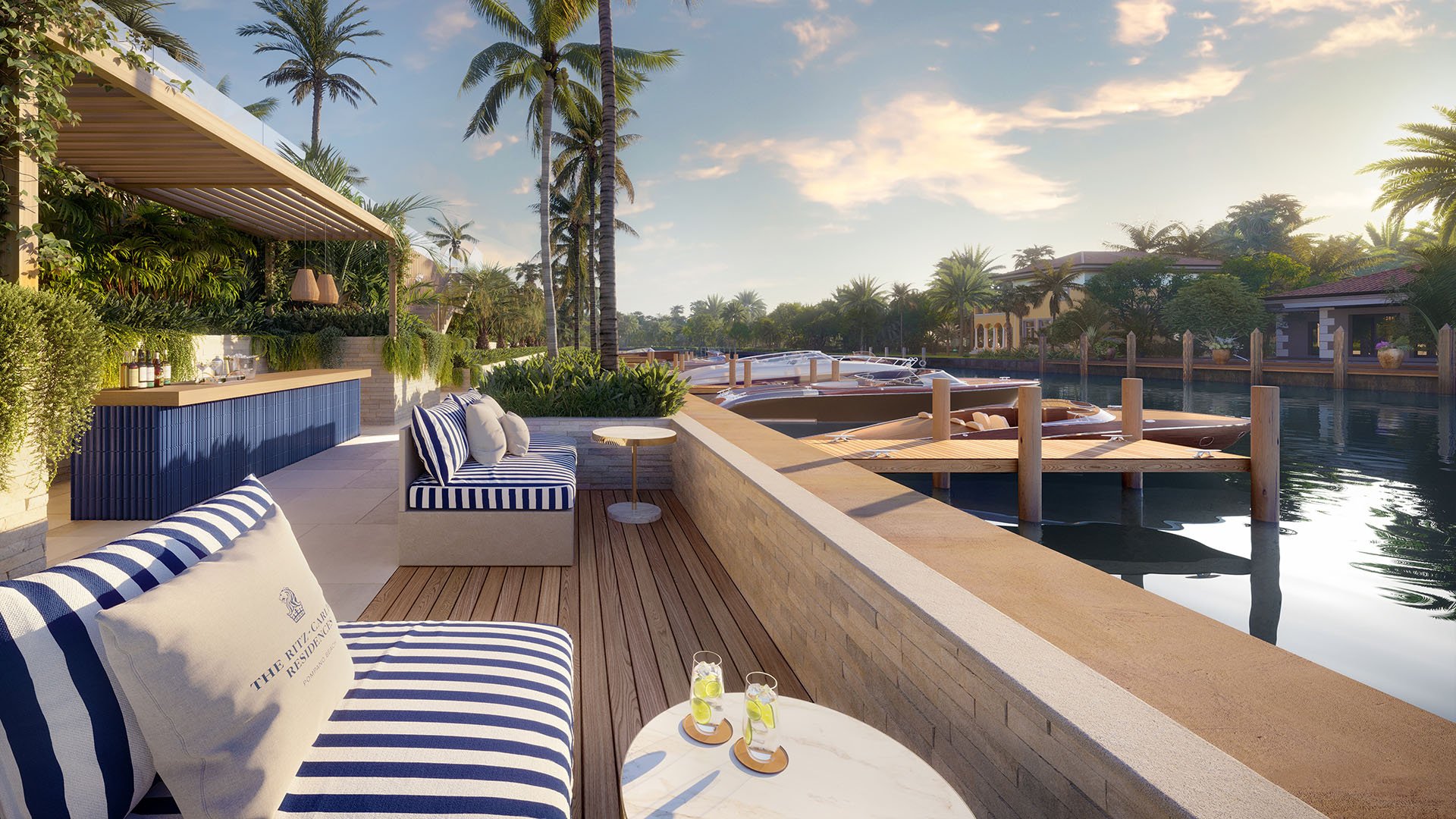
The first model is the private waterfront home, often the dream for owners who want maximum autonomy. A single-family property with direct dockage can offer immediate access, privacy, and the ability to manage the vessel on one’s own terms. It also places more responsibility on the owner. Seawall condition, dock configuration, depth, exposure, bridge clearance, and maintenance all become part of the real estate decision rather than a separate boating matter.
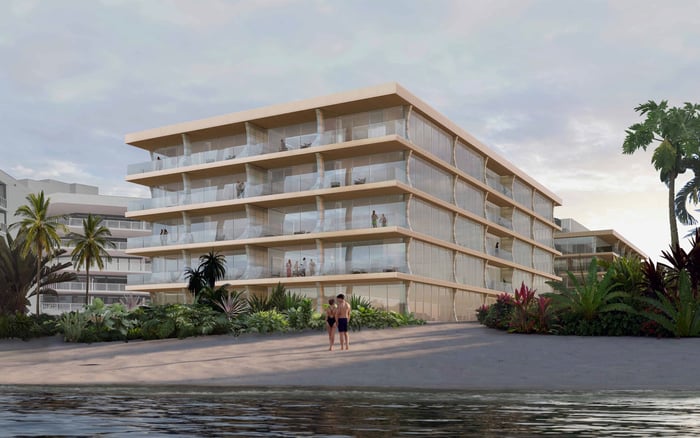
The second model is condominium living with dedicated or nearby boating access. This can be highly attractive to buyers who prefer lock-and-leave service, security, amenities, and a more managed environment. The tradeoff is precision. Not every waterfront condominium is a boating building. Buyers need to understand whether slips are deeded, licensed, leased, assigned, waitlisted, or entirely separate from residential ownership.
The third model is residential ownership near established club or marina infrastructure. This can work well for owners who prize a premier home base but do not need the boat directly below the residence. In this structure, convenience is measured less by a private dock and more by the quality of access, parking, tendering, staff coordination, and the route between home and water.
Each model can be correct. The mistake is choosing based only on romance. The better approach is to map how the owner actually boats.
South Florida is one coastline, but it is not one boating market. Miami Beach often appeals to owners who want cultural immediacy, bayfront beauty, and fast access to social destinations by water. The ownership question there is frequently about balancing glamour with genuine usability: where can the owner live beautifully while avoiding friction every time the boat is used?
Fort Lauderdale has a different boating identity, shaped by an extensive waterfront culture and a deep familiarity with yacht ownership. For buyers who think in terms of vessels, captains, service yards, and long weekends on the water, the residential search often begins with navigation and dock function before interiors are even discussed.
Palm Beach buyers may approach the question through privacy, legacy, and an elegant separation between home, club, and vessel. The boating lifestyle can be more discreet, with access often considered as part of a broader ownership ecosystem rather than the sole defining feature of the residence.
These differences do not create a hierarchy. They create fit. The most sophisticated buyer does not ask which location is best in the abstract. The buyer asks which location supports the life being purchased.
Waterfront property has always carried emotional power. Morning light on the bay, the movement of boats, the horizon line beyond a terrace, and the quiet theater of passing water all affect how a residence feels. But boating adds an operational layer that must be investigated with discipline.
A residence can have a spectacular view and still be impractical for a serious boater. Conversely, a property with a less dramatic outlook may deliver superior day-to-day boating convenience. This is where buyers should separate visual waterfront value from functional marine value.
Functional questions include how quickly the vessel can be reached, whether dockage is protected, how provisioning works, whether guests can board comfortably, and how weather affects use. For larger vessels, approach, turning radius, bridge clearance, and depth become defining considerations. For smaller boats, ease of spontaneous use may matter more than scale.
In the luxury segment, the highest-value choice is often the one that makes boating feel natural rather than ceremonial.
For condominium buyers, boating access deserves the same attention as floor plan, ceiling height, and building services. The key issue is not simply whether slips exist. It is what legal and practical relationship those slips have to residential ownership.
Some buyers want a slip that is clearly tied to the residence. Others are comfortable with separate marina arrangements if the building’s location and amenities justify it. The distinction should be clarified before emotional commitment, because a beautiful residence without secure boating logistics can become a compromise disguised as convenience.
Building culture also matters. A waterfront condominium may be architecturally impressive but not oriented toward boating. Another may have a quieter aesthetic yet function more gracefully for owners who live by the water. The right building staff, loading areas, parking flow, tender policies, guest access, and storage rules can make the difference between a residence that supports boating and one that merely overlooks it.
For ultra-premium buyers, these details are not minor. They are part of the service architecture of the home.
Private waterfront estates offer the most control, but they ask more of the owner. A dock is not just a lifestyle amenity. It is an asset requiring care, oversight, and periodic evaluation. The same is true for seawalls, lifts, utilities, lighting, security, and shoreline resilience.
Estate buyers should view marine infrastructure as part of due diligence. The residence may be exquisite, but if the waterfront elements do not suit the boat or the intended use, the property may require significant adaptation. This is especially important when the buyer expects immediate use after closing.
There is also a privacy dimension. Some owners want the boat visible from the primary living spaces, almost as an extension of the home. Others prefer separation, especially if crew, service, or frequent provisioning would interrupt the calm of the property. Neither instinct is wrong. The best estates align the emotional desire for water with the practical choreography of ownership.
The clearest way to answer the ownership question is to imagine a normal boating day, not a perfect one. Who decides to go out? How quickly can the boat be ready? Where do guests arrive? Where is the car left? How are provisions loaded? What happens when the weather changes? How does the owner return after dinner?
For some buyers, the answer points to a private dock. For others, it points to a serviced marina and a residence that offers privacy, amenities, and a less maintenance-heavy relationship with the water. A family with frequent guests may prioritize boarding comfort and entertaining flow. A couple using the boat for quiet escapes may prioritize proximity and simplicity.
Year-round boating rewards honesty. A purchase based on occasional fantasy may disappoint. A purchase based on repeated habits can feel extraordinary for years.
The South Florida ownership question behind year-round boating is ultimately about control versus convenience. A private dock gives autonomy. A managed marina environment can offer ease. A waterfront condominium may provide elegance with less personal oversight, provided the access structure is clear.
The most desirable answer is the one that makes boating part of the owner’s daily rhythm without turning the home into a management project. In this market, the water is not merely a backdrop. It is a second address, a route to privacy, and a measure of how well a residence has been chosen.
Is a waterfront view the same as boating access? No. A residence may offer a beautiful water view without providing practical dockage, marina rights, or convenient boarding.
Should boaters prioritize a private dock or a marina? It depends on the owner’s tolerance for management. A private dock offers control, while a marina can offer structure and service.
What does boat-slip ownership mean in a condo setting? It can vary by building. Buyers should clarify whether the boat slip is deeded, assigned, leased, licensed, or separately controlled.
Is Miami Beach best for social boating? Miami Beach can suit buyers who want boating close to dining, culture, and bayfront energy, but specific access still matters.
Why do many serious boaters consider Fort Lauderdale? Fort Lauderdale has a strong boating culture, making it attractive for owners focused on marine logistics and yacht-oriented living.
How does Palm Beach differ for boating buyers? Palm Beach often appeals to buyers who value privacy, club life, and a more discreet relationship between residence and vessel.
Can a condo be a good choice for a year-round boater? Yes, if the building’s boating access, staff flow, parking, storage, and guest logistics support the owner’s routine.
What should estate buyers inspect beyond the home? They should evaluate dock condition, seawall integrity, utilities, depth, exposure, and how the waterfront supports the intended boat.
Does larger always mean better for dockage? Not necessarily. Protection, usability, approach, and convenience may matter more than the apparent size of the waterfront area.
What is the best first step before buying around boating? Define how often the boat will be used, who will manage it, and whether control or convenience is the higher priority.
To compare the best-fit options with clarity, connect with MILLION.
If branded residences are on your mind — as a home or as an allocation — we would be glad to share what we are seeing, privately.
Begin a quiet conversation