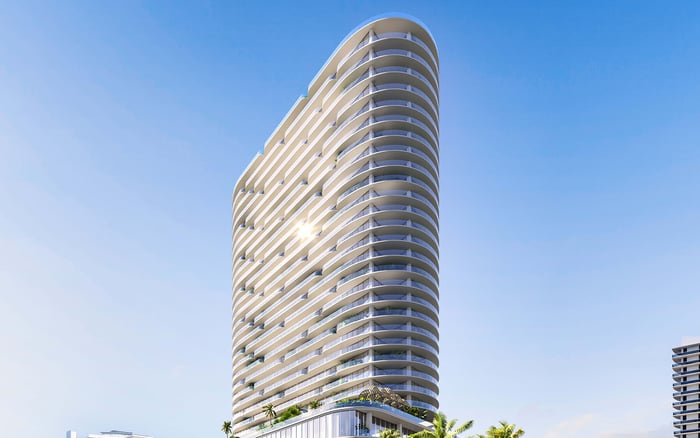
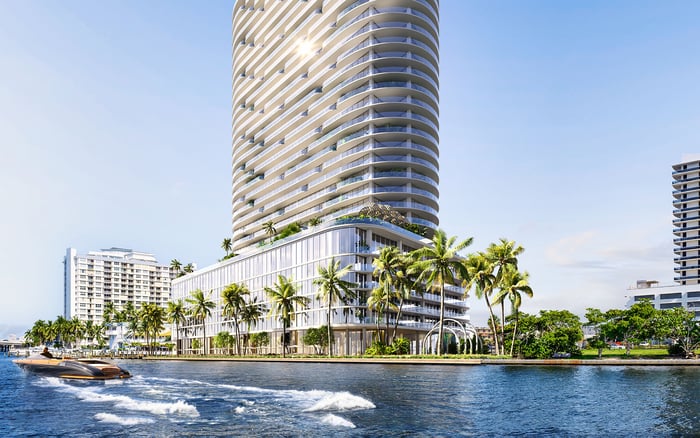
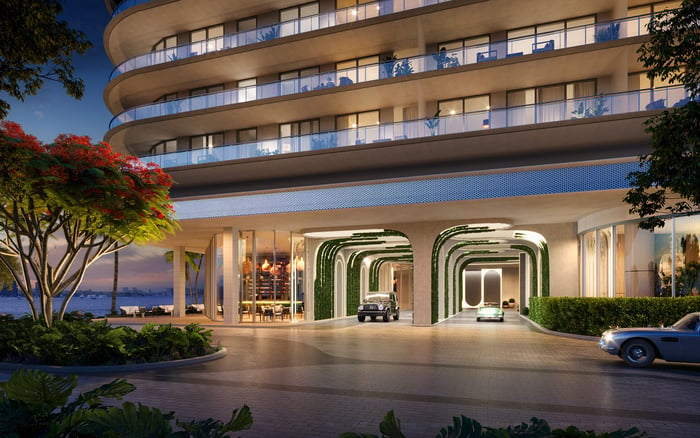
At Continuum Club & Residences, privacy depends less on the presence of concierge and storage amenities than on the operating rules governing every handoff from curb to residence.
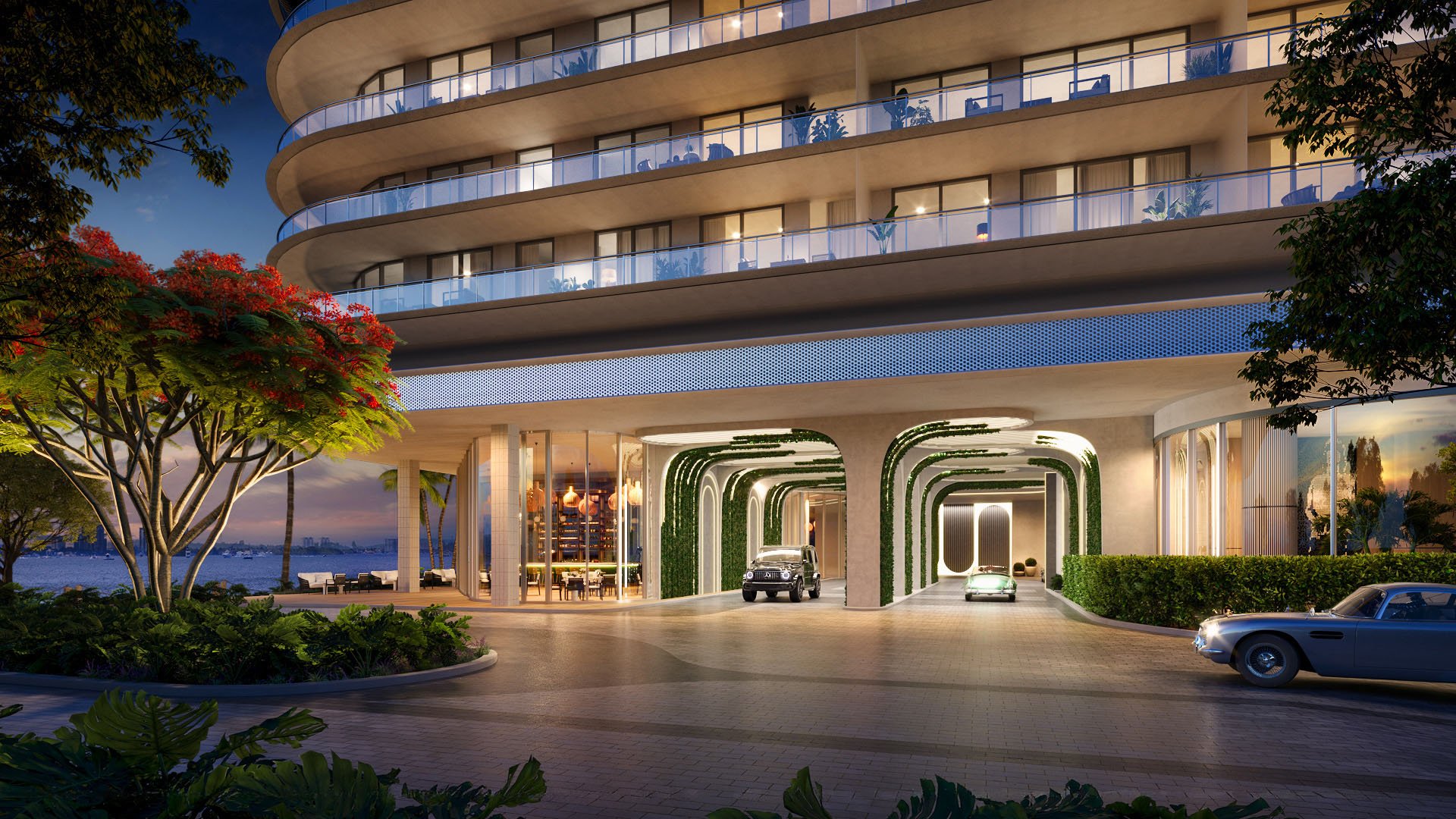
For a serious buyer, privacy is not simply a matter of tinted glass, controlled access or a staffed front desk. It is an operating system. At Continuum Club & Residences North Bay Village, the presented framework includes a porte cochere with 24/7 valet service, a staffed double-height lobby, a 24/7 concierge and temperature-regulated storage for food and package deliveries. Together, these features create multiple opportunities to control arrivals.
What remains unresolved is how those features function as a single chain. A courier may be intercepted at the porte cochere, admitted through the lobby, redirected to another entrance or escorted farther into the building. Each route carries different implications for anonymity, hallway traffic and the visibility of residents’ routines. Before committing, a buyer should ask management to narrate a typical delivery, from vehicle arrival through collection or door handoff.
In a luxury residence, privacy is determined by the route as much as the destination.
Temperature-regulated storage is a meaningful convenience in South Florida, particularly for groceries and other perishables. Yet that description alone does not establish whether the development plans a dedicated package room, several temperature zones or a staff-only holding area. Nor does it answer who can enter, how access is recorded or how long goods may remain.
Ask whether every item is scanned, photographed or manually logged; whether residents receive an automated notification; and whether collection requires identification, an access credential or staff retrieval. Confirm camera coverage, package-retention periods and procedures for high-value, oversized or signature-required deliveries. For refrigerated items, request the written chain of custody and any policy addressing delay, loss or spoilage.
The central question is not whether storage exists, but whether responsibility is clear at every transfer. If a grocery order moves from courier to valet, valet to concierge and concierge to storage, the buyer should know which team records each handoff and who is authorized to release the goods.
The porte cochere creates a staffed checkpoint, but buyers should not assume it is the universal courier entrance. The delivery route could begin at the porte cochere, loading area, garage, lobby or another controlled access point. The listed features do not resolve that question.
Request separate protocols for food couriers, parcel carriers, contractors, movers and event vendors. Ask whether each category has designated hours, entrances and identification requirements, and whether staff escorts are mandatory. Routine parcel volume may warrant one process; a mover, florist or private chef may require another.
The same test applies when considering nearby options such as Shoma Bay North Bay Village and Tula Residences North Bay Village. The objective is not to presume that any property follows a particular model, but to apply the same operational questions consistently. A polished arrival is valuable; a documented circulation plan is more revealing.
A dedicated service elevator for staff, vendors and deliveries has not been clearly identified. Buyers therefore should not assume that couriers avoid resident elevators. Current architectural plans and the elevator schedule should indicate whether service circulation is physically separated, operationally separated through access controls, or shared.
If elevators are shared, ask how staff manages access. Can a courier select a residential floor, or must a resident or employee authorize it? Are vendors escorted? Are delivery windows restricted during peak resident movement? Does an elevator open directly into a residence, a private vestibule or a shared corridor? It also remains unclear how many residences share each elevator bank and whether private or semi-private arrangements are planned.
These details affect more than convenience. Shared elevators can expose patterns of occupancy, household staffing, travel and purchasing. Even when couriers never reach a residence door, an uncontrolled ride through residential floors can dilute the privacy promised at the building entrance.
It has not been established whether residents collect routine packages or staff delivers them to residence doors. Either system can be discreet if governed well. Central collection limits traffic on residential floors, while staff-only door delivery can provide convenience without admitting outside couriers.
The buyer should determine who is permitted beyond the lobby, whether service personnel use separate credentials and whether a delivery may be left outside a residence. Ask how unclaimed items, returns and outgoing parcels are handled. If a resident authorizes direct access for a private vendor, clarify whether that authorization is time-limited, recorded and revocable.
The project name should not substitute for building-specific diligence. Staffing, floor plates, association rules and circulation can differ from one property to another. Privacy must be evaluated through the documents and operating plan for the residence being purchased.
Continuum is planned as a waterfront development with four amenity levels totaling about 60,000 square feet. Its program includes a restaurant, two pools, a marina, social lounge, wellness facilities and family-oriented spaces. This breadth strengthens the residential proposition while making circulation especially important. Residents, members, guests, staff and vendors may move through the property for different purposes and at different times.
Ask whether amenity vendors share arrival points with household deliveries, whether restaurant operations use separate service routes and whether event suppliers can enter residential elevator banks. The most refined arrangement is not necessarily the one with the most checkpoints. It is the one in which permissions are narrow, movement is legible to staff and residential corridors remain insulated from unnecessary traffic.
Marketing language establishes the intended experience, but the condominium offering documents, operating rules and final staffing plan should govern the diligence process. Request the declaration, current floor plates, elevator schedule, vendor-access policy, delivery rules, move-in procedures and package-storage operating policy. Reconcile advertised valet and concierge services with the duties actually assigned to each team.
A serious review should secure written answers on several points: courier entrance; delivery hours and cutoff times; logging and notification technology; storage access; refrigeration controls; retention limits; oversized-item handling; escort requirements; elevator assignment; door-delivery policy; and liability for loss or spoilage. Also ask who may change these procedures after opening and whether residents will receive formal notice.
Treat any dedicated service elevator as unverified until it appears in current plans or binding documents. Likewise, do not infer a private package protocol from the existence of a concierge. A 24/7 desk may coordinate deliveries, but the precise scope of package logging, notifications, vendor access and door service requires confirmation.
The strongest question is simple: can the sales or management team map every person and package from the property entrance to the final destination? The answer should identify checkpoints, credentials, staff responsibilities, elevators and exceptions. If the explanation depends on informal discretion, request the written rule.
This is the practical standard behind MILLION’s Buyer’s Guides for Pre-Construction, Waterfront and Marina living. Amenities create possibility; protocols create privacy. At a residence with extensive services, that distinction is essential because the most discreet luxury is often the movement a resident never has to see.
For private guidance on evaluating South Florida’s most considered residences, connect with MILLION.
If branded residences are on your mind — as a home or as an allocation — we would be glad to share what we are seeing, privately.
Begin a quiet conversationYes. Temperature-regulated storage is advertised for food and package deliveries, but its layout and operating protocol are not publicly detailed.
Public feature descriptions do not establish whether storage is a dedicated room, multiple zones or a staff-only holding area.
The publicly disclosed materials do not specify scanning, photography, logging or a resident-notification system.
That procedure is not publicly established. Buyers should confirm whether residents collect packages or receive staff-only door delivery.
A dedicated service elevator is not clearly identified in accessible project information and should be verified in current plans or binding documents.
The disclosed materials do not establish the courier route. Buyers should ask whether couriers are separated, escorted or restricted by elevator access controls.
The route is not publicly documented. It may involve the porte cochere, loading area, garage, lobby or another controlled entrance.
Confirm storage access, temperature controls, handoff records, retention periods and the written policy for delay, loss or spoilage.
Four amenity levels and numerous facilities can generate resident, guest, staff and vendor movement, making circulation controls especially important.
Request the condominium declaration, current floor plates, elevator schedule, vendor-access policy, delivery rules, move-in procedures and package-storage policy.