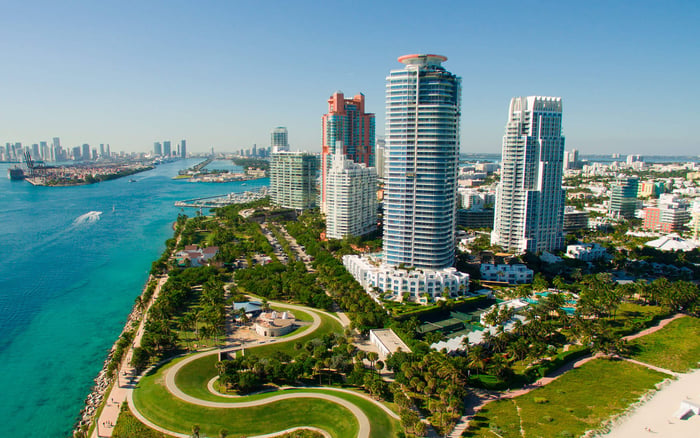
A precise framework for separating fixed assessments, hotel services, housekeeping, gratuities, rental deductions, and guest-facing charges in Bal Harbour.
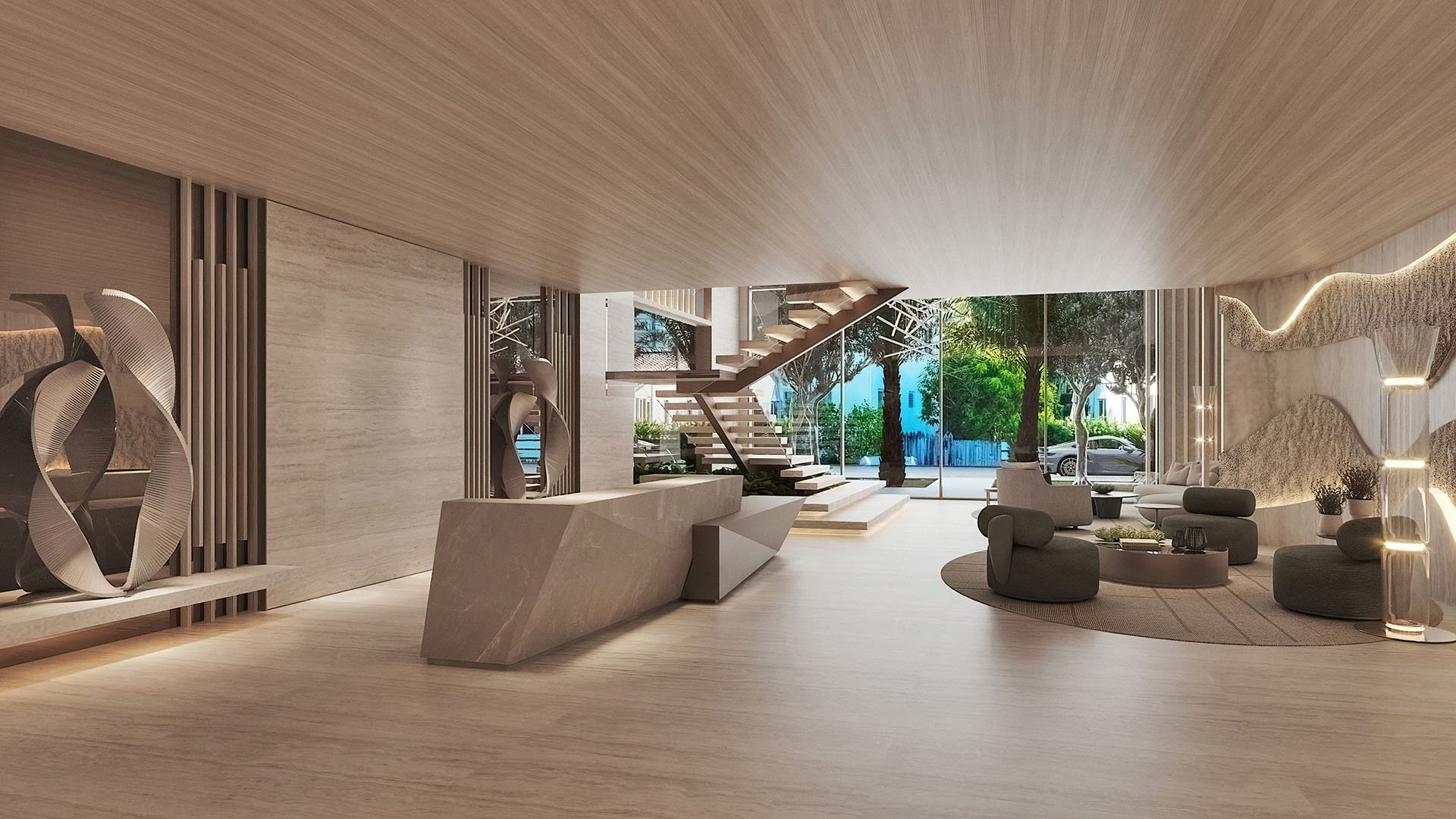
A Bal Harbour residence can appear operationally effortless while carrying a surprisingly intricate expense structure. The essential distinction is not simply between monthly dues and optional services, but among the residential association, hotel or resort operation, unit-management program, and services ordered for an owner, guest, or rental stay.
That distinction matters most in branded residences and condo-hotel ownership, where several entities may touch the same home. A polished arrival experience can involve security, valet, amenity access, housekeeping, linen service, maintenance coordination, and rental administration. Yet those functions may not appear on a single statement or follow the same allocation rules.
The true annual carry is a stack of obligations, not a single monthly number.
Buyers comparing a hotel-serviced residence with a conventional condominium such as Oceana Bal Harbour should therefore compare service architecture-not just asking price or headline association dues.
The first file to examine is the current association budget, together with the latest fee schedule and any special-assessment notices. At St. Regis Bal Harbour, monthly HOA figures have ranged from about $2,898 to $16,102, depending on the residence. A separate 2026 estimate places maintenance at roughly $4.50 to $6.50 per square foot per month, with a typical one-bedroom at approximately $6,800 to $9,800 or more monthly.
At that one-bedroom range, HOA expense alone annualizes to approximately $81,600 to $117,600 before property taxes, housekeeping, insurance inside the residence, or rental-management deductions. Listed inclusions encompass common areas, cable, hot water, internet, grounds and structural maintenance, pools, sewer, security, trash, and water. That list is valuable, but it should never be mistaken for a complete ownership budget.
A useful benchmark is the broader condo-hotel maintenance range of about $1 to $1.50 per square foot monthly, compared with figures reaching as much as $4 per square foot at St. Regis Bal Harbour. The premium may support a more elaborate operating platform, but the buyer still needs to identify precisely which services are included, metered, allocated, or billed upon use.
One Bal Harbour illustrates why labels matter. Its owner fee structure has separately identified a $585 quarterly condominium association fee, a $3,988.97 quarterly hotel-lot-owner assessment, and a $3,638.25 quarterly basic hotel service fee. Annualized, those three disclosed categories total approximately $32,848.88, subject to confirmation against the current schedule.
Another measure places the average association fee near $1.84 per square foot per month. Applied hypothetically to 2,000 square feet, that equals about $3,680 monthly, or $44,160 annually. These figures should not be blended into a single estimate without reconciling the periods, unit assumptions, fee definitions, and governing documents behind them.
The exercise is equally relevant when evaluating newer oceanfront offerings such as Rivage Bal Harbour. Even where the ownership structure differs, a buyer should ask which entity employs or contracts each service, how its cost is allocated, and whether the obligation continues while the residence is vacant.
Daily housekeeping is not necessarily included in either accommodation pricing or residential dues. At St. Regis Bal Harbour, full in-stay cleaning with fresh towels and linens has been offered for $170. At Beach Haus Bal Harbour, daily housekeeping is excluded from the base accommodation; optional mid-stay service has been listed at $35 for a studio, $45 for a one-bedroom, and $55 for a two-bedroom, plus tax. Departure cleaning has ranged from $50 to $150 plus tax per stay.
Those amounts are modest in isolation but material at high frequency. The correct annual model multiplies the current service price by expected turns and owner stays, then separates in-stay cleaning, departure cleaning, linen replacement, and deep cleaning. A broader branded-resort example places one-bedroom daily housekeeping around $80 to $95 and departure service around $180 to $205, depending on rental status and service category.
For buyers also considering the service culture of The Surf Club Four Seasons Surfside, the lesson is consistent: request the actual housekeeping menu and determine whether owner, rental-program, and guest rates differ.
There is no dependable property-wide gratuity policy for Bal Harbour. A due-diligence file should therefore establish whether housekeeping, valet, bell, pool, beach, or in-residence services carry an automatic service charge; whether that charge is distributed as gratuity; and whether additional tipping is customary or expected.
This is not merely a question of etiquette. An automatic percentage, a per-service charge, and discretionary cash gratuities produce different annual outcomes. The buyer should also establish whether gratuities can be charged to the residence account, whether guests may do so, and whether a rental operator treats them as reimbursable expenses or owner costs.
Second-home owners should model a realistic annual gratuity allowance rather than burying it in miscellaneous spending. That preserves the distinction between contracted carry and lifestyle consumption.
Rental participation creates another ledger. At One Bal Harbour, the hotel-lot-owner assessment may be deducted from rental revenue for participating units, while the condominium association fee is not. Economically, both affect the owner, but they appear in different places: one as a revenue deduction and the other as a direct fixed payment.
At St. Regis, estimated gross yields range from approximately 3% to 10%, with net yields near 2% to 5% after a 20% to 25% management share and applicable short-term-rental taxes. Investment analysis should begin with net owner proceeds, not advertised nightly rates.
Guest-facing charges also require careful treatment. At Ritz-Carlton Bal Harbour, hotel-amenity access has been listed at $65 per unit per day, with housekeeping available upon request. Beach Haus has listed a $25-plus-tax nightly resort fee. A buyer must determine whether such charges are paid by the guest, absorbed by the owner, withheld by the operator, or limited by the rental agreement.
Comparisons with The Ritz-Carlton Residences® Miami Beach should focus on each property's governing agreements rather than assume that a shared brand category produces identical economics.
Shared-cost allocations can change. At One Bal Harbour, a settlement shifted the hotel association’s share to 40% of natural-gas and water costs and one-third of common-area electricity and diesel costs, replacing a previous 13% utility allocation. The episode demonstrates why utility and valet formulas, dispute history, and amendment rights belong in the buyer’s legal review.
Bal Harbour Village also maintains separate municipal fee categories for hotels and condominiums. Hotel-side and residential-side obligations should not be treated as interchangeable.
The final annual model should include distinct lines for association dues, hotel-service fees, lot-owner assessments, taxes, interior insurance, utilities not included in dues, unit management, housekeeping, cleaning, amenity access, resort charges, gratuities, rental commissions, rental taxes, and a reserve for special assessments. This is the practical discipline behind buyer’s guides: convert every monthly, quarterly, nightly, per-stay, and percentage charge to a single annual basis while showing which costs are fixed, usage-based, guest-passable, or deducted from revenue.
Before closing, obtain the current association budget, hotel-service agreement, rental-program agreement, housekeeping menu, amenity-access schedule, gratuity policy, and assessment notices. For a confidential review of Bal Harbour ownership options and their operating structures, connect with MILLION.
If branded residences are on your mind — as a home or as an allocation — we would be glad to share what we are seeing, privately.
Begin a quiet conversationIt is the total of fixed dues, hotel-service charges, taxes, insurance, management, housekeeping, usage fees, rental deductions, and appropriate reserves.
Not necessarily. Buyers should obtain the current housekeeping menu and identify in-stay, departure, linen, and deep-cleaning charges separately.
Published listing figures have ranged from about $2,898 to $16,102 monthly, depending on the residence. Current unit-specific figures require direct confirmation.
An estimated $6,800 to $9,800 monthly implies approximately $81,600 to $117,600 annually before taxes, housekeeping, interior insurance, or rental deductions.
Treat condominium dues, the hotel-lot-owner assessment, and the basic hotel service fee as separate lines, then verify each against the current documents.
Published One Bal Harbour documentation indicates that its hotel-lot-owner assessment may be deducted for participating units, while its condominium fee is not.
No. They may be charged to guests, absorbed by owners, or handled through a rental operator, depending on the governing agreement and booking structure.
Confirm automatic service charges, their distribution, additional tipping expectations, charge-account rules, and whether a rental operator reimburses or deducts them.
Hotel and residential entities may divide common-area utilities and operations by negotiated formulas. Changes to those formulas can affect future owner charges.
Obtain the current budget, hotel-service and rental agreements, housekeeping menu, amenity schedule, gratuity policy, insurance information, and assessment notices.