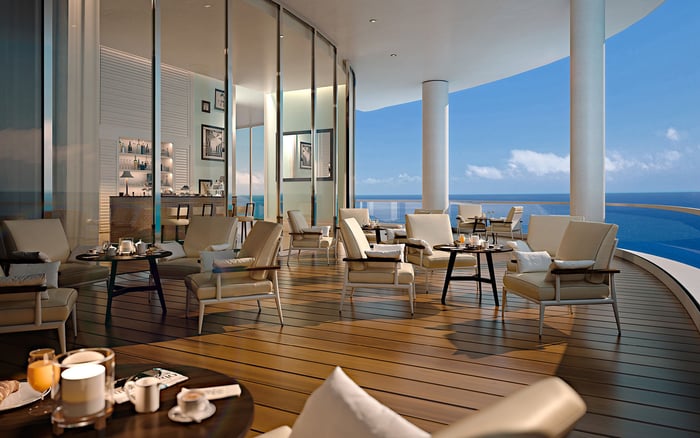
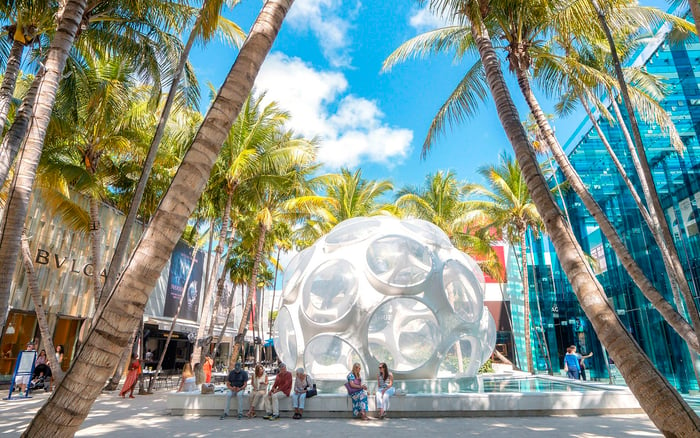
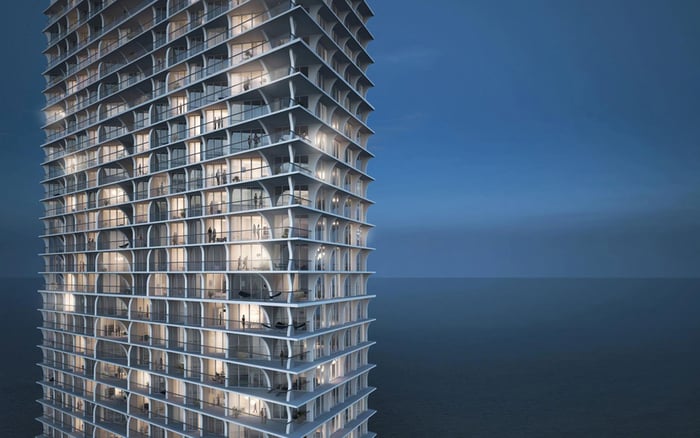
A discreet buyer’s guide to The Ritz-Carlton Residences® Sunny Isles Beach for households with nannies, chefs, drivers, assistants, and other staff, focused on privacy, circulation, service, and daily operations.
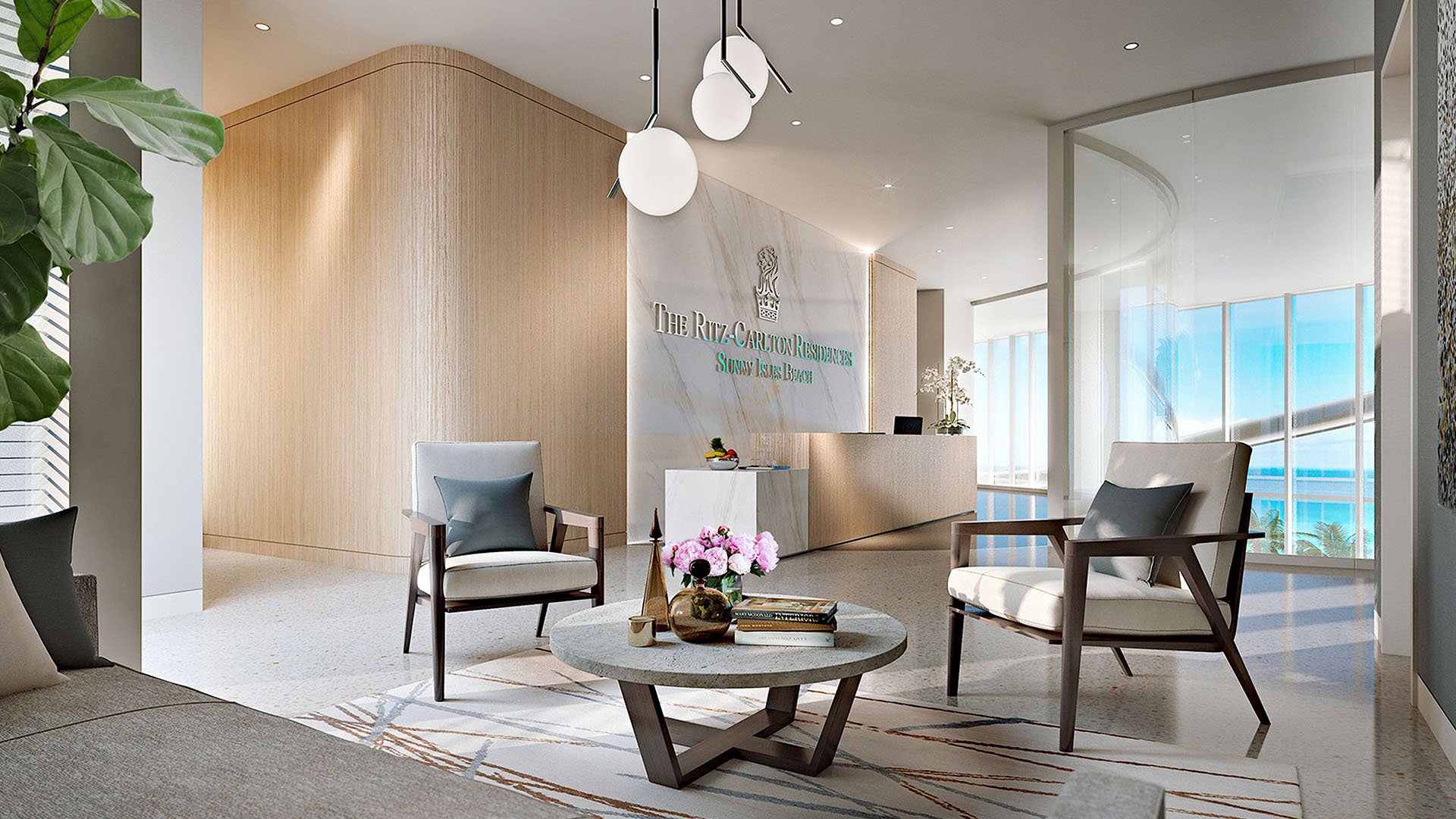
For buyers who travel with staff, employ household teams, or expect a residence to operate with the discipline of a private estate, The Ritz-Carlton Residences® Sunny Isles calls for a more exacting evaluation. This is not simply a trophy address on the sand. It is a branded luxury residential property in Sunny Isles Beach, best understood as a full-time or extended-stay base for households that rely on nannies, housekeepers, private chefs, drivers, family assistants, and security drivers.
That distinction matters. A hotel-oriented tower can feel convenient for short visits, while a traditional single-family estate offers control through land, gates, and private drives. A vertical oceanfront residence asks a more nuanced question: can the building help a household operate with elegance when daily life moves through shared arrival areas, valet systems, elevators, service pathways, amenity floors, beach access, and resident services?
For this reason, The Ritz-Carlton Residences® Sunny Isles should be viewed as an operating center for a staff-enabled beach lifestyle. The brand’s service culture is part of the appeal, but the more important issue is how that culture supports privacy management, owner absence, guest access, deliveries, and the quiet choreography of everyday residential life.
Sunny Isles Beach living is not estate living turned upright. It is its own residential language, shaped by Collins Avenue, waterfront access, bridges, valet rhythm, and the realities of barrier-island circulation. The buyer with a driver, nanny, chef, and housekeeper is not only comparing views and finishes. They are testing a daily operating system.
Morning school runs, early grocery trips, late housekeeping blocks, dry cleaning, airport transfers, security movements, and evening entertaining support all place pressure on a building. A strong residence makes these actions feel nearly invisible. A weak fit makes even the finest apartment feel overexposed.
This is where the Sunny Isles corridor becomes especially relevant. Nearby luxury towers such as St. Regis® Residences Sunny Isles, Bentley Residences Sunny Isles, and The Ritz-Carlton Residences® Miami Beach all speak to buyers who want vertical South Florida luxury living with a high level of residential intention. The differences often emerge less in the headline architecture than in the lived choreography of arrival, service, privacy, and staff coordination.
In search terms, this is a Sunny Isles, oceanfront, beach-access conversation, with Aventura and Bal Harbour forming part of the weekly orbit, anchored by The Ritz-Carlton Residences® Sunny Isles.
For households with staff, the arrival sequence is the first diligence item. A principal may arrive with a driver after a business flight. Children may return separately with a nanny. A chef may be bringing provisions. A family assistant may need to receive a vendor, authorize access, or coordinate a delivery while the owners are away.
The question is not whether valet exists. The question is whether valet, front desk, resident services, and building operations can support layered household activity without turning the lobby into a stage. Buyers should consider how early-morning and late-evening movements feel, how authorized representatives are handled, and whether recurring household routines can be managed discreetly.
A single-family estate solves privacy with gates, garages, and distance from neighbors. A vertical residence solves it with protocol. The best outcome is not theatrical luxury. It is calm repetition: the driver knows the pattern, the nanny knows the route, the assistant knows the procedure, and the building team understands the household’s preferences without unnecessary exposure.
The most elegant staffed residence separates service from ceremony. That does not always require a formal back-of-house arrangement, but it does require practical thinking. Can housekeeping, laundry, deliveries, maintenance, and chef preparation occur without disrupting principal bedrooms, entertaining areas, or the rhythm of family life?
Buyers should study the plan through a staff lens. Where does a housekeeper begin and end the day? Can laundry cycles happen without crossing a dinner party? Is there a sensible path for provisions to reach the kitchen? Can a private chef stage breakfast for children while principals remain undisturbed? Are guest areas easy to maintain without opening the entire residence?
This is also where large oceanfront residences differ from urban pied-à-terre living. A family using the apartment for extended stays may need systems that repeat comfortably over weeks or months. In that context, the residence is less a vacation setting and more a working household on the beach.
For families, nanny-friendly logistics are central. The daily map should connect children’s bedrooms, play spaces, pools, beach areas, and building amenities in ways that feel secure and manageable. The goal is not simply convenience. It is trust.
A nanny may need to take children from the residence to the pool, return for lunch, coordinate with a driver, then manage a late-afternoon beach window. The building must support this without placing the nanny in awkward public routes or requiring constant intervention from parents. Families should pay attention to visibility, elevator use, access controls, and the ease of moving children, bags, towels, strollers, sports gear, or school items through the property.
This is one reason some buyers compare Sunny Isles Beach with both Surfside and Bal Harbour. The Estates at Acqualina Sunny Isles reinforces the area’s reputation for family-scale oceanfront living, while nearby markets appeal to buyers seeking different levels of privacy, shopping access, or neighborhood intimacy.
A private chef changes the meaning of the kitchen. It becomes both a family space and a workplace. Buyers should ask whether the residence can accommodate provisioning, prep, service, cleanup, and occasional entertaining without compromising the atmosphere of the home.
For a staffed household, grocery runs and delivery timing are not minor details. They affect elevator flow, storage, refrigeration, and the sequence of the day. A family assistant may coordinate wine, flowers, catering, pantry stocking, and special dietary needs while principals are away. A housekeeper may need to reset the residence before guests arrive. A chef may require access before the family wakes or after a late return.
The advantage of a branded residential environment is that building operations can become part of the support structure. The residence still needs an intelligent floor plan, but the broader property culture can help the household function when multiple people are responsible for different parts of the day.
Many Sunny Isles Beach buyers are not present year-round. For them, the residence must be secure, prepared, and manageable through trusted representatives. The Ritz-Carlton service model is especially relevant for owners who rely on authorized staff to coordinate keys, deliveries, maintenance, guest access, and daily logistics in their absence.
This is not a small convenience. It is the difference between a residence that waits passively and one that can be activated with confidence. Before arrival, a family assistant may want the home opened, stocked, inspected, and ready for children. During absence, a housekeeper may need scheduled access, a vendor may need supervision, or a driver may need to coordinate luggage and airport timing.
A tower such as Jade Signature Sunny Isles Beach may attract a buyer for its design sensibility, while The Ritz-Carlton Residences® Sunny Isles Beach may be especially compelling for those who place equal weight on branded service culture and household continuity. The right question is not which address sounds grander. It is which one best supports the owner’s life when the owner is not there.
The most persuasive framing for staffed ownership here is intentional resort urbanism. Sunny Isles Beach offers a private, service-rich oceanfront base with access to Miami, Bal Harbour, Aventura, Golden Beach, and Broward-area destinations. The geography is narrow, glamorous, and operationally specific. Collins Avenue, bridges, valet flow, and beach access shape the day.
For some buyers, the appeal is that the residence can function like a beach estate without requiring the management burden of a standalone property. For others, it is the ability to maintain a polished South Florida base while staff coordinates school routines, wellness appointments, shopping, aviation logistics, dining, security movement, and family visits.
That is the deeper promise of The Ritz-Carlton Residences® Sunny Isles Beach for buyers with staff. It is not merely luxury by association. It is luxury as repeatable order, where privacy, service, and household flow allow the family to live lightly, even when the operation behind the scenes is complex.
Is The Ritz-Carlton Residences® Sunny Isles Beach better understood as a residence or a hotel-style product? It is best evaluated as a branded luxury residential property, not as a transient hotel or condo-hotel substitute.
Why does household staff change the buying criteria? Staffed households need to study arrival, access, service routes, laundry, deliveries, children’s movement, and privacy as part of the purchase decision.
What staff roles are most relevant to this lifestyle? Nannies, housekeepers, private chefs, drivers, family assistants, and security drivers all influence how the residence should function.
How does Sunny Isles Beach differ from a single-family estate? Daily life is organized through vertical residences, shared arrival areas, valet operations, elevators, and managed service pathways.
What should families with nannies review first? They should consider access to children’s bedrooms, pools, beach areas, play spaces, amenities, and the ease of moving through the building.
Why is valet flow important for staffed owners? Drivers, school runs, airport transfers, grocery trips, and guest arrivals can all depend on a smooth and discreet arrival sequence.
Can a private chef work well in a Sunny Isles residence? Yes, if the floor plan and building logistics support provisioning, prep, service, cleanup, and storage without disrupting family life.
Is this a practical choice for absentee owners? It can be, especially for owners who rely on authorized representatives to coordinate access, maintenance, deliveries, and residence preparation.
What is intentional resort urbanism in this context? It means a private oceanfront base where service, staff coordination, wellness, shopping, schools, and travel routines are deliberately organized.
How should buyers compare The Ritz-Carlton Residences® Sunny Isles Beach with other towers? They should compare not only views and finishes, but also privacy, service culture, staff circulation, arrival flow, and long-stay livability.
For a confidential assessment and a building-by-building shortlist, connect with MILLION.
If branded residences are on your mind — as a home or as an allocation — we would be glad to share what we are seeing, privately.
Begin a quiet conversation