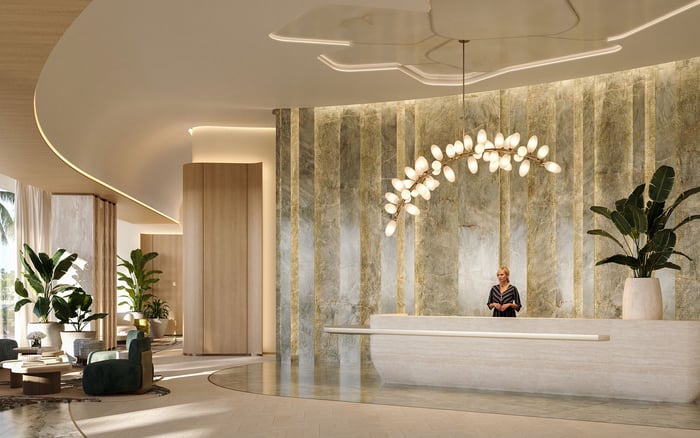
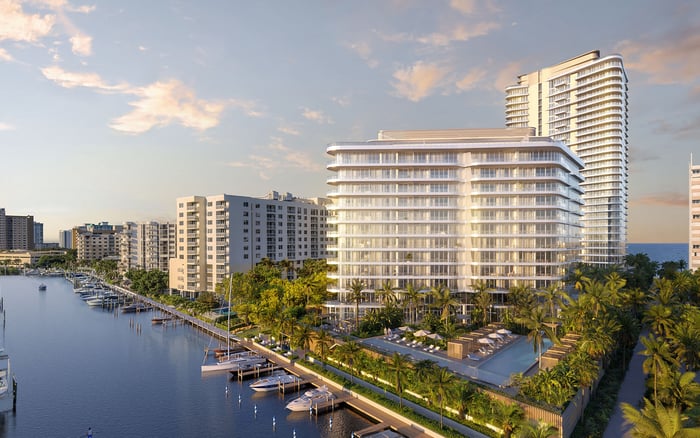
A discreet family-operations guide to comparing The Ritz-Carlton Residences® Pompano Beach and Forté on Flagler West Palm Beach through school-day logistics, household staff flow, and private residential life.
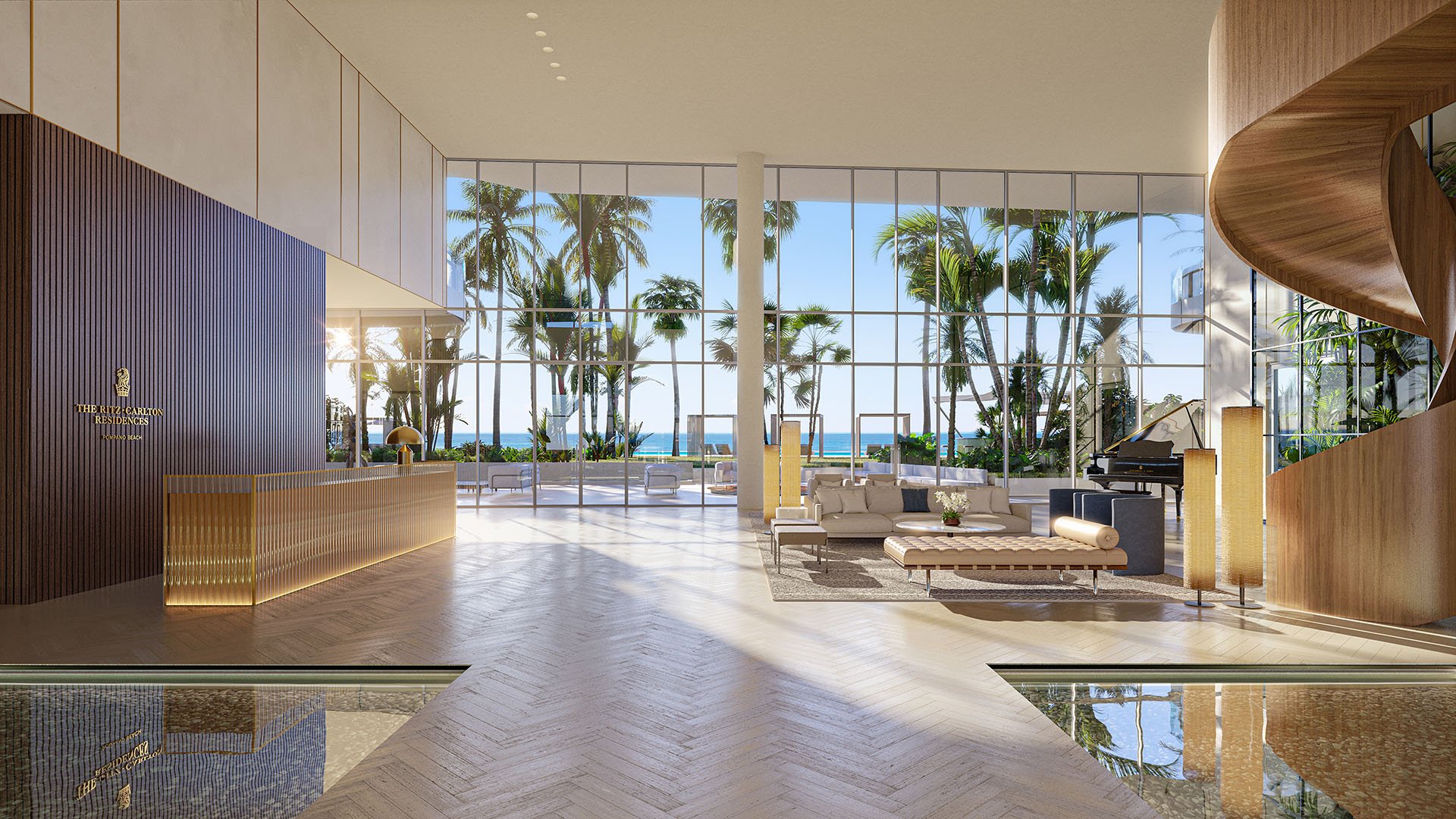
For affluent households, the question is rarely whether a residence feels beautiful on a first showing. The more consequential test is whether it performs gracefully at 7:15 a.m. on a school day, when children, drivers, tutors, household staff, packages, breakfast deliveries, and guest approvals all converge. That is the more useful lens for comparing The Ritz-Carlton Residences® Pompano Beach and Forté on Flagler West Palm Beach.
Both addresses belong to the broader South Florida luxury conversation, but the family buyer should resist a purely aesthetic comparison. Pompano Beach and West Palm Beach may suggest different rhythms, school ecosystems, and daily routes. The essential due-diligence work, however, is the same: confirm how the building handles movement, separation, service, and privacy before treating either residence as operationally effortless.
This is especially relevant for buyers considering a primary home rather than an occasional pied-à-terre. A family residence has to support early departures, late returns, visiting grandparents, nannies, chefs, tutors, security personnel, drivers, and children’s friends arriving at irregular hours. The difference between a glamorous condominium and a truly livable family residence is often found in details that are rarely obvious from the lobby.
School-day convenience should not be reduced to a map pin. For both residences, buyers should verify public-school assignment, private-school proximity, morning-drive reliability, drop-off queuing, and transportation policies directly before relying on assumptions. Private-school and new-construction buyers in South Florida often find that a short distance can feel very different during peak traffic or after-school pickup.
The first question is zoning. Families should confirm applicable public-school boundaries in writing and understand whether those boundaries are subject to change. The second question is private-school access. A residence may appear convenient to a preferred campus, but the true test is the door-to-door commute at the exact time a child would travel, not an off-hour estimate.
A third issue is chauffeur practicality. If a household uses a driver, the building’s valet rhythm, waiting area, and loading protocols matter. A child leaving with a driver should not require improvisation in a congested arrival court. Buyers should ask whether the building can accommodate predictable school-morning departures and whether staff can stage vehicles without disrupting other residents.
For families comparing Pompano Beach and West Palm Beach, the educational decision should be modeled across a full week. Include sports practices, tutoring, arts programs, weekend commitments, and sibling schedules. The residence that appears more convenient in theory may be less efficient once the family’s actual calendar is placed over the road network.
Ultra-luxury family living depends on service that is present but not intrusive. The most sophisticated homes create clear circulation for household staff, deliveries, maintenance, and guests without forcing every movement through the same social path used by owners. That is the key staff-circulation question for both buildings.
Before committing, buyers should ask for specifics on service elevators, back-of-house routes, staff entry points, loading areas, package handling, food-delivery procedures, and domestic-worker parking. These are not secondary matters. They determine whether a chef can arrive without crossing a family breakfast, whether a tutor can be approved without delaying a child, and whether a weekend housekeeper has a practical place to park.
Families should also clarify whether regular staff can be pre-authorized, how long approvals remain active, and how building security handles recurring visitors. A residence may offer impressive hospitality, but a family household needs repeatable systems. The smoother the protocol, the less the owner has to manage daily friction.
The most revealing walkthrough may be a service walkthrough rather than a sales-gallery presentation. Ask where groceries arrive, how dry cleaning is delivered, how large items move, how caterers are screened, and whether service movement intersects with family amenity areas. If the answers are not yet available, treat them as deal points to be confirmed before contract confidence hardens into assumption.
Privacy in a family residence is not only about elevation, glass, or sightlines. It is also about who can reach a floor, who can access a hallway, how guests are screened, whether elevators are private or semi-private, and whether amenity reservations prevent crowding during the hours families actually use them.
For The Ritz-Carlton Residences® Pompano Beach and Forté on Flagler West Palm Beach, the family buyer should focus on access controls and residence separation. Ask whether homes have private elevator foyers, key-fob-controlled floor access, separate service paths, guest-management technology, and protocols for children arriving with friends or caregivers. The answer should be operational, not merely descriptive.
A second layer of privacy concerns amenities. Pools, fitness areas, lounges, and dining spaces can feel serene during a weekday tour and behave differently on weekends or holidays. Families should ask how reservations work, whether guests are limited, how children’s visitors are handled, and how management addresses peak-use periods.
A third layer is household identity. High-profile families often care about discretion at arrival, in elevators, and around building staff. The right residence should allow a family to live normally without constant visibility. That requires policies, training, and physical design working together.
The Ritz-Carlton Residences® Pompano Beach and Forté on Flagler West Palm Beach are framed here as a family-lifestyle comparison, but the proper conclusion is not a premature winner. The better residence is the one whose verified operations match the household’s exact pattern.
Pompano Beach may appeal to families seeking a coastal Broward orientation, while West Palm Beach may appeal to those whose school, social, cultural, or family networks are concentrated farther north. Still, lifestyle preference is only the opening filter. The more decisive issues are written confirmations, building documents, floor-plan logic, and management policies.
For a family with multiple children, the priority may be school reliability. For a household with live-out staff, it may be staff parking and entry control. For a high-privacy buyer, it may be elevator configuration and guest screening. For a family that entertains frequently, it may be how catering, deliveries, and visitor arrivals are handled without turning the home into a logistical checkpoint.
A refined comparison should therefore be scenario-based. Test each residence against a normal Tuesday, a rainy morning, a holiday weekend, a catered dinner, an overnight guest, and a child returning from practice. Luxury is not simply how a building presents itself when quiet. It is how well it absorbs complexity without exposing the family to it.
Before choosing between these residences, a family should secure precise answers to a focused set of operational questions. Which schools are realistically in play, and what are the true morning and afternoon drive patterns? What public-school assignment applies today? What private-school transportation options are permitted or commonly used? Where do drivers wait? How are vehicles staged during peak hours?
On staffing, the questions should be equally direct. Where does regular household staff enter? Are service elevators available for daily household operations? Can staff be pre-cleared? Is there domestic-worker parking or a defined protocol? How are groceries, prepared meals, dry cleaning, and large deliveries routed?
On privacy, ask how access is controlled from arrival to residence door. Are elevators private, semi-private, or shared? Are floors key-fob-controlled? How are children’s friends, tutors, coaches, and extended family members approved? Can amenity spaces be reserved, and what guest limits apply?
The strongest purchase decision will come from aligning these answers with the household’s real life. A family home at this level should feel calm not because nothing is happening, but because the building has already solved what happens every day. Families also comparing nearby branded residences may separately review The Ritz-Carlton Residences® West Palm Beach as part of a broader Palm Beach County shortlist.
Is this a definitive ranking between The Ritz-Carlton Residences® Pompano Beach and Forté on Flagler West Palm Beach? No. It is a family-focused due-diligence framework for comparing daily operations, privacy, and school logistics.
Should buyers assume either building is more convenient for school commutes? No. Commute performance should be tested against the family’s actual schools, departure times, and pickup schedule.
What is the first school-related item to confirm? Confirm public-school assignment, then separately evaluate private-school access, transportation rules, and traffic patterns.
Why does staff circulation matter in a luxury condominium? It determines whether household help, deliveries, and service providers can support the home without disrupting family life.
What should families ask about household staff access? Ask about staff entry points, service elevators, pre-authorization, parking, loading areas, and recurring visitor protocols.
What privacy features should be reviewed before purchase? Review elevator access, private or semi-private foyers, guest screening, amenity controls, and floor-access restrictions.
Are amenity policies important for families with children? Yes. Guest limits, reservations, peak-use rules, and child-visitor protocols can affect day-to-day comfort.
Can a beautiful floor plan still create operational friction? Yes. A strong plan still needs practical service routes, reliable access control, and workable arrival procedures.
What documents should a serious buyer request? Request floor plans, condominium documents, building rules, valet procedures, delivery policies, and access-control details.
What is the best way to compare the two residences? Model a normal school week, then test each building against staffing, privacy, transportation, and guest-management needs.
If you'd like a private walkthrough and a curated shortlist, connect with MILLION.
If branded residences are on your mind — as a home or as an allocation — we would be glad to share what we are seeing, privately.
Begin a quiet conversation