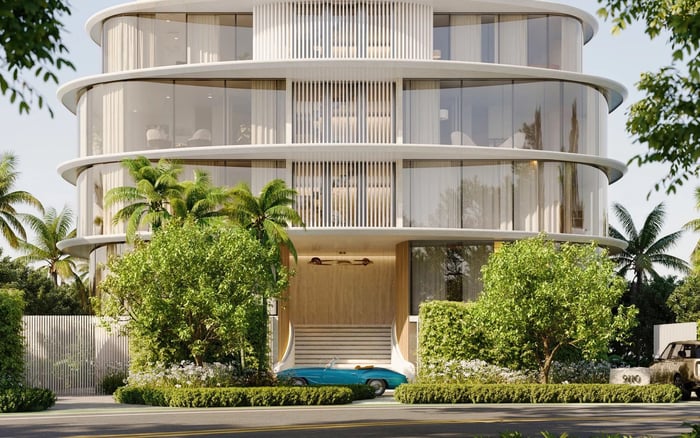
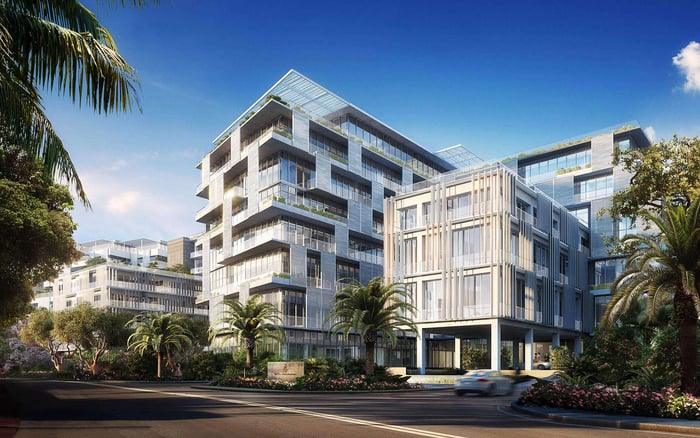
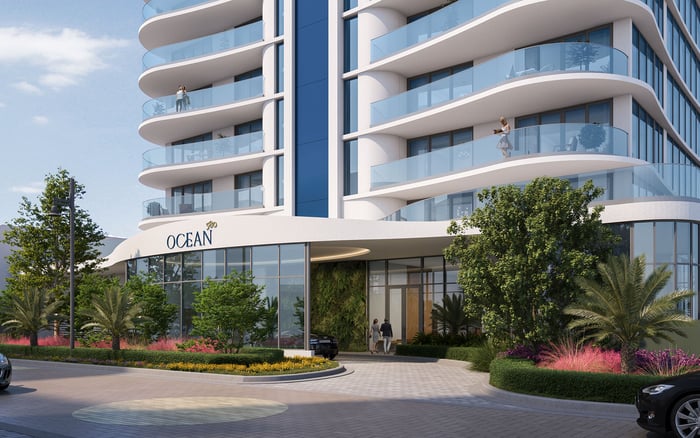
A discreet comparison for buyers weighing The Ritz-Carlton Residences® Miami Beach against a wellness-branded Brickell concept, with emphasis on private dining, practical boating, bridge clearance, and hurricane operations.

For a buyer weighing The Ritz-Carlton Residences® Miami Beach against House of Wellness Brickell, the comparison should not begin with mood boards, spa language, or promises of curated living. It should begin with a more exacting question: will the residence still feel private when its amenities are most in demand?
That question matters most around dining. Affluent buyers often want the grace of hotel-caliber service, the ability to host without calling an outside restaurant, and the comfort of being recognized without being observed. They may value a chef-driven meal, a private room, and a beautifully handled evening, but they do not necessarily want the energy of a members club woven into daily life.
The Ritz-Carlton Residences® Miami Beach enters this comparison as a completed luxury condominium, giving buyers a more concrete basis for review. The task is not to be impressed by the brand alone. It is to test the lived reality of the address: arrival sequence, resident access, amenity circulation, privacy at peak times, service discretion, and the degree to which dining remains residential rather than performative. Buyers comparing broader South Florida branded residences may also study The Ritz-Carlton Residences® Pompano Beach as a separate reference point, while keeping the Miami Beach and Brickell decision grounded in site-specific facts.
House of Wellness Brickell, by contrast, should be approached through verification rather than assumption. A wellness-branded Brickell concept may appeal to buyers who want urban energy and lifestyle programming, but any claims about resident-only dining, guest access, club policies, or operating standards should be reviewed in writing. The central distinction is not wellness versus hospitality. It is residential privacy versus a setting that could feel socially porous.
Private dining in an ultra-luxury condominium is not merely a room with good lighting and service staff. For this buyer, the essential test is whether the dining environment behaves like an extension of the residence. That means controlled access, predictable reservation protocols, limited nonresident traffic, and a tone that does not turn dinner into a scene.
The concern with a members-club-style model is not that it lacks quality. Often, it is precisely the opposite. Such models can be energetic, well designed, and socially appealing. The issue is compatibility. If the buyer expects discretion, the presence of outside members, brand guests, event attendees, or semi-public programming may alter the atmosphere in a way that cannot be solved by finishes or concierge language.
At The Ritz-Carlton Residences® Miami Beach, buyers should study completed, site-specific realities: how residents move from home to amenity spaces, whether dining feels calm during prime evening hours, and how staff handles guests. At House of Wellness Brickell, buyers should ask the same questions before accepting any lifestyle narrative. Who can book the dining spaces? Can nonresidents access them? Are events part of the programming? How are private rooms separated from social areas?
This is where the decision becomes personal. A buyer who wants a residential refuge with polished service may lean toward the property that feels quieter and more controlled. A buyer who enjoys a more activated social environment may tolerate, or even prefer, the energy that comes with broader programming. Neither preference is wrong. The mistake is confusing them.
In South Florida, waterfront language can be imprecise. A building can feel close to water without being especially convenient for regular boating. For the serious owner, boating convenience should be measured by practical use: where the vessel is kept, how quickly one can reach it, what the route looks like, which bridges are involved, and how often conditions make the outing seamless.
The Miami Beach side of this comparison should be assessed through the actual day-to-day path between residence, dockage, waterway, and open bay access. Buyers should verify whether dockage is available, how it is assigned, what vessel sizes are practical, and how resident service supports departures and returns. A beautiful water view is not the same thing as a workable boating routine.
Brickell requires the same practical lens. Its urban waterfront setting can be compelling, especially for buyers who value proximity to offices, restaurants, and cultural life. Yet an urban bay or river environment may involve different constraints than a more residential waterfront setting. The relevant questions are operational: where is the boat kept, how far is it from the lobby, what traffic or tender steps are involved, and how often the owner will actually use it.
For buyers using search criteria such as Miami Beach, Brickell, marina access, boat slips, and water views, the language can be useful, but only as a starting point. The stronger residence is the one that converts waterfront identity into frictionless days on the water.
Bridge clearance should be treated with the seriousness of a design constraint. It can determine whether the boat a buyer owns, or plans to own, is truly compatible with the surrounding waterways. A center console, a low-profile day boat, a tender, and a larger vessel with elevated equipment do not experience the same route in the same way.
This is where buyers should avoid relying on generalized statements about being near Biscayne Bay, the river, or the ocean. The relevant issue is the actual route from storage or slip to preferred boating grounds. Which bridges are involved? What are the clearances under ordinary conditions? How do tides affect usability? Are there alternative routes? Would the vessel require folding equipment, timing, or relocation to another marina?
For The Ritz-Carlton Residences® Miami Beach, the advantage of a completed condominium is that buyers can pressure-test the surrounding boating experience through site visits and owner-style scenarios. For House of Wellness Brickell, the same discipline applies, with special care around any future or conceptual amenity promise. If a buyer’s boating life is central, bridge clearance and vessel logistics should be settled before emotional attachment forms.
Hurricane planning for the ultra-luxury buyer is not only about exposure to weather. It is about operations before, during, and after a storm. The best residences make that planning feel procedural rather than improvised.
Buyers should ask how the property communicates with residents, how staff secures exterior areas, how building access is managed, what happens to valet operations, how generators and critical systems are handled, and what expectations exist for owners who are not in residence. For boating households, the plan must extend to the vessel. Where does it go? Who moves it? What notice is required? Which service providers are approved?
The completed nature of The Ritz-Carlton Residences® Miami Beach allows buyers to evaluate current protocols and resident experience with more specificity. House of Wellness Brickell should be reviewed through documented procedures, especially if the buyer is considering it as a primary residence, seasonal base, or lock-and-leave asset.
In either case, resilience is not just a construction conversation. It is a service conversation. A residence can be beautifully designed and still feel poorly prepared if communication, staffing, and storm logistics are vague.
The cleanest comparison is to separate identity from utility. The Ritz-Carlton Residences® Miami Beach should be judged on completed residential performance: privacy, service cadence, amenity control, boating practicality, and storm operations. House of Wellness Brickell should be judged on what can be verified about resident access, dining policies, wellness programming, and the practical implications of its Brickell context.
For the buyer who expects private dining without a members-club atmosphere, the more suitable choice is likely the one that keeps the social perimeter tight. That may mean fewer outside users, quieter dining, more predictable staff familiarity, and amenity spaces that feel like part of the home rather than part of a brand stage.
For the buyer whose lifestyle is heavily boating-oriented, the decision should be even more technical. Vessel size, bridge clearance, dockage, route simplicity, and storm plans will matter more than the glamour of water views. A residence that photographs beautifully but complicates every departure may lose to one that supports ordinary use with less friction.
The final test is simple. Imagine a Friday evening dinner, a Saturday morning departure by boat, and a late-season storm advisory while the owner is out of town. The better property is the one that handles all three with quiet competence.
Is The Ritz-Carlton Residences® Miami Beach completed? Yes. It is identified here as the completed luxury condominium side of the comparison.
Can specific House of Wellness Brickell amenities be assumed? No. Buyers should verify dining, wellness, access, and operations directly before relying on any concept-level promise.
Why does private dining require special scrutiny? Because dining can shift the emotional tone of a building if it introduces outside traffic or club-style programming.
Is a members-club atmosphere always a negative? No. It can be desirable for social buyers, but it may not suit owners who prioritize discretion and residential calm.
What should boaters verify first? They should confirm dockage, vessel size limits, routes, bridge clearance, service support, and storm relocation procedures.
Why is bridge clearance so important? Bridge height can determine whether a vessel is practical for regular use from a given waterfront location.
Does a water view guarantee boating convenience? No. Views and usability are separate considerations, especially when dockage or routing is complicated.
How should hurricane planning be evaluated? Buyers should review communication protocols, staffing, access control, critical systems, and vessel plans.
Which buyer may prefer Brickell? A buyer who values urban proximity and possibly more active programming may find Brickell compelling if policies align.
Which buyer may prefer Miami Beach? A buyer prioritizing completed residential realities, discretion, and practical waterfront review may favor Miami Beach.
For a confidential assessment and a building-by-building shortlist, connect with MILLION.
If branded residences are on your mind — as a home or as an allocation — we would be glad to share what we are seeing, privately.
Begin a quiet conversation