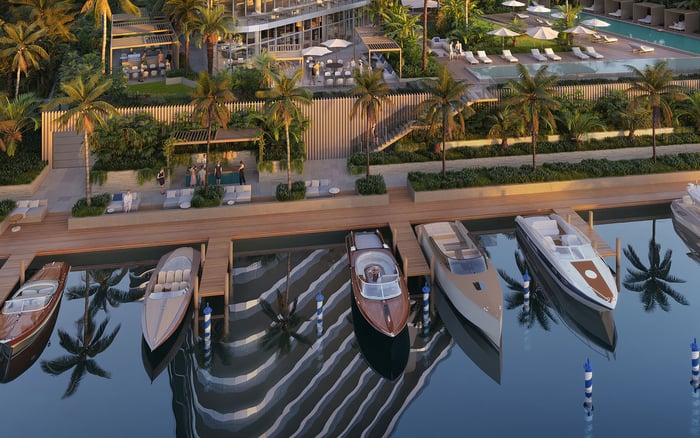
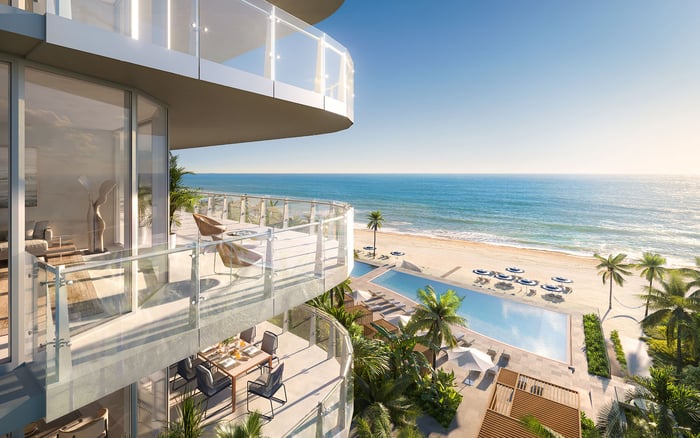
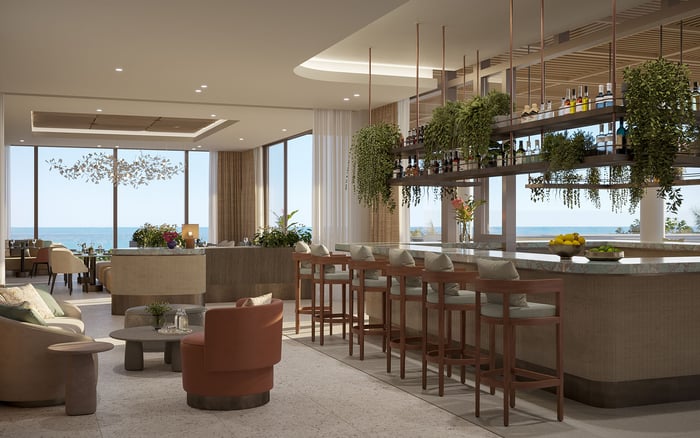
For buyers weighing branded ownership in Fort Lauderdale, the sharper distinction is not prestige but operating logic. Ritz-Carlton Residences is structured as a residential-only environment, while Four Seasons blends private ownership with an active hotel. That difference shapes privacy, circulation, amenity use, and the daily texture of living there. For purchasers prioritizing calm, continuity, and an owner-focused rhythm, Ritz-Carlton reads as the more residential model.

In Fort Lauderdale, branded residences can appear equally polished on paper. The more meaningful question is what happens after the doors open each morning. Does the property function first as a home, or first as a hospitality platform that also accommodates homeowners?
That is the clearest dividing line between The Ritz-Carlton Residences® Fort Lauderdale and Four Seasons Hotel & Private Residences Fort Lauderdale. Both sit in the upper tier of Broward luxury. Both appeal to buyers who expect branded service, polished amenities, and strong waterfront positioning. But the service models are not interchangeable.
If the benchmark is prestige alone, both qualify. If the question is which one feels more residential day to day, the answer is clearer: Ritz-Carlton.
Ritz-Carlton’s advantage is structural. The tower is conceived as a residential-only property rather than a hotel-and-residences hybrid. That matters because residents are not living within a building shaped by constant arrivals, departures, short stays, and the front-of-house choreography required by a large hotel operation.
Instead, the service posture is owner-centric. Concierge support, amenity management, and lifestyle assistance are calibrated to residents rather than transient guests. In practical terms, that often translates to a quieter lobby experience, more predictable amenity use, and a stronger sense that the building belongs to the people who live there.
The residential scale reinforces that impression. With roughly 140 residences across about 40 floors, and homes ranging from around 1,000 to more than 4,000 square feet, the community feels substantial without seeming overprogrammed. Amenities such as spa, fitness, pool, and private dining spaces are framed primarily around resident enjoyment, not hotel activation.
For full-time owners and serious second-home buyers, this is often the elusive quality they are actually seeking: not simply service, but service without theatrical turnover.
That distinction also helps explain why buyers comparing other residential-first branded projects, from Auberge Beach Residences & Spa Fort Lauderdale to Riva Residenze Fort Lauderdale, focus so closely on circulation, privacy, and who truly controls shared space.
Four Seasons offers a different proposition. It combines a large hotel with private residences within the same overall development. That gives owners access to a deep hospitality platform: dining, spa, fitness, concierge, and the broader energy that comes with a globally recognized hotel environment.
For some buyers, that is a real advantage. A resident who wants the feel of an always-on luxury resort may prefer this model. The building feels active, serviced, and socially animated. There is often a sense that something is always happening, whether that means easier access to dining, more visible staff presence, or the convenience of a mature hotel ecosystem.
But that same strength is what makes the experience feel less purely residential. Four Seasons includes more than 300 hotel rooms alongside more than 125 private residences. Even with private resident check-in and dedicated elevators, the property still operates within the rhythms of a live hotel. Public spaces and some front-of-house zones are shaped by guest activity, and the atmosphere reflects ongoing hospitality demand.
For a buyer seeking maximum privacy, the issue is not quality. It is coexistence. You are not only buying into a residence collection. You are buying into a hotel environment that also serves travelers.
The word residential is often used too loosely in branded real estate. In practice, residents tend to experience it through four filters: arrival, privacy, amenity access, and community continuity.
Arrival is the first test. In a residential-only tower, the sequence is typically calmer and more familiar. Staff recognize owners, routines settle in, and the building’s public face changes less hour by hour. In a hotel-linked property, even an elegant one, the arrival experience can feel more fluid because the building is designed to absorb new people constantly.
Privacy is the second test. Ritz-Carlton’s separation from hotel use tends to create a more discreet owner environment. Four Seasons can still be highly refined, but refinement is not the same as seclusion.
Amenity access is the third. Four Seasons may feel more robustly serviced because the hotel platform drives broader activation. Ritz-Carlton may feel more controlled because amenities are oriented around residents first. The difference is subtle until one imagines peak-season weekends, holiday occupancy, or a simple afternoon by the pool.
Community continuity is the fourth, and perhaps the most underestimated. Buildings without hotel use are generally better positioned to foster a long-term social rhythm among neighbors. Familiarity builds. Staff relationships deepen. Owners feel that they belong to a private vertical neighborhood rather than a luxury destination with residential inventory attached.
This is why buyers studying South Florida’s next generation of branded homes, from St. Regis® Residences Bahia Mar Fort Lauderdale to Andare Residences Fort Lauderdale, increasingly ask not just which amenities are offered, but who those amenities are truly designed to serve.
The comparison is not about declaring one model superior in every case. It is about matching service design to buyer temperament.
Choose Ritz-Carlton if the priority is calm repetition, owner-first staffing, reduced transient traffic, and a stronger impression of private residential life. It is the better fit for buyers who expect to spend meaningful time in the residence and want the building to feel settled rather than performative.
Choose Four Seasons if the priority is a more active hospitality ecosystem, stronger hotel energy, and the appeal of living within a fully integrated service machine. It may feel more full-service on an everyday basis, especially for owners who value dining, hotel vitality, and the atmosphere of an internationally legible luxury address.
The distinction mirrors a broader split in the Top Project segment across South Florida. Some branded properties lean toward sanctuary. Others lean toward resort. Both can be sophisticated, but they deliver different emotional outcomes.
For buyers asking a narrow and practical question-which service model feels more residential-Ritz-Carlton comes out ahead.
Not because Four Seasons lacks sophistication, and not because hotel integration is inherently a drawback. Rather, Ritz-Carlton’s residential-only structure produces a more private cadence. The absence of hotel circulation gives it a calmer identity, a cleaner owner hierarchy, and a more convincing sense of home.
Four Seasons remains compelling for purchasers who want residential ownership fused with hotel energy. Yet when the metric is residential feel rather than hospitality abundance, Ritz-Carlton is the more coherent answer.
In Broward, that is an important distinction. Luxury buyers are no longer choosing only between finishes, views, and brand names. They are choosing between ways of living.
Which property feels more residential overall? The Ritz-Carlton Residences® Fort Lauderdale feels more residential because it is structured as a residential-only tower without an on-site hotel component.
Why does a residential-only tower matter so much? It typically means less guest turnover, calmer shared spaces, and services designed primarily around owners rather than travelers.
Does Four Seasons offer stronger day-to-day service? It can feel more full-service because residents benefit from a large hotel infrastructure with dining, spa, fitness, and concierge support.
Is Four Seasons less private? In operational terms, yes. The presence of hotel guests and active front-of-house circulation can make the environment feel less secluded.
Are there private resident features at Four Seasons? Yes. Private resident check-in and dedicated elevators help, though they do not fully remove the building from its hotel context.
Who is the better fit for Ritz-Carlton? Buyers who prioritize privacy, consistency, and an owner-focused atmosphere will usually prefer Ritz-Carlton.
Who is the better fit for Four Seasons? Buyers who enjoy hotel energy, immediate service access, and a more activated amenity environment may prefer Four Seasons.
Does unit count affect the residential feel? It can. A more contained residential collection often feels more intimate than a mixed-use property with substantial hotel inventory.
Is this mainly a question of prestige? No. Both are prestigious, but the more important distinction is how each building operates every day.
What is the bottom-line takeaway for Fort Lauderdale buyers? If your priority is a true residential cadence, Ritz-Carlton is the clearer choice. If you want a residence inside a luxury hotel ecosystem, Four Seasons is compelling.
For a discreet conversation and a curated building-by-building shortlist, connect with MILLION Luxury.
If branded residences are on your mind — as a home or as an allocation — we would be glad to share what we are seeing, privately.
Begin a quiet conversation