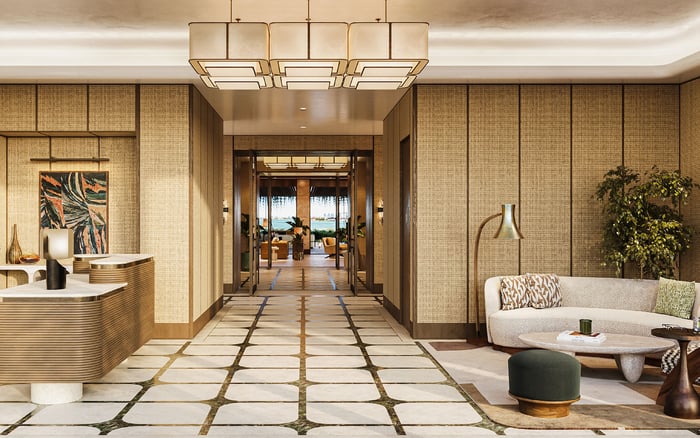
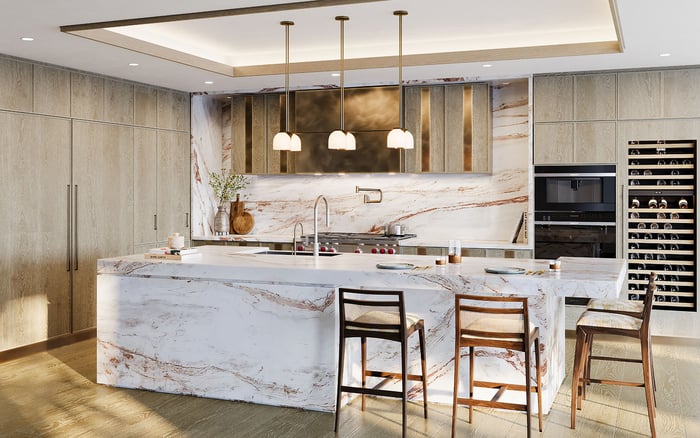
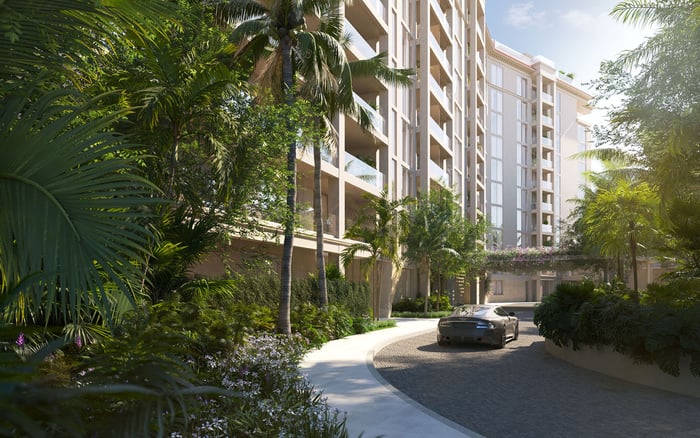
An editorial look at how The Residences at Six Fisher Island serves buyers who want to host at home while preserving privacy through island separation, controlled access, low-density planning, private circulation, and discreet service protocols.
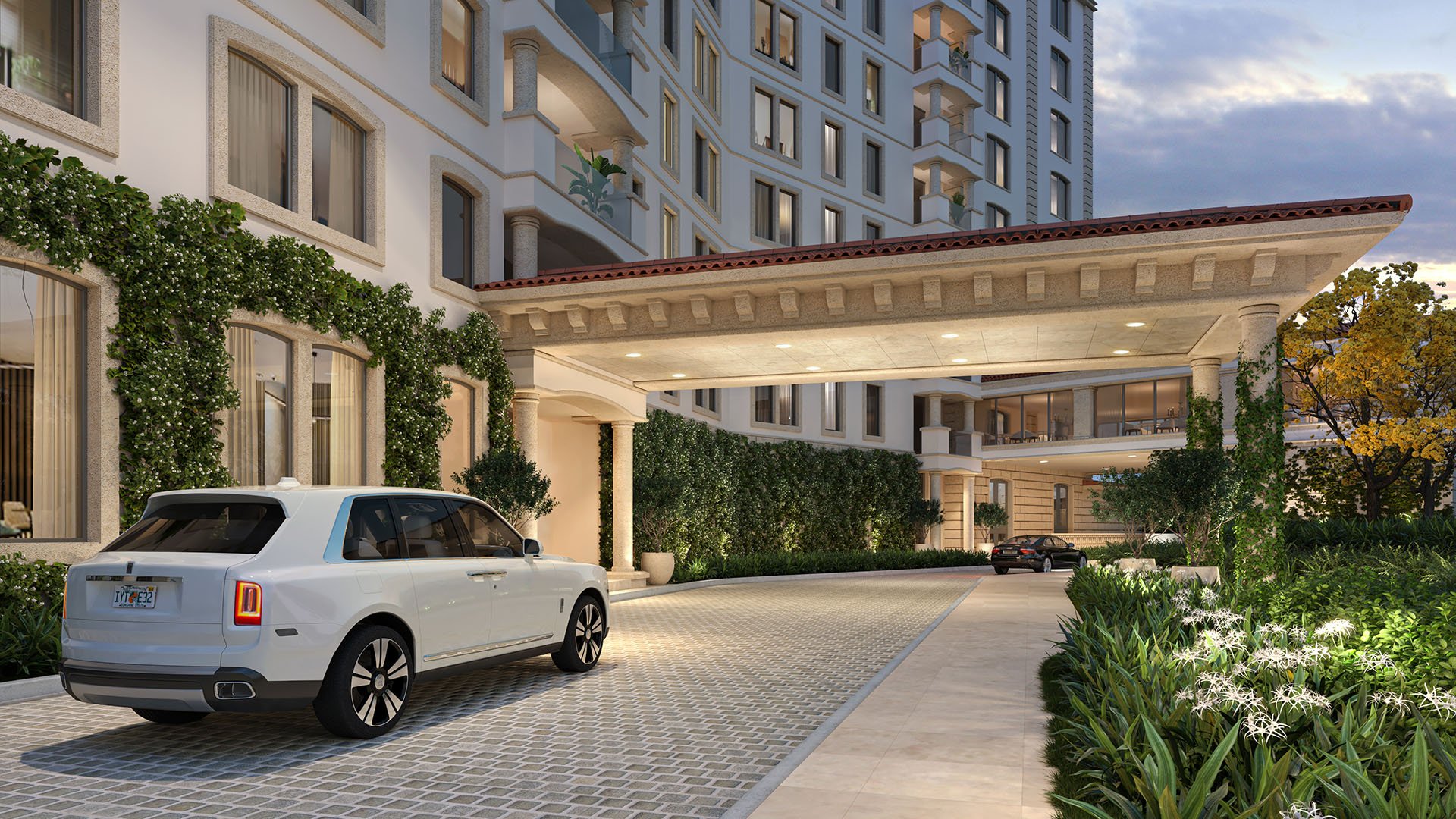
For a certain South Florida buyer, the question is no longer whether a residence can impress. The sharper question is whether it can protect the atmosphere around a private life while still allowing that life to unfold generously. The Residences at Six Fisher Island speaks directly to that buyer, particularly the owner who hosts dinners, philanthropic gatherings, corporate evenings, family celebrations, or quiet weekends with a guest list that should remain exactly that: a guest list.
The privacy proposition begins before architecture. Fisher Island is physically separated from Miami Beach and the mainland, giving the residence a baseline that towers on the public street grid cannot easily replicate. Without direct public road access, arrivals are inherently more intentional. Guests, vendors, and staff may be filtered before reaching the island, creating an access-control layer well before anyone approaches the building itself.
That distinction matters during events. In many luxury buildings, privacy is strongest only after one has crossed the lobby. At Six Fisher, the privacy sequence begins earlier, at the level of geography, movement, and approach. The result is a residence that can entertain at a meaningful scale while maintaining a residential exterior that does not announce itself to the city.
Event privacy is rarely about one dramatic security feature. It is usually about layers. At The Residences at Six Fisher Island, those layers begin with the island condition. The lack of direct public road access makes casual observation, sidewalk-level photography, or public-lobby watching less practical than in many mainland or Miami Beach settings.
For buyers accustomed to public-facing luxury, this is a different residential rhythm. In a traditional urban tower, even a discreet arrival can be shaped by traffic, valet exposure, adjacent pedestrians, and the public choreography of a city block. On Fisher Island, the movement pattern narrows. The residence benefits from controlled maritime access and a setting where the island itself becomes part of the privacy strategy.
This is particularly important for hosts whose gatherings involve multiple forms of arrival. A family dinner may require little more than a handful of guests. A philanthropic event may involve service teams, florists, caterers, security coordination, and a changing guest flow over several hours. A corporate evening may demand discretion before, during, and after the event. The strongest privacy profile anticipates these movements rather than treating them as afterthoughts.
In buyer shorthand, the conversation often touches on Fisher Island, Miami Beach, exclusive-area, gated-community, and new-construction considerations. Yet Six Fisher’s appeal is more precise than any label. It is about reducing unwanted exposure while allowing the residence to function as a highly capable private setting.
The most compelling aspect of Six Fisher’s privacy story is that it is not framed as a single locked door or private lobby. It is layered control. The sequence includes the island’s separation, controlled maritime access, a low-density residential environment, private vertical circulation, and concierge-style service protocols that support discreet hosting.
For event-focused buyers, layered control is more useful than symbolic exclusivity. It helps separate types of movement: family, invited guests, service staff, event support, and everyday residential life. That separation is essential when a home becomes a private venue for an evening but must return to family normalcy the next morning.
Private vertical circulation is especially relevant. It can reduce the sense that every arrival, service route, or guest transition belongs to a shared public procession. For households with children, visiting relatives, staff, or overlapping schedules, that separation can preserve calm even when the residence is active.
Concierge-style service protocols also matter because privacy is operational, not merely architectural. The most serene event is often the one in which the owner does not have to manage the edges. Guest timing, vendor arrival, service movement, and quiet departures all shape whether a home feels composed or exposed.
Low-density planning is an underrated luxury for residents who entertain. A high-traffic tower can be superbly designed and still feel active in ways that complicate private events. Elevators, corridors, valet areas, amenity transitions, and shared lobbies can become points of friction when guests and service providers are moving through the building.
Six Fisher is positioned differently. Its privacy appeal is strengthened by planning that supports entertaining without the atmosphere of a busy residential tower. That does not mean the residence becomes a hotel or club. The better interpretation is subtler: it allows a home to host well while still feeling like a private home.
This is the difference between access and exposure. An event residence must be accessible to invited people, but it should not become legible to everyone else. The island setting, combined with the building-level framework, supports that distinction. Guests can be welcomed, vendors can be coordinated, and the household can remain protected from the casual visibility that often accompanies marquee addresses.
South Florida has many homes designed to entertain. Fewer are designed to entertain without turning the act of hosting into a public performance. The Residences at Six Fisher Island sits in that narrower category. Its value is not only in seclusion, but in the way seclusion remains compatible with hospitality.
For the buyer who entertains socially, the benefit is comfort. Guests arrive to a world that feels removed from the pressure of Miami Beach’s most public settings. For the corporate host, the benefit is discretion. Conversations, introductions, and departures can occur with less incidental exposure. For philanthropic gatherings, the benefit is tone. The event can feel important without becoming conspicuous.
This is where the residence’s island-scale seclusion and contemporary, hospitality-level residential program intersect. The ambition is not to make entertaining difficult in the name of privacy. It is to make privacy feel effortless while entertaining remains graceful.
The ideal buyer for Six Fisher is not merely someone seeking a trophy address. It is someone who understands the cost of visibility. That buyer may divide time among several homes, host selectively, travel with staff, welcome extended family, or use the residence as a setting for relationship-driven gatherings. In each case, the residence must do more than look beautiful. It must manage proximity.
This buyer is likely comparing forms of discretion. A waterfront tower offers views and services. A gated estate offers land and control. A private island residence offers something more unusual: separation from the public road system combined with a managed residential environment. Six Fisher’s advantage is strongest for buyers who want guest-list control, limited public exposure, and a meaningful remove from tourist-heavy settings.
For MILLION readers, the practical takeaway is simple. Privacy during events is not a finish, amenity, or marketing word. It is a design and operations question. The more a residence can control the approach, movement, density, and service sequence, the better it can protect the owner’s private life while still supporting a generous social life.
Why is The Residences at Six Fisher Island relevant for buyers who host events? It is positioned for buyers who want privacy, discretion, and controlled access while entertaining at home.
What makes Fisher Island different from mainland luxury towers? Fisher Island is physically separated from Miami Beach and the mainland, with no direct public road access.
How does controlled access support event privacy? Guests, vendors, and staff can be filtered before reaching the island, adding a privacy layer before building arrival.
Is the privacy advantage based on one feature? No. The appeal comes from layered controls, including island separation, maritime access, density, circulation, and service protocols.
Why does low density matter for entertaining? Low-density planning can reduce the high-traffic atmosphere that often complicates private events in larger towers.
How does private vertical circulation help residents? It supports separation between family, guests, service teams, and event movement within the residence experience.
Is Six Fisher suited only for large events? No. The privacy framework can also support family gatherings, quiet dinners, and selective social hosting.
Does the island setting reduce public exposure? Yes. The setting makes casual sidewalk-level observation and public-lobby visibility less practical than in urban towers.
Who is the best-fit buyer for this residence? A buyer who values guest-list control, limited public exposure, and separation from tourist-heavy Miami Beach settings.
What is the broader luxury lesson here? The most effective event residence protects privacy through geography, operations, circulation, and restraint.
When you're ready to tour or underwrite the options, connect with MILLION.
If branded residences are on your mind — as a home or as an allocation — we would be glad to share what we are seeing, privately.
Begin a quiet conversation