A household-operations comparison of The Residences at 1428 Brickell and Park Grove Coconut Grove for buyers moving from staffed waterfront estates into condominium living.
For a buyer leaving a staffed waterfront estate, moving into a condominium is rarely a simple matter of downsizing. Square footage matters, but it is not the controlling issue. The more important question is how the household functions from morning to evening: who arrives, who parks, who signs for deliveries, how children move through the week, where guests are received, how drivers circulate, how vendors are screened, and how privacy is preserved when an estate gate is replaced by building protocol.
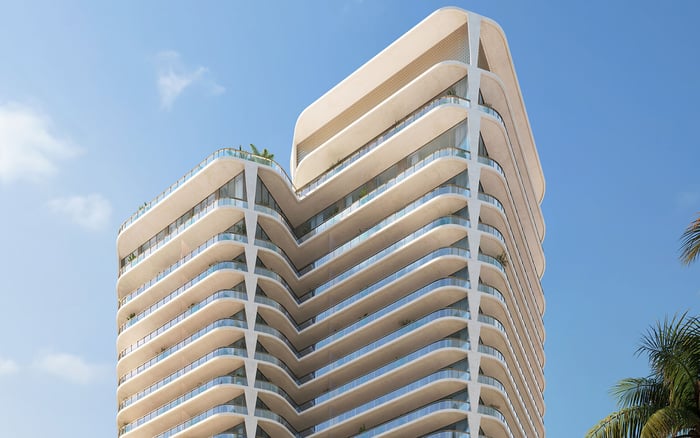
That is the useful lens for comparing The Residences at 1428 Brickell with Park Grove Coconut Grove. The first is best evaluated as a vertically oriented luxury condominium in Brickell. The second is best evaluated as a bayfront condominium setting in Coconut Grove, with a context that may feel more familiar to families coming from a waterfront residential environment.
Neither is abstractly better. Each solves a different operational problem.
Brickell is the more urban operating system. Its advantage is immediacy: proximity, vertical service infrastructure, and the convenience of being at the center of the city’s financial and social gravity. For a household that no longer wants the obligations of land, driveways, separate exterior systems, and private-property maintenance, 1428 Brickell’s appeal is the ability to compress daily life into a serviced vertical format.
That compression can be powerful. A household that values fast access to restaurants, offices, wellness appointments, and city services may find that the tower model replaces estate sprawl with managed efficiency. Buyers also considering the broader Brickell field might look at Una Residences Brickell to understand how different luxury buildings express the same urban desire in distinct ways.
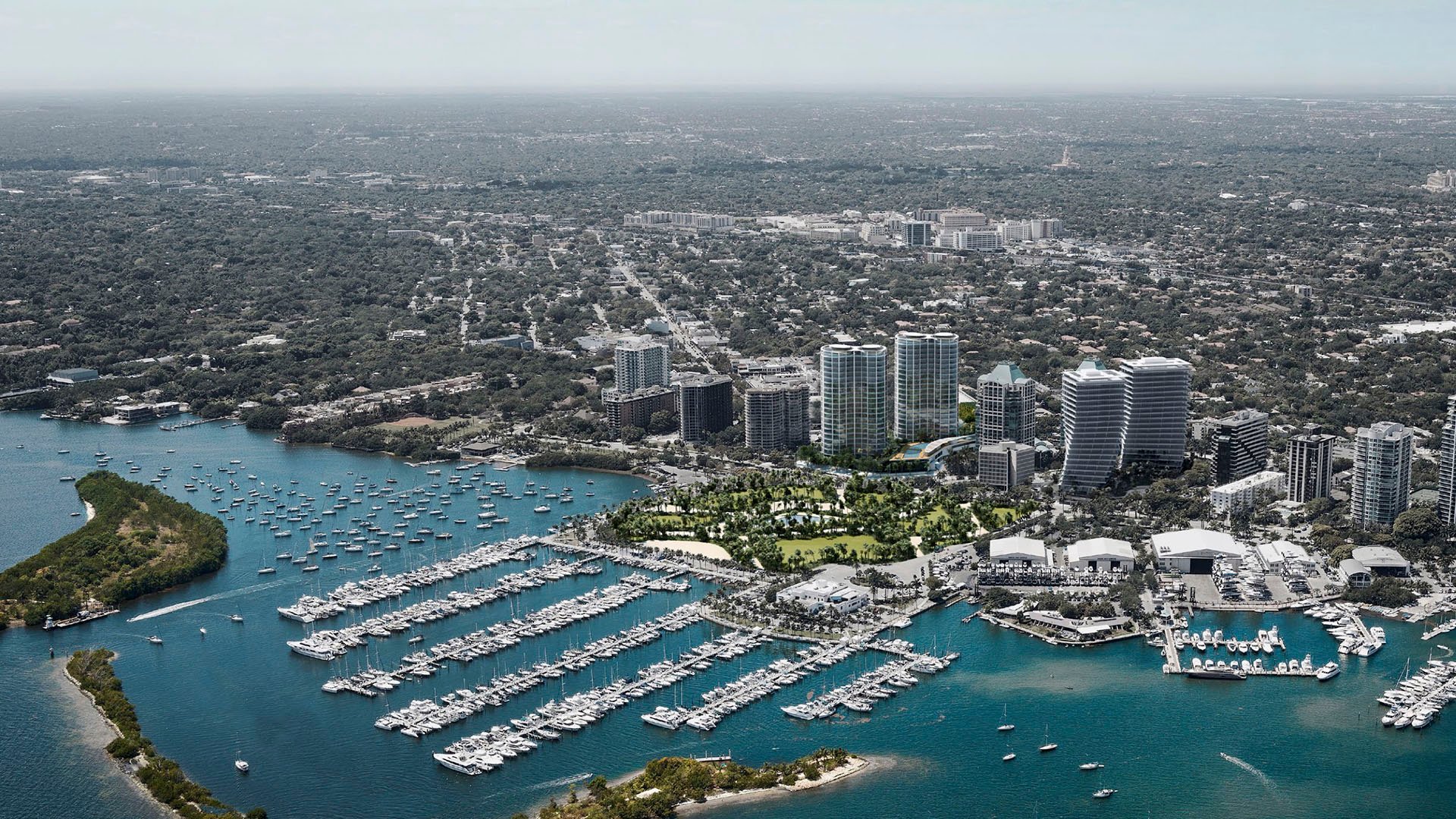
Coconut Grove works differently. Park Grove’s appeal is not only the residence, but the bayfront and village-like setting around it. It is the more neighborhood-and-bay-oriented choice, and for some estate owners that matters deeply. The Grove can soften the psychological shift from private waterfront land to condominium life because the surrounding rhythm feels more residential, less tower-district, and more tied to school runs, marina routines, shade, walking, and bayfront context.
Within that same Coconut Grove frame, Four Seasons Residences Coconut Grove may also enter the conversation for buyers comparing how service-rich residences interact with the Grove’s established residential character.
The estate baseline is usually generous: controlled vehicular entry, multiple garage bays, guest parking, staff parking, delivery staging, and, in some homes, a separate service approach. A condominium changes that equation. Even at the very top of the market, the buyer must study the building’s exact procedures for cars, drivers, household staff, vendors, guests, food deliveries, package handling, and service access.
For 1428 Brickell, the operational question is whether the vertical model improves household efficiency. A buyer should map a full weekday: morning driver arrival, staff check-in, child departure, office transfers, deliveries, guest access, and evening return. The benefit of an urban tower is convenience, but convenience depends on how elegantly the building manages movement.
For Park Grove Coconut Grove, the question is whether the enclave format preserves the estate-like sense of arrival and ease. A buyer accustomed to a private driveway should pay close attention to the transition from car to residence, the handling of visitors, and the rhythm of service personnel entering the property. The setting may feel more residential, but the rules are still condominium rules.
This is where private-school routines become especially relevant. If children are part of the household, the comparison should include school calendars, daily transportation, after-school pickups, weekend sports, and the practical realities of crossing Miami at specific hours. A beautiful residence that complicates every weekday morning may not be the right operational fit.
Estate entertaining is often horizontal. Guests arrive through a gate, cars are absorbed on site, catering teams move through service areas, and the home can expand into gardens, terraces, pools, and dockside space. Condominium entertaining is different. It may be more polished, more contained, and more staff-supported, but it is governed by building procedures and shared infrastructure.
At 1428 Brickell, entertaining is likely to appeal to households that want the city as an extension of the residence. Dinner may begin upstairs and continue in Brickell, or guests may arrive from hotels, offices, and nearby residences with minimal friction. The urban setting favors immediacy and the energy of proximity.
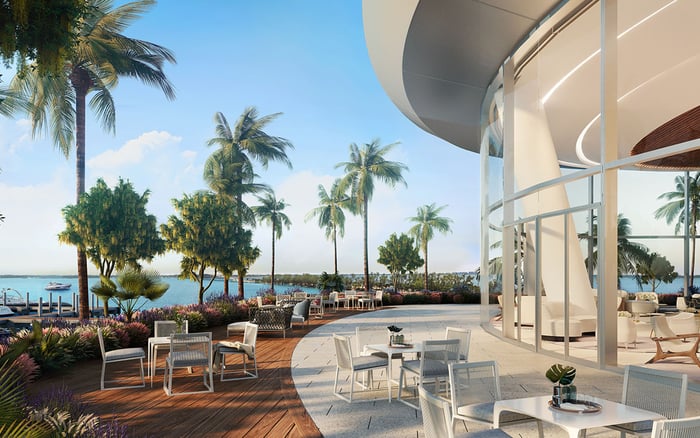
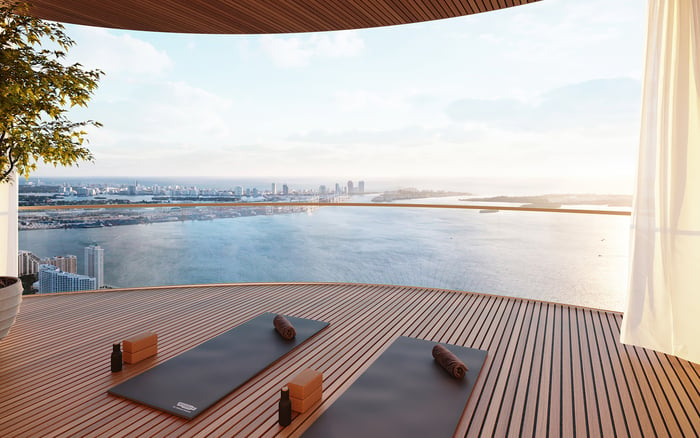
At Park Grove, the emotional center is bayfront Coconut Grove. Waterview living and the surrounding residential character may better echo the atmosphere of a waterfront estate, even if they cannot replicate private land. The buyer should ask how indoor and outdoor hospitality work in practice, how guests are received, and how the building manages larger social occasions.
Boating is the category that requires the most discipline. Former waterfront-estate owners often assume that water proximity equals boating continuity, but a private dock or direct water access is difficult to replicate in many condominium environments. Marina access, boat storage, tender logistics, and third-party arrangements should be verified before a buyer treats either building as a substitute for a private dock.
Security also changes. In an estate, control is personal and physical: the gate, the staff, the cameras, the guardhouse, the owner’s preferred vendors. In a condominium, security becomes a building-managed ecosystem. That can be reassuring, but it requires trust in protocols that the owner does not unilaterally control.
A 1428 Brickell buyer should focus on how the building manages access in a dense urban setting. The questions are practical: how staff are cleared, how recurring vendors are treated, how visitors are announced, and how privacy is protected when the building is busy.
A Park Grove buyer should ask similar questions, but through the lens of a bayfront residential enclave. The environment may feel calmer, yet the same shift applies: private-estate control gives way to association procedures, shared systems, and standardized rules.
Maintenance is the tradeoff many estate owners ultimately welcome. A condominium can reduce the burden of private landscaping, exterior systems, pool maintenance, and waterfront property upkeep. In exchange, the owner accepts association governance, shared infrastructure, schedules, rules, and the reality that some decisions are made collectively rather than privately.
The Residences at 1428 Brickell is likely to resonate with the buyer who wants to replace estate complexity with urban immediacy, vertical living, and Brickell convenience. Park Grove Coconut Grove is likely to resonate with the buyer who still wants bayfront context, neighborhood rhythm, and a setting that feels closer to the emotional cadence of a waterfront estate.
The right decision is not simply a choice between two luxury addresses. It is a household-operations audit. Walk through the week hour by hour. Count the cars. List the staff. Identify the vendors. Map the school routine. Pressure-test entertaining. Confirm boating expectations. Then decide which building ecosystem makes the household feel not merely accommodated, but intelligently run.
Is 1428 Brickell or Park Grove better for a former estate owner? It depends on the household’s operating rhythm. 1428 Brickell favors urban convenience, while Park Grove favors bayfront neighborhood character.
Why is square footage not the main comparison? Estate owners often rely on land, parking, staff areas, and service access. A condo must be judged by how well it replaces those functions.
Which option feels more urban? The Residences at 1428 Brickell is the more urban choice, with appeal tied to Brickell proximity and vertical convenience.
Which option feels closer to a waterfront estate setting? Park Grove Coconut Grove is more bayfront and neighborhood-oriented, which may feel more familiar to some estate households.
What should buyers ask about staff? Buyers should review procedures for recurring staff, vendors, deliveries, service access, and privacy before committing.
How important are cars and drivers in this decision? Very important. The estate baseline often includes generous parking and controlled arrival, which must be re-evaluated in a condo.
Should families consider school routines? Yes. Daily school transportation and after-school logistics can determine whether Brickell or Coconut Grove works better.
Can either condo fully replace private boating access? Not automatically. Private docks and direct water access are difficult to replicate and should be verified in detail.
Does condo living reduce maintenance? It can reduce private-property upkeep, but it introduces association rules, shared systems, and building-managed schedules.
What is the best way to choose between them? Treat the decision as an operations audit, not a beauty contest, and test each building against the household’s actual week.
For a discreet conversation and a curated building-by-building shortlist, connect with MILLION.
If branded residences are on your mind — as a home or as an allocation — we would be glad to share what we are seeing, privately.
Begin a quiet conversation