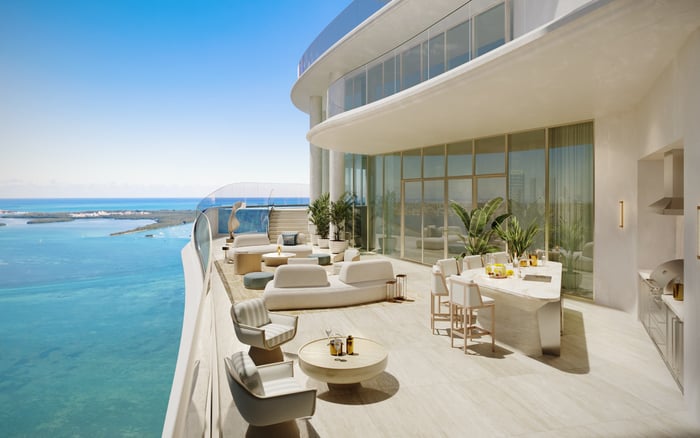
A buyer-focused look at why yoga-room acoustics deserve the same scrutiny as finishes, views, and wellness programming in luxury condominium living.

In the current language of luxury condominium living, the yoga room is often presented as a soft-focus promise: calm light, pale floors, restrained materials, and the suggestion that wellness is not an appointment but an extension of home. Yet for discerning buyers, the room raises a sharper question. Does the building merely display wellness, or has it engineered the conditions for it?
That question carries particular weight in South Florida, where amenity programs have become more layered, more social, and more ambitious. A yoga room is rarely removed from the building’s daily life. It may sit near a fitness center, spa corridor, pool deck, residents’ lounge, elevator bank, or children’s area. Each adjacency can shape the experience. The room may appear serene in a rendering; the real test is whether it remains serene when the building is fully occupied and moving at its natural rhythm.
For MILLION readers, the issue is not whether a yoga studio is attractive. The more revealing question is whether its quiet is protected.
Acoustic comfort is not a single feature. It is the result of several decisions working in concert. The first layer is sound isolation: how well the room is protected from neighboring spaces, mechanical systems, corridors, and impact noise above or beside it. If a yoga room shares a wall with active fitness uses, that wall matters. If it sits below a social deck, the ceiling assembly matters. If it opens directly to a busy circulation route, the door and threshold matter.
The second layer is reverberation. A room can be isolated from outside noise and still feel acoustically hard inside. Stone, glass, mirrors, and large uninterrupted surfaces can make breathwork, instruction, and soft music feel sharper than intended. A refined wellness room usually needs some form of sound absorption, whether through ceiling treatments, wall panels, textiles, millwork, or other integrated details that preserve the design vocabulary.
The third layer is operational sound. This includes HVAC tone, door closers, cleaning schedules, programmed music levels, class occupancy, and the way adjacent amenities are used. In a luxury setting, operations are part of design. A room built for calm can lose its purpose if the building treats it as overflow space, a waiting area, or a passageway.
The most useful tour of a yoga room is not only visual. A buyer should pause, stand still, and listen. Is there a mechanical hum? Can voices from nearby corridors be heard clearly? Does sound bounce across the room? Are footsteps, weights, doors, or music intruding from adjacent areas? Does the space feel quiet because it is empty, or because it has been designed to remain quiet?
The timing of the visit can matter. A mid-morning tour may create one impression; an early evening visit, when residents are more likely to use gyms, elevators, lounges, and outdoor decks, may reveal another. Buyers do not need to become acoustic engineers. They only need to notice whether the room’s atmosphere feels stable or fragile.
This is especially important in South Florida lifestyle searches that begin with location and amenity labels. Those words can describe geography and features, but they do not reveal how quiet a private wellness moment will feel once the building is alive.
A gym can tolerate energy. A yoga room cannot tolerate distraction in the same way. The sound of a door closing, a conversation outside, or low-frequency music from another amenity can be disproportionately disruptive because the activity inside is built around focus. Yoga, meditation, stretching, and breathwork depend on continuity. The room’s luxury is not measured only in square footage or finish level, but in whether it allows residents to forget the building around them.
This distinction matters because many condominium amenity plans group wellness uses together. That can be convenient, but convenience is not the same as acoustic compatibility. A high-performance fitness room, a movement studio, a spa relaxation area, and a yoga room each have different sound profiles. The strongest amenity planning recognizes those differences rather than relying on a single wellness aesthetic to solve them.
The quiet-risk question is therefore not a complaint about noise. It is a measure of design intelligence.
In luxury real estate, buyers often understand the premium attached to views, ceiling heights, terraces, private elevator access, and distinctive materials. Quiet is more elusive, yet it can shape daily satisfaction just as strongly. A beautiful residence with a poorly managed amenity floor may still feel compromised. A wellness suite that functions gracefully can make the building feel more private, more composed, and more expensive in the truest sense.
Quiet also signals care. If the yoga room is well protected, it suggests that the development team thought beyond photogenic amenity moments. It suggests attention to transitions, assemblies, user behavior, and the way residents actually inhabit a building. For buyers accustomed to discretion, that kind of invisible performance can be more persuasive than spectacle.
The inverse is also true. If an amenity promises calm but delivers intrusion, the mismatch can linger. It may not appear in a brochure, but residents notice it. Guests notice it. Over time, repeated small disruptions can erode the sense of sanctuary that a luxury building is meant to provide.
A serious buyer can approach yoga-room acoustics with a few direct questions. Where is the room located relative to gyms, lounges, service corridors, mechanical areas, elevators, and outdoor decks? What materials are used to manage sound within the room? How are classes scheduled, and are music levels controlled? Is the room reserved for quiet wellness uses, or can it become a multipurpose space? Are doors, thresholds, and ceiling conditions designed with acoustic comfort in mind?
These questions are not technical theater. They are practical due diligence. A buyer does not need every answer to be complex. In many cases, clarity is the luxury. A sales team or building representative should be able to explain how the room is intended to perform and how resident use will be managed.
For completed buildings, the best evidence is experience. For pre-completion purchases, buyers can look for thoughtful amenity planning, clear separation between active and quiet uses, and design language that treats acoustics as integral rather than decorative.
South Florida condominium living has a distinctive relationship with sound. Indoor and outdoor life frequently overlap. Amenity decks, pools, lounges, fitness spaces, waterfront settings, valet courts, and social programming can all contribute to a building’s energy. That energy is part of the appeal. The question is whether the building can also create true retreat.
A yoga room becomes a test of that balance. It asks whether the property can shift from social to silent, from public to personal, from resort mood to residential privacy. In a market where luxury buyers often compare buildings through the lens of lifestyle, the ability to deliver calm without isolation is a meaningful advantage.
The most elegant wellness spaces do not feel sealed off or clinical. They feel naturally protected. They allow the architecture to lower its voice.
Yoga-room acoustics may seem like a small detail until they become part of daily life. For the resident who begins the morning with a stretch, uses meditation to reset between meetings, or wants a wellness amenity that feels genuinely restorative, quiet is not optional. It is the amenity.
The next time a building presents its wellness suite, look beyond the finish palette. Listen for the neighboring room. Notice the door. Consider the ceiling. Ask how the space will perform when the building is busy. In the ultra-premium market, the difference between a designed amenity and a lived luxury often begins with what cannot be seen.
Why should buyers care about yoga-room acoustics in a luxury condo? Because acoustic comfort determines whether the space feels genuinely restorative or merely decorative.
Is a beautiful yoga room always a quiet yoga room? No. Visual serenity and acoustic performance are separate qualities that must be evaluated together.
What is the first thing to listen for during a tour? Listen for mechanical hum, corridor voices, door noise, music bleed, and sound from nearby amenity areas.
Can a yoga room near a gym still work well? Yes, if the building has planned appropriate separation, sound isolation, and operational controls.
Do hard surfaces create acoustic issues? They can. Glass, stone, mirrors, and uninterrupted surfaces may increase reverberation if not balanced with sound-conscious treatments.
Should buyers ask about class schedules and music levels? Yes. Operations can affect quiet as much as architecture, especially in shared wellness areas.
Is this issue only relevant in completed buildings? No. In pre-completion purchases, buyers can still review amenity layout, adjacencies, and design intent.
Does acoustic comfort affect resale perception? It can support the broader impression of quality, privacy, and thoughtful building management.
What is the quiet-risk question in simple terms? It asks whether a wellness room will remain calm when the building is fully active.
What is the best way to shortlist comparable options for touring? Start with location fit, delivery status, and daily lifestyle priorities, then compare stacks and elevations to validate views and privacy.
To compare the best-fit options with clarity, connect with MILLION.
If branded residences are on your mind — as a home or as an allocation — we would be glad to share what we are seeing, privately.
Begin a quiet conversation