A refined look at why South Florida luxury buyers now treat resort-level service as the baseline, while prioritizing discretion, wellness, privacy, design intelligence, and effortless ownership.
There was a time when resort-level service could define a luxury residence. A gracious arrival, attentive valet, a pool deck with hotel polish, and a concierge who remembered preferences were enough to distinguish one address from another. In South Florida’s highest-end residential market, that threshold has moved. Service is no longer the headline. It is the baseline.
Today’s luxury buyer arrives with a more exacting question: what happens after the welcome? The answer must reach beyond hospitality into privacy, wellness, security, maintenance, design coherence, and daily ease. A residence may impress on the first walk-through, but its lasting value is revealed in how quietly and consistently it performs over time.
This is especially true in South Florida, where primary homes, seasonal residences, and investment-minded second homes often serve the same buyer profile. An owner may live there full-time, arrive for long weekends, or expect the property to be fully prepared after weeks away. In every scenario, service must be precise, invisible, and deeply integrated into the rhythm of ownership.
The most sophisticated buyers are not seeking constant attention. They are seeking control. They want staff presence without intrusion, access without friction, and recognition without theater. That distinction separates resort-style living from true residential luxury.
A hotel can deliver abundance. A private residence must deliver judgment. The strongest service cultures understand when to anticipate and when to recede. They protect privacy at arrival, manage guest flow intelligently, and make daily routines feel secure rather than staged.
This matters because South Florida attracts buyers who often lead highly public, mobile, or security-conscious lives. For them, luxury is not simply having someone available. It is knowing that preferences are handled consistently, spaces remain secure, and the home functions with minimal explanation. The service standard becomes less about display and more about trust.
Wellness once appeared as a spa, a gym, or a treatment room. Today, buyers judge it more holistically. They consider air, light, sound, circulation, outdoor access, recovery spaces, fitness programming, and the relationship between private interiors and shared amenities. The question is not whether a building offers wellness. The question is whether the residence makes healthy living easier every day.
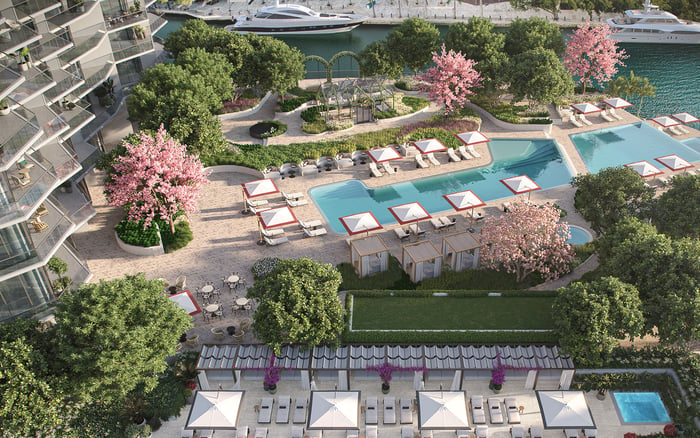
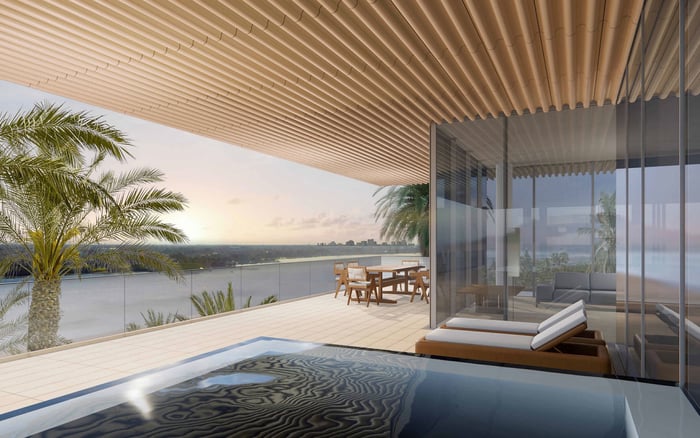
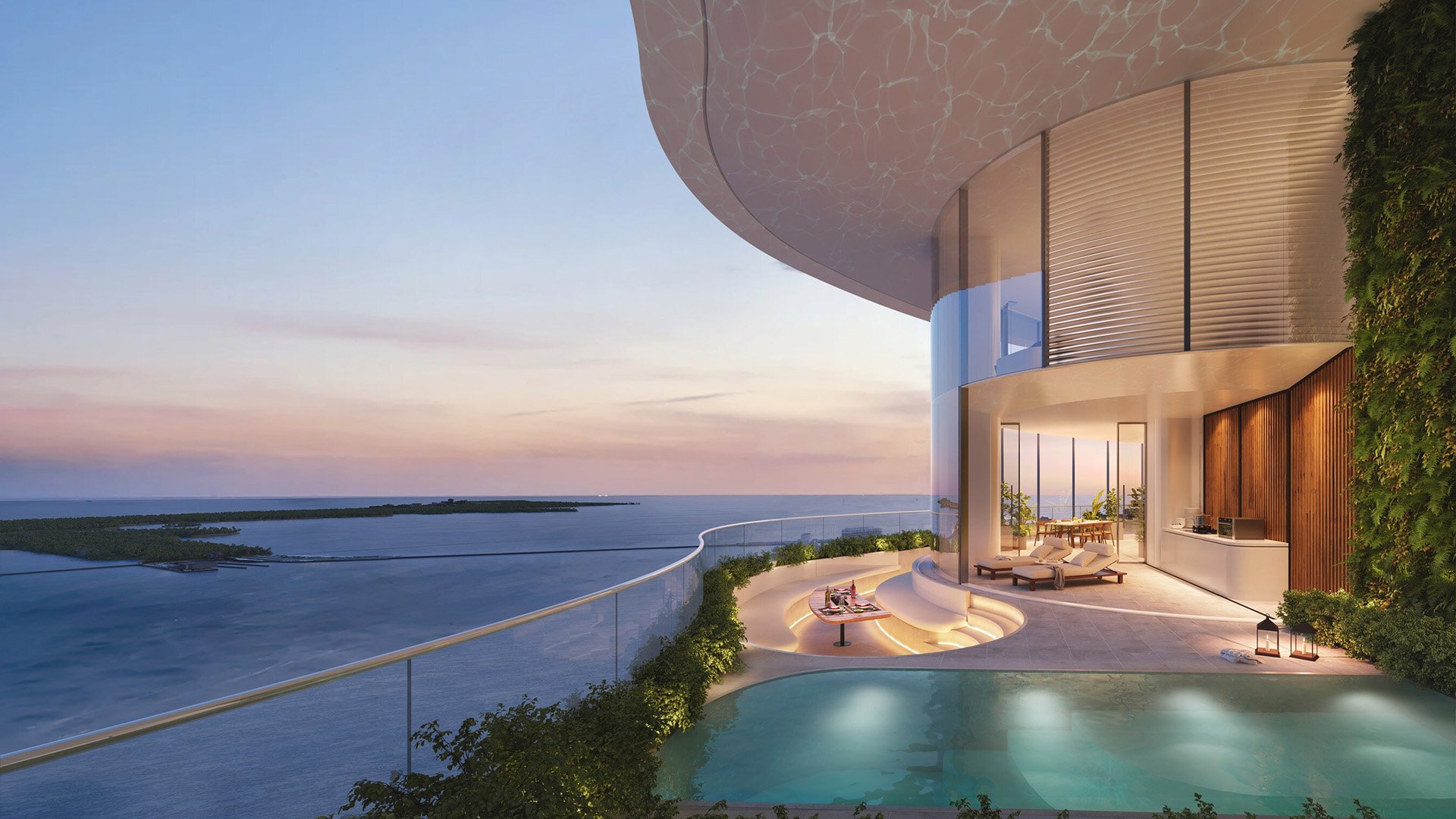
In South Florida, the climate sharpens that standard. Outdoor rooms, shaded terraces, water views, and fresh-air transitions can be as meaningful as formal amenity spaces. A beautifully planned terrace may matter as much as a treatment suite if it becomes the place where mornings begin and evenings settle. A pool is no longer judged only by scale or scenery, but by privacy, service, seating, sun, shade, and how comfortably owners can use it without feeling on display.
The best luxury residences treat wellness as a system. Fitness, dining, spa, outdoor living, and personal retreat are connected rather than scattered. When done well, the result is not a louder amenity package. It is a calmer life.
For many South Florida buyers, the real test of service begins when no one is home. A residence may sit vacant between visits, host family for extended stays, or need to shift quickly from quiet mode to full readiness. That requires more than a concierge desk. It requires operational intelligence.
Owners want confidence that climate, access, deliveries, maintenance, housekeeping, and preparations can be managed with discretion. They want the refrigerator stocked without a simple request becoming a project. They want terraces checked, service appointments coordinated, and the residence presented as though they never left. For a second-home buyer, this is not indulgence. It is the difference between owning a residence and managing another obligation.
This is why service quality must be evaluated beyond amenity tours. A buyer should ask how requests are documented, who has access, how privacy is protected, and how quickly the property can be readied. The most impressive answers are often operational, not visual.
South Florida luxury is not one market with one lifestyle. A buyer comparing Brickell, oceanfront living, new-construction residences, second-home planning, pool programming, and terrace design is really comparing different definitions of ease. Each location places a different burden on service.
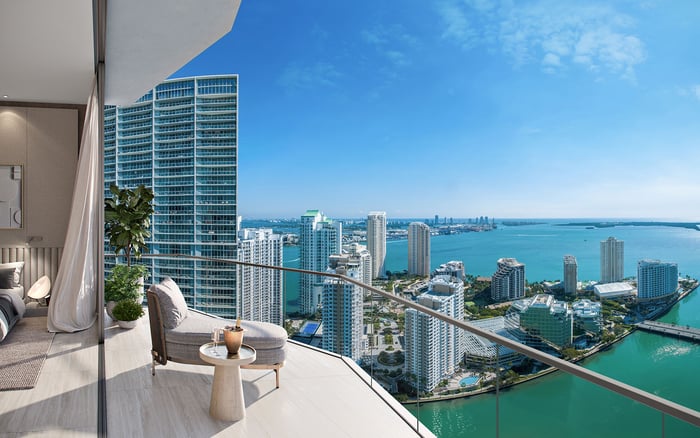
In a dense urban setting such as Brickell, efficiency becomes essential. Arrival, parking, package handling, guest access, and elevator flow can influence daily satisfaction as much as finishes. The residence must create calm within the momentum of the city. Service succeeds when it compresses complexity and gives time back to the owner.
Along an oceanfront corridor, privacy and maintenance become more central. Exposure, outdoor furnishings, beach access, poolside service, and transition spaces all require careful management. The best experience feels relaxed, but it is supported by constant attention to detail.
In new-construction residences, buyers often expect the newest design language, current technology, and polished amenity concepts. Yet newness alone does not guarantee maturity. The deciding factor is whether the property’s service culture can match the architecture. A beautiful building without disciplined operations can feel unfinished, even after completion.
The most revealing questions are practical. How does the staff learn an owner’s preferences? How are special requests handled when the owner is out of town? What systems protect privacy? How are service levels maintained during peak seasonal periods? Who oversees the residence when something goes wrong?
These questions move the conversation beyond brochure language. They also clarify whether an address is built for occasional admiration or sustained living. A residence that photographs well may not necessarily live well. Conversely, the most valuable service features may be almost invisible during a tour.
Buyers should also pay attention to tone. Overly performative service can feel tiring in a private residential context. The strongest properties communicate confidence through restraint. Staff are present, spaces are ready, and details align without the owner having to manage the experience.
In that sense, resort-level service is only the opening chapter. The more meaningful luxury is continuity. It is the ability to arrive, settle, host, recover, and depart without friction. For South Florida’s most discerning buyers, that is where the market is moving: away from amenities as spectacle and toward service as a quiet form of intelligence.
Is resort-level service still important in South Florida luxury real estate? Yes. It remains important, but the most discerning buyers now treat it as a baseline rather than a final differentiator.
What matters more than traditional concierge service? Privacy, operational consistency, wellness integration, and the ability to manage the residence seamlessly when the owner is away are often more meaningful.
Why is discretion so important to luxury buyers? Many buyers value recognition without exposure. They want staff to understand preferences while preserving a residential sense of calm and privacy.
How should buyers evaluate amenity quality? They should look beyond appearance and ask how amenities function in daily life, especially during peak use, guest visits, and seasonal transitions.
Does a newer building always mean better service? Not necessarily. New-construction can offer current design and technology, but service culture depends on management, training, and consistency.
Why does location change the service expectation? Urban, waterfront, and resort-style settings create different needs. The best service model responds to the specific lifestyle of the location.
What should second-home buyers prioritize? They should prioritize property readiness, maintenance oversight, privacy controls, and clear communication while they are away.
Are wellness amenities still a differentiator? Yes, when they are integrated into daily living rather than treated as decorative add-ons. Calm, access, air, light, and routine all matter.
What is a sign of truly refined residential service? The strongest sign is effortlessness. Requests are anticipated, spaces are prepared, and the owner does not need to repeatedly explain preferences.
How should a buyer compare luxury residences with similar amenities? They should focus on management depth, privacy, service protocols, and how the property supports real life after the initial impression fades.
When you're ready to tour or underwrite the options, connect with MILLION.
If branded residences are on your mind — as a home or as an allocation — we would be glad to share what we are seeing, privately.
Begin a quiet conversation