A discreet buyer’s guide to evaluating vendor-access protocols in South Florida luxury condominiums, from documentation and service culture to resale confidence.
In luxury condominium living, risk is often framed in visible terms: storm exposure, structural condition, insurance costs, or the strength of the reserve story. Yet one of the most revealing questions is quieter: who can enter the building, where can they go, who approved them, and how is that access recorded?
Vendor access sits at the intersection of privacy, security, convenience, and operational discipline. It includes housekeepers, contractors, delivery teams, designers, installers, dog walkers, maintenance technicians, caterers, art handlers, and service providers hired by the association, the management team, or individual residents. In a high-service building, these relationships are essential. In a poorly controlled building, they can create ambiguity.
For South Florida’s ultra-premium buyer, the issue is not whether a residence allows service. The issue is whether the building has a mature culture around service. The best buildings make access feel effortless for owners while keeping permissions precise, temporary, and documented.
A polished lobby can conceal weak process. A gracious front desk can soften unclear rules. A familiar staff member can become the informal gatekeeper for too many exceptions. Buyers should look beyond the elegance of arrival and ask how the building handles the ordinary day: a plumber at 9 a.m., a florist before dinner, a furniture delivery during season, or a housekeeper arriving while the owner is away.
The central question is accountability. A strong access protocol should make clear who requested entry, who approved it, what areas were permitted, when permission began, when it ended, and whether the vendor left as expected. This does not need to feel institutional. In a sophisticated building, the experience can remain quiet and gracious. Behind that calm, however, there should be structure.
This is especially important for owners who divide time between homes. A second-home lifestyle often depends on remote permissions, recurring service providers, and staff coordination. Convenience is valuable, but convenience without boundaries is not luxury. It is exposure.
South Florida’s luxury condominium market prizes hospitality. Owners expect packages to be handled, residences to be prepared, and service providers to move through the property without friction. That expectation is reasonable. The distinction is between professional service and informal access culture.
Professional service is documented, repeatable, and consistent from one staff shift to the next. Informality depends on memory, relationships, and exceptions. The first protects privacy. The second may feel charming until a problem arises.
A buyer should listen closely during conversations with management. Phrases such as “we know everyone” or “we usually let them up” may sound reassuring, but they deserve follow-up. Who verifies identity? Are vendors pre-registered? Are recurring vendors reviewed periodically? Are keys, fobs, service elevators, loading docks, and parking areas governed by written procedures? Are there separate expectations for owner-hired vendors and building-hired vendors?
In trophy buildings, the answers should be confident without being defensive.
Vendor access is not a single question. It is a sequence of practical checks. Buyers can begin with the house rules, management procedures, and any resident-facing policies for guests, vendors, deliveries, and contractors. The goal is to understand whether the rules are specific enough to be useful and flexible enough to support a luxury lifestyle.
Ask how vendors are registered. Ask whether insurance documentation is required for certain categories of work. Ask how after-hours access is handled. Ask whether vendors may enter a residence when the owner is absent and what written approval is required. Ask whether access permissions expire automatically. Ask how staff record arrivals and departures. Ask who can issue temporary credentials, elevator permissions, or loading access.
The answers matter less as isolated details than as a pattern. A building with strong governance will usually describe a clean chain of permission. A building with weaker discipline may rely on vague assurances.
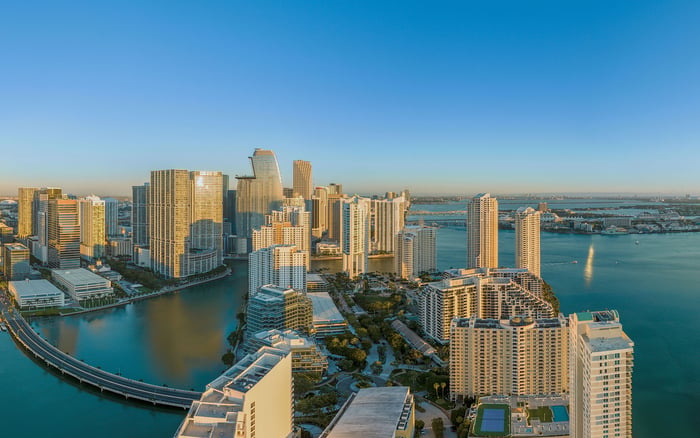
Across Brickell, Miami Beach, Sunny Isles, and Fisher Island, the buyer profile often includes privacy-sensitive owners, frequent travelers, household staff, and high-value interiors. That makes operational clarity part of the asset, not a mere management preference.
The immediate benefit of strong access control is peace of mind. Owners should be able to authorize a vendor without wondering whether that permission became broader than intended. They should be able to leave town knowing the residence can be maintained without creating unnecessary circulation through private areas.
There is also a lifestyle benefit. Clear rules reduce awkwardness. Staff know what they can and cannot do. Vendors understand the process. Residents are not forced to negotiate exceptions each time a service need arises. In the best environments, the protocol becomes invisible because it is so well understood.
This is where luxury and discipline meet. A building that manages access well can feel more relaxed, not less. The resident does not experience security as friction. The resident experiences it as confidence.
The question differs for new-construction and resale opportunities. In a new building, buyers may be evaluating proposed technology, staffing models, service corridors, loading areas, and management philosophy before the property has a long operating history. In a resale building, buyers can study how policies function in real life and whether the culture has drifted from the written rules.
Neither category is automatically safer. A new building can have excellent design but immature routines. An established building can have experienced staff but overly casual habits. The strongest signal is alignment: documents, staffing, technology, and resident behavior all pointing in the same direction.
Buyers should also consider whether vendor access policies match the building’s brand promise. A residence marketed around privacy should not have casual controls. A building designed for high-touch service should not depend on ad hoc approvals. The more elevated the promise, the more carefully operations should support it.
Access protocol can influence buyer confidence even when it is not a headline feature. Sophisticated purchasers increasingly look at the total ownership experience. They want to know that the building protects privacy, reduces avoidable conflict, and maintains professional standards.
A buyer who sees disciplined access management may infer broader operational maturity. Conversely, unclear vendor rules can raise questions about governance, staffing, insurance posture, and resident expectations. Even when no incident has occurred, ambiguity can make a property feel less controlled.
For sellers, this makes building culture part of the presentation. For buyers, it becomes part of value protection. The quiet-risk question is simple, but its implications are wide: who can enter, under whose authority, and with what record?
Why should luxury condo buyers care about vendor access? Vendor access affects privacy, security, convenience, and the daily experience of ownership.
Is vendor access only a concern for absentee owners? No. It matters for full-time residents as well, especially in buildings with frequent deliveries, contractors, and household support.
What is the most important access question to ask? Ask who has authority to approve entry and how that approval is documented.
Should recurring vendors be treated differently? They may need a streamlined process, but recurring access should still be reviewed, limited, and recorded.
Are written rules enough? Written rules are only the starting point. Buyers should also understand how consistently those rules are applied.
Can strong access control feel intrusive? It should not. In a well-run building, controls support a seamless service experience rather than interrupt it.
What should second-home owners prioritize? They should focus on remote authorization, expiration of permissions, key control, and confirmation of vendor departure.
Does vendor access affect resale value? It can affect buyer confidence, especially among purchasers who place a premium on privacy and operational quality.
Is this mainly a security issue? It is broader than security. It also reflects governance, staff training, resident culture, and service standards.
When should buyers raise these questions? They should raise them before contract deadlines, while documents, management practices, and building expectations can still be reviewed.
For a confidential assessment and a building-by-building shortlist, connect with MILLION.
If branded residences are on your mind — as a home or as an allocation — we would be glad to share what we are seeing, privately.
Begin a quiet conversation