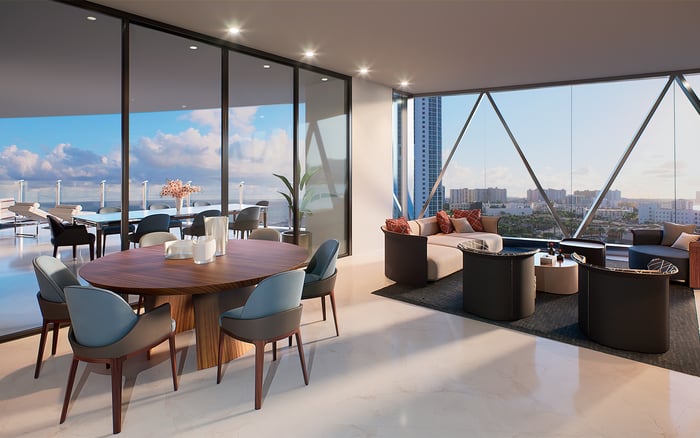
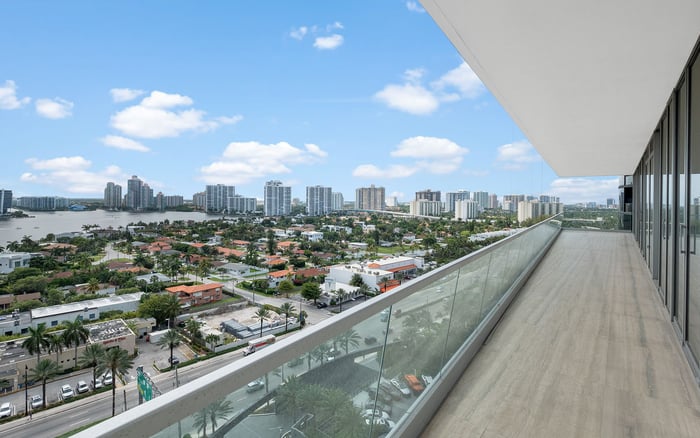
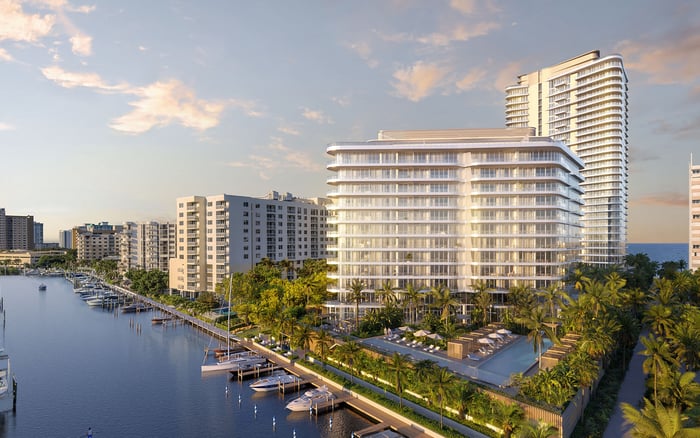
At 2000 Ocean, the published arrival design pairs facial recognition with a physical-fob alternative. Serious buyers should distinguish that design from current access policies, then examine consent, privacy, household credentials, and outage procedures before closing.
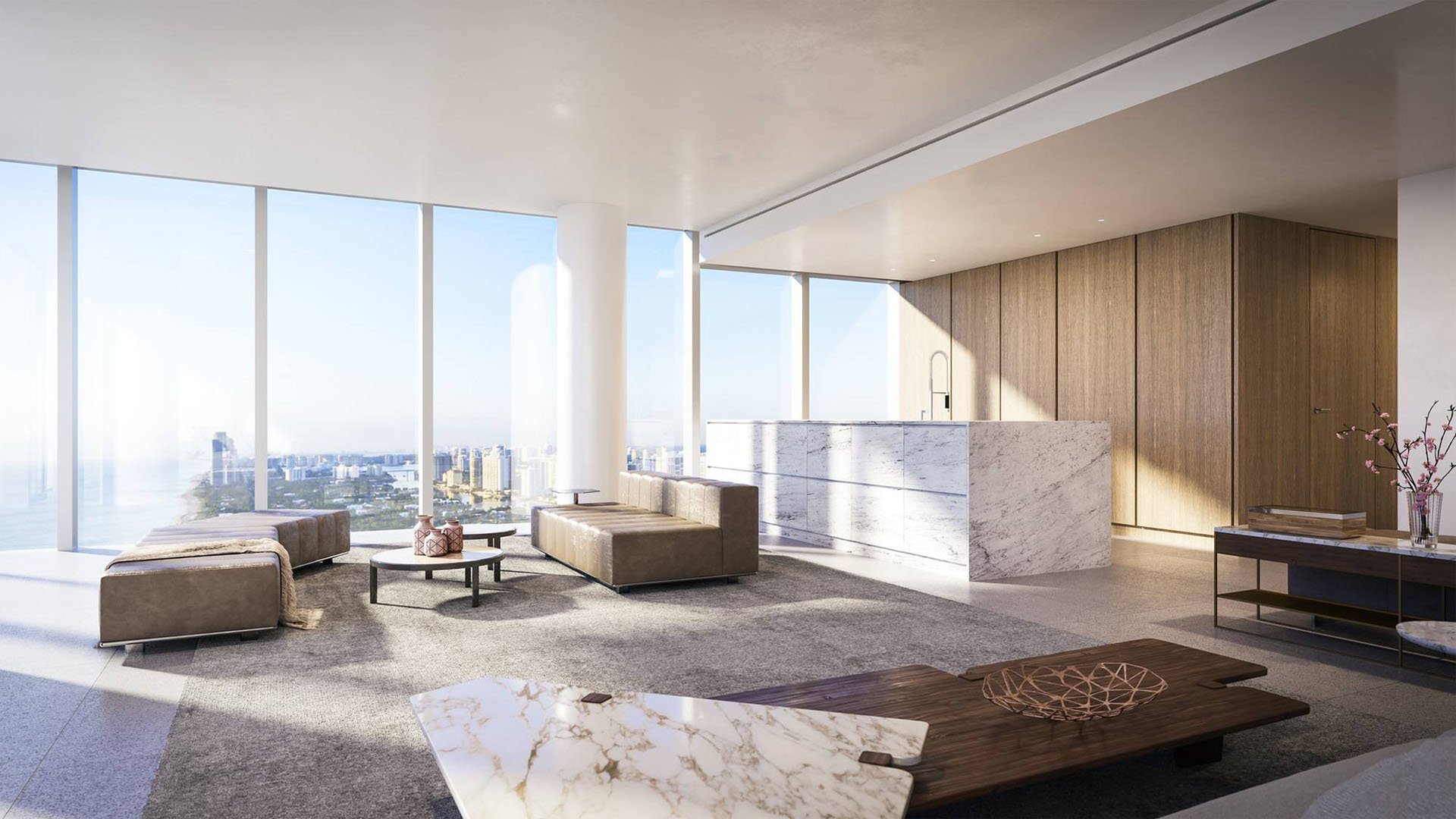
At 2000 Ocean Hallandale Beach, the appeal of a private arrival is straightforward: less friction between reaching home and retreating into it. The oceanfront condominium at 2000 S. Ocean Drive, Hallandale Beach, advertises a private entrance, full-service valet parking, concierge, and 24-hour security. Its published access design adds facial recognition to that service-led setting.
For a serious buyer, effortless entry is only part of the proposition. The more consequential questions concern choice: whether a resident can decline biometric enrollment, whether an alternative credential provides equivalent access, and what happens when technology or a credential fails.
The published design offers a starting point: residents who prefer not to use biometrics can use a physical fob instead. That does not confirm today's association procedures. The purchase decision should rest on current written policies and a demonstration of the intended daily routine.
The published description distinguishes two functions. Passive lobby facial recognition is intended to alert the concierge when a resident arrives. Elevator authorization controls access to the private landing serving the residence, with facial recognition or a physical fob described as credential options.
The distinction matters. Recognition supports personalized service; authorization determines where someone may go. Buyers should ask management to explain each function separately, including whether the systems share enrollment records and whether either can operate without the other.
The published description places this technology within a building of 64 residences with private elevator landings. The building is now presented as complete and ready for immediate occupancy, while the biometric description reflects a pre-completion design. Neither an advertised feature nor a resale description establishes current contractual access rights or operational performance.
Crucially, choosing a fob does not establish that lobby cameras stop capturing or processing a resident's face. Declining biometric enrollment and avoiding camera observation are distinct privacy questions.
A non-biometric credential is meaningful only when its practical scope is clear. Request a walkthrough using the credential you intend to carry, rather than relying solely on a facial-recognition demonstration.
The walkthrough should establish which credentials are required at the entrance, garage, elevator, amenities, beach access, and private landing. These are points to verify, not confirmed fob permissions. Ask whether declining facial recognition means any part of the route requires concierge intervention, different access hours, or an additional credential.
Service equivalence deserves equal scrutiny. Can a fob-only resident receive the same arrival assistance without biometric enrollment? Do replacement charges, credential limits, or approval requirements differ? Written answers make the alternative easier to evaluate.
For buyers also considering Shell Bay by Auberge Hallandale, the useful comparison is the same: how clearly does each property document the resident's choices? This is a due-diligence framework, not an assertion that the properties use comparable systems.
Before enrolling, request the current consent form and privacy notice. First, confirm whether enrollment remains voluntary under present rules. Then establish who obtains consent, what it covers, and whether declining it changes access, charges, or service.
Withdrawal warrants as much scrutiny as enrollment. Ask whether a resident can stop using facial recognition after moving in, retain uninterrupted non-biometric access, and request deletion without penalty. Have management distinguish disabling a credential from deleting its associated data; one should not be assumed to accomplish the other.
Make data questions specific. What facial images, biometric templates, video, and access logs are collected? Who stores them, who receives them, and who may review them? Request retention periods and an explanation of deletion from active systems and any retained copies.
These are matters for written confirmation, not established building procedures. A satisfactory answer should identify the responsible party and the process for resolving a resident's request.
The owner's arrival is only one part of residential life. Children, caregivers, domestic staff, contractors, and overnight guests may each need different permissions. Ask which non-biometric options are available to each group and whether their rules differ from those governing owners.
For recurring visitors, establish how access is approved, limited, and revoked. Can a credential be restricted to particular times or destinations? Who can authorize a replacement? What happens when a caregiver changes or a contractor's work ends? Resolve these questions without assuming that such controls already exist.
Buyers extending their search from Broward to Sunny Isles Beach, including Jade Ocean Sunny Isles Beach, can use the same household scenarios at every showing. Comparing written answers is more revealing than comparing recognition features alone. No shared biometric policy should be inferred between buildings.
A physical fob is an alternative credential in the published design, not a verified emergency override. Nothing in that description establishes that a fob continues to function during a power failure, network outage, or access-system failure.
Ask management to address each scenario separately: a failed facial match, a lost fob, a reader malfunction, a network interruption, and a power outage. An elevator outage needs its own explanation, because successful identity verification does not establish elevator availability.
For each scenario, identify who assists the resident, how identity is checked, and what authorized route or procedure is available. The advertised 24-hour security presence is not proof of round-the-clock manual access assistance. Confirm that capability directly, including the escalation path when the first contact cannot resolve the problem.
Emergency-responder access and credential revocation after loss, sale, lease termination, or staff departure deserve separate written explanations.
Request the current condominium rules, access-control policy, privacy notice, enrollment and withdrawal forms, and emergency-access procedures. Have counsel review how those materials relate to the governing documents and whether the association can change technology, fees, or enrollment requirements.
Then reconcile the documents with the walkthrough. The goal is a clear account of the credential you will use, the access it permits, the information it generates, and the assistance available when normal entry fails. Any unresolved point should remain an open due-diligence item, not become an assumption.
At this level of ownership, convenience should not require uncertainty. Facial recognition may suit one household; a physical credential may suit another. The essential luxury is understanding the choice before committing to it.
For a discreet perspective on South Florida residences and buyer priorities, explore MILLION.
If branded residences are on your mind — as a home or as an allocation — we would be glad to share what we are seeing, privately.
Begin a quiet conversation2000 Ocean is an oceanfront luxury condominium at 2000 S. Ocean Drive, Hallandale Beach, Florida 33009.
The published design allows residents who prefer not to use biometrics to use a physical fob for elevator access to their private landing. Buyers should confirm current association procedures before closing.
No. The published description separates lobby recognition intended to alert the concierge from elevator authorization controlling access to the resident's private landing.
That has not been established. Declining biometric enrollment does not by itself demonstrate that cameras stop capturing or processing a resident's face.
Ask whether enrollment is voluntary under current rules, who obtains consent, and whether declining or withdrawing consent affects access, charges, or service.
Current withdrawal and deletion procedures require confirmation. Buyers should ask separately about disabling biometric access and deleting the associated information.
The published fob alternative does not establish outage functionality. Buyers should request procedures for power, network, reader, and access-system failures.
The advertised services include a private entrance, full-service valet parking, concierge, and 24-hour security. These features do not independently establish a round-the-clock manual-access protocol.
Confirm which credentials are available for children, caregivers, domestic staff, contractors, and guests. Ask how permissions are approved, limited, replaced, and revoked.
Request current condominium rules, access-control policies, privacy notices, consent and withdrawal forms, and emergency-access procedures. Compare their provisions with a walkthrough using the intended credential.