A collector-focused guide to evaluating a Wynwood residence through artwork-sensitive lighting, daylight control, verified mounting capacity, and carefully documented insurance questions.
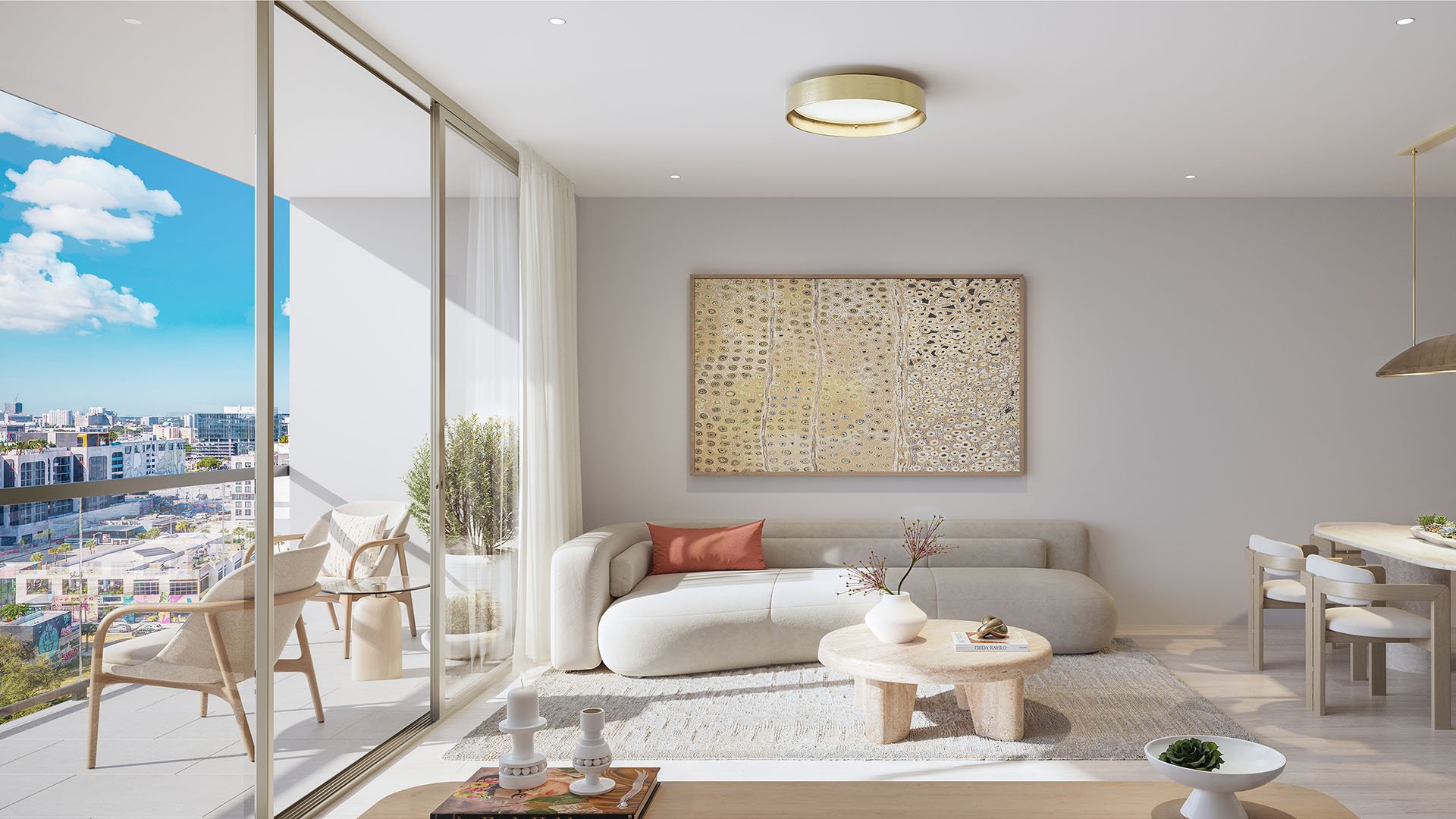
For a collector considering a Wynwood residence, the most consequential design decisions may be the least visible. A beautifully illuminated wall is not necessarily a preservation-minded wall. The private-client brief should begin with the objects themselves: their materials, sensitivity to light, dimensions, weight, and intended display schedule. Only then should the conversation turn to fixtures, glazing, mounting, and insurance.
When evaluating Frida Kahlo Wynwood Residences, use that collection brief to assess the individual residence rather than infer conservation performance from its identity. The same discipline applies to any property under consideration. Museum-grade should describe a carefully specified and measured approach-not imply that artwork cannot deteriorate.
The objective is a home that balances viewing pleasure with preservation. That requires coordination before installation: lighting, wall construction, and collection documentation should be considered together, not resolved separately after delivery.
Approximately 50 lux is a useful planning reference for textiles, works on paper, watercolors, photographs, and similarly sensitive materials. For oil and acrylic paintings, approximately 150 lux is an initial reference; it also applies to furniture and polychrome objects. These are neither universal settings nor guarantees. Individual works may warrant a more conservative approach after assessment by a conservator.
A mixed collection therefore calls for differentiated lighting. A photograph beside an oil painting should not automatically receive the same illumination simply because both occupy one architectural composition. Ask the lighting designer to organize controls around the works’ sensitivity, not just the room’s geometry.
Measure illuminance at the artwork’s surface. A room-level reading cannot establish what reaches the object. Before accepting the installation, request measurements at the intended display positions under the lighting settings the household will actually use.
Color rendering matters, too. High-quality LEDs with a color rendering index above 90 can provide good to excellent light quality and need not cause more damage than incandescent or halogen sources at equivalent illuminance. But LED does not mean damage-free. Visible light from any source can fade vulnerable surfaces; fixture quality never replaces exposure management.
Light damage is cumulative: both intensity and duration contribute to exposure. Even the familiar 50-lux reference is a compromise between visibility and preservation, not a completely safe level for sensitive objects. A restrained lighting setting left on unnecessarily still adds exposure.
Design everyday controls around this principle. Shorter lighting hours, dimming, occupancy controls, and intermittent display can reduce unnecessary illumination. Rather than keeping every collection wall lit throughout the day, ask for settings that distinguish active viewing from periods when the room is unoccupied.
For fragile paper, photographs, watercolors, and dyed textiles, discuss shorter display periods or rotation. The home need not present every important work continuously. A deliberate rotation can preserve the pleasure of discovery while reducing exposure for especially vulnerable objects.
These decisions belong in the operating brief, not merely the designer’s presentation. Owners and household staff should understand which settings are intended for viewing and which works require a more limited display schedule.
Aim to eliminate ultraviolet and infrared radiation from display lighting wherever practicable. For UV, treat 75 µW/lm as a maximum reference, not a preferred target. Approximately 0-10 µW/lm is achievable with modern technology, so a substantially lower specification is worth discussing with the design team.
Where daylight reaches collections, consider UV-filtering glazing, films, shades, or curtains, and keep sensitive works out of direct sunlight. UV-absorbing glazing may also be appropriate when UV cannot be eliminated at the light source. Select the treatment for the actual work and its display conditions.
Filtered daylight still contains visible light. Removing UV does not remove the need to manage intensity and exposure duration. A bright wall behind treated glass is not automatically suitable for a watercolor or photograph.
For buyers also considering Edgewater, including EDITION Edgewater, the question remains residence-specific: can the proposed collection positions be protected from direct sun, and can daylight be controlled without undermining the desired interior? Request an assessment of the actual layout rather than assume a project-wide answer.
Large canvases and heavy sculptures may require reinforced mounting and management-company approval. Establish the work’s installation requirements, verify the proposed wall’s capacity, and resolve any required permissions before arranging delivery.
A finished wall is not evidence of structural suitability. Ask a qualified professional to assess the actual construction and specify the mounting approach. Do not select anchors or allowable loads from a general editorial guide; those decisions require project-specific information and appropriate technical judgment.
For a Brickell comparison such as The Residences at 1428 Brickell, carry the same installation questions into due diligence. Request confirmation of the approval process for the contemplated work rather than assume reinforcement or mounting is permitted. A desirable display position is useful only if the installation can be executed appropriately.
Treat insurance as a separate review, not a conclusion drawn from the residence’s quality or the care invested in installation. Before moving the collection, ask a specialist broker or insurer to explain the proposed coverage in writing and identify the documents needed to evaluate it.
Frame the discussion around specific questions: which objects would be insured, how would their values be established, and what would the policy say about transit, installation, temporary storage, and display? Ask about exclusions, deductibles, security conditions, and any obligations attached to the proposed coverage. These are matters to verify, not terms to presume.
If condominium documents enter the conversation, request a written explanation of any relationship between building insurance and the owner’s collection coverage. Do not assume a master policy protects privately owned artwork. Retain the policy wording and written clarifications so the decision rests on actual terms, not a reassuring summary.
Before committing to a residence, assemble a concise collection brief for the relevant professionals. Identify sensitive materials, preferred display locations, lighting references, daylight-control questions, and works needing mounting review. Keep insurance questions alongside that brief without treating conservation planning as evidence of coverage.
The strongest outcome is not maximum brightness or maximum display density. It is an interior shaped from the outset by the collection’s requirements, with owners who understand the limits of each protective measure.
For a discreet conversation about selecting a South Florida residence around your collection, connect with MILLION.
If branded residences are on your mind — as a home or as an allocation — we would be glad to share what we are seeing, privately.
Begin a quiet conversationApproximately 50 lux is a planning reference for works on paper and similarly sensitive materials. It is a preservation compromise, not a guarantee against damage.
Approximately 150 lux is an initial reference for oil and acrylic paintings. Individual materials and condition may warrant a more conservative approach.
Measure illuminance at the artwork’s surface. An ambient room reading alone does not establish the exposure reaching the object.
No. High-quality LEDs can provide excellent color rendering, but their visible light can still fade vulnerable materials.
A CRI above 90 is a useful reference for good or excellent-quality LED light. Color rendering does not replace control of illumination and exposure duration.
Aim to eliminate UV wherever practicable; approximately 0–10 µW/lm is achievable with modern technology. Treat 75 µW/lm as a maximum reference, not a preferred target.
No. Filtered daylight still requires intensity and duration control, and sensitive works should remain out of direct sunlight.
Shorter display periods and rotation reduce cumulative light exposure for fragile photographs, paper, watercolors, and dyed textiles.
Verify capacity before delivery and resolve any required mounting approvals. Large canvases and heavy sculptures may need reinforced mounting and management-company approval.
Request written policy terms and clarification of the proposed treatment of transit, installation, storage, and display. Do not assume building insurance covers privately owned artwork.