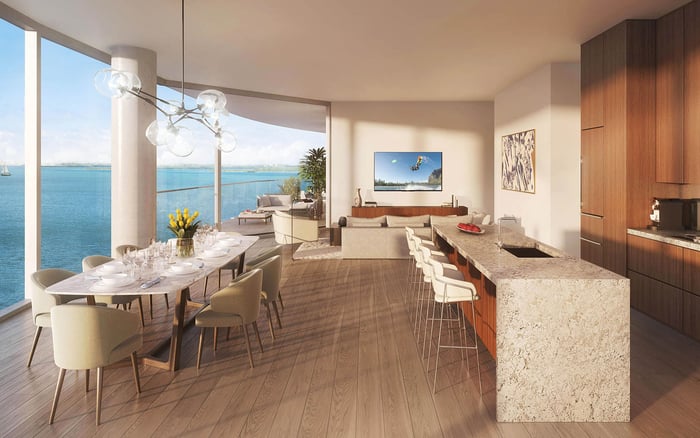
A practical residence strategy for a Chicago household considering Miami’s Edgewater, with South Florida due diligence focused on club calendars, seasonal events, guest arrivals, and driver coordination. Compare residential options against actual commitments rather than assumed access or travel savings.

For a Chicago household considering a residence in Miami’s Edgewater, the useful starting point is the life the home needs to support. A recurring lunch, an evening invitation, visiting friends, and a late performance create different arrival and return requirements. The question is not simply which address feels most appealing, but which arrangement works for the household’s intended South Florida routine.
Edgewater here means Miami’s neighborhood. Chicago is the point of departure, not the geography under review. Keep the residence search focused on Miami destinations, guest accommodation, and vehicle handling rather than importing assumptions from an existing routine elsewhere.
Begin with a working calendar of commitments you genuinely expect to keep. Identify which outings are recurring, which depend on invitations, and which involve hosting. For every important evening, consider the journey home as carefully as the arrival. A residence should remain workable when plans change or guests leave at different times.
A residence purchase should not be treated as evidence of private-club eligibility, reciprocal privileges, or access to member events. For each intended South Florida destination, ask what membership, booking, invitation, and guest requirements apply. Obtain confirmation before making access central to the residence decision.
Distinguish a dining reservation from an event invitation and either from membership. If a household expects to use reciprocal arrangements, verify eligibility and the permissions for the specific visit. Do not assume a guest can attend independently or use the same privileges as the host.
Building entry requires its own diligence. Ask how an independently arriving visitor is admitted, whether advance registration is needed, and how an evening arrival is handled. Club admission and residential admission are separate arrangements, even when the same assistant coordinates both.
For Aria Reserve Miami, use the residence inquiry to establish which written guest and vehicle policies apply. The project belongs on a shortlist only if its confirmed arrangements support the household’s intended use; the name alone does not establish operational fit.
Describe the visits the home must accommodate before assessing a floor plan or arrival area. Will friends arrive together, meet the host elsewhere, or return independently? Does the household need overnight accommodation, or only a comfortable setting for an evening gathering?
Request written guidance on visitor registration, overnight guests, loading zones, valet, commercial vehicles, and overnight parking. Ask which requirements apply to the specific residence and whether any proposed hosting arrangement needs separate approval. Avoid treating an informal conversation as a substitute for the governing documents.
For EDITION Edgewater, frame questions around the actual sequence of a visit: guest arrival, admission, vehicle handling, departure, and a possible late return. Do not infer guest privileges or hotel services from branding.
Use the household’s South Florida event calendar to identify evenings that deserve extra planning. Multiple stops, separate arrivals, and uncertain finish times can complicate an otherwise simple outing. The goal is a workable contingency plan, not an unsupported promise of shorter journeys.
Test relevant routes at times that resemble the intended schedule where practical. Record the circumstances rather than turning one successful trip into a general travel-time claim. Ask how the plan would change if a pickup location became unavailable or an event ended later than expected.
At the residence, confirm where passengers can be collected and whether a driver may wait. Request property-specific answers about event-night curb access and vehicle handling rather than assuming that an attractive entrance guarantees a convenient pickup.
Driver logistics extend beyond the occupied journey. The plan should address empty-vehicle repositioning, waiting, separate guest pickups, and late-night returns. Decide whether the driver remains nearby, leaves and returns, or handles another passenger between trips.
Confirm vehicle permissions with the residence and arrival instructions with each destination. Establish who communicates changes and how independently departing guests arrange their pickups. If valet is part of the plan, verify current eligibility, charges, and billing terms without assuming a rate or charging interval.
Include a fallback arrangement for changed plans. A clear pickup location and communication procedure can be more useful than selecting a residence on the basis of an untested journey-time expectation.
Use a consistent checklist when considering Edgewater alongside other Miami residential options. For Aston Martin Residences Downtown Miami, assess recurring destinations, guest admission, and written vehicle policies against the same household calendar. This is a comparison of suitability, not a claim of equivalent services or club privileges.
Apply that discipline to Cipriani Residences Brickell as well. Ask whether the intended hosting and driver arrangements are permitted, and distinguish confirmed provisions from assumptions attached to a branded address.
Finally, compare a single Miami home with a two-address South Florida arrangement only if both are relevant to the household. Consider carrying costs, visitor accommodation, parking permissions, and management effort. A second address is an option to evaluate, not an established financial advantage or a guaranteed solution to event traffic.
Explore a South Florida residence strategy shaped around your calendar and hosting priorities with MILLION.
If branded residences are on your mind — as a home or as an allocation — we would be glad to share what we are seeing, privately.
Begin a quiet conversationThe residence strategy concerns Miami’s Edgewater. Chicago is the household’s point of departure, not the area being evaluated.
List the South Florida commitments it expects to keep, including recurring outings and hosting. Assess arrival and return arrangements for each shortlisted residence.
Do not assume it does. Confirm membership, invitation, booking, and guest requirements directly before relying on access.
No such access should be assumed. Verify eligibility and the permissions for the intended visit.
Ask about advance registration, independent arrivals, overnight visitors, and late returns. Obtain the policies applicable to the specific residence in writing.
Branding alone should not be used to infer either. Verify the services and permissions relevant to the intended residence.
Use the events they expect to attend and test relevant journeys where practical. Plan alternatives without assuming guaranteed travel-time savings.
Include repositioning, waiting, separate guest pickups, and late-night returns. Confirm pickup locations and who communicates changes.
Verify eligibility, current charges, billing terms, and the applicable vehicle permissions. Do not assume a charging interval or a right to leave a vehicle overnight.
The article establishes no financial advantage. Compare carrying costs, accommodation needs, parking permissions, and management effort against actual use.