A collector-focused guide to the written confirmations buyers should seek at House of Wellness Brickell, from wine-storage scope and backup power to delivery custody, climate records, and contractual protection.
For a buyer with a carefully assembled wine collection, residential luxury extends beyond an amenity floor. It means knowing where bottles will rest, who will receive them, and what happens when normal building operations are interrupted. At House of Wellness Brickell, those questions warrant a separate diligence exercise-not an assumption that wellness programming includes wine preservation.
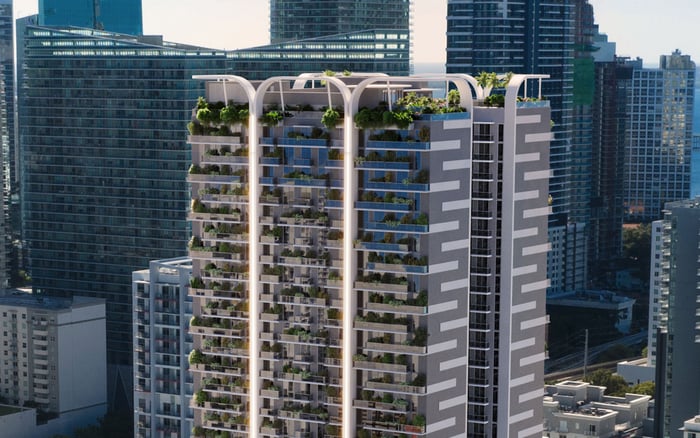
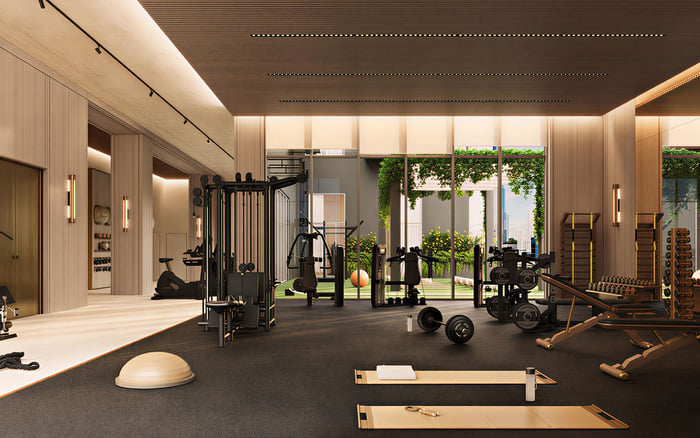
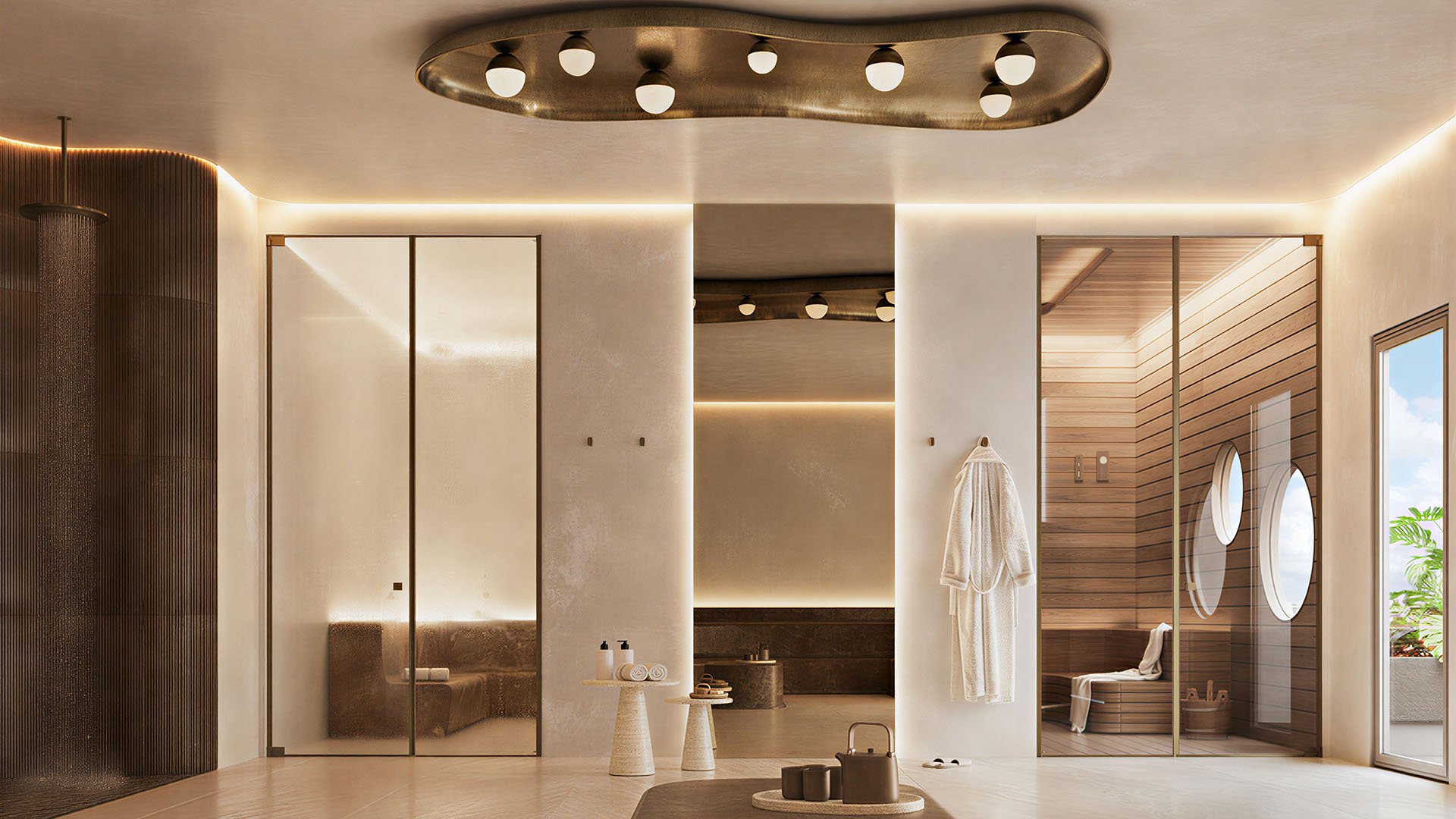
The project is planned for 152 SW 9th Street, Miami, FL 33130. Its proposed tower comprises 34 stories and 656 residences, with North Development, a joint venture between Oak Capital and Edifica, as developer. The planned program includes more than 22,000 square feet of wellness and lifestyle amenities, including a spa with hammam, sauna and steam room, fitness spaces, a cold plunge, and a rooftop infinity pool.
Those plans establish the project's lifestyle direction. They do not establish a dedicated wine cellar, owner wine lockers, or a temperature-controlled storage service. Wine-related facilities and operating protections remain unverified diligence items, not confirmed absent features.
House of Wellness Brickell is a pre-construction project, not an operating condominium with an established service record. The groundbreaking target is Q2 2027, while delivery estimates span Q4 2029 and Q1 2030. Neither completion estimate should be treated as guaranteed.
That distinction determines the evidence a buyer can reasonably request. At this stage, the useful documents are proposed specifications, equipment schedules, draft policies, and written commitments. Actual receiving records, climate histories, and outage performance would belong to a later operating period. Ask when those records will become available and who will maintain them.
For buyers also considering Cipriani Residences Brickell, use the same questionnaire rather than treating a project's identity as evidence of wine-handling capability. Compare documented scope and responsibility without assuming equivalent facilities or services.
First establish whether the intended solution is inside the residence, within a shared facility, or outside the building. Dedicated wine refrigerators, conditioned wine rooms, and wine-specific humidity provisions remain unconfirmed, as does a dedicated owner wine-storage program.
Request written confirmation of the proposed location, bottle capacity, equipment, ownership structure, and access rights. If shared storage is contemplated, clarify whether space is assigned, reserved separately, or available subject to capacity. Ask who can enter, who maintains the equipment, and what charges or restrictions may apply.
For an in-residence installation, have the project team identify the applicable specifications and approval requirements. Address temperature and humidity controls explicitly; do not infer them from general residential air conditioning. Define the proposed system before asking whether it has emergency power.
Wine-storage backup-power coverage remains unverified. Emergency circuits, battery arrangements, transfer timing, and backup duration therefore require written clarification. A general statement about building backup power does not establish whether particular wine equipment is covered.
Request the wine-related emergency-circuit schedule and identify every relevant component: refrigeration, any separate humidity-control equipment, sensors, controls, and communications. Ask for backup capacity, transfer arrangements, expected transfer timing, and fuel autonomy. If an answer remains provisional, request the milestone at which it will be finalized.
Address prolonged interruptions as well. Who receives an alert, who can access the storage area, and who has authority to arrange intervention? Ask how performance will be tested and documented before collection storage begins. The objective is a traceable commitment to specific equipment, not reassurance about the building in general.
A wine-delivery protocol covering alcohol acceptance, temperature-sensitive handling, and custody responsibilities remains unverified. A refrigerated receiving area or dedicated wine-holding facility is also unconfirmed. A ground-floor urban lounge does not, by itself, establish secure wine receiving or storage.
Request rules for adult signatures, identification checks, authorized recipients, and resident notification. Clarify whether staff may accept shipments when an owner is absent, what happens if acceptance requirements cannot be met, and how rejected or delayed deliveries are handled. Each answer should identify the responsible party.
Physical logistics matter equally. Verify loading access, freight-elevator availability, delivery hours, floor access, package security, and shipment-size restrictions. Ask where a shipment waits, whether that location is conditioned, and how long holding is permitted. Ordinary package acceptance is not equivalent to temperature-sensitive handling.
Finally, request a chain-of-custody procedure documenting arrival, placement, and handover. Ask how visible damage or handling concerns are recorded and how loss-or-damage claims are submitted. These are proposed diligence requirements, not descriptions of established services at House of Wellness Brickell.
For an owner who travels frequently, a climate display in the building is only part of the answer. Wine-storage temperature ranges, humidity targets, alarm thresholds, sensor calibration, and remote-alert protocols remain unspecified.
Request sensor locations, calibration intervals, alert recipients, data-retention periods, and owner-access procedures. Ask for proposed report formats now and operating samples when available. Clarify whether records will distinguish routine readings from excursions, outages, maintenance periods, and corrective action.
The same documentation standard can guide a comparison with The Residences at 1428 Brickell, without implying any particular wine-storage offering there. What matters is whether a buyer can evaluate a defined system and obtain a usable record of its performance.
For collection-minded owners, the decisive distinction is between marketing intention and enforceable scope. Ask counsel to identify where any agreed wine-storage provisions belong: the purchase agreement, specifications, declaration, association rules, or management agreement. Different documents may address different responsibilities.
Have the written package distinguish equipment delivery from ongoing operation. Confirm responsibility for maintenance, monitoring, receiving, record access, and incident response, along with how proposed changes will be addressed. Where a service is not yet finalized, record its status rather than interpreting an unanswered question as either a promise or a refusal.
House of Wellness Brickell offers a planned wellness-focused setting. For a collector, the purchase decision should also rest on explicit answers about storage, power, custody, and climate evidence. Until those answers are documented, wine-care capability remains an open diligence question.
For a discreet assessment of Brickell residences and collection-specific priorities, connect with MILLION.
If branded residences are on your mind — as a home or as an allocation — we would be glad to share what we are seeing, privately.
Begin a quiet conversationThe project is planned for 152 SW 9th Street, Miami, FL 33130, in Brickell.
The developer is North Development, a joint venture between Oak Capital and Edifica.
The proposed condominium tower has 34 stories and 656 residences.
Delivery estimates span Q4 2029 and Q1 2030, with a Q2 2027 groundbreaking target. These are targets, not guaranteed dates.
A dedicated wine cellar, wine lockers, or a temperature-controlled owner storage program remains unverified. That does not establish that these features are absent.
Dedicated wine refrigerators, conditioned wine rooms, and wine-specific humidity controls remain unconfirmed. Buyers should request written equipment and installation specifications.
Wine-storage backup coverage remains unverified. Request the relevant circuit schedule, backup capacity, transfer timing, fuel autonomy, and sensor and communications coverage.
A wine-delivery protocol and refrigerated holding remain unconfirmed. Ask about adult signatures, identification, notification, custody, and handling responsibilities.
Request sensor locations, calibration intervals, alert recipients, retention periods, sample records, and outage logs. Confirm how owners will access those records.
Ask counsel to identify the appropriate purchase, specification, association, or management documents for any agreed commitments. Separate equipment provisions from ongoing service responsibilities.