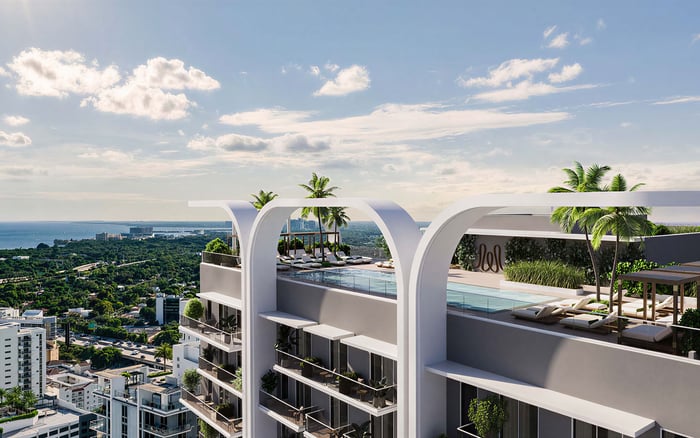
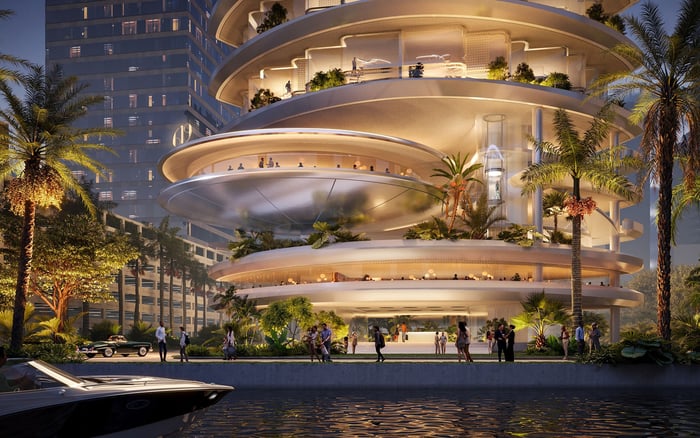
A buyer-focused editorial on why elevated pools in South Florida luxury towers should be evaluated as practical living spaces, not merely visual amenities.
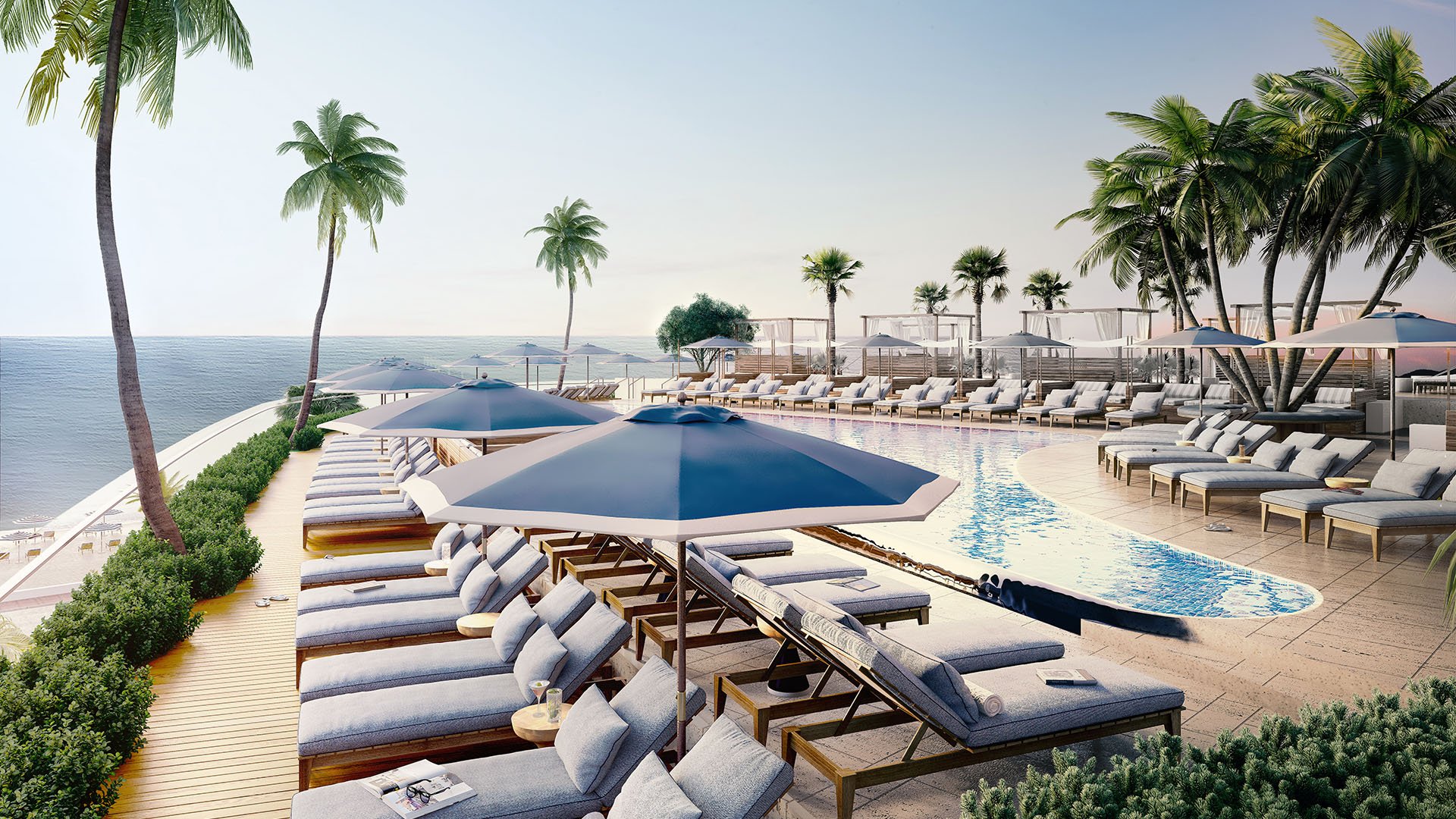
In South Florida luxury real estate, the elevated pool has become one of the most scrutinized spaces in a tower. It is no longer enough for a pool deck to photograph well from a drone or read dramatically in a rendering. The more relevant question for a buyer is simpler: will this space feel good at 8 a.m., at noon, after dinner, and on a quiet weekend when the building is full?
That is the practical luxury case for better sky pools. A superior pool is not merely an amenity. It is an extension of the private residence, a social threshold, a wellness tool, and a signal of how carefully a building has considered daily life. The difference is often subtle: a shaded edge, a wind-protected lounge, a discreet towel station, a true lap dimension, or a view corridor that feels composed rather than exposed.
For affluent buyers, the question is not whether a building has a pool. Nearly every serious contender does. The question is whether the pool has been designed with the same intelligence expected inside the residence.
A pool in the sky has immediate appeal. Height creates perspective, breeze, light, and a sense of separation from the street. In Brickell, that elevation can turn the pool deck into a pause above the urban tempo. Along oceanfront corridors, it can frame the water as part of the daily ritual rather than a distant backdrop.
Yet height can also expose weak planning. Too much openness can make a deck feel windy or theatrical. Too little shade can limit use during the brightest hours. Overly shallow lounging zones can feel more decorative than functional. A better sky pool understands that altitude is only one ingredient.
The best elevated pool environments are composed for comfort. They make room for sun without treating shade as an afterthought. They create social energy without forcing every chair into view. They use planting, screens, cabanas, and architectural edges to create a sense of choice. A resident should be able to swim, read, host, recover, or simply look out without feeling as if every use has been reduced to one glamorous scene.
Luxury buyers often evaluate kitchens, closets, terraces, and primary suites with rigorous attention. Pool decks deserve the same discipline. A beautiful sky pool that works only in perfect weather is less persuasive than a quieter, better-planned deck that supports everyday habits.
Consider the practical sequence. How does a resident arrive from the elevator? Is there a graceful transition from indoor lounge to outdoor water? Are restrooms close but not visually prominent? Is service present without feeling busy? Are children, guests, swimmers, readers, and private residents all competing for the same few feet of space?
A lap pool, when properly considered, adds another layer of value because it supports routine rather than occasional display. But the label alone is not enough. Buyers should look at proportion, edge conditions, and whether the lane experience feels protected from heavy social traffic. The same applies to plunge pools, spa zones, and shallow shelves. Each should have a purpose beyond looking resort-like in marketing imagery.
The most refined sky pools do not confuse visibility with prestige. In many towers, the pool deck is one of the most public private spaces in the building. It may sit between residences, amenity interiors, restaurant-style lounges, and neighboring towers. A strong design anticipates sightlines before they become compromises.
Privacy can be achieved without making a space feel closed. Level changes, planting, angled seating, shade structures, and carefully placed cabanas can create intimacy while preserving views. The goal is not isolation. It is control.
This is especially important for owners who use their South Florida residence as a second home. They may arrive for short periods and expect immediate ease. A pool deck that feels calm, intuitive, and selectively private becomes part of the reason to return. A pool deck that feels exposed or overprogrammed becomes something to avoid.
Balcony living and pool living should also be considered together. If private terraces offer serenity, the sky pool should provide a complementary experience: more expansive, lightly social, and service-oriented, but not louder by default.
Great pool design is sensory. The view matters, but so do glare, footing, acoustics, temperature, and wind. In South Florida, comfort is not a decorative concern. It is the basis of whether an amenity becomes part of daily life.
Shade should be layered, not incidental. A few umbrellas rarely solve the issue. Architectural overhangs, planted canopies, cabanas, pergolas, and covered dining areas can extend the usable hours of the deck. Wind should be considered through the shape of the tower and the placement of seating. A pool that looks serene but feels restless will not become a favorite place.
High floors can intensify both pleasure and exposure. The strongest designs make elevation feel effortless. They allow the resident to enjoy air, horizon, and distance without sacrificing comfort. That is where practical luxury becomes visible: not in excess, but in control.
A sky pool becomes truly valuable when service is integrated into the architecture. This does not require spectacle. It requires choreography. Towels should be easy to access. Water should be nearby. Food and beverage service, where offered, should feel natural rather than disruptive. Storage should be hidden. Staff paths should not cut awkwardly through the most desirable seating.
The strongest pool decks understand hospitality without turning a residence into a hotel. For many buyers, that balance is essential. They want polish, but they also want discretion. They want the option to host without feeling surrounded by strangers. They want a setting that can feel lively in season and tranquil on an ordinary weekday.
This is why the pool is increasingly tied to broader amenity planning. Fitness, spa, lounges, treatment rooms, and outdoor terraces should connect in a way that supports rituals. Swim, sauna, breakfast, work call, sunset drink: the sequence should feel easy.
A compelling view can distract from practical questions. Buyers should slow down and examine the pool deck as they would a residence plan. Where are the quiet corners? How many distinct seating moods exist? Is there a genuine place to dine outdoors? Does the pool support swimming, lounging, or both? Are the best seats too exposed to neighboring sightlines?
The most resilient luxury is not novelty. It is repeat use. A better sky pool will be used because it solves for comfort, privacy, and rhythm. It will also help the building feel more complete, especially in neighborhoods where buyers compare residences not only by finish level, but by the quality of life beyond the front door.
For pool-focused buyers, the best advice is to visit at different times if possible. Morning light, afternoon sun, and evening ambience can make the same deck feel like three different places. In a competitive market, that lived impression may matter more than a checklist of amenities.
Why do sky pools matter in luxury real estate? They shape daily lifestyle, wellness routines, entertaining, and the overall feeling of a building beyond the private residence.
Is a higher pool always better? Not necessarily. Height can improve views, but comfort, shade, wind protection, and privacy determine real usability.
What should buyers notice first on a pool deck? Look at circulation, shade, seating variety, sightlines, service access, and whether the space feels comfortable without effort.
Does an oceanfront pool need different planning? Yes. It should frame the water beautifully while still managing sun exposure, breeze, privacy, and glare.
Is a lap pool more valuable than a lounge pool? It depends on lifestyle. A true swimming condition adds routine value, while a lounge pool may better support relaxation and hosting.
How important is privacy around a sky pool? Very important. The best designs preserve openness while giving residents choices between social and secluded settings.
Should the pool connect to wellness amenities? Ideally, yes. A natural relationship between pool, spa, fitness, and lounge spaces makes the amenity level easier to use.
What role does service play? Service turns a pool deck from a feature into an experience when towels, refreshments, staff movement, and storage are handled discreetly.
Can a pool deck affect resale appeal? A well-designed pool environment can strengthen the overall impression of a building because buyers remember spaces they can imagine using.
What is the best way to shortlist comparable options for touring? Start with location fit, delivery status, and daily lifestyle priorities, then compare stacks and elevations to validate views and privacy.
For a confidential assessment and a building-by-building shortlist, connect with MILLION.
If branded residences are on your mind — as a home or as an allocation — we would be glad to share what we are seeing, privately.
Begin a quiet conversation