A buyer-focused look at why elevator performance matters in South Florida luxury residences, from privacy and daily rhythm to resale confidence and building operations.
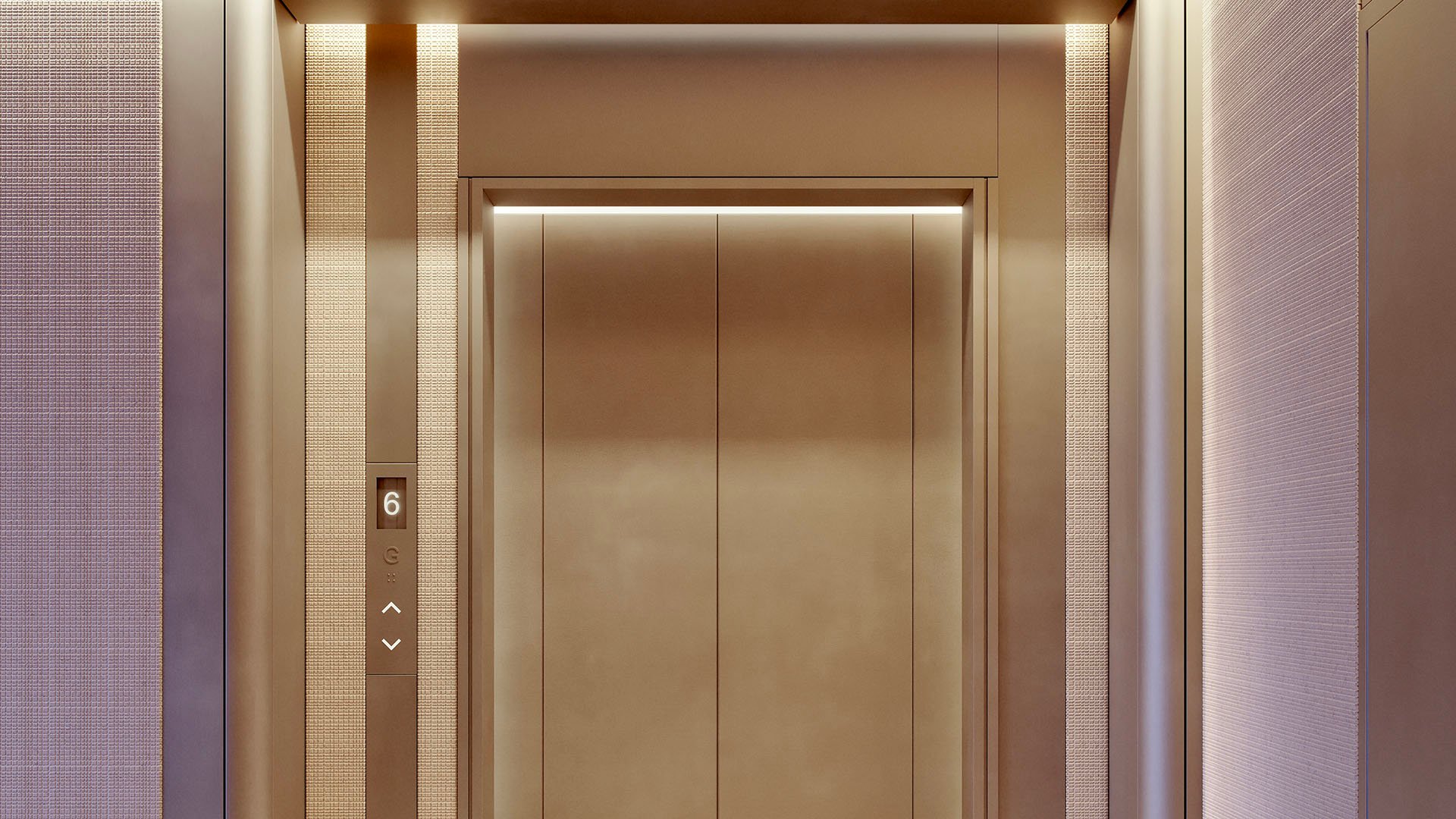
In South Florida luxury real estate, elevator wait times are rarely the headline. Views, terraces, finishes, private clubs, and arrival sequences usually command attention first. Yet for the owner who actually lives in a high-rise residence, vertical circulation becomes one of the most repeated experiences in the home. It shapes the morning departure, the return from dinner, the family school run, the staff routine, the guest arrival, and the quiet passage between privacy and the city.
Better elevator performance is not simply about speed. It is about reducing friction. A refined building should feel composed even when it is fully alive, with residents, guests, deliveries, pets, service teams, and amenity users moving through the same structure. When that movement is poorly planned, the lobby becomes a waiting room. When it is well planned, the building feels calm, intuitive, and appropriately private.
For affluent buyers, this is a practical luxury question. It is also a value question. A residence can have extraordinary interiors and still feel compromised if every departure introduces uncertainty. The most persuasive buildings understand that time is an amenity, and that the elevator is often where the promise of effortless living is tested.
A long elevator wait is rarely dramatic in isolation. The issue is repetition. A few extra moments before a car arrives may seem minor, but in daily life those moments become part of the emotional texture of ownership. They can influence whether the building feels serene or congested, residential or hotel-like, private or exposed.
This matters especially in markets where owners expect both resort-level amenities and domestic ease. South Florida buyers often want generous amenity programs, waterfront access, wellness spaces, valet service, package handling, and social environments. Each feature adds life to the building. Without thoughtful circulation, that energy can compete with the resident’s desire for discretion.
The luxury case for better elevator wait times is therefore not only operational. It is experiential. Owners want to leave a penthouse without wondering whether a crowded car will stop repeatedly. They want children, guests, household staff, and service providers to move efficiently without creating visible bottlenecks. They want the building to perform gracefully at peak moments, not only during quiet afternoons.
The private residence does not begin at the threshold. In a high-rise, it begins at the curb, the porte cochere, the lobby, and the elevator bank. A well-considered elevator experience reinforces the sense that a building is controlled, curated, and deeply residential.
Private or semi-private elevator access can be compelling, but privacy is broader than whether an elevator opens directly into a residence. It includes how many homes share a bank, how service traffic is separated, how deliveries are managed, and how guests are guided. It also includes acoustic calm, clear wayfinding, and the absence of crowding.
In Brickell, where vertical living is part of the neighborhood’s identity, buyers often weigh the convenience of density against the desire for a composed home life. In Miami Beach, the question may be tied to resort energy and seasonal use. In Sunny Isles, it may relate to tall oceanfront towers and the daily rhythm of beach, valet, and residence. In Fisher Island, expectations of privacy are especially pronounced. Across these settings, high floors and new construction can intensify the importance of elevator planning because the daily journey from residence to ground level is intrinsic to the ownership experience.
Elevator performance should be part of due diligence, especially for buyers comparing high-rise residences with similar views or amenity packages. The questions do not need to be technical at first. They should be practical, observational, and grounded in daily life.
Begin with the number and organization of elevators serving the residence. Ask whether resident, guest, service, and amenity traffic are separated. Understand whether higher floors have dedicated service or share the same bank as lower floors. Consider how pets, staff, deliveries, and move-ins are handled. Then experience the building at different times of day if possible, because quiet mid-morning conditions may not reveal peak behavior.
Buyers should also study the lobby. A crowded elevator bank often announces itself before the doors open. If residents linger in clusters, if staff are constantly redirecting traffic, or if service activity is visible in primary arrival spaces, the building may be working harder than it should. Conversely, a calm lobby with intuitive movement suggests that the architecture and operations are aligned.
For pre-construction or newer offerings, the conversation should extend to planning logic. How does the tower intend to protect privacy at scale? How are amenity levels reached? Are there separate paths for back-of-house needs? How does the building manage the practical tension between a lively amenity program and a quiet residential experience?
Luxury buildings have become more layered. Wellness suites, private dining rooms, children’s spaces, screening rooms, coworking lounges, spa areas, pools, beach clubs, and clubrooms can all enrich ownership. They can also add traffic. The stronger the amenity program, the more important the circulation strategy becomes.
An amenity-rich building should not make residents feel as if they are passing through a public venue every time they go home. The highest level of design separates energy from intimacy. It allows a building to be social when desired and quiet when needed. Elevators are central to that balance.
This is especially true for owners who split time between residences. A second-home buyer may arrive for a long weekend and expect immediate ease. A full-time resident may be more sensitive to daily reliability. A family may care about predictable movement during school hours. An owner with household staff may focus on service access. Each profile has a different reason to care, but the underlying concern is the same: the building should move people without making movement feel like a burden.
Elevator wait times are difficult to capture in a glossy presentation, but they can influence perception during ownership and resale. A buyer touring a residence notices more than the view. They notice arrival, security, scent, sound, staff choreography, and whether vertical movement feels easy. If the elevator experience feels strained, the building’s polish can be diminished.
Better elevator performance also signals discipline. It suggests that the developer, architect, operator, and management team have considered not only how the building looks, but how it behaves. In ultra-premium real estate, that distinction matters. The most enduring buildings are not only photogenic. They are livable under pressure.
Owners should think of elevator quality as part of a broader operational premium. The same buyer who values reserved parking, service elevators, package management, valet coordination, and private arrival should value intelligent vertical movement. It is not a glamorous topic, but it is one of the most civilized forms of luxury.
The case for better elevator wait times is ultimately a case for respect. Respect for the owner’s time. Respect for privacy. Respect for guests. Respect for household logistics. Respect for the daily rituals that make a residence feel like a sanctuary rather than a spectacular address with a queue.
In South Florida, where high-rise living often promises water, light, service, and ease, the elevator is the connective tissue. It links the car to the lobby, the lobby to the amenity deck, and the amenity deck to the private home. If that sequence feels graceful, the building feels more expensive in the most meaningful way. If it does not, even beautiful architecture can feel less resolved.
For the discerning buyer, the advice is simple: do not evaluate elevators as an afterthought. Ride them. Observe them. Ask about them. Notice how the building manages its busiest moments. In the quiet precision of a well-timed elevator, luxury becomes less about display and more about the privilege of moving through life without unnecessary interruption.
Why do elevator wait times matter in luxury condos? They affect daily comfort, privacy, and the overall sense of ease within a building.
Is elevator speed the only factor buyers should consider? No. The number of elevators, traffic separation, management, and peak-use patterns also matter.
Are private elevators always better? They can enhance privacy, but the building’s full circulation plan is just as important.
Should buyers test elevators during a showing? Yes. Riding the elevators and observing the lobby can reveal how the building functions.
What is a warning sign in an elevator lobby? Persistent crowding, visible service congestion, or confusing wayfinding can suggest friction.
Do amenities affect elevator wait times? They can, especially when amenity spaces generate frequent resident and guest movement.
Does floor height change the elevator conversation? Yes. Higher residences depend more visibly on efficient vertical circulation.
Should pre-construction buyers ask about elevators? Absolutely. Elevator planning is part of understanding how the building will live.
Can elevator performance influence resale perception? Yes. A smooth arrival and departure sequence can strengthen a buyer’s impression.
What is the simplest buyer takeaway? Treat elevator quality as part of the residence, not merely part of the building.
For a confidential assessment and a building-by-building shortlist, connect with MILLION.
If branded residences are on your mind — as a home or as an allocation — we would be glad to share what we are seeing, privately.
Begin a quiet conversation