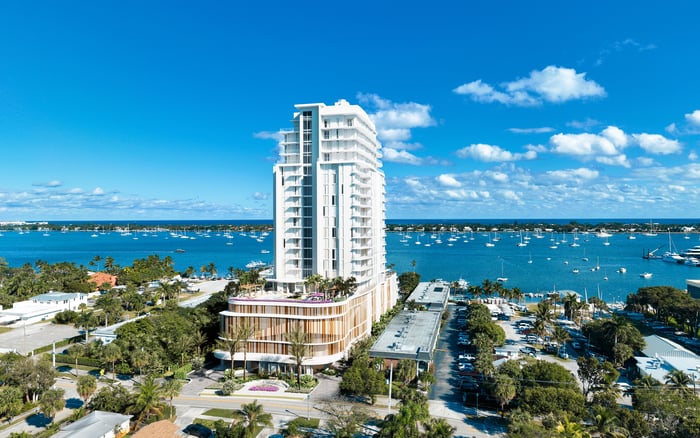
A discreet buyer’s guide for private aviation users evaluating Palm Beach, West Palm Beach, Palm Beach Gardens, and Boca Raton residential options.

For the private aviation user, a Palm Beach residence is more than a beautiful address. It is the final link in a carefully choreographed sequence: aircraft, ground transfer, gate, lobby, elevator, residence. The right purchase should make that progression feel quiet, predictable, and nearly invisible.
This buyer profile values time differently. A few minutes lost at the wrong point in the journey can matter more than an additional amenity. The residence must perform after a late landing, before an early departure, during peak seasonal traffic, and when family, staff, pets, luggage, or security details are moving at once.
The strongest private aviation search begins with lifestyle mapping, not square footage. Where will you land most often? Who meets the aircraft? How much luggage arrives with you? Does the property need to accommodate a principal, children, guests, pilots, household staff, or rotating visitors? Once those answers are clear, the real estate conversation becomes sharper.
In Palm Beach, the emotional purchase may be the water, garden, architecture, or sense of privacy. The strategic purchase is the first and last mile. A residence can be visually extraordinary yet still imperfect for a buyer who arrives by private aircraft if the ground sequence is exposed, congested, or dependent on too many handoffs.
That is why discreet arrival matters. Buyers should study how a car approaches the property, whether the entry feels protected, how valet or self-parking is handled, and how easily luggage can move from vehicle to residence. In a condominium, the transition from lobby to elevator is as important as the terrace. In a house, the motor court, garage depth, service entry, and guest parking become practical luxuries.
For buyers who want a Palm Beach orientation with a highly residential feel, Palm Beach Residences belongs in a conversation about privacy, seasonal use, and the quality of daily return. Nearby urban energy may also appeal to those who want dining, wellness, and culture close to the home base, where Alba West Palm Beach can be considered within a broader West Palm Beach search.
Private aviation buyers should tour differently. The showing should not begin at the front door. It should begin with the drive. Arrive as you would after a flight, ideally with the same vehicle type and the same number of people. Watch the turns, sight lines, approach to security, and the way staff manage entry.
Inside the building, test the daily choreography. Is there a private or semi-private elevator option? Can luggage be moved without crossing the most public spaces? Is there a place for golf clubs, sporting equipment, pet carriers, trunks, or seasonal wardrobes? If the residence is intended as a second home, ask how the property performs when closed, reopened, stocked, and serviced without the owner present.
Service access is not glamorous, but it is central. The best homes allow housekeeping, deliveries, maintenance, and personal staff to move efficiently without disturbing the principal rooms. For frequent flyers, the ability to prepare a residence before arrival can be more valuable than a rarely used amenity.
The private aviation buyer should treat the region as a set of lifestyle zones rather than a single market. Some buyers want the classic Palm Beach rhythm: quiet mornings, established social patterns, and a residence that feels removed from the pace of mainland life. Others prefer the convenience and cultural adjacency of West Palm Beach, especially when the home is used for shorter, more frequent stays.
In practice, buyers may label the search Palm Beach, West Palm Beach, or Boca Raton, but the more useful question is how each location supports the owner’s actual travel behavior. If the residence is a winter base, a weekend retreat, or a family gathering point, the right answer may differ.
Palm Beach Gardens can appeal to buyers who want space, club-oriented living, or a northern Palm Beach County setting. The Ritz-Carlton Residences® Palm Beach Gardens is relevant for buyers who prefer branded residential service and a polished lock-and-leave framework. Farther south, Boca Raton may suit those balancing aviation, family routines, private clubs, and a year-round residential cadence, where Alina Residences Boca Raton can fit a refined condominium search.
For the private flyer, condominium living can simplify ownership. Staffed entries, managed common areas, building security, maintenance coordination, and amenity access can support a lock-and-leave life. The tradeoff is control. Buyers should understand move-in rules, guest registration, elevator reservations, contractor access, pet policies, and any restrictions that could complicate fast arrivals.
Single-family homes offer more autonomy. A principal can control the gate, garage, staffing pattern, delivery schedule, and household systems. The tradeoff is operational responsibility. A larger home may require a more formal staff structure, stronger vendor management, storm preparation planning, and careful oversight during absences.
Neither format is inherently superior. The right choice depends on how often the owner flies in, how long they stay, whether the residence hosts guests, and how much privacy is required between aircraft arrival and the first moment at home.
Before contract, private aviation users should review the property through a travel lens. Confirm preferred routes at different times of day. Ask how the property handles late arrivals. Understand where a driver waits, where luggage is staged, and how guests are announced. If security is part of the household plan, walk the property with that in mind.
Buyers should also evaluate building culture. Some luxury buildings are social and visible. Others are quieter and more residential. For a buyer who values discretion after a flight, the difference is meaningful. The best fit is often the property where service is present but not performative, and where privacy feels built into the routine rather than requested as an exception.
Finally, plan for flexibility. Aircraft schedules change. Weather changes. Family plans change. The residence should absorb those shifts gracefully, with enough storage, access, staffing support, and neighborhood convenience to make each arrival feel composed.
What should private aviation users prioritize in a Palm Beach home? Prioritize the complete arrival sequence, including the drive, entry, parking, elevator access, luggage movement, and privacy.
Is a condo better than a single-family home for frequent flyers? A condo can simplify maintenance and lock-and-leave ownership, while a single-family home offers more control over access and staffing.
How should I tour a property if I usually arrive by private aircraft? Begin with the drive and entry experience, then test how luggage, guests, pets, and staff would move through the property.
Why does service access matter so much? Service access determines whether the home can be prepared, stocked, cleaned, and maintained without disrupting the owner’s privacy.
Should I consider West Palm Beach as well as Palm Beach? Yes, if you want a more urban base with convenient access to dining, wellness, culture, and shorter-stay routines.
Can Palm Beach Gardens work for private aviation buyers? It can, especially for buyers seeking a polished residential setting, club-oriented living, or a broader northern county lifestyle.
When does Boca Raton make sense in the search? Boca Raton can suit buyers who want a refined year-round base with family routines, private clubs, and condominium convenience.
What should I ask a condominium before buying? Ask about elevator use, guest registration, late arrivals, deliveries, pet policies, staff access, and storage options.
How important is building culture? It is highly important because some buildings feel social and visible, while others are quieter, more discreet, and more residential.
What is the biggest mistake aviation-focused buyers make? They fall in love with the view before testing how the property performs during real arrivals, departures, and absences.
To compare the best-fit options with clarity, connect with MILLION.
If branded residences are on your mind — as a home or as an allocation — we would be glad to share what we are seeing, privately.
Begin a quiet conversation