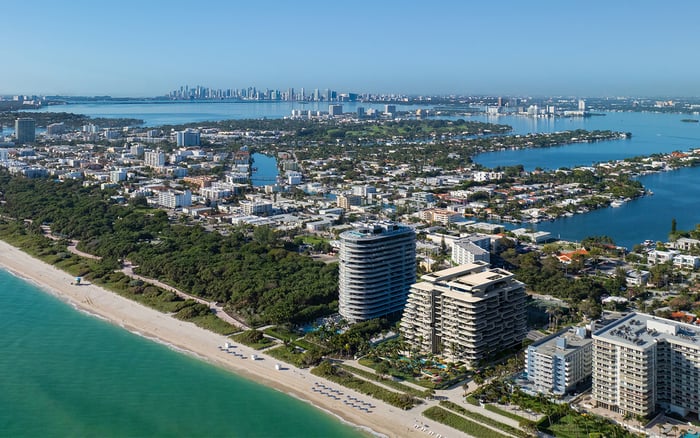
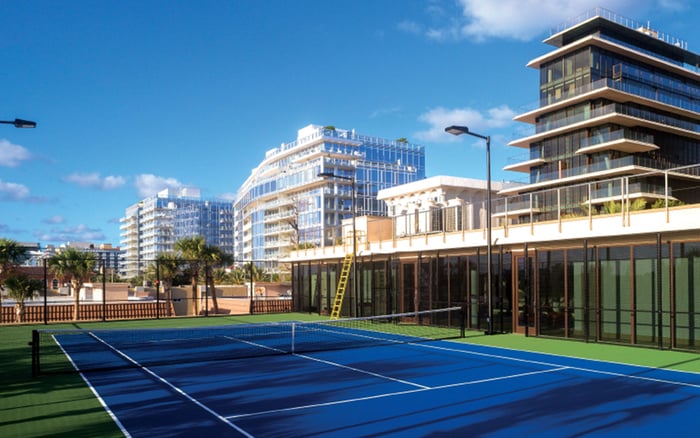
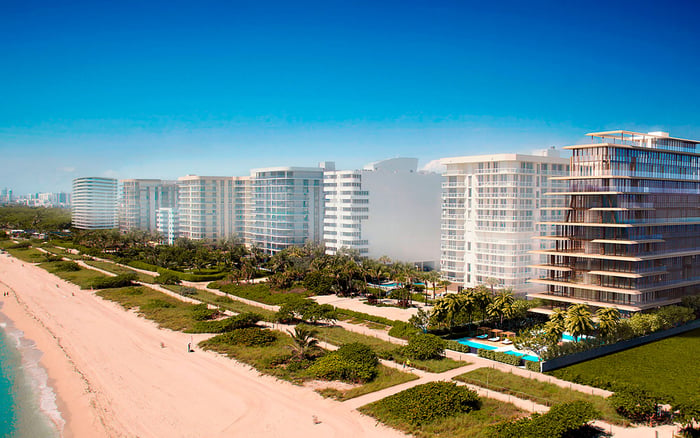
A buyer-focused ranking of Surfside’s leading luxury addresses, viewed through the lens of reserve discipline, assessment exposure and document-level diligence.
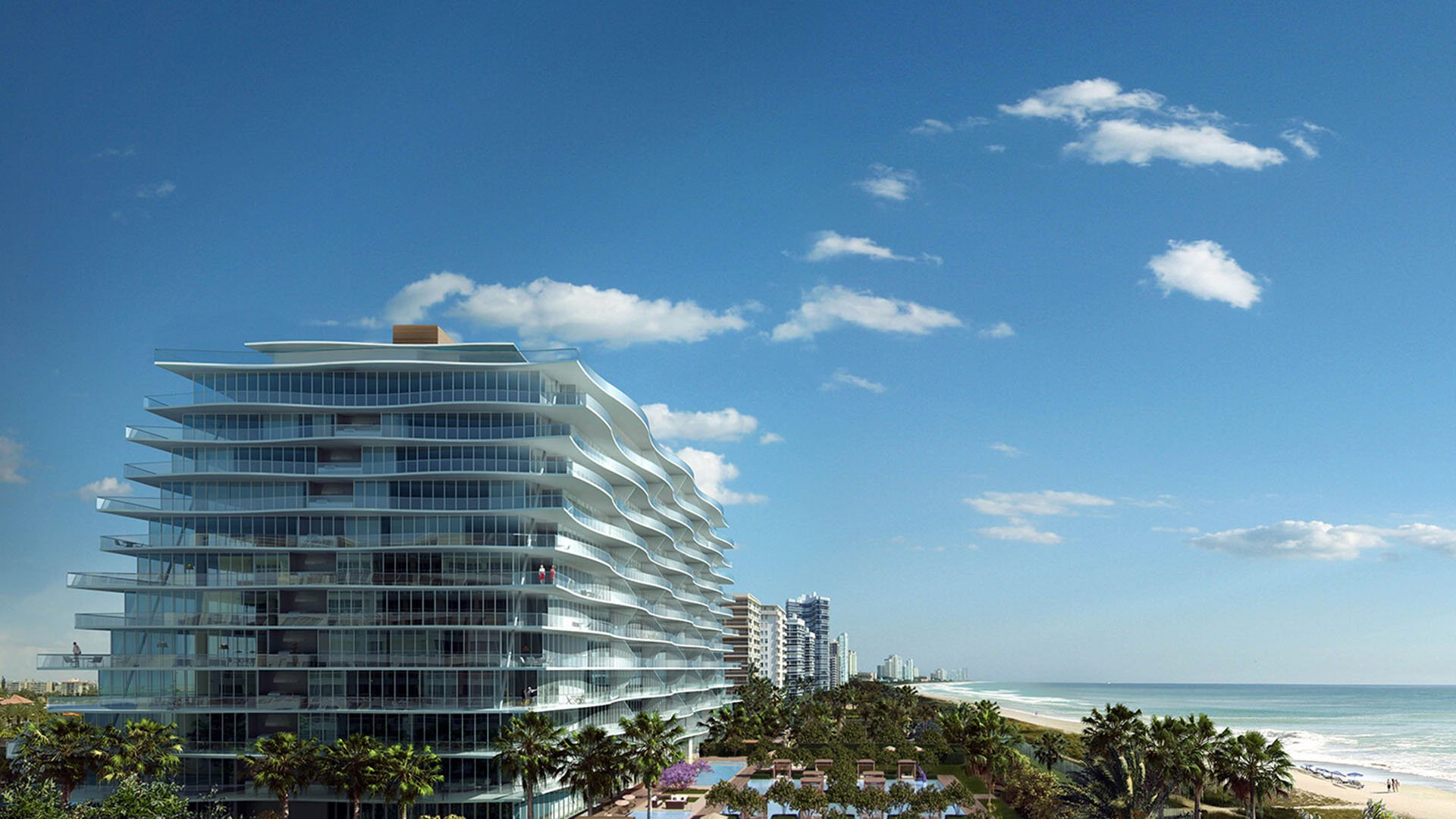
In Surfside, the sophisticated cash buyer is no longer focused solely on view corridors, privacy, and finish quality. Association finances now sit alongside architecture in the acquisition brief. A milestone inspection, reserve study, and assessment history can shape value just as decisively as an oceanfront position.
Cash can remove financing uncertainty and may create leverage when a building struggles with lender review. It does not transfer the association’s obligations to someone else. Special assessments, insurance costs, structural work, and governance decisions remain attached to ownership, regardless of how the residence was funded.
This ranking weighs market standing, scarcity, and disclosed sales signals while keeping reserve exposure central. It is not a comparison of audited reserve balances, because standardized figures are not publicly available across every property. Buyers comparing The Surf Club Four Seasons Surfside with Fendi Château Residences Surfside should still commission property-specific legal and financial reviews.
1. The Surf Club Four Seasons Hotel and Residences - Collins Avenue oceanfront
The Surf Club ranks first for its combination of scarcity, exceptional transaction values, and reputation as a “fortress asset.” Zero assessments and virtually no turnover define its profile, although any buyer should verify the relevant period and current association records.
A 12-month group of 14 closings was entirely cash, averaging approximately $19.9 million and $4,685 per square foot. Prices ranged from $6.2 million to $44 million, reaching $7,949 per square foot. Those figures signal depth at the top of the market, not immunity from future obligations.
2. Fendi Château Residences - Collins Avenue oceanfront
Fendi Château takes second place because it is consistently positioned alongside The Surf Club among Surfside’s strongest luxury addresses. For buyers seeking branded residences with an established identity, that market standing can reinforce confidence in desirability and resale relevance.
Prestige, however, is no substitute for current documentation. The reserve study, insurance summary, pending-assessment disclosures, and minutes should be reviewed together, with particular attention to planned capital work and the assumptions behind funding schedules.
3. Ocean House Surfside - Collins Avenue oceanfront
Ocean House ranks third as a lower-key luxury candidate with meaningful sales momentum. In 2026, it was one of two referenced developments approximately 70 percent sold-a useful indicator of absorption, but not a measure of association funding.
For a cash buyer, the appeal lies in the possibility of a more discreet boutique proposition. The diligence question remains precise: which obligations belong to the developer, the association, and owners at closing, and how are future capital needs expected to be funded?
4. Seaway North - 9165 Collins Avenue
Seaway North’s defining attribute is extreme low density, with only 10 residences. Its average sale price of $38.6 million places the projected sellout near $400 million, establishing it as a rarefied proposition even within Surfside.
Low density can be highly attractive, but it does not answer the reserve question. Buyers should examine the applicable budget structure and reserve treatment directly, then consider how major shared costs may be allocated across a very limited ownership base.
5. Champlain Towers legacy site - Collins Avenue cautionary benchmark
This fifth position is deliberately not a conventional purchase recommendation. The Champlain Towers legacy site is included because the collapse remains the defining reference for structural, inspection, insurance, and reserve scrutiny in Florida condominium ownership.
The continuing sensitivity around proposals for the site shows that premium positioning cannot erase history. For every Surfside acquisition, the lesson is practical: engineering, governance, and funding records deserve the same scrutiny as title, contract terms, and physical condition.
The strongest address is not automatically the simplest financial proposition. A high sale price can reflect service, scarcity, and design while saying little about whether a future project is fully reserved, specially assessed, or still under discussion. Likewise, a discounted resale opportunity may compensate for lender friction without compensating for the buyer’s ultimate share of association exposure.
Current comparisons can extend beyond the ranked names. A purchaser evaluating Ocean House Surfside may also study the documentation and delivery posture of The Delmore Surfside. The point is not to assume equivalence, but to understand how different ownership structures, project stages, and capital responsibilities shape the total proposition.
This is where cash creates strategic flexibility. It allows a buyer to proceed without a mortgage contingency, negotiate around transaction complexity, and judge risk on personal terms. Yet disciplined investment analysis must still translate every unresolved building issue into a potential cost, timing concern, or liquidity constraint.
Begin with the current budget, recent financial statements, and reserve study. Read them alongside the milestone inspection, insurance summary, meeting minutes, pending-assessment disclosures, and records of planned capital work. No single document provides the complete answer.
Minutes can reveal projects not yet visible in headline financials. Engineering materials can define scope, while budgets show whether funding is recurring, deferred, or expected from owners. Insurance terms may add another layer of pressure. Post-Surfside regulation and rising premiums have already increased financial strain across Florida condominium associations.
Counsel and financial advisers should determine whether disclosed obligations survive closing, whether credits meaningfully offset them, and whether the contract clearly allocates responsibility. For a cash purchaser, speed should be a negotiating advantage-not a reason to shorten diligence.
Does paying cash eliminate reserve exposure? No. Cash removes mortgage-related friction, but the owner remains exposed to association budgets, assessments, insurance costs, and capital work.
Why does The Surf Club rank first? It combines scarcity, exceptional cash transaction activity, and a reputation for financial strength, subject to verification through current documents.
Were all 14 referenced Surf Club closings cash purchases? Yes. The 12-month group contained 14 closings, all purchased with cash.
Is this ranking based on audited reserve balances? No. Standardized audited reserve balances are not publicly available across all five entries.
What should a buyer request first? Request the current budget, financial statements, reserve study, milestone inspection, insurance summary, and recent meeting minutes.
Can a lender-rejected building still interest a cash buyer? Yes. It may offer pricing leverage, but the underlying structural, financial, and governance exposure remains.
Why is Fendi Château second? Its standing among Surfside’s strongest luxury addresses supports desirability, while its current reserve and assessment documents still require review.
What distinguishes Seaway North? It contains only 10 residences and has an average sale price of $38.6 million.
Is Champlain Towers presented as an active purchase option? No. It appears solely as the market’s essential cautionary benchmark for inspection, insurance, and reserve discipline.
What is the central question before closing? Determine which capital obligations exist, how they will be funded, and what share could ultimately fall to the purchaser.
For a confidential assessment and a building-by-building shortlist, connect with MILLION.
If branded residences are on your mind — as a home or as an allocation — we would be glad to share what we are seeing, privately.
Begin a quiet conversation