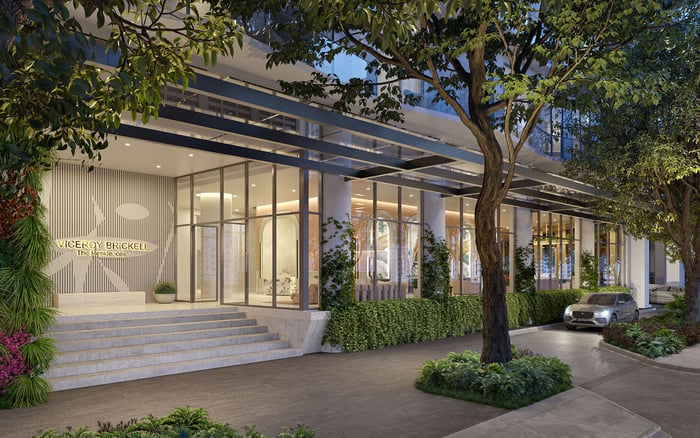
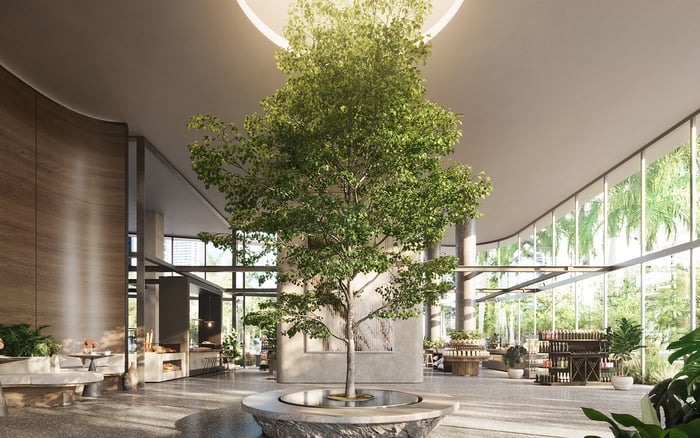
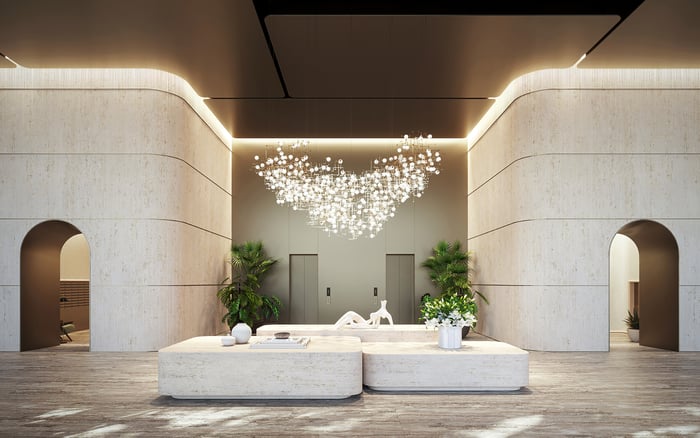
A pre-completion ownership guide to ORA by Casa Tua Brickell, focused on façade maintenance, balcony waterproofing, responsibility allocation, and the records needed to evaluate water-intrusion claims.
For a buyer considering ORA by Casa Tua Brickell, diligence on façade sealants and balcony waterproofing begins with documentation, not an assumed maintenance calendar. The purchase file should distinguish what is proposed, approved, installed, and tested. These remain separate questions, even when the residence is presented as a complete lifestyle proposition.
This is a pre-completion ownership-diligence file, not an account of documented defects, repairs, or insurance losses. Available public disclosures do not establish an ORA-specific sealant replacement interval, a completed balcony repair history, or a verified wind-driven-rain claim. Those limitations do not establish a claim-free building, either. The distinction matters to buyers seeking clarity on future obligations rather than reassurance unsupported by records.
The development site is 1210 Brickell Avenue, Miami, FL 33131. The sales lounge is at 1300 Brickell Avenue, a separate address. Keep that distinction explicit when requesting plans, contracts, inspections, or insurance documents so the file consistently identifies the property under consideration.
By July 2, 2025, a construction-permit application had been filed for a planned 78-story mixed-use tower. That milestone does not establish current construction completion, occupancy approval, or acceptance of installed balcony waterproofing. The project's improvements, designs, and construction also remain subject to appropriate federal, state, and local permits and approvals.
Before assessing maintenance exposure, request current status documentation. A permit application is no substitute for evidence that a particular assembly has been installed, inspected, and accepted.
Available public materials establish neither an ORA-specific exterior sealant replacement interval nor a recurring replacement history. They also do not establish a completed façade-maintenance manual or sealant schedule. Assigning a universal lifespan would create a false sense of budgeting certainty unsupported by the ownership file.
Instead, request the approved façade plans, sealant schedule, product approvals, and applicable maintenance instructions. Ask which joints and interfaces each specified product serves, what inspection routine is contemplated, and which findings would prompt localized repair or broader replacement. Keep any proposed planning allowance separate from a documented replacement requirement.
The installation record deserves equal attention. Seek available inspection records, adhesion testing, water-penetration testing, and punch-list closeout documentation. Ask the buyer's envelope consultant to identify what each record establishes and which areas it covers. A product specification and evidence of accepted installation answer different questions.
For a buyer also considering The Residences at 1428 Brickell, use the same document categories for comparison. The aim is consistent diligence-not an assumption that neighboring projects share materials, maintenance cycles, or performance.
An open balcony is identified for unit 7001 at 1210 Brickell Avenue. That supports describing the residence as having a balcony, but it does not identify a technical waterproofing specification or establish details for other units.
ORA's publicly available materials do not establish the balcony membrane product, coating system, drainage assemblies, flashing, or threshold specifications. Nor do they establish a history of completed balcony waterproofing repairs or leakage investigations. Buyers should not fill those gaps with assumptions drawn from renderings or a visible finish.
Request the approved waterproofing details for the specific residence and its adjoining interfaces. Ask the design and construction team to identify the membrane, protective finish, drainage provisions, and door-threshold detail. Clarify how the balcony meets the façade and which documents govern those transitions.
Then request available installation inspections, testing results, and closeout records. If a record is not yet available, ask when it is expected and who will provide it. Have counsel distinguish a future delivery commitment from a document already furnished; neither should be treated as the other.
Responsibility allocation belongs alongside the technical drawings, not at the end of the decision process. Request the current offering package, declaration, bylaws, budget, warranties, and available engineering disclosures. For correct representations, buyers and lessees should consult the brochure and documents furnished under Section 718.503, Florida Statutes. This does not mean every diligence record requested here is necessarily required by that section.
Ask counsel to trace maintenance and repair obligations for exterior walls, windows, balcony doors, slabs, membranes, coatings, drains, railings, and sealants. Identify who arranges inspections, authorizes work, pays the expense, and retains the resulting records. Do not assume that a component's location alone determines responsibility.
For buyers weighing ORA alongside Cipriani Residences Brickell, the comparison should follow the same discipline: examine each project's actual allocation of obligations rather than extrapolating from its address or presentation. Keep unresolved responsibilities visible in the purchase review.
No verified ORA-specific wind-driven-rain or water-intrusion claim is established in the available public materials. This describes the limits of the documentation; it is not proof that no claim exists or could arise.
Request available insurance loss runs, litigation disclosures, and remediation records. Keep three categories distinct: an alleged defect, an insurance claim, and an insurer-paid loss. Do not label an allegation as a paid claim or infer an absence of allegations from an absence of payment information.
If an event is disclosed, ask for its date, affected location, documented cause, investigation findings, repair scope, and closeout evidence. Have counsel and the insurance adviser review the relevant coverage and claim correspondence. The objective is a coherent event file, without presuming either a defect or a favorable coverage outcome.
A particular warranty term for façade sealants or balcony waterproofing is not established in the available materials. Request the actual warranties and ask counsel to clarify their scope, commencement, exclusions, maintenance conditions, notice requirements, and transfer provisions. Do not equate a proposed replacement cycle with a warranty period.
Before a purchase decision, assemble a concise schedule of confirmed specifications, delivered records, outstanding requests, and assigned responsibilities. Ask advisers which unresolved items affect the decision and what additional evidence would address them. At ORA, confidence should rest on written obligations and documented acceptance-not an invented service interval or an unsupported promise of watertightness.
For a discreet perspective on Brickell ownership and your next residence, connect with MILLION.
If branded residences are on your mind — as a home or as an allocation — we would be glad to share what we are seeing, privately.
Begin a quiet conversationThe development site is 1210 Brickell Avenue, Miami, FL 33131. The sales lounge is separately located at 1300 Brickell Avenue.
No. The construction-permit application milestone dated July 2, 2025, does not establish current completion, occupancy approval, or acceptance of installed waterproofing.
No ORA-specific interval or recurring replacement history is established in the available public materials. Request the sealant schedule and maintenance instructions before adopting a planning assumption.
Request approved plans, sealant schedules, product approvals, installation inspections, adhesion testing, water-penetration testing, and available punch-list closeout records.
No. The open-balcony description for unit 7001 does not establish its membrane, coatings, drainage assemblies, flashing, or threshold specifications.
The available public materials do not establish a history of completed balcony waterproofing repairs or leakage investigations. That limitation should not be interpreted as proof that no such history exists.
Responsibility should be determined from the applicable governing documents. Ask counsel to identify obligations for each component rather than assuming responsibility from its location.
No verified ORA-specific wind-driven-rain or water-intrusion claim is established in the available public materials. This does not certify a claim-free history.
The available marketing materials do not establish a particular term. Request the actual warranties and review their scope, conditions, exclusions, and notice requirements.
Do not assume it does. The article's diligence requests extend beyond the reference to statutory offering documents, and counsel should clarify applicable disclosure requirements.