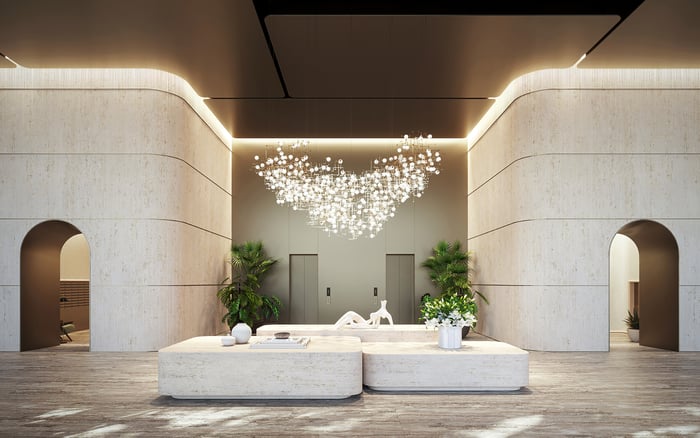
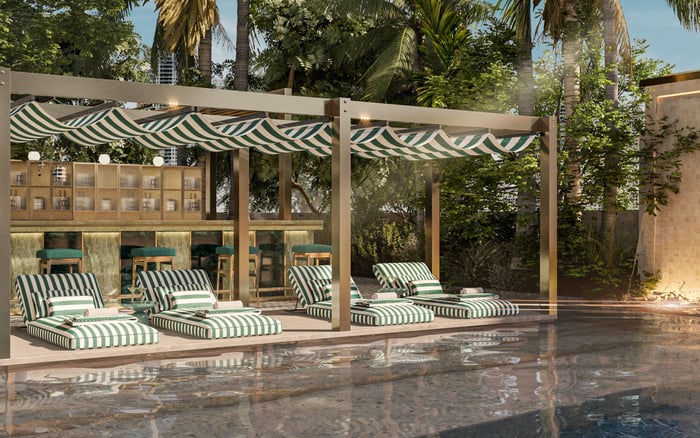
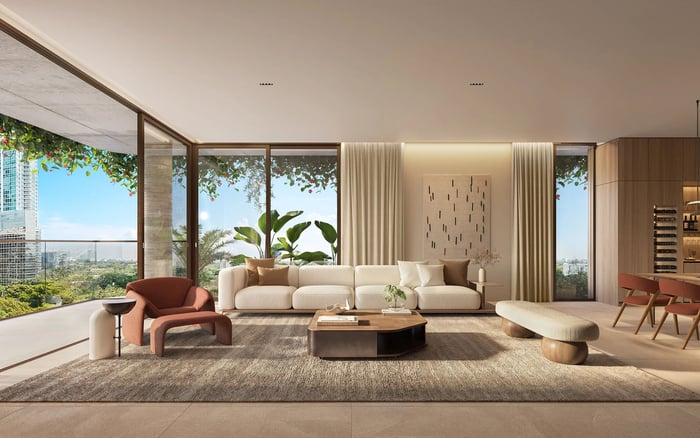
ORA’s hospitality-led concept pairs flexible ownership with an ambitious social and dining program. Buyers should examine circulation, maintenance allocations, and reservation rights before treating service-rich living as a promise of privacy or priority access.
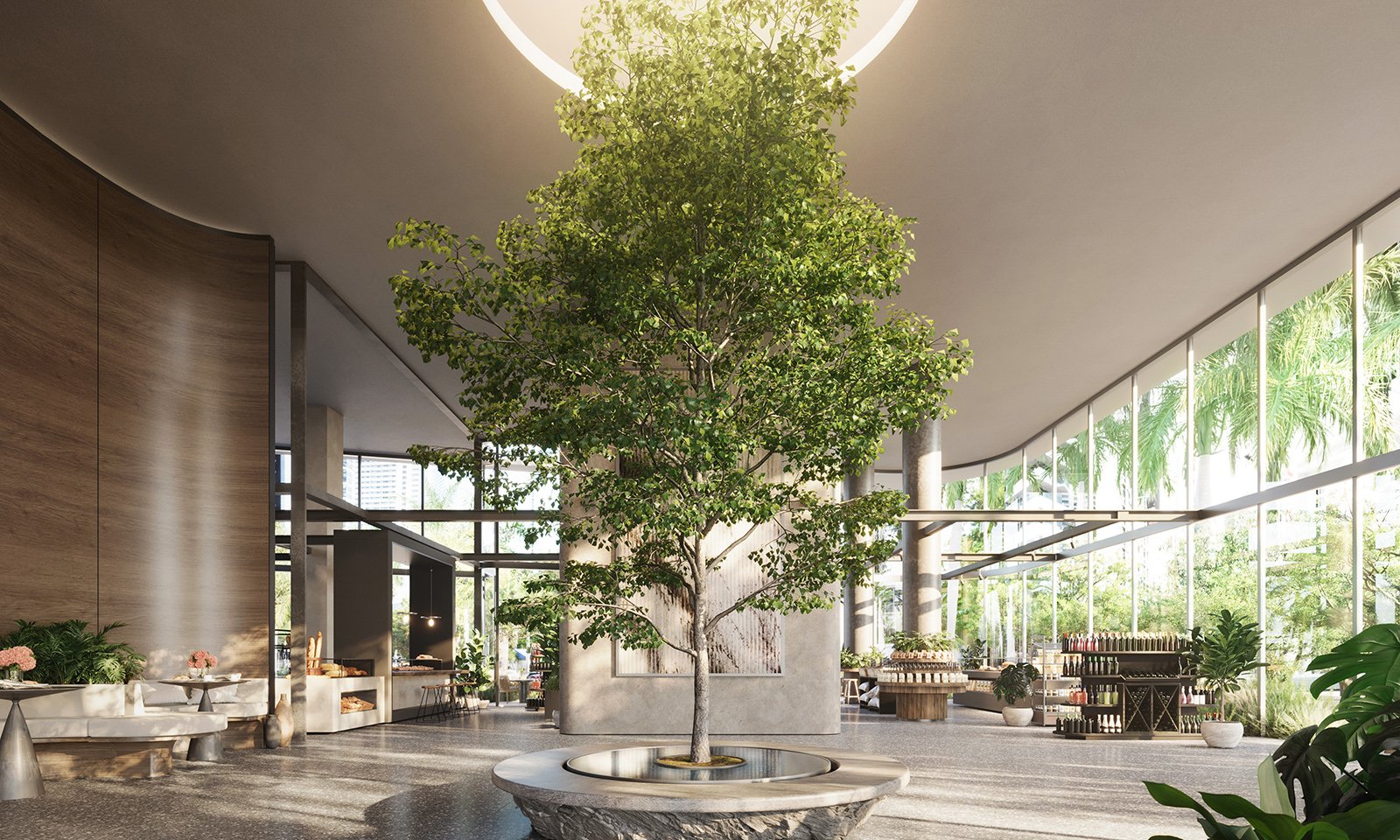
At ORA by Casa Tua Brickell, the purchase decision extends beyond the residence. The planned mixed-use tower at 1210 Brickell Avenue combines homes, restaurants, and office space with a hospitality-led service program. The appeal is clear: furnished living, dining close at hand, and flexibility when an owner is away.
The distinction matters just as much. Hotel-style services and short-term rentals do not, by themselves, establish a conventional hotel component or a legal condo-hotel designation. Nor do multiple uses establish that every facility will be shared. Buyers should approach shared hotel facilities as a question of access and operations, not a settled description of ORA’s legal structure.
For a purchaser seeking convenience and discretion, three issues deserve close attention: who crosses the residential threshold, who pays for common-area wear, and who receives priority when amenities are in demand.
The specifications proposed in July 2025 comprised 78 stories and 533 condominium units, alongside more than 58,000 square feet of office space. These are proposed specifications, not completed-building figures or a current completion update. The planned residence program ranges from fully furnished studios to four-bedroom homes.
A three-day minimum rental stay is advertised, subject to governing documents. Dedicated on-site management and digital concierge services are also proposed. Together, these features suggest a concept designed for varied ownership patterns rather than exclusively full-time occupancy.
Before contracting, request the operative rental provisions, management arrangements, and applicable restrictions. Establish whether the flexibility central to your purchase is documented, what conditions apply, and who can change the rules. An advertised minimum stay is no substitute for examining the ownership framework.
ORA’s plans include a separate lobby and staff for rental check-ins. That is a meaningful design feature, but it addresses only arrival. It does not establish separate elevators, residential corridors, or routes to the pool and lounges.
Trace several journeys through the plans: an owner returning home, a rental guest checking in, an office occupant arriving for work, and a restaurant patron attending dinner. The aim is to identify where routes intersect and which doors require credentials-not to assume those users have equivalent access.
The workspace program includes commercial co-working areas, shared workspaces, and private offices. Clarify whether those areas have distinct access controls and how visitors are registered. Service movement deserves equal scrutiny: luggage, deliveries, cleaning teams, and event setup can affect daily privacy even when front-door arrivals are separated.
For someone also considering The Residences at 1428 Brickell, the useful comparison is documented circulation and access rights. Do not infer either building’s privacy arrangements from positioning alone.
ORA’s planned dining program is central to its identity. TERRA is conceived as a 24-hour gourmet market and bakery; UVA as an enoteca with more than 500 sommelier-selected wine labels and Mediterranean cuisine. FUOCO is planned around wood-fire cooking, while VENTO is conceived as a rooftop lounge with private dining and event space.
Planned services include 24/7 concierge, valet, and poolside food, beverage, and towel service. Planned social spaces include a reading library, virtual sports room, club room with a bar, and a lounge with an oversized LED screen. The proposition is compelling for an owner who values gathering places as much as retreat.
Yet proximity is not exclusivity. Public access to every venue, pool privileges for outside diners, and a definitive facility-by-facility access schedule for residents and guests remain unestablished. Request that schedule in writing, including any distinctions among owners, rental guests, members, office occupants, and outside patrons.
A three-day minimum stay permits more frequent turnover than a long-stay-only model, although actual occupancy patterns remain unknown. More arrivals could mean greater use of lifts, luggage routes, upholstery, and pool furniture. These are potential pressures, not documented deterioration or higher maintenance costs at ORA.
The practical question is how operating obligations are divided. Review projected budgets, reserves, and agreements allocating security, cleaning, repair, and refurbishment expenses among the residential, restaurant, and office components. Ask which costs are shared, how allocations are calculated, and who approves changes.
Separate routine upkeep from eventual replacement. A staffing plan can explain daily presentation; a reserve strategy addresses the later renewal of furnishings and equipment. Both matter in a service-rich environment.
Neither branding nor institutional financing establishes a larger maintenance budget, a hospitality-revenue subsidy, or superior upkeep. If commercial activity is expected to benefit residential owners financially, require the contractual basis. Do not assume that busy venues translate into lower ownership costs.
A concierge can facilitate a request without guaranteeing its acceptance. At ORA, resident booking priority, guaranteed restaurant tables, and protected access during private events remain unestablished.
Request separate policies for restaurants, rooftop areas, event spaces, and any reservable amenities. Clarify booking windows, resident allocations, guest limits, cancellation charges, and whether private functions can temporarily restrict ordinary access. Ask who resolves conflicts and whether the operator can revise these terms.
Then test the rules against your intended routine. If your ideal evening involves an unplanned dinner followed by time at the rooftop lounge, find out what happens when the venue is fully booked. If entertaining is central to ownership, establish whether private dining is an included privilege, a paid reservation, or subject to another arrangement. These are questions to resolve, not benefits to presume.
For buyers weighing ORA against Cipriani Residences Brickell, compare enforceable rights rather than the atmosphere suggested by a name. This does not imply that the projects share rental policies, access arrangements, or service obligations. Each requires its own review.
ORA’s emphasis on accessible gathering spaces and shared experiences may suit an owner seeking an active urban base. A purchaser whose first priority is seclusion should be equally precise about protected residential routes, visitor controls, and amenity boundaries.
Before committing, have your advisers reconcile the purchase documents, circulation plans, access policies, projected budget, cost-sharing agreements, and reservation terms. Where an operating policy remains undecided, evaluate the purchase without assigning value to an unconfirmed privilege. The strongest fit is not necessarily the building with the longest amenity list, but the one whose rules support the life you intend to lead.
For a discreet perspective on your next Brickell purchase, connect with MILLION.
If branded residences are on your mind — as a home or as an allocation — we would be glad to share what we are seeing, privately.
Begin a quiet conversationORA is a planned mixed-use condominium with hotel-style services and short-term rental flexibility. Those features do not establish a conventional hotel component or legal condo-hotel designation.
The planned address is 1210 Brickell Avenue in Miami. The project combines residences, restaurants, and office space.
The specifications proposed in July 2025 comprised 533 condominium units across 78 stories. These are proposed specifications, not completed-building figures or a current completion update.
A three-day minimum rental stay is advertised, subject to governing documents. Buyers should review the operative provisions and applicable restrictions.
No. A separate lobby and rental check-in staff do not establish separate elevators, corridors, or amenity routes.
The available project details do not establish pool access for outside diners. Buyers should request written eligibility rules for each facility.
Guaranteed tables and resident booking priority are not established. Confirm booking windows, allocations, and restrictions before treating priority access as an ownership benefit.
Greater turnover could increase common-area use, but higher costs or faster deterioration are not documented ORA outcomes. Review budgets, reserves, and expense-allocation agreements.
The planned concepts include TERRA, a 24-hour market and bakery; UVA, an enoteca; FUOCO, a wood-fire dining concept; and VENTO, a rooftop lounge with private dining and event space.
Review purchase and rental documents, circulation plans, access policies, projected budgets, reserves, cost-sharing agreements, and reservation terms. Do not assign value to unconfirmed privileges.