For EDITION Edgewater buyers, storm readiness belongs in the ownership file alongside residence plans and service commitments. Emergency-power allocation, designated cooling space, and written re-entry procedures remain essential diligence questions, not established amenities.
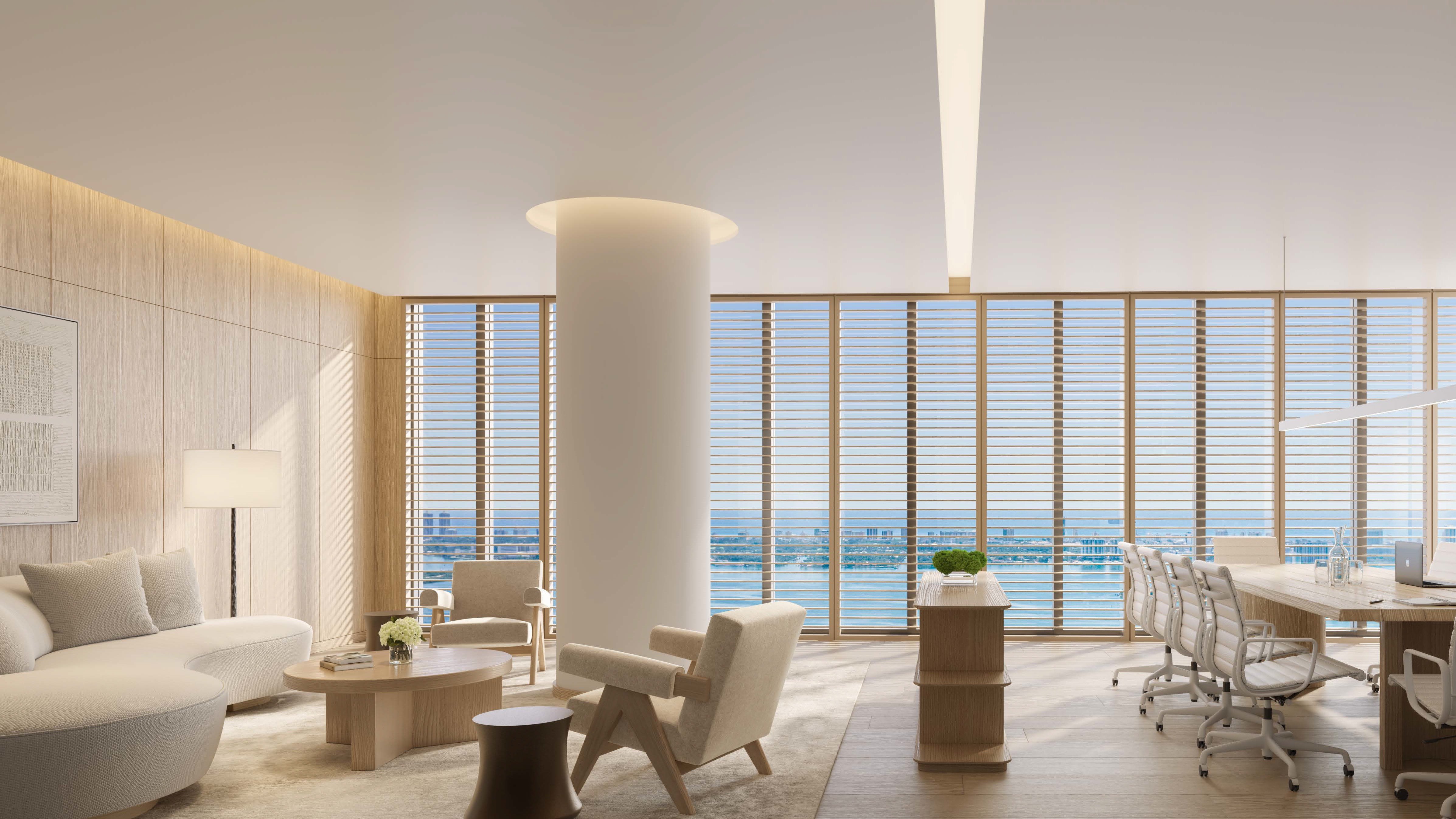
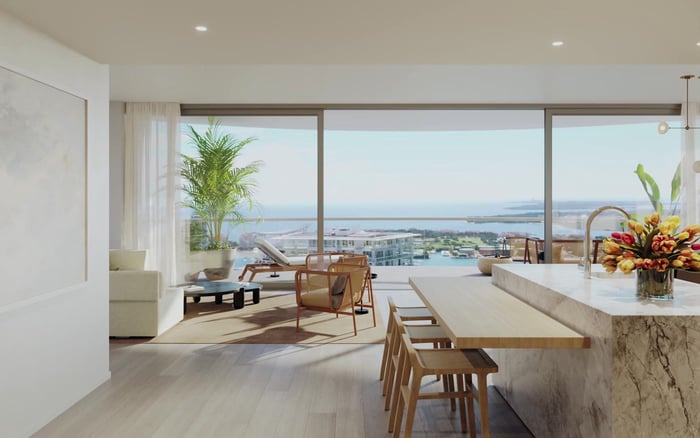
At EDITION Edgewater, the ownership proposition pairs Biscayne Bay views with a substantial service and amenity program. Plans for the project at 2121 N. Bayshore Drive in Miami’s Edgewater neighborhood call for a 55-story, approximately 649-foot glass tower with roughly 45,000 square feet of indoor and outdoor amenities.
For a buyer, however, storm readiness warrants a separate conversation from the architectural presentation. The questions are precise: which systems receive emergency power, where cooling would remain available, and who authorizes a return after a storm. An amenity inventory is not an emergency operating plan.
Those operational questions remain unresolved in the reviewed materials. That is a disclosure boundary, not evidence that equipment or procedures are absent. The next step is to request written documentation that distinguishes intended capabilities from finalized arrangements and identifies who is responsible for each commitment.
The residences are marketed as managed and operated by EDITION Hotels, with valet, security, reception, and 24-hour butler, doorman, and porter services. These are meaningful elements of everyday ownership, but they do not establish a hurricane staffing schedule or guarantee uninterrupted service during an outage.
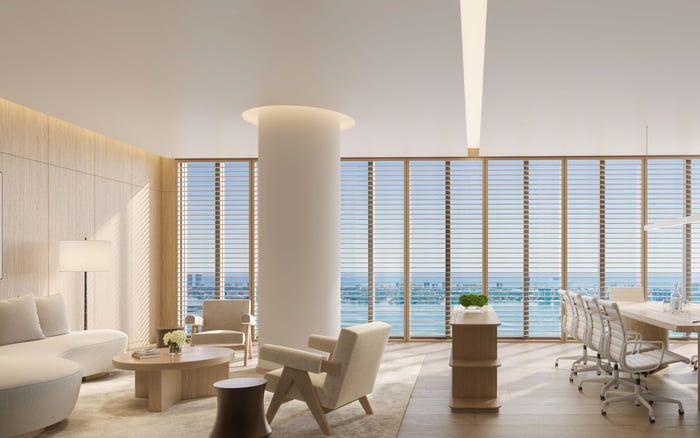
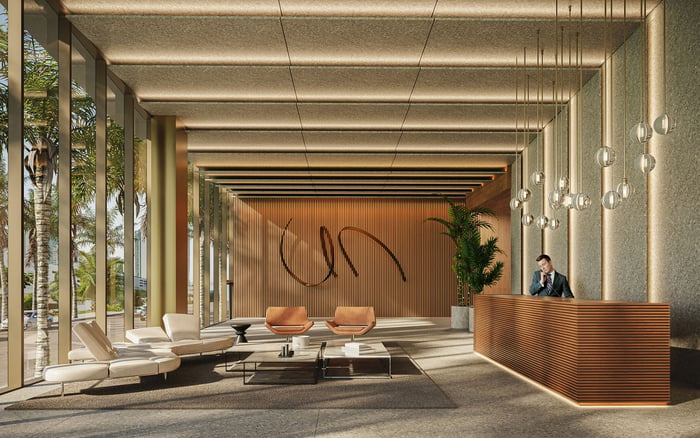
The advertised common areas include a three-story lobby, library, social lounges, bayfront gardens, private dining room, cinema, children’s and teen rooms, and guest suites. None should be treated as a storm shelter or post-storm accommodation without explicit written confirmation. Permission for residents to remain through a hurricane has not been established.
Ask for the hurricane evacuation policy, storm operating protocol, resident communication plan, and staffing schedule. Each request should address availability under emergency conditions, not simply repeat normal service hours. A useful answer identifies the responsible role, the circumstances in which service changes, and how those changes will be communicated to residents.
Generator capacity, fuel type, and redundancy remain undisclosed in the reviewed materials. Backup-power coverage is also unspecified for elevators, domestic-water pumps, fire pumps, lighting, access control, refrigeration, and HVAC. Neither a generator-load schedule nor an emergency-power allocation matrix appears in those materials.
The central diligence document should therefore be a system-by-system allocation matrix. Request final connected-load documentation showing what is connected, what can operate simultaneously, and what restrictions apply. Ask specifically whether any residential circuits or in-residence cooling are included; neither should be inferred from a general reference to emergency power.
Elevators warrant a separate explanation. Request the number available under backup power, any operating restrictions, and the conditions governing resident use. For water systems, ask which pumps are supported and what limitations would remain. For access control and lighting, seek a clear description of the areas served.
Runtime should be tied to a stated load, not presented as an isolated number. Request fuel arrangements, testing records, and maintenance responsibilities, with proposed specifications clearly distinguished from completed-system records. These remain open diligence requests, not verified EDITION features.
A buyer also considering Aria Reserve Miami should request the same categories of documentation there. A consistent questionnaire makes the comparison more useful without presuming that either property has equivalent equipment or operating rules.
The ninth-floor Wellness Center is advertised with a spa relaxation area, steam room, sauna, fitness center, yoga studio, and personal-training studios. Yet the reviewed materials identify no designated cooling refuge, and generator-backed air conditioning remains unconfirmed in the spa, lounges, cinema, and other common areas.
A room’s normal use does not establish its emergency function. Ask management to identify any designated refuge by room name and location, then confirm in writing that its HVAC receives backup power. The answer should also address operating hours, occupancy limits, and the circumstances under which the space would close or become unavailable.
Comfort depends on more than cooled air. Request details on drinking water, restroom access, pet rules, and how residents would reach the room if elevator service were restricted. For a household with specific mobility or health needs, resolve these questions before treating any shared space as part of a personal contingency plan.
The advertised rooftop pool and hot tub should remain outside that plan unless emergency availability is expressly confirmed. Their presence does not establish access during hurricane conditions. Nor would confirmation of a cooling room, by itself, establish permission to remain in the building through a storm.
Post-storm re-entry procedures remain undisclosed in the reviewed materials, including clearance authority, inspection requirements, and resident-identification rules. Buyers should request a written sequence rather than rely on a general assurance that management will communicate when the property is ready.
Start with authority: who determines that residents may return, and how is that decision communicated? Then request the inspection and utility prerequisites, including how any remaining elevator, water, access, or cooling limitations would be explained. Ask whether permission to enter would carry restrictions and how those restrictions would be updated.
Identification is equally practical. Clarify what residents must present and the procedure for authorized representatives. Request communication methods for telecom outages, along with a procedure for obtaining the latest status before traveling back. These answers should set out the actual protocol, not leave households to infer it from ordinary reception services.
For an owner who may be away when a storm approaches, the file should answer two distinct questions: how to receive reliable instructions while absent, and what must happen before returning. Do not treat advertised guest suites as fallback accommodation; their storm or post-storm availability is not established.
If Villa Miami is also on the shortlist, carry the same power, cooling, and re-entry questions into that purchase discussion. The purpose is not to rank resilience without evidence, but to compare written answers against the same household needs.
Organize the ownership file into three sections: emergency-power allocation, cooling-refuge arrangements, and post-storm re-entry. For each, retain the written response, its status, the responsible party, and any unresolved questions. Where final documentation is not yet available, request a defined point for an update rather than treating a preliminary answer as settled.
The distinction is simple but consequential. EDITION’s advertised service and amenity program describes the intended residential experience. Emergency documentation must separately explain what remains available, under which conditions, and with whose authorization. Until those answers are documented, buyers should keep the questions open rather than translate luxury into an operational guarantee.
For a considered approach to South Florida luxury ownership, explore MILLION.
If branded residences are on your mind — as a home or as an allocation — we would be glad to share what we are seeing, privately.
Begin a quiet conversationThe project is planned at 2121 N. Bayshore Drive, Miami, FL 33137, in Edgewater.
The project is described as a 55-story, approximately 649-foot tower with roughly 45,000 square feet of indoor and outdoor amenities.
The reviewed materials do not disclose generator capacity, fuel type, or redundancy. This does not establish that emergency equipment is absent.
No backup-power coverage for HVAC is specified in the reviewed materials. Buyers should request written confirmation of any in-residence cooling coverage.
It should identify supported systems, simultaneous operating capabilities, and restrictions. Buyers should also request runtime assumptions, fuel arrangements, testing records, and maintenance responsibilities.
The reviewed amenity materials do not identify one or confirm generator-backed air conditioning in common areas. Request the room location, HVAC coverage, capacity, hours, and access rules.
No. The advertised service program does not establish a storm staffing schedule or uninterrupted emergency availability.
The reviewed materials do not establish permission to remain or designate the tower as a storm shelter. Buyers should request the written evacuation and storm operating policies.
No. Guest suites are advertised, but their availability as storm or post-storm accommodation is not established.
Request clearance authority, inspection and utility prerequisites, identification rules, and any access restrictions. The protocol should also explain communication during telecom outages.