A considered art installation begins with more than placement. For Alana Bay Harbor Islands owners, the essential file separates association authorization, wall-specific technical guidance, municipal permitting, and vendor insurance before installation day.
An important artwork deserves a considered setting, but installation begins well before placement. At Alana Bay Harbor Islands, owners should approach the ownership file as carefully as the room itself: define the work, establish the proposed attachment, obtain the relevant decisions, and organize vendor documentation before scheduling installation.
Artwork depicted in the project’s marketing materials is not included with a residence purchase. Improvements, designs, and construction are also subject to appropriate federal, state, and local permits and approvals. Neither a furnished image nor a purchase decision grants permission for a particular installation.
Three questions govern the process: what management authorizes, what the wall can support, and what the Town requires. An answer to one does not settle the others. Keeping those decisions distinct gives the owner a clearer path from acquisition to display.
Bay Harbor Islands requires building permits for most construction work. That does not mean every picture-hanging task requires a permit. Start with a precise description of the proposed work, not an assumption based on the artwork’s value or visual scale.
Ask management whether the installation requires architectural or alteration review, which documents should accompany the request, and who can issue written authorization. These are questions to resolve for Alana, not confirmed building-specific procedures. Separately, request the Town’s permit determination for the actual scope.
Where a permit is required, the municipal submission must include a letter of authorization from the condominium or management association. Obtain that letter through the appropriate building representative; it does not replace the municipal decision.
For buyers also considering Bay Harbor Towers, the same diligence questions apply, but answers must remain property-specific. A shared location does not establish shared private alteration rules.
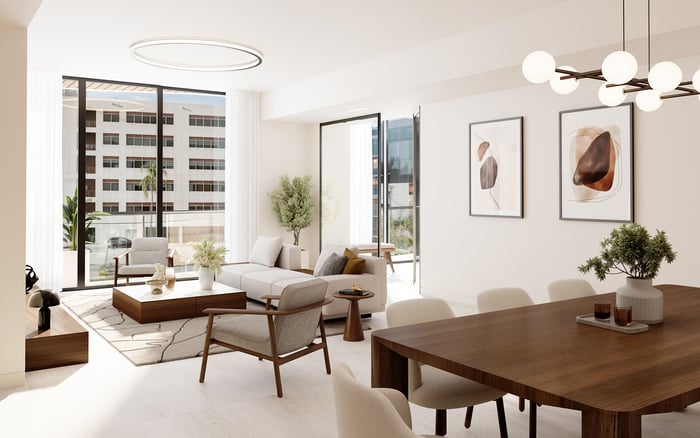
The available Alana floor plan identifies residence and outdoor-living areas but provides no wall-mounted-art weight limit, anchor capacity, or point-load allowance. Use it to discuss location, not to infer structural permission.
Before drilling, request written guidance from management and a qualified technical reviewer addressing the proposed wall, attachment method, and allowable load. Asking only whether a piece is “too heavy” is not enough. The review should address the actual artwork and mounting arrangement in sufficient detail to evaluate them together.
A recommended technical file includes artwork dimensions and weight, mounting details, installation drawings, and identification of the intended wall. Ask the qualified reviewer what further information is needed and whether the proposed attachment is acceptable. Do not assume a numerical loading allowance or anchoring method for Alana from a marketing plan.
This is a documentation recommendation, not a verified Alana submission mandate. Its purpose is to replace a general assurance with guidance specific enough for the installer to follow.
Vendor insurance certificates deserve a separate review. Municipal permit requirements include a certificate of insurance issued to the Town of Bay Harbor Islands showing liability and workers’ compensation coverage. Contractors claiming a workers’ compensation exemption must provide supporting documentation.
Those municipal requirements do not establish Alana’s private insurance minimums or additional-insured wording. Ask management for its current vendor requirements and any applicable certificate instructions, then have the contractor and insurance representative address them directly.
Keep municipal insurance evidence distinct from documentation requested by the association. Confirm which entities must be identified, what limits are required, what wording is requested, and what evidence management will accept. These are matters to verify, not policy details to presume.
The same discipline applies when a buyer compares ownership in Bay Harbor Islands with Bal Harbour through Rivage Bal Harbour. An insurance package assembled for one property should not be assumed acceptable at another. Municipal requirements must also be checked independently.
Construction-related permit applications can be submitted online. For work requiring a permit, the submission must include a completed application signed by the owner and contractor or qualifier, with notarization where applicable. Contractors must also supply applicable licensing documentation, including local and/or state business credentials.
Depending on the scope, the submission may require Florida Building Code-compliant plans, product approvals, product specifications, and a floor plan. A copy of the contract, proposal, estimate, or paid invoice or receipt is also requested. Use a consistent description of work throughout so the approval file and commercial agreement describe the same installation.
If multiple trades or disciplines are involved, subcontractor applications with appropriate licensing and insurance are required under the master application. Confirm the application structure before different vendors arrive to perform interconnected work.
Confirm whether a recorded Notice of Commencement is required for the proposed work, including the currently applicable job-cost threshold, before filing.
An artwork proposed for an outdoor setting needs a separate conversation about scope. Exterior modifications require review and approval by the Town Planner and/or Design Review Board. An outdoor-living area shown on a floor plan does not itself authorize a modification there.
Ask whether the proposed installation constitutes an exterior modification and which municipal and private reviews apply. Resolve that question before commissioning installation details or committing to a delivery window.
For access, ask management about delivery arrangements, elevator reservations, protective measures, deposits, and supervision. None should be treated as an established Alana requirement without confirmation. They belong on the owner’s question list because an approved technical proposal and a workable delivery plan are separate matters.
Keep the responses in the installation file so the owner’s representative, designer, and vendor work from the same instructions rather than separate recollections.
A useful ownership file brings together artwork specifications, proposed mounting details, technical guidance, contractor credentials, insurance evidence, association authorization, and the Town’s permit determination. Where permits apply, retain the relevant application materials and approvals alongside that core record.
Before proceeding, confirm that the written decisions address the installation actually planned. If the artwork, location, attachment, or contractor changes, ask whether any part of the review needs updating. The objective is not paperwork for its own sake, but a clear connection between the selected work and the authorized installation.
For discreet guidance on South Florida residential ownership, connect with MILLION.
If branded residences are on your mind — as a home or as an allocation — we would be glad to share what we are seeing, privately.
Begin a quiet conversationNo. Artwork depicted in the project’s marketing materials is not included with a unit purchase.
The available floor plan provides no wall-mounted-art weight limit, anchor capacity, or point-load allowance. Obtain wall-specific technical guidance before drilling.
Bay Harbor Islands requires permits for most construction work, but that does not establish a permit requirement for every picture-hanging task. Request a determination for the proposed scope.
Ask about alteration review, written authorization, vendor insurance requirements, and delivery procedures. These details must be confirmed for Alana rather than assumed.
Municipal permit materials require a certificate of insurance issued to the Town showing liability and workers’ compensation coverage. A contractor claiming a workers’ compensation exemption must document it.
No. Municipal requirements do not establish Alana’s private insurance minimums or additional-insured wording; obtain those instructions from management.
Yes. Municipal permit materials require a letter of authorization from the condominium or management association.
Collect artwork dimensions and weight, mounting details, installation drawings, technical guidance, contractor credentials, insurance evidence, association authorization, and the Town’s permit determination.
Exterior modifications require review and approval by the Town Planner and/or Design Review Board. Confirm whether the proposed installation falls within that scope.
Before filing, confirm whether a recorded Notice of Commencement is required for the proposed work and verify the currently applicable job-cost threshold.