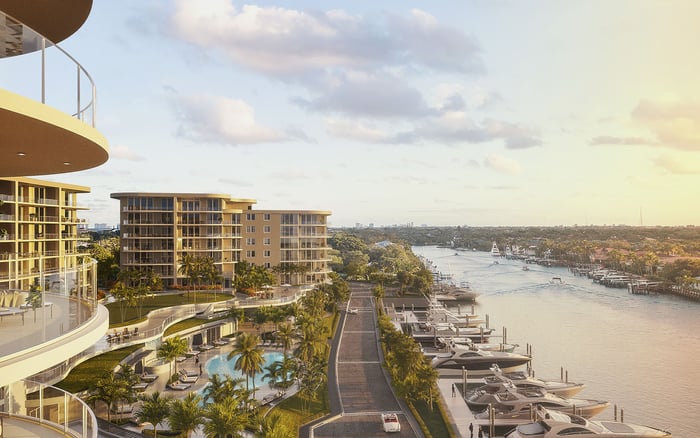
A discreet relocation guide for Boston-area executives, founders, investors, and families weighing West Palm Beach as a primary residence and business base.

For many Boston-area buyers, the move to West Palm Beach begins with climate and lifestyle, but it rarely ends there. The more consequential question is strategic: where the household intends to be based, where the business will be managed, and how the residential asset should be owned.
Those are separate workstreams. Personal domicile planning focuses on intent, records, routines, and evidence of permanence. Business relocation involves operations, contracts, employees, management functions, and state-level obligations that should be reviewed with counsel. Ownership structure determines whether a primary residence, second home, or investment property should be held personally, through a trust, or through an entity designed for a specific purpose.
West Palm Beach has become a serious South Florida option for executives, founders, investors, and families who want a Florida base while maintaining Northeast relationships. The strongest residential strategy begins with a clear premise: this is not merely a change of address. It is a coordinated relocation plan.
For Boston buyers, state tax treatment can be a central reason to evaluate Florida, but planning should not rest on a headline assumption. A buyer who owns in West Palm Beach while maintaining stronger day-to-day ties elsewhere may need a more careful domicile analysis than expected.
During a dual-home transition, advisers often look at practical evidence: time spent in each location, family routines, professional addresses, vehicle registration, voting records, medical relationships, club life, charitable involvement, and where the home genuinely functions as the center of life. The goal is consistency between stated intent and lived behavior.
A declaration, filing, or address change can support a record, but it should not be treated as a substitute for real relocation. Buyers should align the paper trail with the life they are actually building in West Palm Beach.
Moving the owner does not automatically move the company. A Boston-area founder, partner, executive, or investor may still have employees, contracts, clients, properties, management duties, or board roles connected to Massachusetts or another state.
That distinction matters. A Florida residence can support a new base, but corporate tax, nexus, employment, licensing, entity formation, and governance issues belong with qualified legal and tax advisers. The residential purchase should be timed with that broader review rather than treated as a purely lifestyle-driven acquisition.
If a buyer is forming or reorganizing an entity, the ownership plan should reflect liability, financing, estate, tax, privacy, and residential-use goals. A high-net-worth buyer should be especially careful before placing a primary residence into an entity without understanding how that choice may affect benefits, financing, and long-term planning.
For a West Palm Beach property intended as a permanent residence, homestead-related planning can influence taxes, creditor-protection analysis, title decisions, and estate planning. Because those consequences depend on individual facts, buyers should decide early whether the property is meant to be a primary residence, second home, or investment asset.
That answer can shape financing, insurance, documentation, renovation plans, and even the type of residence selected. A condominium may suit a lock-and-leave executive lifestyle, while a single-family home may better support privacy, gardens, pets, guest space, or a more settled family routine.
Waterfront ownership adds another layer. Docks, seawalls, elevation, wind exposure, drainage, and storm protection should be evaluated before the buyer falls in love with the view.
West Palm Beach offers several relocation profiles. Downtown and near-downtown condominiums can support an office-centric rhythm, with easier transitions between meetings, dining, civic life, aviation, and the waterfront. Along the Flagler corridor, buyers comparing new and emerging residences might evaluate Alba West Palm Beach as part of a broader conversation about views, service model, carrying costs, and long-term use.
For buyers drawn to the waterfront spine of the city, Forté on Flagler West Palm Beach may enter the conversation as they consider how close they want to be to Palm Beach, downtown West Palm Beach, restaurants, and aviation access. The strategic point is not only the building. It is whether the address supports the buyer’s daily routine and relocation narrative.
Character neighborhoods such as El Cid and Flamingo Park can appeal to buyers who value architecture, gardens, and a more residential texture. Buyers planning exterior changes, additions, or redevelopment should understand any applicable review process before closing. South of Southern, often discussed as SoSo, may suit buyers who want a quieter residential pattern while remaining connected to the waterfront and the city.
For buyers who want a hospitality-inflected lifestyle in the urban core, Mr. C Residences West Palm Beach can be considered within the broader new-construction landscape. For a more Palm Beach-adjacent lens, buyers may also compare South Flagler House West Palm Beach or The Ritz-Carlton Residences® West Palm Beach depending on lifestyle, service expectations, and timing.
Many relocations succeed because they acknowledge that the prior market does not disappear overnight. A buyer may still travel to Boston for board meetings, family obligations, medical relationships, philanthropic commitments, or operating-company responsibilities.
The residential choice should make that reality workable without undermining the intended Florida base. If West Palm Beach is meant to be home, the residence should support everyday life: work cadence, school decisions where relevant, health care, recreation, entertaining, privacy, and the records that demonstrate a settled South Florida routine.
A home selected only for occasional convenience can be less persuasive than a home selected around actual daily life. The most durable strategy is the one that the buyer can live consistently.
Luxury buyers sometimes model taxes first and carrying costs second. In West Palm Beach, those discussions should happen together. Insurance availability, flood exposure, windstorm considerations, association obligations, maintenance history, and renovation feasibility can materially affect the long-term ownership experience.
For single-family purchases, diligence should include roof condition, storm protection, drainage, seawalls where applicable, docks where applicable, generators, prior renovations, and the practical cost of maintaining the property. For condominiums, buyers should examine association rules, reserves, insurance, assessments, rental restrictions, pet policies, building maintenance, and approval requirements for alterations.
The elegant residence is only one part of the acquisition. The more discreet luxury is a home that can be insured, financed, maintained, renovated, and defended as part of a coherent long-term plan.
Should a Boston buyer treat a West Palm Beach move as more than a home purchase? Yes. The strongest approach coordinates the residence, domicile plan, business obligations, and ownership structure before closing.
Is personal relocation the same as business relocation? No. A person can build a Florida base while a company still has separate obligations tied to employees, contracts, assets, or management activity elsewhere.
When should tax counsel be involved? Counsel should be involved before major timing decisions, entity changes, or title decisions are made, especially for executives, founders, and investors.
Why does evidence of daily life matter? Records and routines can support the buyer’s stated intent, particularly during a period when Boston and West Palm Beach ties overlap.
Should a primary residence be placed in an entity? Not automatically. Entity ownership can affect financing, estate planning, liability analysis, and residential benefits, so it should be reviewed before title is selected.
What type of residence works best for an executive relocation? It depends on routine. A condominium may suit a lock-and-leave lifestyle, while a single-family home may better support privacy, guests, pets, or family needs.
What should waterfront buyers review early? Waterfront diligence should include flood exposure, insurance, elevation, seawalls, docks, drainage, roof condition, and storm protection.
Do condominium buyers need different diligence? Yes. Association rules, reserves, insurance, assessments, rental limits, pet policies, maintenance, and alteration approvals should be reviewed before closing.
Can historic or character neighborhoods require extra planning? They can. Buyers with renovation or redevelopment plans should understand any applicable review process and constraints before closing.
Is West Palm Beach practical for buyers who still have Boston ties? Yes, if the residence supports real daily life in South Florida while travel and legacy obligations are managed intentionally.
If you'd like a private walkthrough and a curated shortlist, connect with MILLION.
If branded residences are on your mind — as a home or as an allocation — we would be glad to share what we are seeing, privately.
Begin a quiet conversation