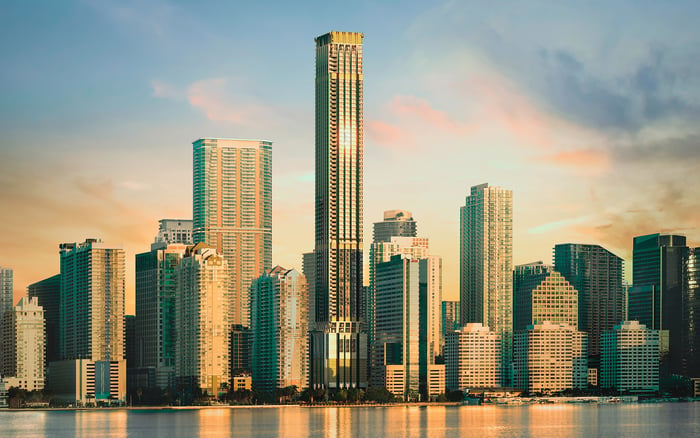
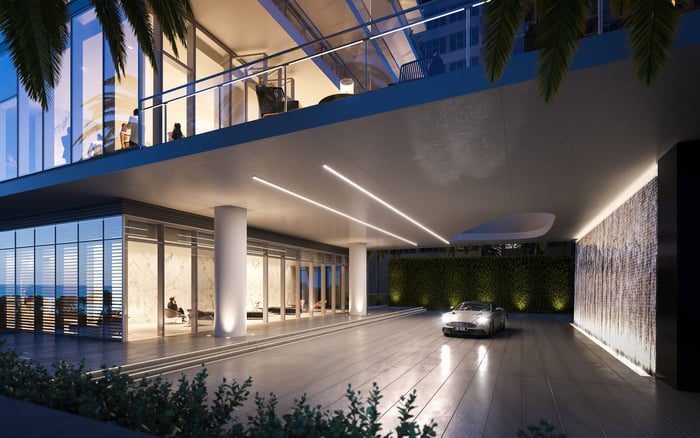
In a luxury high-rise, privacy is not only visual. It is acoustic. In high-traffic corridors, the difference between an ordinary residence and a truly serene one is often decided by what you do not hear: footsteps, doors, voices, elevators, service carts, and the subtle building hum that accumulates at peak hours. For discerning buyers considering Mercedes-Benz Places Miami, corridor sound control matters because it influences day-to-day comfort, perceived quality, and long-term value in a competitive Brickell market. This MILLION Luxury editorial explains what creates corridor noise, what soundproofing strategies sophisticated towers typically employ, and what residents can look for during the purchase process and pre-delivery walkthroughs. It also places acoustic expectations in context alongside other premium South Florida residential benchmarks.
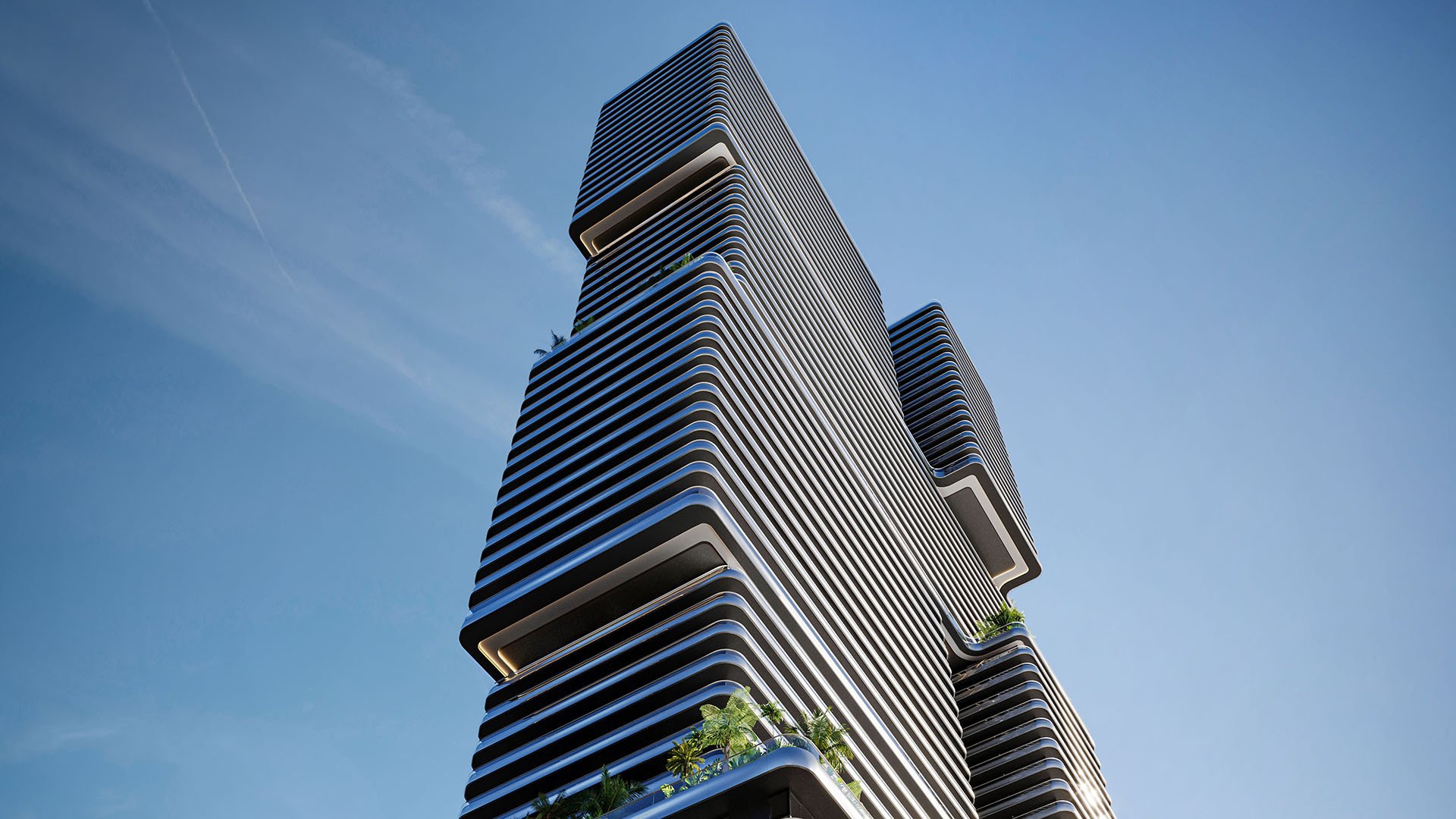
High-traffic corridors are a building’s circulatory system: residents returning from dinner, guests arriving for weekends, deliveries, housekeeping, and staff moving quietly and efficiently in the background. In a premium residence, the objective is straightforward: you should be able to tap into Brickell’s energy when you want it, and be insulated from it when you don’t.
Corridor noise is uniquely disruptive because it’s irregular. A steady city soundscape can recede into the background; a burst of laughter outside the door, a rolling cart, or a sharp latch can break your focus instantly. Over time, those interruptions become a quality-of-life issue. For the most discerning buyers, acoustic privacy is also a proxy for craftsmanship. If a tower controls what you hear at the threshold, it’s more likely to control the finer details throughout.
For buyers considering Mercedes-Benz Places Miami, corridor soundproofing carries added weight because the brand promise is experience-driven design. The expectation isn’t only attractive interiors-it’s an environment that feels composed at every hour.
Acoustic issues rarely stem from one dramatic flaw. More often, they come from a series of small pathways that allow sound to travel.
Door transmission and leakage.
The front door is often the weakest point in the envelope between a residence and the corridor. Even a heavy door can underperform if perimeter seals are inconsistent, the threshold is poorly detailed, or latch hardware leaves micro-gaps.
Wall assemblies and joints.
Corridor demising walls can transmit voices, elevator lobbies can carry vibration, and weak junction detailing-around outlets, recessed panels, or access doors-can compromise otherwise solid construction.
Impact noise through the slab.
Footsteps are as much a structure issue as they are a hallway issue. Hard corridor flooring and insufficient underlayment can turn routine traffic into audible thuds, especially on quieter floors or in residences near corridor turns.
Mechanical and elevator adjacency.
High-rise systems generate low-frequency sound. Fans, pumps, and elevator equipment can create a subtle “building hum.” Low-frequency noise is challenging because it travels through structure and is harder to mask.
Operational rhythms.
Trash collection, service activity, move-ins, and intermittent maintenance create predictable windows of noise. A well-designed building anticipates these rhythms and reduces their impact through planning and detailing.
Luxury buyers often hear generic assurances about “quality construction.” The more meaningful question is what the building does at the corridor-to-residence boundary. The following strategies are common in quiet, premium towers-and they belong in a buyer’s vocabulary.
1) A real acoustic door package.
Look for solid-core (or equivalent performance) doors paired with full perimeter gasketing and a properly detailed drop seal or threshold. The best doors feel substantial, close with precision, and don’t rattle.
2) Corridor finishes that reduce footfall and reverberation.
Soft surfaces and well-chosen materials can reduce both impact noise and the hallway “echo” effect. Even with a modern aesthetic, reverberation can be controlled discreetly through underlayments, wall treatments, and ceiling details.
3) Robust wall assemblies and attention to penetrations.
Performance isn’t only in the wall assembly-it’s in every penetration. Electrical boxes, access panels, and recessed features should be detailed so the assembly remains continuous.
4) Vestibules and transition zones where possible.
A small entry vestibule or corridor setback can create an acoustic buffer. Even a few feet of separation can materially improve perceived privacy, especially for homes near elevator banks.
5) Mechanical isolation, not just mechanical capacity.
Quiet operation depends on vibration isolation, damping, and routing. In an ultra-premium context, this is the difference between “you can’t hear it” and “you can live with it.”
A practical takeaway: sound control is a system. Ignore one component, and the overall experience can fall short.
Discreet due diligence is part of sophisticated purchasing. You don’t need to be confrontational to be specific.
Ask whether the developer or building team can describe the front door construction and confirm whether the perimeter includes continuous seals. Inquire whether the corridor-to-unit wall assemblies were designed with acoustic performance in mind, and whether any form of testing or commissioning is standard.
If you’re purchasing pre-construction, request clarity on where your residence sits relative to elevator lobbies, trash rooms, and service corridors. A quiet home is partly a design decision-and partly a placement decision.
Finally, align expectations with your lifestyle. If you entertain often, you may prioritize shielding the interior from corridor noise while also ensuring your own sound doesn’t spill outward. Privacy works both ways, and the best buildings balance it with restraint.
Brickell is a neighborhood defined by momentum. Its appeal is proximity-restaurants, wellness, offices, and waterfront access often within minutes. That same convenience can translate into heavier building circulation, particularly in mixed-use environments or towers with active amenity levels.
In this context, acoustic privacy becomes a defining luxury differentiator. Buyers comparing newer Brickell inventory may weigh how corridor design supports a calm residential feel. For example, 2200 Brickell sits in the broader Brickell conversation where residents commonly prioritize refined daily living. Similarly, buyers exploring design-driven offerings such as 888 Brickell by Dolce & Gabbana often evaluate whether a building’s glamor extends to the quieter, less photographed moments-like nighttime hallways.
The point isn’t that every building sounds the same. It’s that Brickell’s pace makes soundproofing more valuable, because the cost of interruption is higher when life runs late.
If you’re touring an existing building, pause in the corridor. Do you hear elevator chimes, conversation from other units, or a persistent mechanical tone? Step inside, close the door, and listen. A well-sealed entry often creates an immediate perceptual “pressure change,” as outside noise drops away.
If you’re touring a sales gallery or model environment, prioritize details you can verify later. Ask to review typical door sections, threshold details, and any published specification language that describes acoustic intent.
Also consider location within the floorplate:
Homes immediately adjacent to elevator lobbies may require stronger door and wall performance.
Corner placements can reduce pass-by traffic.
Units near service functions can experience more intermittent activity.
These aren’t deal-breakers, but they can inform negotiation, selection, and upgrade planning.
In some cases, owners want an extra margin of acoustic assurance beyond what the building provides. The most effective improvements are typically concentrated at the entry.
Upgrade door seals and thresholds.
Small air gaps can defeat major material upgrades. A discreet, properly installed seal package can noticeably reduce voices and other high-frequency corridor noise.
Add acoustic treatment inside the entry.
A textured wall finish, art with absorptive backing, or a well-considered console wall can reduce internal reflection, making any residual sound less present.
Consider a softening layer under hard surfaces.
If your entry or foyer is highly reflective, a premium rug or runner with an appropriate pad can strengthen the sense of calm without compromising design.
Any changes should respect building rules, life-safety requirements, and design intent. In the best outcomes, the upgrade is invisible-and the serenity is unmistakable.
Across South Florida, buyers have become more fluent in the language of “quiet luxury,” and sound sits at its center. In oceanfront settings, priorities can shift toward wind and surf exposure, but the principle remains: the most valuable homes support restoration.
A buyer cross-shopping outside Brickell may notice how different environments shape acoustic expectations. For instance, beachfront living at 57 Ocean Miami Beach can foreground ocean-driven soundscapes, while a coastal-residential setting such as 2000 Ocean Hallandale Beach can emphasize privacy within a resort-like circulation pattern. Even when the sources of sound differ, the buyer’s question is consistent: does the building protect the home as a sanctuary?
In that sense, corridor soundproofing isn’t a niche technicality. It’s a lifestyle feature with real resale implications, because future buyers will also notice what they hear the moment they step off the elevator.
What is the most common source of corridor noise entering a residence? Door gaps and weak seals are often the primary pathway-even with a heavy door.
Do thicker doors always solve the problem? Not on their own. Without continuous perimeter sealing, sound can leak through small openings.
Is low-frequency “building hum” harder to address than voices? Yes. It can travel through structure and typically requires vibration isolation strategies.
Should I avoid units near elevator lobbies if I value quiet? Not necessarily, but you should prioritize a stronger door package and thoughtful placement.
Can corridor flooring affect what I hear inside my unit? Yes. Impact noise from footfall can transmit through the slab and adjacent assemblies.
Are vestibules or entry galleries meaningful for sound privacy? Yes. Even a small transition zone can reduce perceived corridor intrusion.
What should I listen for during a tour? Close the entry door and note whether voices, carts, and chimes drop away immediately.
Can I improve soundproofing after closing? Often, yes-starting with upgraded door seals and threshold detailing, subject to rules.
Will adding soft furnishings actually help? It can reduce interior reflection, making any remaining noise feel less sharp.
Why do luxury buyers care so much about corridor acoustics? Because acoustic privacy signals craftsmanship and protects daily comfort and resale value.
If you'd like a private walkthrough and a curated shortlist, connect with MILLION Luxury.
If branded residences are on your mind — as a home or as an allocation — we would be glad to share what we are seeing, privately.
Begin a quiet conversation