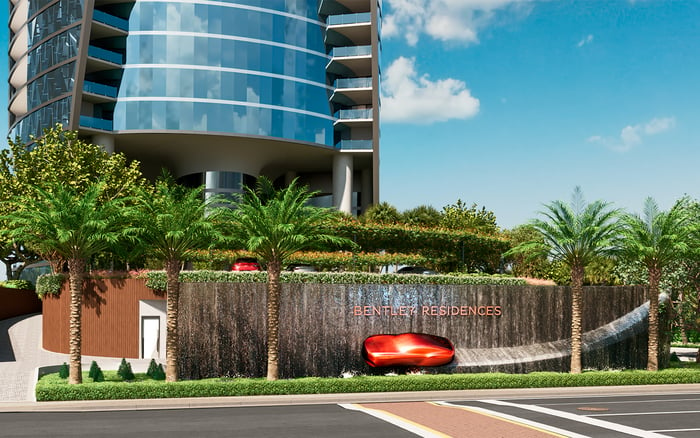
For collectors, a garage is not a utility space. It is a controlled environment where mechanical integrity, finish quality, and long-term value are quietly preserved. In coastal South Florida, the most consequential variable is not horsepower, but wind: a single failure at the garage opening can introduce wind-driven rain, salt-laden humidity, and pressure changes that cascade through a residence. Hurricane-rated garage doors are a primary line of defense because the garage opening is typically the largest vulnerable aperture in a home or private automotive bay. When specified and maintained correctly, a rated door is less about surviving a storm headline and more about protecting what happens afterward: corrosion on fasteners, compromised electronics, moisture intrusion into interior finishes, and the persistent, difficult-to-remediate effects of salt air. At **[Bentley Residences Sunny Isles](https://www.millionluxury.com/sunny-isles/bentley-residences-sunny-isles)**, the conversation resonates with a particular buyer profile: residents who view automotive ownership as part of their lifestyle, and who expect building performance to match the standard of the vehicles they curate.

A collector’s garage is often treated as a vault: climate-stable, secure, and designed to keep surfaces flawless. In a hurricane corridor, the garage opening is frequently the primary vulnerability simply because of its scale. The door spans a wide opening, it moves, it depends on multiple contact points, and it sits directly in the path of wind pressure and wind-driven rain.
When a garage door isn’t engineered for high winds, failure can be abrupt. Panels can bow, tracks can separate, and seals can lift. The immediate problem is water and debris, but the longer-tail risk is pressure. Once the envelope is compromised, pressure shifts can drive moisture and salt particulates deeper into the space-accelerating corrosion and creating a lingering humidity burden that outlasts the storm.
For supercars, this isn’t theoretical. Low-slung bodywork, exposed brake components, carbon-ceramic hardware, and complex electronics are unforgiving of coastal moisture. A hurricane-rated door is, in practical terms, an exterior-envelope component that helps protect both the vehicle and the residence beyond it.
Collectors know preservation is rarely about one catastrophic moment. It’s about preventing repeated, incremental degradation that becomes expensive-and visible.
Salt-laden humidity and corrosion.
Even without standing water, wind-driven rain can aerosolize salt and push it into a garage. Once inside, salt settles on metal surfaces, fasteners, brake hats, and suspension components. A well-sealed, properly rated door reduces infiltration pathways.
Pressure changes that stress interior finishes.
Garages connected to a home or private lobby are part of a broader envelope. If pressure differentials build, they can drive moisture into adjacent walls, baseboards, and storage areas. For owners who keep detailing supplies, leather goods, luggage, or stored wheels in the same space, controlling pressure and moisture is not optional.
Debris impact.
Rated systems are designed with impact resistance in mind. The objective isn’t only to keep the door in place-it’s to keep it functioning as a barrier when conditions are chaotic.
Security and operational continuity.
A door that stays aligned, stays on its tracks, and maintains locking integrity is also a security asset during the disrupted days after a storm.
Luxury buyers are surrounded by labels. The only distinction that matters is whether the door assembly performs as a system.
The entire assembly, not just the panels.
A rating applies to the full door system: door sections, reinforcement, tracks, rollers, hinges, anchoring, and the interface to the structure.
Hardware quality and corrosion resistance.
In coastal environments like Sunny Isles, hardware selection is consequential. Even a strong door can become unreliable if fasteners and brackets corrode, leading to misalignment and compromised seals.
Seals that actually seal.
Bottom seals, perimeter weatherstripping, and the quality of the threshold interface largely determine how much wind-driven moisture gets in. A rated door that’s loosely sealed can still admit the damp, salty air supercar owners work to avoid.
Installed to spec.
Protection depends on precision. Track alignment, anchoring, and calibration are as important as the product itself.
Sunny Isles buyers often select residences for ocean proximity, views, and lifestyle. Yet the attributes that protect long-term value are frequently invisible. Storm readiness is one of them, and the garage door is a perfect example: a daily convenience most of the year, and a critical barrier when conditions change.
This is especially relevant for owners choosing a branded tower where the expectation is that performance matches design intent. In that context, a hurricane-rated garage door becomes part of the broader promise: living beautifully on the water without compromising resilience.
Within Sunny Isles, collectors also compare how different luxury buildings handle the arrival sequence, vehicle storage, and resident privacy. When evaluating choices such as St. Regis® Residences Sunny Isles, keep the focus on functional resilience as much as finishes. The most convincing luxury is the kind that holds up under stress.
Bentley’s global design language is associated with precision, comfort, and craftsmanship. A buyer drawn to Bentley Residences Sunny Isles is typically attuned to mechanical detail. For that owner, the garage isn’t a background space-it’s part of the living program.
A hurricane-rated garage door fits that sensibility because it’s engineering expressed through daily experience: a door that closes with consistent alignment, maintains a tight seal, and operates reliably in coastal conditions. It also supports the discreet, practical goal beneath most collections: protect the cars, reduce friction, and keep everything ready to enjoy.
Because the Research Pack and Fact Table do not specify exact door models or certifications for this project, the most responsible approach is to treat hurricane-rated performance as a buyer diligence item: confirm the door’s rating documentation, the full assembly scope, and the maintenance plan that keeps the system performing.
For a supercar owner, a generic inspection isn’t enough. The questions are specific.
Ask for the rating documentation.
A true rated system comes with test and approval documentation tied to intended wind pressures and installation conditions.
Confirm the weakest link.
Tracks, anchoring, and the condition of the surrounding structure are common failure points. The door can only be as strong as what it’s attached to.
Verify seal integrity and drainage strategy.
Review how the threshold and perimeter manage water. If wind-driven rain hits the door, where does it go?
Review backup access and operational planning.
After storms, power and building operations can be disrupted. Consider how vehicles are protected and accessed under contingency conditions.
Plan for preventive maintenance.
Coastal environments demand proactive care: hardware inspection, lubrication appropriate for salt air, and periodic seal replacement.
A rated door is a cornerstone, but collectors typically layer protection.
Climate control and dehumidification.
The door reduces intrusion; climate systems manage the air that remains. For long-term storage, stable humidity is as important as temperature.
Surface discipline.
Even with a strong envelope, coastal ownership rewards consistent rinsing and detailing rhythms that prevent salt accumulation on underbodies and brakes.
Storage planning.
Keep chargers, battery tenders, and sensitive materials away from thresholds and exterior-facing walls.
Insurance alignment.
A resilient envelope may influence underwriting comfort, but the more direct benefit is reducing claim-worthy damage in the first place.
Supercar ownership in South Florida isn’t confined to one shoreline. The same engineering logic applies across submarkets, even when the lifestyle differs.
In Hallandale, for example, buyers evaluating 2000 Ocean Hallandale Beach often focus on oceanfront living and privacy. For collectors, the parallel question is how the building protects the back-of-house realities, including vehicle storage and envelope resilience.
In Miami Beach, the environment is similarly demanding. A project like 57 Ocean Miami Beach may attract a design-led buyer, but the long-term ownership experience still hinges on practical coastal performance. Rated openings, durable hardware, and thoughtful detailing remain decisive.
These references aren’t about comparing amenities. They underscore a consistent principle: in ocean-adjacent living, the engineering details that keep water and pressure outside are the same details that keep collections pristine.
For an ultra-premium buyer, hurricane-rated garage doors aren’t a box to check. They’re an investment in continuity. They protect the cars you drive for pleasure and the finishes you live with every day-and they reduce the likelihood that a single weather event becomes a multi-month restoration project.
The door is also a signal. In a market where luxury is often expressed through surface, resilience is the deeper differentiator. In Sunny Isles, buyers who understand that tend to enjoy ownership more, because their environment is designed to perform as elegantly as it looks.
Do hurricane-rated garage doors actually protect a supercar from damage? They reduce wind and water intrusion, which helps limit corrosion, moisture exposure, and debris-impact risks.
Is “impact-rated” the same thing as hurricane-rated? Not necessarily; impact resistance is one component, but true performance depends on the full door assembly and installation.
What part of the system fails most often in high winds? Tracks, anchoring, and panel deflection are common weak points when doors are under-specified or poorly maintained.
Does a tighter seal matter if my garage is climate-controlled? Yes, because sealing reduces the moisture and salt load the climate system must manage.
Can wind pressure in a garage affect the rest of the residence? It can; pressure changes and moisture intrusion may migrate to adjacent interior areas if the envelope is compromised.
How often should coastal garage door hardware be inspected? At least seasonally and before storm season, with extra attention after heavy rain or salt-air exposure.
Will a hurricane-rated door eliminate flooding risk? No; it helps resist wind-driven rain and debris, but site drainage and water management still matter.
Should collectors store detailing supplies near the garage door? Preferably not; keep sensitive items away from thresholds and exterior-facing areas where moisture intrusion is most likely.
What should I ask for when reviewing a building’s garage door specs? Request rating documentation, assembly scope, and confirmation that installation and maintenance follow the approved requirements.
Is this concern only for ground-level garages? It is most acute at exposed openings, but any exterior-facing garage door can be a vulnerability in high winds.
When you're ready to tour or underwrite the options, connect with MILLION Luxury.
If branded residences are on your mind — as a home or as an allocation — we would be glad to share what we are seeing, privately.
Begin a quiet conversation