Private elevator openings can define the first impression, security posture, and resale confidence of a luxury condo. Before closing, buyers should treat the elevator threshold as a critical due diligence zone, not a decorative afterthought.
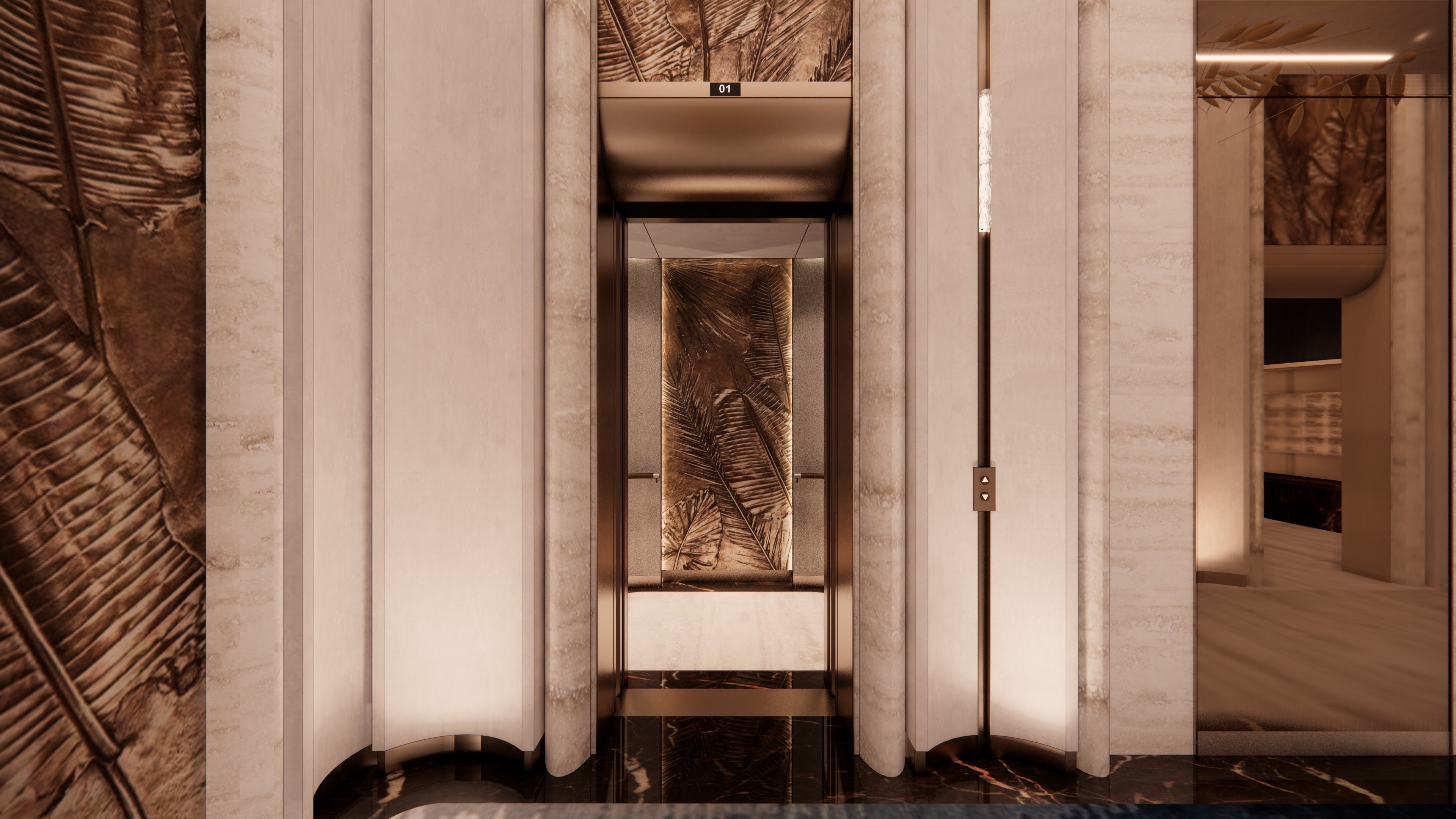
In South Florida’s luxury condominium market, the private elevator opening is often treated as a cinematic moment. Doors part, a foyer reveals itself, and the residence begins before the front door ever appears. For buyers focused on views, ceiling heights, terraces, kitchens, and the primary suite, this threshold can seem like a detail. It is not.
A private elevator opening is where architecture, security, building operations, finishes, and ownership expectations converge. In a Brickell tower, a Penthouse in a coastal enclave, or a boutique residence with only a few homes per floor, the arrival sequence can shape both daily comfort and long-term market perception. If something is misaligned, under-finished, poorly lit, insecure, noisy, or awkwardly configured, the area may be small in square footage but significant in consequence.
The hidden cost is not repair alone. It is the loss of leverage once closing has occurred. Before closing, a buyer can ask questions, request walkthroughs, document concerns, and clarify responsibility. After closing, the same issue can become a coordination exercise among the owner, association, elevator contractor, designer, builder, and property management.
In a conventional apartment corridor, imperfections are shared. In a private elevator foyer, they feel personal. The opening forms part of the residence’s first impression, even when it is technically connected to common building systems. That ambiguity is exactly why it deserves careful review.
Buyers should look beyond the spectacle of arrival. Does the elevator open directly into a controlled private space? Is there a secondary door? Is access limited to the proper floor or residence? Is the foyer finished to the same standard as the home? Is the transition from elevator cab to foyer smooth and intuitive? These questions are not academic. They shape how the residence functions for owners, guests, household staff, deliveries, art handlers, and service providers.
For High-floors, the private arrival may carry an even stronger emotional premium. Buyers expect quiet, discretion, and a sense of separation from the rest of the building. If the opening feels compromised, the entire residence can feel less resolved, no matter how dramatic the view may be.
Private elevator openings often sit at the intersection of private ownership and building infrastructure. That can create uncertainty around who controls what. The elevator cab may be maintained by the building. The doors may be part of the elevator system. The landing or foyer finishes may be tied to the residence, the common elements, or a limited common area. Access-control programming may involve property management. None of this should be assumed casually.
Before closing, buyers should ask their advisors to clarify boundaries, obligations, and any approval requirements for future changes. If an owner wants to redesign the foyer, add wallcovering, change lighting, install millwork, hang art, upgrade a door, or integrate smart access, there may be permissions and technical limitations. In New-construction, the issue may be whether the delivered condition matches the expectation set during contract review and walkthroughs. In Resale, the question may be whether prior alterations were properly approved and whether the system operates as intended.
The risk is magnified because elevator-related work is rarely as simple as changing a fixture. It may require scheduling, licensed trades, building access windows, protection of common areas, and coordination with systems that cannot be casually interrupted. A minor annoyance can become a premium-priced inconvenience.
A private elevator opening should be walked slowly, more than once, and ideally at different times of day. Buyers should experience the arrival as an owner would: from lobby to elevator, from elevator to foyer, from foyer into the residence, and back again. The route should feel secure, legible, and appropriately private.
Start with door operation. The elevator should open and close smoothly, without visible rubbing, abrupt motion, unusual sound, or uncomfortable delay. Observe the alignment between the cab, threshold, and landing. Look for chipped stone, uneven transitions, loose trim, paint flaws, exposed gaps, or inconsistent reveals. These are not merely cosmetic if they suggest rushed installation or repeated contact.
Then study lighting. A private foyer should not feel like a service vestibule unless that is the intended design. Shadows at the elevator door, poor switch placement, glare, or insufficient emergency-style lighting can diminish the arrival sequence. If art is planned, lighting and wall strength should be discussed before closing rather than after an expensive installation.
Security deserves equal attention. Confirm how access is controlled, who can call the elevator to the floor, and how guests, deliveries, housekeeping, and maintenance personnel are handled. The most elegant foyer loses its purpose if it functions like an open hallway.
Luxury buyers do not purchase only rooms. They purchase rituals. The private elevator opening is one of the most powerful rituals in a condominium residence because it announces privacy before anything else. A well-executed arrival can make a home feel detached from the tower around it. A weak one can make even a large residence feel less exclusive.
This matters for resale. Future buyers may not articulate the issue technically, but they will feel it. If the elevator doors open into a cramped, under-lit, or unresolved zone, the experience can subtly reduce confidence. If the opening is graceful, quiet, secure, and visually coherent with the interiors, it reinforces the value narrative from the first second.
The same logic applies to adjacent lifestyle features. A Balcony may win the emotional tour, but the private elevator foyer sets the tone before the view is revealed. For ultra-prime homes, both moments should feel intentional.
The best time to address a private elevator opening is before closing, while documentation and expectations are still active. Buyers should keep requests precise. Instead of saying the foyer feels unfinished, identify the item: door alignment, threshold transition, access-control operation, lighting location, wall finish, ceiling detail, hardware condition, or sound concern.
Photographs and video can help create a practical record, especially when an issue is intermittent. If a concern involves function rather than appearance, request a demonstration with the appropriate building representative present. If the concern involves design, ask whether the feature is deliverable, optional, owner-maintained, association-controlled, or subject to approval.
The goal is not to overcomplicate a purchase. It is to prevent an expensive residence from closing with an avoidable uncertainty at its most symbolic entrance.
Before closing, buyers should confirm three categories: function, finish, and control. Function includes elevator operation, door movement, threshold alignment, noise, lighting, and physical clearances. Finish includes stone, wood, paint, metal, millwork, ceiling, base, hardware, and the visual transition into the residence. Control includes access permissions, service protocols, emergency procedures, delivery handling, and future modification rights.
For trophy properties, the buyer should also consider daily life. Can large furnishings pass comfortably from elevator to residence? Does the foyer accommodate art delivery or seasonal installations? Will staff circulation preserve privacy? Does the arrival feel appropriate when guests enter for dinner? A private elevator is not simply vertical transportation. It is the front door in motion.
Why inspect a private elevator opening before closing? Because it affects privacy, security, arrival experience, and potential post-closing repair or coordination costs.
Is the private elevator foyer always part of the residence? Not necessarily. Ownership and maintenance responsibility can vary, so buyers should clarify the boundaries before closing.
What visible issues should buyers look for first? Look for uneven thresholds, damaged finishes, poor lighting, door misalignment, loose trim, and awkward transitions into the residence.
Can elevator access programming matter to value? Yes. If access is not properly controlled, the private nature of the arrival may feel compromised.
Should designers review the elevator foyer before closing? For high-end interiors, yes. Designers can identify lighting, wall finish, art placement, and millwork constraints early.
Are private elevator issues only cosmetic? No. Some concerns involve security, building systems, maintenance access, or approval requirements for future work.
How does this affect Resale? A refined private arrival can strengthen buyer confidence, while an unresolved foyer can weaken the first impression.
Does New-construction require extra attention? Yes. Buyers should compare the delivered condition with expectations and document any concerns before final acceptance.
Should the inspection include furniture delivery planning? Yes. Clearances from elevator to residence can affect moving, art installation, and future renovations.
What is the most important takeaway? Treat the private elevator opening as part of the home’s luxury experience, not as a pass-through space.
For a confidential assessment and a building-by-building shortlist, connect with MILLION.
If branded residences are on your mind — as a home or as an allocation — we would be glad to share what we are seeing, privately.
Begin a quiet conversation