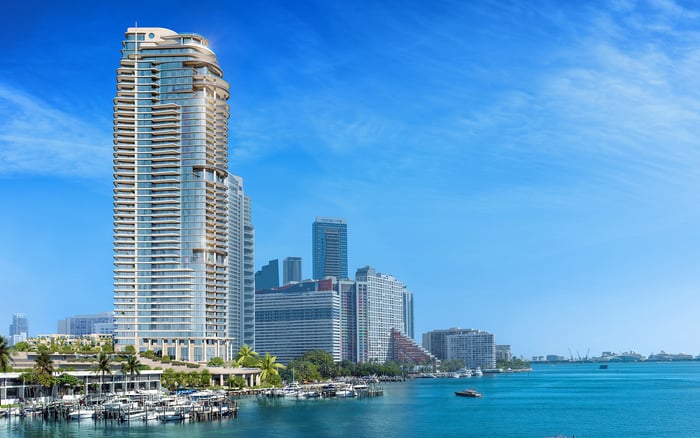
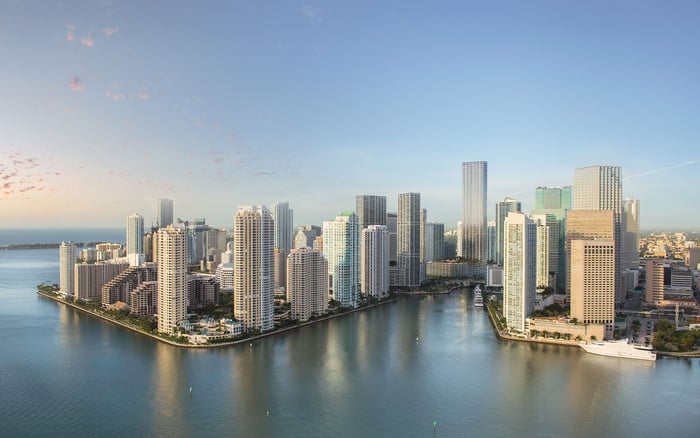
A practical owner’s guide to art installation, freight access, vendor coordination, and climate-controlled storage at Baccarat Residences Brickell and Opus Coconut Grove.

For seasonal residents, the logistics of art and furnishings often seem like a move-in concern. For full-time owners at Baccarat Residences Brickell and Opus Coconut Grove, they become part of the residence’s daily performance. A collection may rotate. A new commission may arrive. A dining table may need to be crated out for refinishing. A fragile work on paper may need to be removed from display during a repair or storm-season preparation.
That is why the most important questions extend beyond finishes, views, service, and amenity programming. They concern how the building performs when valuable objects need to move through it repeatedly and discreetly. Freight access, vendor approval, in-residence installation procedures, HVAC behavior, and climate-controlled storage should all be reviewed before occupancy.
In the ultra-premium market, operations are part of the asset. A residence can be architecturally compelling, yet still create friction if the owner’s art handlers cannot secure appropriate access, if common-area protection rules are unclear, or if storage cannot support sensitive materials. For an investment, a resale decision, or a new project purchase, those practical details matter.
At Baccarat Residences Brickell, full-time owners with meaningful art, collectible design, or high-value furnishings should treat freight access as an ongoing ownership issue. The first move-in is only one event. Over time, owners may acquire new works, rotate pieces, host private showings, update interiors, or send items to specialists for conservation.
The due-diligence question is straightforward: how does a large, fragile, or high-value object move from the street or loading area to the private residence? Owners should understand whether freight-elevator access is available for the relevant use, how scheduling is handled, and what protection is required for corridors, elevator interiors, lobby-adjacent areas, and other shared spaces. Exact elevator dimensions, freight hours, loading rules, and blackout periods should be confirmed through building documents, management, or the association before they are relied upon.
For a Brickell owner, repetition is the key variable. A one-time delivery can often be solved with extra attention. A working collection requires a repeatable protocol. If art handlers need access several times per year, the owner should understand lead times, insurance certificate expectations, staff coordination, and whether certain days or hours are restricted.
Opus Coconut Grove presents a different but equally important full-time ownership lens. The Grove buyer may be planning a more residential, design-driven lifestyle, with bespoke interiors, carefully scaled works, custom millwork, textiles, and furnishings intended to be lived with year-round.
At Opus Coconut Grove, owners should treat art installation as construction-adjacent work, not as a casual delivery. Even a seemingly simple installation may involve installers, specialty hardware, wall protection, elevator padding, insurance documentation, and staff coordination. If a piece is unusually heavy, oversized, or technically delicate, the process should be reviewed in advance rather than negotiated on arrival.
The same applies to specialty vendors. Art handlers, lighting consultants, conservators, framers, AV technicians, and interior-design teams may each have different access needs. Full-time ownership can make small constraints more significant over a long holding period. Limited freight windows, holiday restrictions, blackout dates, or inconsistent vendor routing can create avoidable friction if they are not understood before closing.
Miami’s heat, humidity, solar exposure, and storm season make climate-controlled storage a central preservation issue for owners of paper works, textiles, wood panels, delicate furnishings, photography, and mixed-media pieces. The question is not simply whether there is space. It is whether the storage environment is appropriate for the object.
In-residence storage should be evaluated for temperature consistency, humidity stability, air filtration, light exposure, and practical crate access. A closet that works for luggage may not be appropriate for framed works on paper. A service area that holds household supplies may not be suitable for textiles or sensitive decorative objects. Owners should also consider how often a space is opened, whether air circulation is steady, and whether stored pieces are vulnerable during maintenance or repairs.
For Baccarat Residences Brickell owners, pairing in-unit display space with off-site climate-controlled storage may be appropriate for collection rotation, overflow, hurricane-season planning, or temporary building disruptions. For Opus Coconut Grove owners with active collections, off-site storage can also serve as a risk-management tool when works need protection during repairs, vendor work, or storm-related concerns.
The best time to solve art and storage logistics is before closing, while unit selection, interior-design planning, and walkthroughs are still active. Owners should ask direct questions and request practical answers. Where does the crate enter? Which elevator is used? Who approves the vendor? How far in advance must access be scheduled? What insurance documentation is required? Are there limits on installation hours? How are walls, floors, elevators, and corridors protected?
For full-time owners, these are not minor administrative questions. They influence the ease of living in the residence and the safety of valuable property. They also shape interior-design decisions. A large-format work may require a specific path of travel. A sculptural object may require professional rigging or multiple installers. A custom wall treatment may affect how art can be mounted, removed, or conserved.
This is where the distinction between amenity luxury and operational luxury becomes visible. A polished arrival experience matters, but so does the building’s ability to support private ownership behind the scenes. The most sophisticated owners tend to evaluate both.
A disciplined plan should begin with an inventory of the owner’s most sensitive items: large works, fragile frames, sculptures, wood pieces, textiles, design objects, and furnishings that require specialty handling. From there, the owner, designer, and art handler can map likely delivery routes, installation timing, storage needs, and future rotation plans.
The plan should also distinguish display, reserve, and emergency categories. Display items belong in the residence under stable conditions. Reserve items may be better suited to off-site climate-controlled storage. Emergency items are those that should be moved or protected quickly if repairs, leaks, vendor work, or storm preparations create risk.
Baccarat Residences Brickell and Opus Coconut Grove each call for this kind of owner-level thinking. The goal is not to assume every detail is difficult. The goal is to remove uncertainty. When management procedures, vendor access, freight routing, and storage strategy are clarified in advance, the residence can function with the quiet confidence expected at this tier.
Should full-time owners ask about freight access before closing? Yes. Freight access, scheduling, elevator use, and common-area protection should be confirmed before occupancy.
Are exact freight-elevator dimensions publicly confirmed for these buildings? They should not be assumed. Owners should verify dimensions and rules through management, condo documents, or association materials.
Why does art installation require advance planning? Installation can involve specialty vendors, wall protection, elevator padding, insurance certificates, and staff coordination.
Is climate-controlled storage important in Miami? Yes. Heat, humidity, solar exposure, and storm season can affect paper, textiles, wood, furnishings, and mixed-media works.
Can in-residence closets replace professional storage? Sometimes, but only if temperature, humidity, air filtration, light exposure, and access are appropriate for the objects stored.
Should Baccarat Residences Brickell owners plan for repeated freight use? Yes. Owners who rotate art, acquire pieces, or host private showings should expect more than a one-time move-in process.
What should Opus Coconut Grove owners ask vendor teams before installation? They should ask how vendors are approved, scheduled, insured, routed through the building, and supervised during work.
Is off-site storage useful for full-time owners? It can be useful for rotation, overflow, hurricane-season planning, repairs, or temporary building disruptions.
Do these logistics affect resale value? They can affect buyer confidence, especially for collectors or design-focused purchasers who expect operational clarity.
When should interior designers be involved? Designers should be involved early, ideally during unit planning, pre-closing review, and before major art or furniture deliveries.
To compare the best-fit options with clarity, connect with MILLION.
If branded residences are on your mind — as a home or as an allocation — we would be glad to share what we are seeing, privately.
Begin a quiet conversation