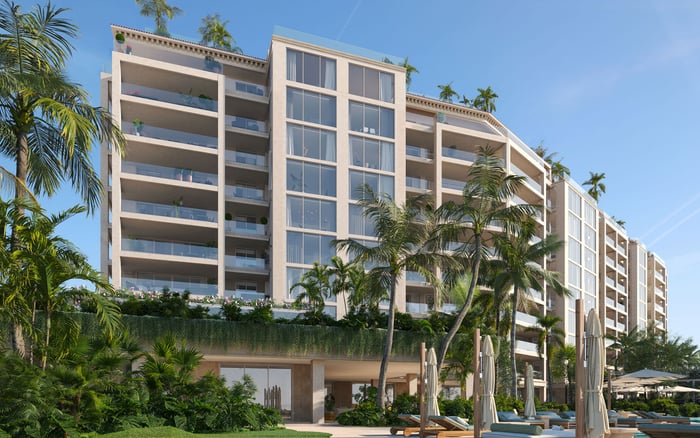
For Argentine families considering Fisher Island, the purchase is best treated as a coordinated cross-border wealth decision. Ownership structure, tax exposure, currency movement, succession, club obligations, and immigration intentions should be aligned before contract, not after closing.

For families in Buenos Aires, a Fisher Island residence is rarely just a vacation purchase. It may also be a private South Florida base, a family hospitality platform, and part of a longer-term wealth plan. That combination is why sophisticated buyers often begin with structure before becoming attached to a particular view.
Fisher Island’s appeal is rooted in privacy, controlled access, a resort-style environment, and proximity to Miami Beach. For Argentine buyers accustomed to private clubs, gated communities, and the demands of moving capital across borders, the island can feel familiar while still sitting within a U.S. legal and monetary setting.
The purchase can involve U.S. real estate law, Argentine tax residency, foreign-exchange logistics, banking compliance, estate planning, and family governance. A buyer who signs first and structures later may still complete the acquisition, but often with avoidable friction.
Investment thinking on Fisher Island is often less about short-term speculation than preservation, discretion, and utility. The island’s private, club-centered environment creates a different ownership psychology from mainland neighborhoods where the buyer may be comparing a wider range of housing options.
For Argentine buyers, South Florida ownership can also provide the practical comfort of holding a usable real asset in U.S. dollars. The residence may serve school holidays, medical visits, art-season travel, or extended family gatherings, so the ownership plan should reflect actual family use rather than title mechanics alone.
On-island options such as The Residences at Six Fisher Island and The Links Estates at Fisher Island illustrate the private residential context that draws buyers seeking security and permanence. In this segment, legal structure, use patterns, and future succession should be discussed together.
The central question is not simply who buys, but how the residence is held. Direct individual ownership can be straightforward, yet it may not be optimal for privacy, estate planning, liability isolation, or cross-border reporting. U.S. limited liability companies, foreign holding vehicles, and trusts may each have a role, depending on the buyer’s residency, family composition, financing needs, and succession objectives.
The structure should be tested in both directions. In the United States, buyers and advisors typically evaluate income tax, capital gains, estate and gift tax exposure, reporting duties, and practical closing requirements. In Argentina, residents may need to consider worldwide income, personal assets tax, foreign asset reporting, and how beneficial ownership is treated under local rules.
A structure designed only for U.S. efficiency can create Argentine complications. A structure built only for Argentine privacy can create U.S. tax or estate inefficiency. The goal is not complexity for its own sake, but a vehicle the family, attorneys, accountants, bankers, and future heirs can understand and administer.
For buyers moving from Buenos Aires to Fisher Island, the path of funds is as important as the purchase price. Large dollar transfers should be supported by clear documentation, including origin of funds, banking history, corporate records where relevant, and identity information for beneficial owners.
U.S. banks, title companies, and closing professionals operate within compliance frameworks that require careful review. Argentine foreign-exchange rules and practical access to dollars can add another timing layer. Buyers who assume funds can move at the last minute risk delays, enhanced review, or a missed closing window.
Best practice is to map the payment route before contract. That includes identifying the sending account, the receiving escrow account, intermediary banks, required approvals, and any documentation that must be translated, legalized, or updated. For ultra-premium purchases, clean execution is part of the asset protection strategy.
Argentine families often think about succession through a civil-law lens, including family expectations around children, spouses, and extended relatives. U.S. planning uses a different toolkit, which may include wills, trusts, operating agreements, and beneficiary structures.
A Fisher Island residence can become complicated if several heirs inherit without a clear governance plan. Who may use the home during peak season? Who pays assessments, taxes, staff, insurance, and club costs? Can one branch of the family sell its interest? What happens if a child becomes a U.S. resident, marries, divorces, or has different liquidity needs?
These are not theoretical questions. Luxury residences are emotional assets. Families should consider written rules for use, expenses, decision-making, and sale rights before the property becomes part of an estate. Residences such as Palazzo del Sol and Palazzo della Luna underscore the level of ownership where family governance can matter as much as interior design.
A Fisher Island address may support a lifestyle plan, but real estate ownership alone does not resolve immigration status. Some Argentine buyers intend to remain occasional visitors. Others may explore longer U.S. stays, education planning, business expansion, or investor visa pathways.
Each path should be coordinated with tax residency analysis. Days spent in the United States, business activity, family relocation, school enrollment, and visa strategy can all influence planning. Buyers should distinguish between owning a home in Florida and becoming a U.S. tax resident, since those outcomes carry very different implications.
This is where South Florida’s wider luxury map becomes relevant. A family may choose Fisher Island for privacy while maintaining business, banking, or professional routines in Brickell, where residences such as The Residences at 1428 Brickell speak to a more urban rhythm. The right answer depends on where the family will actually live, work, study, and spend time.
Waterfront ownership on Fisher Island feels effortless only when the operational details are anticipated. Buyers should review condominium or association rules, club requirements, insurance, renovation approvals, staffing access, hurricane preparation, and rental restrictions if occasional leasing is contemplated.
They should also understand that privacy is not the same as invisibility. Banking, tax, and beneficial ownership reporting have become more sophisticated globally, so poorly documented structures can become more problematic over time. The most discreet buyers tend to be the most organized.
For many Argentine families, the highest-value decision is to assemble the advisory team early: U.S. real estate counsel, Argentine tax counsel, cross-border accountants, immigration advisors where needed, private bankers, insurance specialists, and a broker who understands both the island and the family’s international context.
Should an Argentine buyer purchase Fisher Island property in an individual name? Sometimes, but individual ownership should be compared with company or trust structures for tax, estate, privacy, and reporting consequences.
Does owning on Fisher Island make a buyer a U.S. tax resident? Ownership alone does not determine residency, but time spent in the United States and broader ties can become important.
Why is currency planning so important for Argentine buyers? Dollar movement, banking documentation, Argentine foreign-exchange rules, and U.S. escrow timing can all affect closing certainty.
Can a Fisher Island residence be part of a succession plan? Yes, but families should coordinate Argentine inheritance expectations with U.S. wills, trusts, or entity agreements.
Is privacy still possible in a cross-border purchase? Yes, but modern privacy usually means compliant structuring, clean documentation, and disciplined administration.
Do buyers need to consider club and association obligations? Yes, Fisher Island ownership should be reviewed together with club, condominium, insurance, renovation, and operating costs.
Can the property be used as a second home for the family? Yes, provided the ownership plan reflects actual use, guest access, expenses, and future family governance.
Are visa plans connected to the real estate purchase? They can be, especially if the family is considering longer stays, investor activity, schooling, or relocation.
Should Argentine and U.S. advisors work together before contract? Yes, early coordination reduces the risk of conflicting tax, reporting, estate, and closing requirements.
What is the best first step before touring properties? Define the buyer profile, funding path, intended use, residency goals, and succession objectives before choosing a structure.
To compare the best-fit options with clarity, connect with MILLION.
If branded residences are on your mind — as a home or as an allocation — we would be glad to share what we are seeing, privately.
Begin a quiet conversation