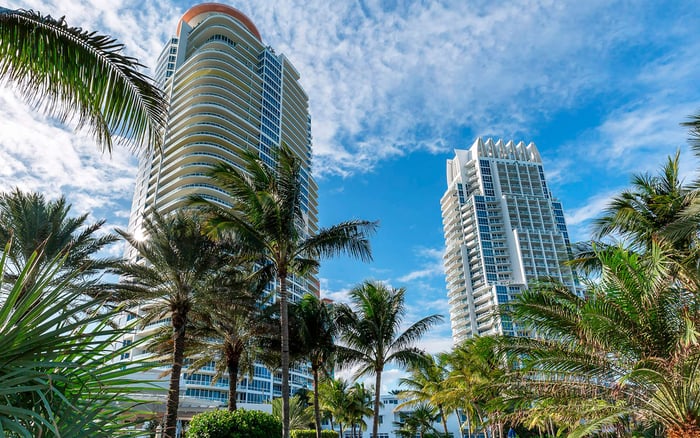
For a family office moving capital from Seoul property into a South Beach residence, execution depends on more than the sale price. Net proceeds, verified liquidity, financing conditions and transfer documentation must align before the Miami purchase timetable becomes binding.
A Seoul-to-South Beach move may begin with a residence, but execution should begin with a capital calendar. For a family office, the central question is not simply whether the balance sheet supports the purchase. It is whether the right funds will be available, documented and acceptable to the closing parties when the contract requires them.
A search that includes Apogee South Beach should therefore run alongside a separate workstream for the Seoul disposal, tax analysis and purchase funding. The property decision and the liquidity decision belong together, but neither should obscure uncertainty in the other.
The essential distinction is straightforward: anticipated sale proceeds, available liquidity and funds cleared for closing are three different things. A disciplined acquisition plan gives each its own evidence and deadline.
Start with an adviser-reviewed estimate of net sale proceeds, not the expected gross price. Have the team identify debt repayment, transaction expenses and an appropriate tax reserve before allocating capital to the Florida acquisition. This is a planning exercise, not a substitute for a seller-specific tax calculation.
For individuals, Korea taxes capital-asset disposal gains separately from ordinary global income. Gains from land or buildings can fall within a 6%-45% graduated framework, while asset category and holding period can produce flat rates or other treatment. That range is not the family's effective tax rate and should not be applied automatically to an entity-owned asset.
Ownership, residency, holding period and available exemptions require individual analysis. The U.S.-South Korea tax treaty does not automatically exempt a Seoul property sale from Korean taxation; its real-property provisions preserve relevant taxing rights.
Have advisers distinguish the expected sale-completion date from the date proceeds can support the Miami closing. Confirm Korean remittance permissions, foreign-exchange reporting and bank clearance timing for the actual ownership and transfer structure. Do not infer them from the sale contract.
There are three useful planning paths: sell first, purchase using existing liquidity, or investigate interim borrowing. None is universally preferable.
Selling first can reduce dependence on an uncompleted disposal, provided proceeds are received and the transfer route is confirmed. The trade-off is letting the home search follow the capital timetable rather than assuming a particular residence will remain available.
Using existing liquidity separates the purchase from the Seoul closing. The family office should still determine how much cash remains available after tax reserves and other commitments, and confirm that the intended funding account is acceptable to the closing parties.
Interim borrowing could address a timing mismatch, but it introduces another set of conditions. Do not make the Miami purchase unconditional on the strength of an indicative financing conversation.
For a family considering Continuum on South Beach, the practical test is the same: can the selected funding path meet the proposed contractual dates without relying on an optimistic Seoul completion assumption? Ask counsel to review that dependency before making commitments.
A bridge-first approach deserves evaluation, not automatic endorsement. Availability, collateral eligibility, pricing and execution timing require confirmation from the proposed lender. Do not assume a Seoul property can secure a facility usable for a Miami acquisition.
Request written terms covering the borrower, collateral, currency, permitted use, draw conditions, repayment date and consequences of a delayed sale. Then test the plan against later-than-expected proceeds and a lower net amount. These are diligence questions, not established features of a particular financing product.
A foreign-national purchase mortgage is a separate option, not a synonym for bridge financing. Indicative down-payment ranges include approximately 25%-30% and 30%-50%. Neither range is a universal requirement. The lender, borrower and property determine the actual terms.
Mortgage documentation commonly includes a passport, income evidence, bank statements and a home-country bank credit reference. Seek preapproval early, but distinguish it from funds ready to close.
Proof of funds answers whether money is available. Source-of-funds documentation explains where it came from. A family office should prepare both rather than expect one document to serve both purposes.
For liquidity evidence, recent bank statements showing liquid funds or a bank letter on official letterhead can be useful. Where possible, aim for documents dated within 30 days-a practical freshness target, not a universal legal rule. They should clearly identify the account owner, bank and available balance.
For proceeds from a completed property sale, a certified closing statement can help establish origin. It does not, by itself, demonstrate that those proceeds remain liquid or are available in the account intended to fund the purchase.
While evaluating Five Park Miami Beach, prepare this evidence before the transaction becomes time-sensitive. Ask the relevant parties what they will accept, including whether translated records or entity documents are needed. If the purchaser and account holder differ, resolve the documentary explanation early rather than leaving it for the closing wire.
The acquisition schedule must account for more than the movement of money. Cash-purchase planning estimates of 30-45 days and financed-purchase estimates of 45-60 days can provide an initial framework, but they are not guaranteed closing periods or project-specific commitments.
Condominium association review can add time. Request application and approval requirements early, including for a contemplated purchase at Setai Residences Miami Beach, without assuming a particular review period or outcome.
Lenders, title companies and associations may request passports, entity records, proof of funds, source-of-wealth explanations and translated documents. Assign responsibility for collecting each item and track unresolved requests separately from the sale timetable.
Title companies typically require a verified closing wire from an account acceptable under their compliance procedures. Confirm the intended account and documentation path in advance. Available money does not eliminate transfer review, just as a completed Seoul sale does not guarantee a cross-border clearance date.
The immediate objective is a well-funded purchase, but future liquidity deserves attention too. FIRPTA concerns foreign sellers disposing of U.S. real property, not the Korean property sale. It can require withholding of 15% of the gross U.S. sale price, subject to exceptions and withholding-certificate procedures.
Reduced withholding may require an IRS certificate. Preparing ahead of a future disposition can therefore affect the amount temporarily unavailable for the family's next acquisition. Treat this as an exit-planning issue, not a calculation of the Seoul seller's tax.
The strongest purchase plan aligns net proceeds, confirmed funding, current evidence and the closing parties' requirements before contractual pressure builds.
Explore your South Florida residential options with MILLION.
If branded residences are on your mind — as a home or as an allocation — we would be glad to share what we are seeing, privately.
Begin a quiet conversationSelling first can reduce dependence on an unfinished disposal, but existing liquidity or confirmed financing may support a different sequence. The choice should reflect net proceeds, transfer readiness and contractual obligations.
No automatic exemption applies. The treaty preserves relevant real-property taxing rights, and the seller's circumstances require individual tax analysis.
No. It is a graduated framework that can apply to certain land or building gains, while ownership, residency, asset category, holding period and exemptions can affect treatment.
No. Collateral eligibility, borrower qualification, permitted use, pricing and funding timing must be confirmed with the proposed lender before relying on a facility.
Recent bank statements showing liquid funds or a bank letter on official letterhead can provide evidence. Confirm the intended recipient's requirements and clearly identify the account owner, bank and available balance.
Within 30 days is a practical freshness target where possible, not a universal legal requirement. Ask the receiving parties what document age they will accept.
No. A certified closing statement can help document the origin of sale proceeds, while current liquidity evidence shows whether money is available.
Some programs advertise approximately 25%–30% down, while other guidance describes 30%–50%. Actual requirements depend on the lender, borrower and property.
Initial planning estimates are 30–45 days for cash purchases and 45–60 days for financed purchases. Association review, lender conditions and transfer documentation can affect the actual schedule.
A foreign seller's disposition of U.S. real property can trigger 15% withholding on the gross sale price, subject to exceptions. Reduced withholding may require an IRS withholding certificate, making advance preparation important.