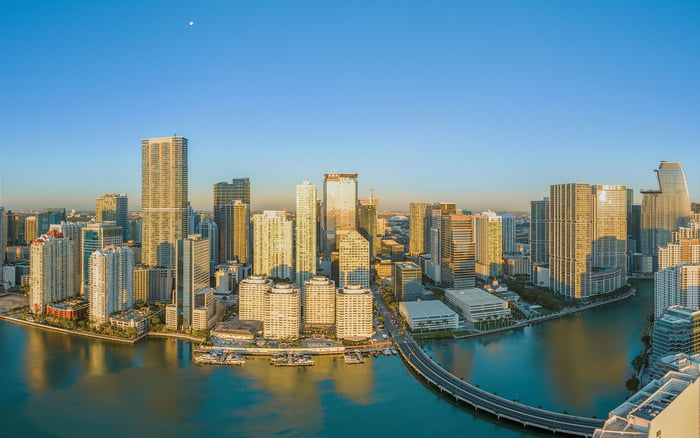
A discreet planning framework for a Hong Kong family office considering Key Biscayne, with sale-to-purchase sequencing, bridge-liquidity discipline, and transaction-specific proof-of-funds preparation at its center.
For a Hong Kong family office considering a residence in Key Biscayne, the central question is not simply which property to acquire. It is whether the purchase can proceed independently of a sale elsewhere-and what happens if the two transactions fall out of step. A carefully chosen home should not depend on a fragile chain of funding assumptions.
This is a planning framework, not an account of a completed relocation. The essential distinction is between wealth, accessible liquidity, and funds available to support the proposed purchase timetable. Selling first, buying first, and coordinating two closings each solve a different problem. None is universally preferable.
For a search that includes Oceana Key Biscayne, establish the capital plan before narrowing the residence selection. The objective is to preserve discretion and choice without allowing an attractive property to dictate an untested funding schedule.
Key Biscayne was classified as a buyer's market in September 2026. An October 11, 2026 snapshot counted 144 homes and condos for sale and 24 under contract, with 11.3 months of single-family inventory and 6.8 months for condos and townhomes. Those figures support a measured negotiating posture-not an assumption that every seller will accept the same discount or timetable.
The distinction between segments matters. For the 12 months ending September 12, 2026, Biscayne Key Estates recorded 10 sales, a median sale price of $3,487,500, and a median marketing time of 171 days. Sellers received a median 91% of original asking price. These are neighborhood-level observations, not a valuation formula for an individual residence.
Nor do Florida figures establish the likely proceeds or timing of a Hong Kong sale. Underwrite that disposal separately. An advertised price is not realized capital, and marketing time is not contract-to-closing time. The acquisition budget should reflect those distinctions rather than treating anticipated proceeds as available funds.
Sell first.
This approach reduces financial risk by releasing equity before the next purchase. The trade-off is less flexibility if the preferred residence becomes available before the sale closes. For a family office prioritizing certainty, that may be an acceptable exchange.
Buy first.
This preserves the ability to act on a selected property but requires independent purchase liquidity or financing. Bridge financing can, in principle, address unavailable home equity. It should not be treated as committed capital until the facility and its conditions have been established.
Coordinate the transactions.
Parallel closings can align the release and use of capital, but coordination is not certainty. Maintain a fallback for a delayed sale rather than making the Florida purchase dependent on an uninterrupted chain of events.
The decision should turn on available equity, market conditions, and financing. A family with ample accessible capital may reasonably choose differently from one whose acquisition budget depends on disposing of a specific asset.
A bridge should solve a defined timing mismatch. It should not conceal uncertainty about the sale price or become a reason to waive an otherwise sensible purchase protection. Before relying on one, ask the proposed lender to clarify collateral eligibility, funding conditions, costs, maturity, and repayment expectations for the transaction.
These are diligence questions, not standardized terms for a Hong Kong-to-Florida facility. Do not assume an advance rate, approval timetable, or cross-border structure. Test whether the purchase remains manageable if the sale takes longer or produces less than expected.
Higher-value local financing also brings jumbo lending, liquidity reserves, debt-to-income assessment, and confirmed insurance coverage into focus. The financing conversation should therefore include the residence itself, not just the family's balance sheet. Price, borrowing capacity, and insurability need to work together before a closing date becomes a commitment.
Prepare proof of funds around the proposed transaction, not an assumed universal deadline. Ask the seller's representative what evidence is expected with the offer, and ask the lender and closing team what additional documentation they need for their respective roles.
Clarify statement recency, whether a bank letter is acceptable, how account ownership relates to the proposed purchaser, and what confirmation will be needed as closing approaches. Resolve these matters with the parties involved; they are not fixed requirements that can be prescribed for every acquisition.
Internally, distinguish evidence of financial capacity from a confirmed funding path. Documenting assets does not, by itself, establish when purchase funds will be available. For the cross-border elements, obtain transaction-specific advice on tax treatment, transfer constraints, ownership obligations, and international-wire arrangements before making timing promises.
An alternative address should not automatically become an alternative capital plan. If the family also considers Coconut Grove, a comparison involving Park Grove Coconut Grove can remain part of the residence search while liquidity decisions are evaluated separately. The same discipline applies to a Brickell option such as Una Residences Brickell.
These are search references, not representations about availability, pricing, or closing readiness. A broader shortlist can preserve choice, but each prospective purchase needs its own contract review and funding assessment. Do not transfer assumptions about one property's timing to another simply because both fit the family's lifestyle brief.
For a waterfront acquisition, investigate flood and windstorm insurance, elevation, roof condition, seawall or dock obligations, permits, and open violations. Insurance feasibility can affect both financing and ownership costs. Resolve those questions alongside the capital plan rather than leaving them for the final days before closing.
Typical financed contract-to-closing periods are 30-45 days, with cash closings taking roughly two weeks when title, inspections, documentation, and funds are ready. These are conditional expectations, not guarantees for an international purchase.
Cash can remove loan and appraisal contingencies and support a faster closing. It does not diminish the value of property diligence. A compressed calendar is useful only when the family can meet it without sacrificing clarity on the asset or the funding path.
The strongest sequence is the one the family can sustain if an expected sale is delayed. Before committing, reconcile the purchase budget, liquidity access, financing conditions, documentation expectations, and property diligence. Let the closing timetable follow that work rather than lead it.
For a discreet conversation about aligning your South Florida residence search with your acquisition priorities, connect with MILLION.
If branded residences are on your mind — as a home or as an allocation — we would be glad to share what we are seeing, privately.
Begin a quiet conversationNo. It presents a planning framework for a potential move rather than a documented transaction.
The principal options are selling first, buying first, or coordinating the transactions. The choice depends on available equity, market conditions, and financing.
Selling first releases equity and reduces financial risk before the acquisition. It can also limit flexibility if a preferred property becomes available before the sale closes.
Bridge financing may help a buy-before-sell purchase when existing-home equity is unavailable. Its suitability depends on the actual lender's terms and funding conditions.
It was classified as a buyer's market in September 2026. An October 11 snapshot showed 11.3 months of single-family inventory and 6.8 months for condos and townhomes.
No. The Hong Kong disposal needs its own assessment of likely proceeds and timing; Florida market figures do not establish either.
As a planning practice, clarify the seller's expectations before submitting an offer. Confirm lender and closing-team documentation needs separately rather than assuming a universal deadline.
Local guidance suggests roughly two weeks when title, inspections, documentation, and funds are ready. That is a conditional expectation, not a guaranteed international closing timetable.
Local guidance identifies approximately 30–45 days from contract to closing. Financing, documentation, and property readiness still affect the actual schedule.
Review flood and windstorm insurance, elevation, roof condition, seawall or dock obligations, permits, and open violations. Insurance feasibility can affect financing and ownership costs.