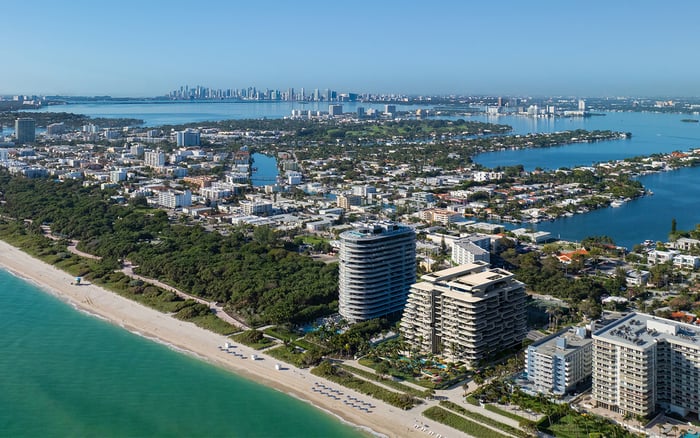
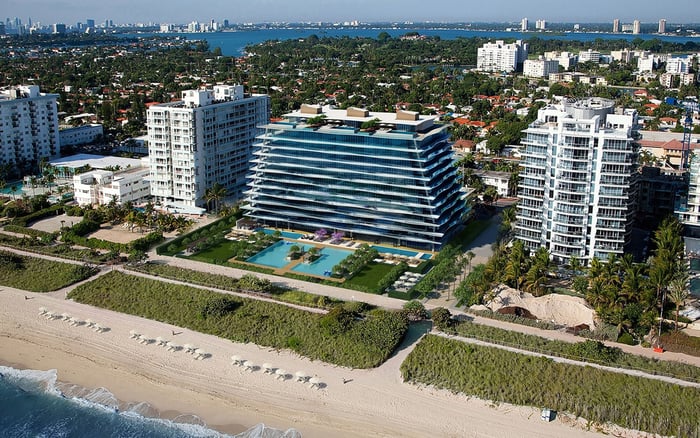
A buyer-oriented guide for empty nesters considering The Delmore Surfside, focused on right-sizing, privacy, guest flexibility, daily rituals, and a quieter coastal lifestyle.

For many empty nesters, the next residence is not a smaller version of the former house. It is a more deliberate one. The decision to consider The Delmore Surfside is often less about stepping back from family life and more about refining it: fewer rooms that sit unused, fewer maintenance obligations, and more days shaped by light, privacy, service, and proximity to the water.
Surfside has a particular appeal at this stage of ownership because it allows home to feel calm without feeling remote. The strongest empty nester move is not merely a downsizing exercise. It is a lifestyle edit. The right residence should support quiet mornings, uncomplicated hosting, fitness without logistics, and the ability to welcome children, grandchildren, or close friends without rebuilding the scale of a former estate.
The most successful empty nester purchases begin with an honest inventory of how life is actually lived. A formal dining room used twice a year may be less valuable than a generous living area that opens well. A third or fourth bedroom may matter only if it can function elegantly as an office, media room, or guest suite. Storage becomes more important, not less, because the objects that remain are usually the ones worth keeping.
At this level, right-sizing should feel like gaining time rather than giving up space. That means prioritizing floor plan clarity, private primary quarters, flexible guest accommodations, and areas that can absorb everyday routines without clutter. Boutique living can be especially attractive when it reduces friction, but it should never feel constrained. The question is not, “How much can we give up?” It is, “What do we want the residence to make easier?”
Empty nesters often become more precise buyers because they understand their habits. The right Surfside home should make an ordinary day feel composed. Morning coffee should not require a production. A walk, a swim, a quiet lunch, or an evening with family should unfold naturally. Oceanfront living, when chosen well, can turn the view into a daily ritual rather than an occasional spectacle.
This is where terrace design, indoor-outdoor flow, and privacy become practical matters. A terrace is not simply a place for photographs. It is where the day begins, where a guest may linger, and where a couple can enjoy the climate without leaving home. A pool, wellness area, or residential service program should be evaluated in the same way: not as amenities to collect, but as features that reduce the number of decisions required each week.
The empty nester residence still needs to hold family life, but in a more edited format. Children may visit with partners. Grandchildren may arrive for long weekends. Friends may come for dinner and stay overnight. The residence should anticipate those moments without being designed around constant occupancy.
A flexible guest suite is often more useful than multiple underused bedrooms. A den that can close off when needed may be more valuable than a ceremonial space. The kitchen should support both quiet evenings and catered occasions. The living area should allow conversation without feeling like a lobby. These details matter because the new home is not a withdrawal from hosting. It is a better version of it.
Surfside buyers often view the neighborhood as a collection of distinct residential personalities rather than a single market. A couple considering The Delmore may also study Arte Surfside, Fendi Château Residences Surfside, Ocean House Surfside, or The Surf Club Four Seasons Surfside to understand how different buildings express privacy, service, architecture, and atmosphere.
The comparison should be disciplined. Empty nesters should avoid being seduced by features they will rarely use and instead focus on how each residence supports the week they want to live. Is arrival discreet? Does the building feel calm at the hours that matter? Can guests be accommodated gracefully? Are pets part of the practical plan? Does the residence feel equally comfortable on a quiet Monday and a holiday weekend?
At this stage of life, privacy often rises in importance. Many buyers want to be connected to the coast without feeling exposed to constant activity. The best residence should create a sense of separation between public circulation and private life. Entry sequences, elevator access, acoustic comfort, and the relationship between living spaces and bedrooms all shape how restful a home feels.
Privacy also extends to social rhythm. Some owners want a building with a highly visible social atmosphere. Others prefer a more discreet setting, where staff support and neighborly familiarity do not become performance. There is no universal answer, but empty nesters tend to value control. The residence should allow engagement when desired and retreat when needed.
Before committing, empty nesters should test the residence against a full year of use. Consider holidays, visiting family, medical appointments, travel schedules, pets, storage needs, and seasonal wardrobe changes. A second residence or second-home pattern may require different priorities than a full-time move. Lock-and-leave convenience, service consistency, package handling, guest access, and maintenance coordination can be just as important as finishes.
Also consider what is being left behind. A larger home often carries memories, routines, and an identity built over decades. The next residence should not feel like a compromise. It should feel like a reward for knowing what matters. In Surfside, that may mean a quieter coastal address, a more intentional floor plan, and a home that supports the next chapter with elegance rather than excess.
Is The Delmore Surfside a good fit for empty nesters? It may be a strong fit for buyers seeking a more intentional coastal lifestyle, with less emphasis on unused space and more focus on privacy, comfort, and ease.
What should empty nesters prioritize first? Prioritize daily function: primary suite privacy, storage, guest flexibility, terrace usability, and how easily the residence supports normal routines.
Does right-sizing mean choosing a much smaller home? Not necessarily. Right-sizing means aligning space with real use, so the home feels more efficient without feeling diminished.
How important is guest space for empty nesters? It is often essential, but flexibility matters more than excess. One well-planned guest suite can be more useful than several rarely used rooms.
Should buyers compare other Surfside residences? Yes. Comparing buildings helps clarify differences in atmosphere, privacy, service style, and how each residence supports the desired lifestyle.
Is oceanfront living practical for year-round use? It can be, provided the residence and building services support everyday comfort, easy maintenance, and a calm daily rhythm.
What role should a terrace play in the decision? A terrace should function as an extension of daily living, not simply as a visual feature. Its usability can meaningfully shape the home experience.
Are pets an important planning consideration? Yes. Pet routines, building policies, elevator access, and nearby outdoor habits should be considered before choosing a residence.
Can a Surfside home work as a second-home? It can, especially when lock-and-leave convenience, service reliability, and guest access are aligned with how the owners travel.
What is the biggest mistake empty nesters make? The biggest mistake is replacing a large house with another home designed around past habits rather than the lifestyle they want next.
When you're ready to tour or underwrite the options, connect with MILLION.
If branded residences are on your mind — as a home or as an allocation — we would be glad to share what we are seeing, privately.
Begin a quiet conversation